

TL;DR:
- Updating rental units with a cost-effective renovation, such as a classic refresh, yields the best return on investment within a 24-month payback period. Using durable, neutral materials and incorporating smart technology can reduce maintenance costs and attract tenants willing to pay higher rent. Proper planning, tenant communication, and avoiding vanity upgrades are essential for maximizing profitability and tenant satisfaction.
Updating rental units is the most direct way to increase monthly rent, reduce vacancy, and protect long-term property value. The industry term for this process is "unit renovation," and it spans everything from a $500 paint job to a $25,000 full gut rehab. Knowing which level to choose, and when, separates landlords who grow their income from those who drain it. This guide breaks down the financial logic, the best materials, the planning process, and the mistakes that kill ROI, so you can make every dollar work harder.
How to update rental units for the best financial return
The single most important question before any renovation is whether the rent increase will pay back the cost within a reasonable window. Experts target a payback period under 24 months using a simple break-even formula: divide the total renovation cost by the expected monthly rent increase. If a $6,000 refresh raises rent by $150 per month, payback takes 40 months. That fails the test. A $4,000 refresh raising rent by $175 pays back in under 23 months. That passes.
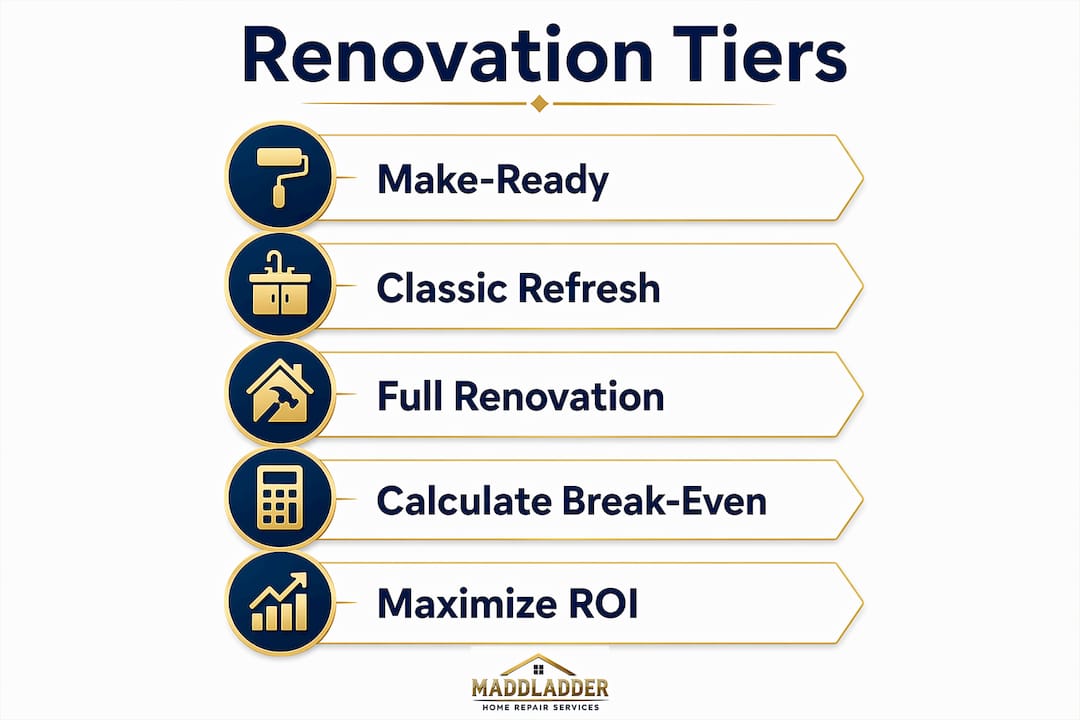
Industry modeling for 2026 classifies rental renovations into three tiers. Each has a distinct cost, timeline, and rent impact.
| Renovation Type | Typical Cost | Timeline | Monthly Rent Increase |
|---|---|---|---|
| Make-Ready Turn | Under $3,500 | 3–7 days | $25–$75 |
| Classic Refresh | $3,500–$7,500 | 10–14 days | $75–$175 |
| Full Renovation | $10,000–$25,000 | 21–45 days | $200–$400+ |
A classic refresh is the sweet spot for most landlords. It covers paint, flooring, lighting fixtures, and hardware without touching structural systems. Minor remodels consistently outperform major ones by percentage of recouped costs. That means a fresh coat of paint and new Luxury Vinyl Plank (LVP) flooring will almost always beat a kitchen gut in terms of ROI per dollar spent.
Smart thermostats and updated lighting are also worth including in a classic refresh. Research shows 65% of tenants pay more for units with tech upgrades. That single data point justifies adding a Nest or Ecobee thermostat to nearly every unit turn.
Pro Tip: Before committing to a full renovation, run the break-even formula on three scenarios: make-ready, classic refresh, and full renovation. The scenario with the shortest payback period under 24 months wins, regardless of how good the full renovation looks on paper.
What materials and design choices maximize durability?
Material selection determines how long your renovation holds up between tenant turns. Neutral, durable materials like Luxury Vinyl Plank flooring, porcelain tile, and stain-resistant satin paint reduce maintenance costs and avoid the need for frequent remodels. High-end finishes go out of style quickly and chip, scratch, or stain faster in rental conditions.
Here are the materials that consistently perform best in rental units:
- Flooring: Luxury Vinyl Plank (LVP) is waterproof, scratch-resistant, and installs over most subfloors without leveling. Porcelain tile works well in bathrooms and kitchens where moisture is constant.
- Paint: Satin or semi-gloss finish in neutral grays or warm whites cleans with a damp cloth and resists scuffs far better than flat or eggshell finishes.
- Kitchen fixtures: Single-handle faucets with ceramic disc cartridges last longer and require fewer repairs than ball-style faucets. WaterSense-labeled fixtures cut water bills, which matters in markets where landlords cover utilities.
- Bathroom fixtures: Low-flow toilets and pressure-balancing shower valves reduce both water costs and maintenance calls.
- Lighting: LED recessed lighting or flush-mount LED fixtures eliminate bulb replacement calls entirely and cut energy use.
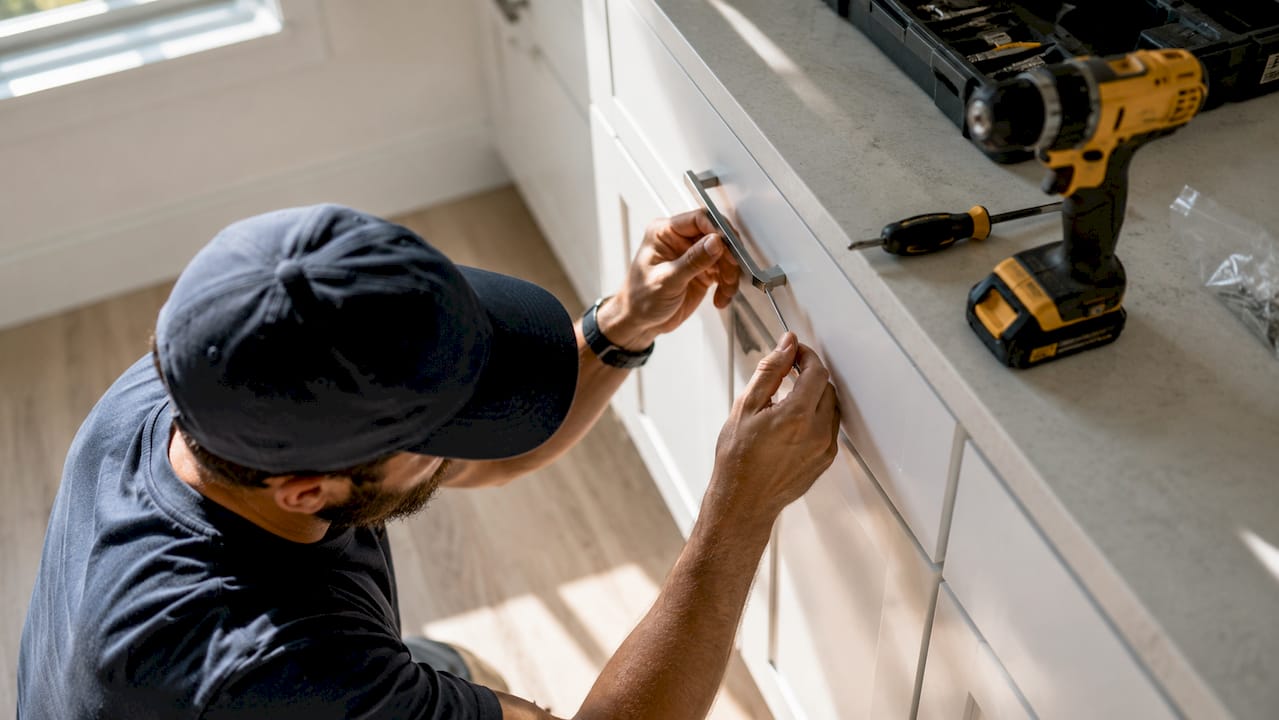
- Hardware: Brushed nickel or matte black cabinet pulls are durable, neutral, and cost under $3 per piece at most hardware stores.
Pro Tip: Calculate the lifecycle cost of materials, not just the purchase price. LVP at $3 per square foot that lasts 15 years costs less over time than carpet at $1.50 per square foot that needs replacing every 5 years.
The goal is a unit that looks clean and modern without requiring a designer's eye to maintain. Tenants respond to cleanliness and function. They do not need quartz countertops to sign a lease.
How do you plan rental unit renovations efficiently?
Renovation planning is where most landlords lose money. The fix is a structured process that accounts for inspection, sequencing, budgeting, and tenant communication before a single tool comes out.
Follow these steps in order:
- Conduct a targeted pre-renovation walk-through. Focus on exterior grading, floors, walls, HVAC, plumbing, and electrical. Focused inspections before renovation can prevent 90% of costly overruns by catching hidden problems early.
- Prioritize vacant units first. Renovating occupied units is slower, more disruptive, and more expensive. If you have a mix of vacant and occupied units, start with vacant ones and move tenants into completed units where possible.
- Build a total project budget, not just a materials budget. Include labor, materials, permit fees, and vacancy costs. A 30-day renovation on a unit renting at $2,000 per month adds $2,000 in lost rent to your true project cost.
- Set aside 5–10% of annual rental income for ongoing maintenance. For a $2,000 per month unit, that means budgeting $1,200–$2,400 per year for ongoing maintenance and repairs beyond the renovation itself.
- Use AI planning tools for scope and budget scenarios. AI-powered renovation tools analyze photos and generate scopes of work and budget estimates, letting you test multiple scenarios before spending anything.
- Communicate with tenants in writing before work begins. Give at least 24–48 hours notice for non-emergency work. Clear communication during occupied renovations protects tenant goodwill and your reputation.
- Check local permit requirements. Electrical, plumbing, and structural work typically require permits in Kansas City and most municipalities. Skipping permits creates liability and complicates future sales.
Sequencing matters as much as budgeting. Demolition and rough work come first, then mechanical systems, then drywall and paint, then flooring, then fixtures and hardware. Installing flooring before painting is one of the most common and costly sequencing mistakes landlords make.
You can also use tools like repair scheduling guides to build a repeatable process across multiple units, which cuts planning time significantly on your second and third renovation.
What mistakes should landlords avoid when renovating?
The most expensive renovation mistake is renovating for vanity rather than for rent increase or maintenance reduction. Investors frequently over-renovate by adding finishes that exceed what the local rental market will pay for. A $15,000 kitchen remodel in a neighborhood where comparable units rent for $1,100 per month will never pay back.
Avoid these specific pitfalls:
- Ignoring deferred maintenance before cosmetic upgrades. Painting over water-stained ceilings without fixing the leak is the fastest way to face a much larger repair bill six months later. Address essential repairs for rentals first, always.
- Over-improving for the market. Research what comparable units in your zip code rent for before deciding on renovation scope. Your ceiling is set by the market, not by your renovation budget.
- Skipping professional help on electrical and plumbing. DIY electrical work in rental units creates liability exposure. Licensed work protects you legally and ensures inspections pass.
- Underestimating vacancy costs. Every extra day a unit sits empty during renovation is lost income. Tight project management and reliable contractors cut vacancy days directly.
- Neglecting tenant screening after renovation. A renovated unit placed with a poor tenant will cost more in damage and turnover than the renovation earned. Upgrade your screening process alongside your unit.
- Choosing trendy finishes over neutral ones. Subway tile with dark grout looks sharp in 2026. It will look dated by 2030 and will be harder to clean in the meantime.
The top home repair trends that hold value longest are the ones that prioritize function and neutrality over style. That principle applies whether you are updating a single unit or a 20-unit building.
Renovating for vanity rather than focusing on updates that increase monthly rent or cut future maintenance costs is one of the most common and costly mistakes rental property investors make.
Key takeaways
The most effective way to update rental units is to match the renovation tier to the local rent ceiling, use durable neutral materials, and account for vacancy costs in every budget.
| Point | Details |
|---|---|
| Use the break-even formula | Divide renovation cost by monthly rent increase; target payback under 24 months. |
| Classic refresh wins on ROI | A $3,500–$7,500 refresh typically yields the best return per dollar spent. |
| Choose durable, neutral materials | LVP flooring, satin paint, and LED fixtures reduce maintenance calls and last longer. |
| Budget for vacancy and maintenance | Include lost rent in project cost and reserve 5–10% of annual income for upkeep. |
| Avoid vanity renovations | Match renovation scope to what comparable units in your market actually rent for. |
What i have learned about updating rental units the hard way
After working with landlords across the Kansas City metro, the pattern I see most often is this: a landlord spends $18,000 on a beautiful kitchen remodel, then struggles to find a tenant willing to pay $150 more per month than the unit next door. The math never worked. The renovation was for the landlord's pride, not the tenant's decision.
The landlords who consistently grow their portfolios do something different. They test one upgrade level on one unit, measure the rent increase and lease-up speed, then scale what works. A classic refresh on Unit A before a full renovation on Unit B is not laziness. It is data collection.
Technology is also underused. AI renovation planning tools are not just for large operators. A single-unit landlord can upload photos of a kitchen, get a scope of work and budget estimate in minutes, and compare three scenarios before calling a single contractor. That kind of planning used to take days. Now it takes an hour.
The other thing I would tell every landlord is to communicate more than you think you need to during occupied renovations. Tenants who feel informed and respected during disruption renew their leases. Tenants who feel ignored move out. The cost of a good tenant relationship is a few text messages. The cost of a turnover is one to two months of rent.
Finally, do not skip the boring stuff. Fix the HVAC filter, the dripping faucet, and the sticking door before you install new cabinet hardware. Tenants notice what does not work far more than they notice what looks nice.
— Jennifer
How Maddladder helps kansas city landlords update their rentals
Updating a rental unit moves faster when you have a reliable crew handling the hands-on work. Maddladder serves landlords and property managers across the Kansas City metro with exactly that kind of support.

From minor plumbing and electrical repairs to smart home upgrades like thermostat and camera installation, Maddladder covers the upgrades that move the needle on rent and tenant satisfaction. The team also handles drywall, fixture replacement, trim work, and general repairs that keep units rent-ready between turns. Flexible pricing starts at $75 per hour for one-time services, and the Property Manager subscription plan is built specifically for landlords managing multiple units. Get a free estimate and see how Maddladder fits into your next renovation.
FAQ
What is the cheapest update that increases rental income?
Paint and flooring deliver the highest return per dollar spent. A classic refresh covering paint, LVP flooring, and updated lighting typically costs $3,500–$7,500 and raises monthly rent by $75–$175.
How much should a landlord budget for rental unit updates?
Budget 5–10% of annual rental income for ongoing maintenance and renovations. For a unit renting at $2,000 per month, that means setting aside $1,200–$2,400 per year beyond any major renovation project.
Should landlords renovate occupied or vacant units first?
Vacant units should always come first. Renovating occupied units is slower, more disruptive, and more expensive. Where possible, move tenants into completed units to keep the project moving.
What flooring works best in rental units?
Luxury Vinyl Plank is the top choice for most rental units. It is waterproof, scratch-resistant, installs quickly, and appeals broadly to tenants without requiring expensive maintenance.
Do smart home upgrades increase rent in rental properties?
Yes. Research shows 65% of tenants are willing to pay more for units with tech upgrades like smart thermostats and security cameras, making these among the most cost-effective additions to a classic refresh.