
TL;DR:
- Proper scheduling of routine and emergency repairs helps Kansas City homeowners avoid costly damages.
- Organized repair calendars, local vendor relationships, and city programs enhance maintenance effectiveness.
- Proactive planning and local expertise ensure control, savings, and property protection in Kansas City's climate.
A busted pipe on a January morning or a dead furnace in February can turn your week upside down fast. For Kansas City homeowners and property managers, the difference between a minor inconvenience and a $5,000 repair bill often comes down to one thing: how well you schedule your home maintenance. Kansas City's freeze-thaw winters, humid summers, and unpredictable storms create a repair environment unlike most cities. This guide walks you through exactly how to organize, plan, and execute a repair schedule that keeps your property protected and your budget intact year-round.
Table of Contents
- Understanding your home repair needs: Routine vs. emergency
- Prepare your repair calendar: Tools, checklists, and cost planning
- How to schedule repairs: Coordinating with vendors, tenants, and apps
- Troubleshooting and special scenarios: KC weather, vacant properties, cost-saving
- Our take: Why local expertise and proactive scheduling win in Kansas City
- Level up your home repair scheduling with MaddLadder
- Frequently asked questions
Key Takeaways
| Point | Details |
|---|---|
| Differentiate repairs | Know what counts as routine maintenance and what demands urgent action for effective scheduling. |
| Use proactive planning | Apply seasonal checklists and set aside 1-2% of property value each year to avoid costly surprises. |
| Leverage technology | Scheduling apps and portals streamline coordination among vendors, tenants, and managers. |
| Local factors matter | Kansas City's climate and city programs require tailored scheduling, especially for freeze-thaw cycles and grants. |
Understanding your home repair needs: Routine vs. emergency
Before you can schedule repairs, it's crucial to understand which issues require urgent attention and which can be part of regular planning. Not every dripping faucet is a crisis, and not every HVAC noise can wait until spring. Getting this distinction right saves you money and stress.
Routine repairs are planned, predictable tasks you schedule in advance. Think seasonal HVAC tune-ups, gutter cleaning after fall, roof inspections before winter, and pipe checks before the first hard freeze. These are the tasks that, if skipped, quietly become expensive problems. Routine maintenance includes seasonal HVAC tune-ups, gutter cleaning, and inspections for roofs and pipes, while emergencies like burst pipes and HVAC failures demand a 24/7 response.
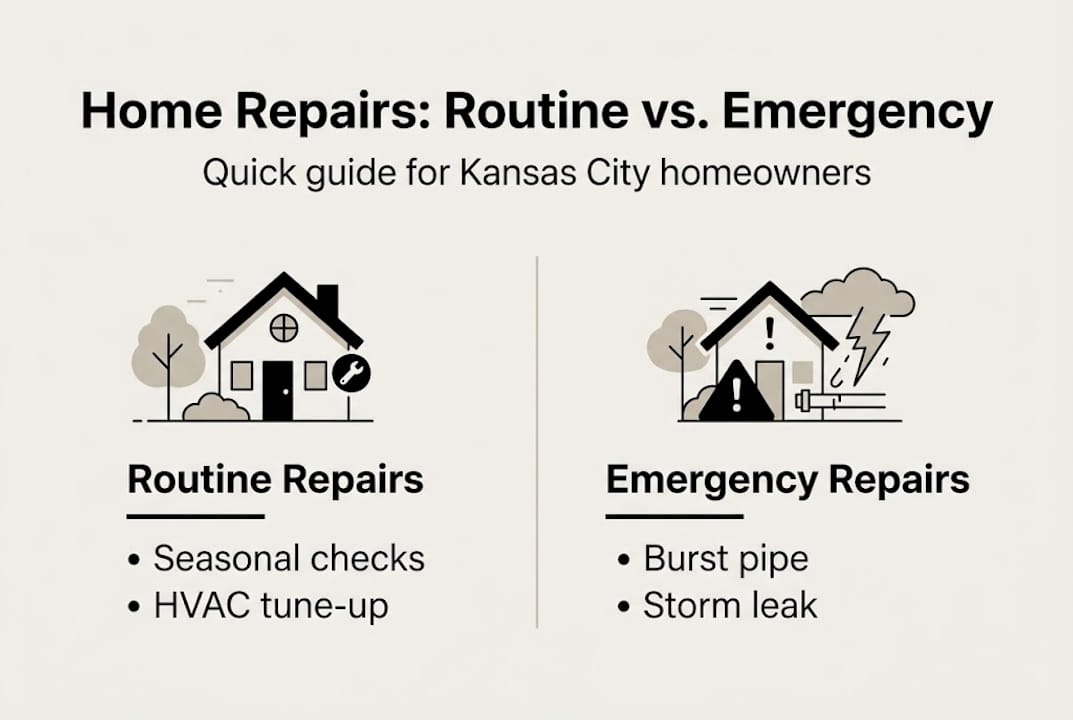
Emergency repairs demand immediate action. A burst pipe, sudden HVAC failure in extreme cold, or a roof leak during a storm cannot wait for a scheduled appointment. Emergency burst pipe repair can exceed $5,000 total, while routine pipe inspections cost a fraction of that. Knowing the difference upfront helps you respond faster and spend smarter.
| Category | Definition | KC Examples | Typical Cost | Frequency |
|---|---|---|---|---|
| Routine | Planned, preventive tasks | HVAC tune-up, gutter cleaning, roof check | $90 to $500 | Seasonal or annual |
| Emergency | Urgent, unplanned failures | Burst pipe, furnace failure, roof collapse | $500 to $5,000+ | Unpredictable |
Here are common repair types relevant to Kansas City's climate:
- Routine: HVAC filter replacement, caulking windows before winter, sump pump testing, exterior paint touch-ups
- Emergency: Frozen or burst pipes, heating system failure in sub-zero temps, storm-related roof damage, flooded basement
For a deeper look at what qualifies as a repair versus a project, the general home repair in Kansas City guide breaks it down clearly. If you prefer to handle smaller tasks yourself first, DIY repair steps can help you assess what's manageable before calling a pro.
Pro Tip: Use a property management app to flag each new issue as either "routine" or "urgent" the moment you notice it. This simple habit speeds up vendor coordination and prevents small issues from slipping through the cracks.
Prepare your repair calendar: Tools, checklists, and cost planning
Once you know what types of repairs you'll face, it's time to get organized with tools and a plan. A repair calendar isn't just a to-do list. It's a financial strategy.
Start with the right tools. Apps like Buildium, Propertyware, or even a shared Google Calendar work well for tracking maintenance tasks. Physical planners work fine too, especially for single-property owners who prefer a simple system. The key is consistency, not complexity.
Seasonal checklists are your backbone. Use February for winter prep and pipe checks, spring for HVAC and AC service, summer for exterior inspections, and fall for gutter cleaning and roof checks. Bulk scheduling in the off-peak months also unlocks discounts from vendors who have more availability.
| Season | Key Tasks | Recommended Month |
|---|---|---|
| Winter prep | Pipe insulation, furnace check, weatherstripping | October to November |
| Spring | AC tune-up, roof inspection, gutter flush | March to April |
| Summer | Exterior paint, deck check, window seals | June to July |
| Fall | Gutter cleaning, sump pump test, chimney sweep | September to October |
On the budget side, set aside 1 to 2% of your property's value each year for maintenance. For a $250,000 home, that's $2,500 to $5,000 annually. It sounds like a lot until you compare it to a single emergency repair.
Top ways to reduce your annual repair costs:
- Bundle multiple tasks into one service visit to cut labor costs
- Book HVAC tune-ups in late winter before spring demand spikes
- Ask vendors about off-peak pricing, many offer it without advertising it
- Check city programs for qualifying low-income homeowners in Kansas City
- Explore value-boosting repairs that double as maintenance investments
Pro Tip: Schedule your furnace tune-up in February or early March. Demand is lower, prices are better, and you'll have faster appointment availability than if you wait until fall.
Staying current on home repair trends also helps you prioritize upgrades that protect property value while keeping maintenance costs manageable.
How to schedule repairs: Coordinating with vendors, tenants, and apps
With a plan in place, the next step is actually scheduling repairs. Here's how to make that as smooth as possible, whether you're managing one home or a full rental portfolio.
Step-by-step repair coordination:
- Identify the issue and document it with photos or notes
- Classify it as routine or emergency to determine response urgency
- Select a vendor from your preferred list or request bids through an app
- Confirm the appointment, access details, and expected timeline
- Track progress and follow up within 24 hours of completion
Property managers use vendor networks, inspections, and digital reports to stay organized. Apps like AllBetter allow you to collect competitive bids from multiple contractors at once, which saves time and reduces overpaying. Leveraging software and marketplaces like AllBetter can cut management time by 40 to 60% while delivering more competitive pricing.
Key features to look for in a repair scheduling app or platform:
- Side-by-side bid comparison from multiple vendors
- 24/7 emergency request capability
- Real-time status updates and notifications
- Tenant-facing portals for direct issue submissions
- Integrated payment and invoice tracking
For landlords, tenant portals are a game-changer. They create a documented paper trail for every request, reduce back-and-forth phone calls, and ensure nothing gets lost. When a tenant submits a request digitally, you have a timestamp, a description, and a record, all in one place.
Pro Tip: Build a preferred vendor list organized by repair category: plumbing, electrical, HVAC, general repairs. When an issue comes up, you're not scrambling. You already know who to call.
For situations where speed matters most, same-day repair solutions are worth knowing about in advance. And if your property needs accessibility upgrades, scheduling those alongside routine work saves a separate trip and often a separate service fee.
Troubleshooting and special scenarios: KC weather, vacant properties, cost-saving
Even with great planning, unexpected challenges can arise, especially in Kansas City's unique environment. The metro sits in a climate zone where temperatures can swing 50 degrees in a single week, and that volatility punishes unprepared properties.
Kansas City's freeze-thaw cycles are particularly hard on pipes and roofing. When water freezes inside a pipe and then thaws, it expands and contracts repeatedly until the pipe cracks. Roofs face similar stress from ice dams. The solution is consistent pre-winter prep, not reactive repairs after the damage is done.
Predictive maintenance saves 10 to 40% compared to reactive repairs over the long term. Reactive fixes are cheaper per incident on paper, but the cumulative cost of repeated emergency calls adds up fast.
Common scheduling pitfalls to avoid:
- Waiting until a small issue becomes visible damage before acting
- Failing to follow up after a repair to confirm it was done correctly
- Ignoring early warning signs like slow drains, soft spots in flooring, or unusual HVAC sounds
- Skipping seasonal checks because "nothing seems wrong"
Insurance may deny water damage claims for vacant properties that weren't maintained at a minimum heating temperature during winter.
If you own a vacant property, keep the thermostat at 55°F or higher at all times during cold months. Open cabinet doors under sinks to allow warm air to reach pipes. Failing to do this doesn't just risk damage. It can void your insurance coverage entirely.
Kansas City also offers city programs for low-income homeowners to help with vital repairs and code compliance. These programs typically open in spring and early summer, so apply early. For general safety planning, safety upgrade tips can help you prioritize which improvements matter most for your property type.
Our take: Why local expertise and proactive scheduling win in Kansas City
Armed with these troubleshooting tactics, here's what years of local experience have shown really makes a difference. Generic national maintenance guides miss the point for Kansas City homeowners. A checklist built for Phoenix doesn't account for our freeze-thaw cycles. A vendor network based in another city doesn't know which local contractors actually show up on time.
Proactive scheduling isn't just about saving money, though it absolutely does that. It's about control. When you schedule on your terms, you get better rates, better vendor availability, and less disruption to your daily life. Reactive repairs hand all of that control over to the situation.
The managers and homeowners who consistently get the best outcomes in this market are the ones who build local vendor relationships, use city resources, and treat maintenance like a financial strategy rather than a chore. National platforms have their place, but they can't replace the value of knowing your HVAC tech by name or understanding which KC neighborhoods have longer permit timelines.
The real Kansas City savings come from combining smart scheduling with local knowledge. That combination is what separates a well-maintained property from one that's always one freeze away from a crisis.
Level up your home repair scheduling with MaddLadder
Ready to make your repair scheduling truly hands-off and hassle-free? MaddLadder helps Kansas City homeowners and property managers take the guesswork out of home maintenance, from seasonal tune-ups to same-day emergency coordination.

As your Kansas City home repair experts, we handle everything from scheduling reminders to connecting you with vetted local vendors. Whether you need a one-time fix or a full-year maintenance plan, MaddLadder's services are built around your schedule and your budget. Check out affordable repair pricing to find a plan that fits, and let us handle the coordination so you can focus on everything else. Free estimates are available, and our team is ready to respond fast when it matters most.
Frequently asked questions
How do I decide if a home repair is routine or an emergency?
Emergencies are issues that need immediate attention to prevent further damage or safety risks, like burst pipes or HVAC failure. Routine repairs are planned tasks like seasonal tune-ups or annual inspections that can be scheduled in advance.
What is the best time of year to schedule home repairs in Kansas City?
Late winter and early spring are ideal for most routine maintenance because off-peak scheduling means lower prices and faster vendor availability before the busy season hits.
How much should I budget for annual home repair and maintenance?
Plan to set aside 1 to 2% of your property value each year. For a $250,000 home, that's $2,500 to $5,000, enough to cover routine work and absorb most unexpected repairs.
Are there city assistance programs for low-income Kansas City homeowners?
Yes. Kansas City offers targeted repair programs for qualifying low-income homeowners. Applications typically open in spring and early summer, so check city channels early in the year.
What happens if my vacant property isn't heated during winter?
If your home is unheated and pipes freeze, insurance may deny the claim entirely. Always keep the thermostat at 55°F or higher and open cabinet doors under sinks to protect exposed pipes.