
TL;DR:
- Small repairs like caulking or fixing leaks prevent costly water damage and structural issues.
- Preventative maintenance scheduled seasonally helps protect homes from Kansas City's climate risks.
- Hire licensed professionals for major plumbing, electrical, or structural work beyond handyman scope.
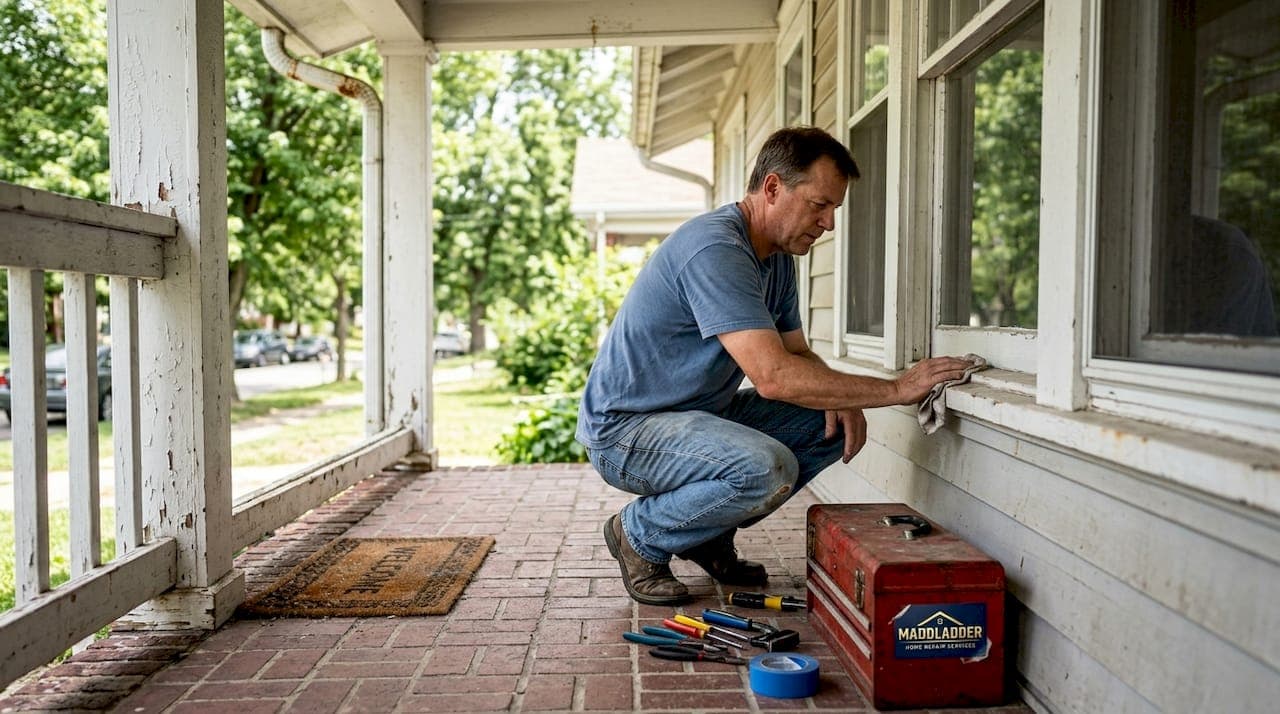
Most homeowners don't realize that the small crack in the caulk around the tub or the sticky door that won't close right are the early warnings of much bigger problems. Left alone, these minor issues quietly grow into water damage, structural rot, or safety hazards that cost thousands to fix. General home repair covers the minor fixes and maintenance that stop those small problems before they spiral. For Kansas City homeowners dealing with everything from brutal winters to humid summers, knowing what general home repair includes, what it costs, and when to call a pro is one of the smartest things you can do for your property.
Table of Contents
- Understanding general home repair: Basics and scope
- Most common home repairs and installations in Kansas City
- How general home repair prevents major problems
- Limits and best practices: Staying safe and cost-smart
- Expert perspective: What most homeowners miss about general home repair
- Simplify your Kansas City home repairs with trusted experts
- Frequently asked questions
Key Takeaways
| Point | Details |
|---|---|
| General repair defined | General home repair includes small fixes, maintenance, and installations that keep your property safe and functional. |
| Prevention saves money | Timely repairs and seasonal maintenance can prevent thousands in major repairs down the road. |
| Know your limits | Handymen handle non-structural jobs, but licensed pros are required for plumbing, electrical, or complex projects in Kansas City. |
| Budget and document | Set aside 1% of home value per year and keep records to maximize resale value. |
Understanding general home repair: Basics and scope
General home repair is not a vague catch-all. It has a clear definition: minor repairs, routine maintenance, and basic installations that restore function or safety without requiring major permits or licensed trade work. Think patching a hole in drywall, fixing a leaky faucet, replacing weatherstripping, or recaulking a shower. These are the everyday tasks that keep a home running smoothly.
According to typical services explained, general home repair covers jobs that restore functionality, ensure safety, and prevent bigger issues. A skilled handyman handles most of these tasks efficiently and affordably. But there's an important line between what a handyman does and what a licensed specialist must do.
Here's a quick breakdown of what falls inside and outside general home repair:
- Inside general repair: Drywall patching, caulking, door and window adjustments, minor plumbing (like replacing a faucet), fixture replacements, gutter cleaning, grab bar installation, furniture assembly, and smart home device setup
- Outside general repair: Major electrical rewiring, HVAC installation, load-bearing structural changes, full bathroom or kitchen remodels, and gas line work
In Kansas City specifically, weather plays a big role in what repairs come up most often. The freeze-thaw cycle cracks caulk and damages exterior paint. High humidity warps wood doors and window frames. Severe spring storms stress gutters and rooflines. A handyman who understands local conditions will know to check these areas first and prioritize repairs that protect against Kansas City's specific climate risks.
Knowing licensed handyman requirements in Missouri also matters. Some jobs that seem minor, like certain electrical outlet replacements, may still require a licensed electrician depending on local code. Always verify before you start.
"A handyman who knows Kansas City's weather patterns is worth twice as much as one who doesn't. Local knowledge changes everything about which repairs matter most."
Pro Tip: Before hiring anyone, confirm they carry general liability insurance and understand Kansas City's climate-related repair priorities. It protects you and guarantees the work holds up through the seasons.
With the basics in mind, next let's get specific about the most common types of general home repairs Kansas City homeowners find most useful.
Most common home repairs and installations in Kansas City
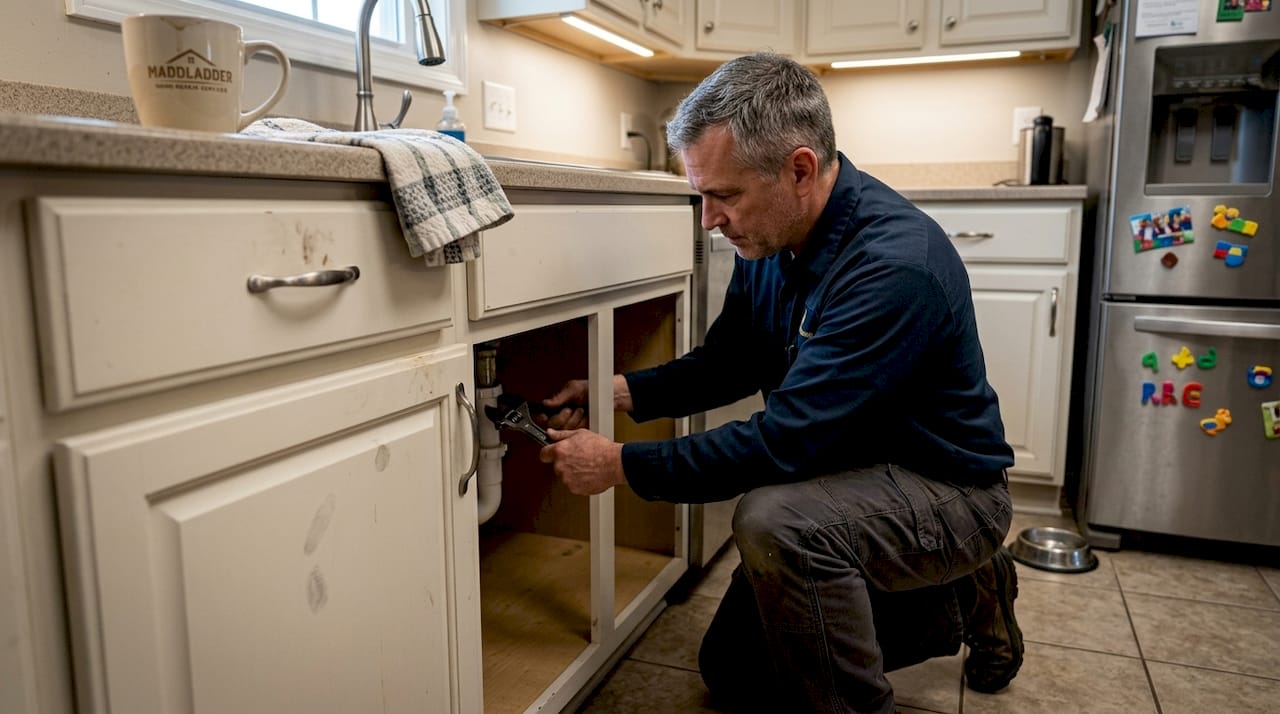
Knowing what repairs come up most often helps you budget smarter and act faster. Common services include fixing faucets ($100 to $500), patching drywall, cleaning gutters, and securing railings. These aren't glamorous jobs, but they protect your home's value and keep your family safe.
Here's a table of the most frequently requested repairs in the Kansas City area with typical price ranges:
| Repair or installation | Typical cost range |
|---|---|
| Leaky faucet repair | $100 to $500 |
| Drywall patch (small to medium) | $75 to $300 |
| Gutter cleaning | $100 to $250 |
| Caulking (bath, windows, exterior) | $75 to $200 |
| Door or window weatherstripping | $80 to $200 |
| Grab bar installation | $100 to $300 |
| Smart thermostat installation | $100 to $250 |
| Exterior paint touch-up | $150 to $400 |
| Toilet running repair | $75 to $200 |
| Ceiling fan replacement | $100 to $300 |
Preventative repairs are where the real savings live. Homeowners who stay ahead of maintenance avoid the compounding costs of neglect. A $150 caulking job today prevents a $3,000 water damage repair next year. That math adds up fast over a decade of homeownership.
Beyond repairs, handymen handle a wide range of installations that improve comfort and safety:
- Smart home upgrades like thermostats, video doorbells, and security cameras
- Accessibility additions including grab bars, handrails, and threshold ramps
- Fixture swaps such as light fixtures, faucets, and cabinet hardware
- Furniture assembly for flat-pack items
- Minor plumbing fixes like supply line replacements and shut-off valve swaps
If you're unsure whether a specific job qualifies, check out our drywall repair checklist or browse safety upgrades that add real value. For a broader look at what professional handyman repair services typically cover, external resources can help you compare.
Now that you know the main repair types, discover how the right approach and techniques make all the difference, from prevention to sequencing and value.
How general home repair prevents major problems
Reactive repairs are expensive. You wait until something breaks, then scramble to fix it under pressure, often paying emergency rates and dealing with collateral damage. Preventative maintenance flips that script entirely.
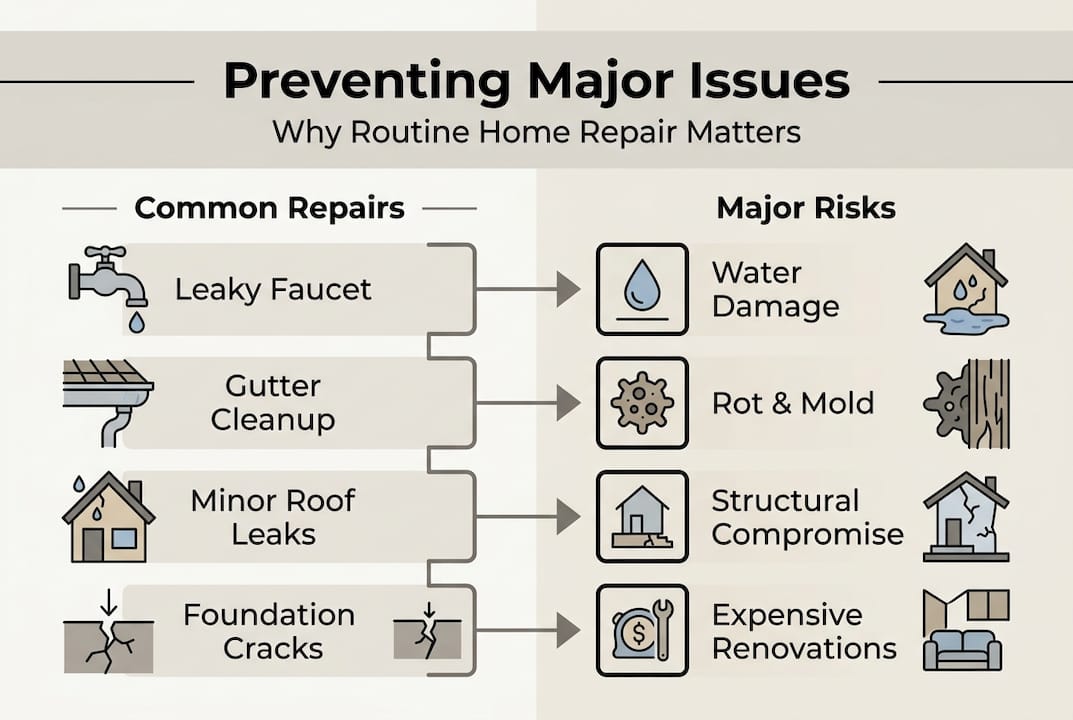
Recaulking and gutter cleanup prevent the root causes of 60 to 80% of costly issues like rot and water intrusion. That's not a small number. It means the majority of expensive home repairs are avoidable with consistent, low-cost upkeep.
Here's a side-by-side look at what reactive versus preventative approaches actually cost you:
| Factor | Reactive repair | Preventative maintenance |
|---|---|---|
| Average cost | High (emergency rates apply) | Low (scheduled, planned) |
| Disruption to daily life | Significant | Minimal |
| Impact on property value | Neutral or negative | Positive |
| Stress level | High | Low |
| Long-term savings | None | Substantial |
For Kansas City homeowners, a seasonal checklist makes preventative maintenance manageable. Here's a practical sequence to follow:
- Spring: Inspect gutters after winter debris, check exterior caulking for cracks, test smoke and carbon monoxide detectors, look for frost heave damage around doors and steps
- Summer: Touch up exterior paint before humidity peaks, check window screens, inspect deck boards and railings for rot or loose fasteners
- Fall: Clean gutters before leaves pile up, re-caulk windows and doors before cold sets in, service HVAC filters, check weatherstripping
- Winter: Monitor for ice dams on rooflines, check pipe insulation in unheated spaces, test sump pump before spring thaw
One technique that separates quality repairs from temporary patches is sequencing. Always fix exterior issues before interior ones. If you patch drywall before fixing the roof leak that caused it, you're just redoing work. Exterior integrity comes first, then interior finishing.
These habits also boost value with maintenance over time and align with the latest home repair trends that buyers and appraisers notice. For more on why handyman service benefits extend beyond the immediate fix, the logic is consistent: small, regular investments protect large assets.
Pro Tip: Before calling anyone, spend 10 minutes diagnosing the root cause. A running toilet might be a flapper, a fill valve, or a cracked float. Knowing which saves you money and speeds up the repair.
Prevention is powerful, but it pays to understand the boundaries of handyman work. When a job turns complex or risky, local rules and best practices come into play.
Limits and best practices: Staying safe and cost-smart
Not every home repair belongs in a handyman's toolbox. Understanding the limits protects you legally, financially, and physically. Handymen are limited to low-value, non-structural jobs. Major plumbing, electrical, or structural work requires licensed pros.
Here's where the clear boundaries sit:
- Handyman territory: Patching drywall, replacing fixtures, minor plumbing (faucets, supply lines), caulking, painting, grab bar installation, smart device setup, furniture assembly
- Licensed trade required: Panel upgrades, new circuit installation, gas line work, load-bearing wall removal, full bathroom plumbing rough-in, HVAC system replacement
- Gray zone (verify locally): Toilet replacement, water heater swaps, outlet additions (depends on Kansas City jurisdiction and job scope)
Kansas City has specific code considerations worth knowing. Missouri generally allows handymen to perform repairs under a certain dollar threshold without a contractor's license, but the rules vary by municipality. Overland Park, Lee's Summit, and Kansas City proper may each have slightly different requirements. When in doubt, ask your handyman to confirm the local rule before starting.
Insurance is non-negotiable. If an uninsured worker gets hurt on your property, you could be liable. Always ask for proof of general liability coverage before any work begins.
For DIY versus hiring decisions, the rule is simple. Basic cosmetic patching, painting, or fixture swaps are reasonable DIY projects if you're comfortable. Anything involving safety, like grab bars that must hold body weight, or anything near water or electricity, is worth hiring out. The cost of a mistake far exceeds the cost of a pro.
Saving on home repairs is smart, but not at the expense of safety or code compliance. Also explore accessibility upgrades and when to hire a licensed pro for more guidance on making the right call.
Pro Tip: For any job over $500, get two or three quotes and document everything in writing. Keep a simple home repair log with dates, costs, and contractor names. It's invaluable at resale.
By knowing when to handle or outsource repairs, you protect your home and maximize value. Here's what decades in the home repair field reveal about making the smartest choices.
Expert perspective: What most homeowners miss about general home repair
Most people treat home repair as a pure expense. Something breaks, money goes out, nothing comes back. That framing is wrong, and it leads to bad decisions.
The homeowners who come out ahead financially are the ones who treat repairs as an annual investment plan. They keep a simple log of every fix, every inspection, every upgrade. When it comes time to sell, that documentation signals to buyers that the home was cared for. It reduces negotiation friction and often supports a higher asking price.
There's also what we call the 24-hour rule. When you spot a repair, don't ignore it and don't panic. Give yourself 24 hours to assess whether it's urgent, whether it's DIY-able, and whether it connects to a bigger pattern. A single crack in caulk is minor. Three cracks in three different spots near the same wall? That's a pattern worth investigating.
The uncomfortable truth is that most major home repair bills are self-inflicted through delay. The upgrades that build equity are rarely dramatic renovations. They're consistent, boring maintenance done on schedule. That's the real secret.
Think of your home like a vehicle. You wouldn't skip oil changes and then act surprised when the engine fails. Your house deserves the same logic.
Simplify your Kansas City home repairs with trusted experts
Understanding general home repair is the first step. Acting on it is where the real value shows up. At MaddLadder, we make it easy for Kansas City homeowners to stay ahead of repairs without the stress of finding reliable help.

Our licensed and insured team handles everything from drywall patches and fixture replacements to smart home upgrades and accessibility installs. We offer free estimates, transparent pricing starting at $75/hour, and flexible maintenance plans designed for homeowners, landlords, and property managers alike. Whether you need a one-time fix or ongoing support, explore our full range of Kansas City handyman services or visit MaddLadder home repair to schedule your free estimate today.
Frequently asked questions
What qualifies as general home repair?
General home repairs are minor fixes and maintenance that restore function or safety without requiring specialty licenses or permits. Examples include patching drywall, fixing leaky faucets, replacing fixtures, and recaulking windows.
How much should I budget annually for general home repairs?
Experts recommend setting aside between $6,000 and $11,000 per year, or roughly 1% of your home's value, to cover routine repairs and maintenance costs.
When should I hire a licensed pro instead of a handyman?
Always hire licensed professionals for major plumbing, electrical, HVAC, or structural repairs. Handymen are best for non-structural, lower-value tasks that don't require trade licenses.
What seasonal repairs are most important in Kansas City?
Key seasonal tasks include gutter cleaning, caulking, and HVAC checks in both spring and fall to guard against Kansas City's freeze-thaw cycles and storm damage.