
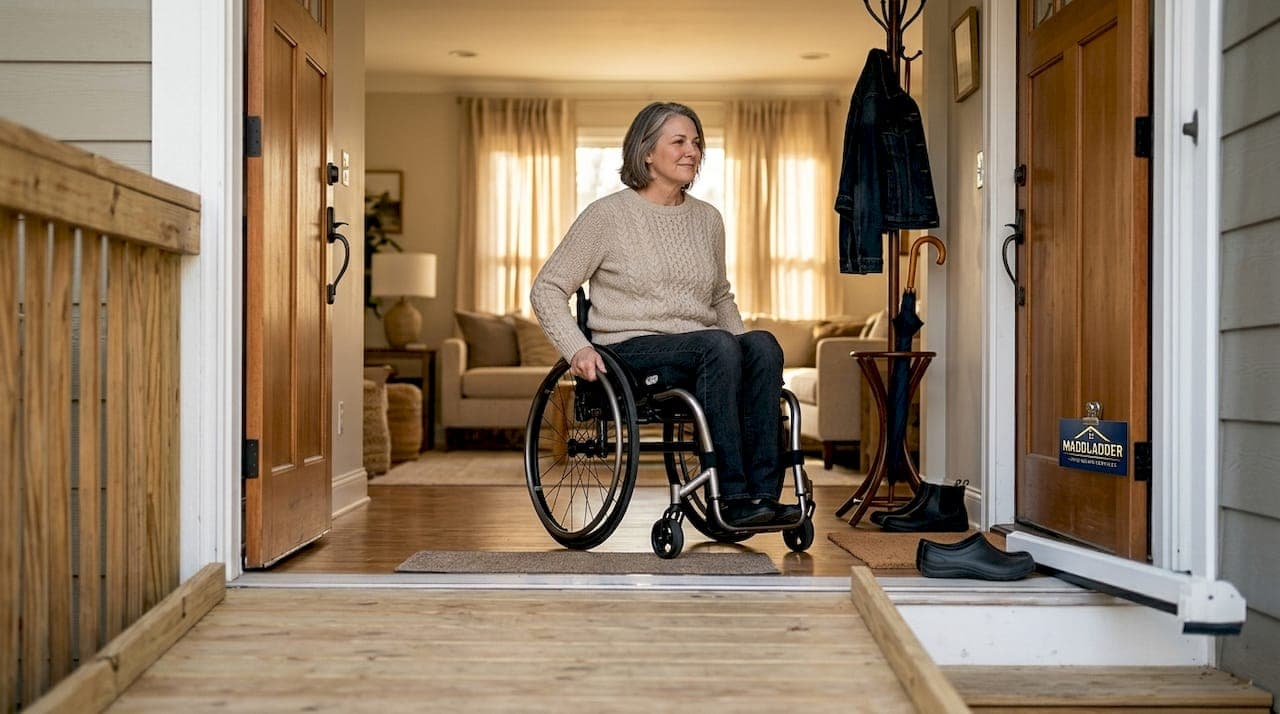
Choosing the right accessibility upgrades for your Kansas City home feels like a maze. You want your home safer and more functional, but between grab bars, ramps, lever handles, and bathroom remodels, it is easy to second-guess every decision. Get it wrong and you risk a fall, a code issue, or wasted money on a fix that does not hold up. Get it right and you protect the people you care about while adding real long-term value to your property. This guide walks you through the most practical upgrades, what each one costs, and how to decide what fits your home and budget.
Table of Contents
- How to evaluate accessibility upgrades for your home
- Grab bars: Placement, types, and installation tips
- Wheelchair ramps: Materials, codes, and choosing what fits
- Other smart accessibility upgrades to consider
- Kansas City resources and cost-saving strategies
- Our perspective: The truth about cost versus safety
- Get expert help with accessibility upgrades
- Frequently asked questions
Key Takeaways
| Point | Details |
|---|---|
| Start with bathrooms | Grab bars are one of the most effective, affordable upgrades for preventing falls. |
| Follow safety guidelines | ADA principles are best practice for ramps and bars, even if not required in homes. |
| Plan for the long term | Investing in permanent solutions pays off through safety, comfort, and reduced care costs. |
| Tap local resources | Kansas City offers reliable installers and financial support for accessibility improvements. |
How to evaluate accessibility upgrades for your home
Before you buy a single grab bar or price out a ramp, you need a clear framework. Not every upgrade makes sense for every home. The right choice depends on who lives there, what risks exist today, and what your property can support structurally and financially.
Start with these key criteria:
- Safety risks first. Where are the most likely fall or access hazards? Bathrooms and entryways top the list for most homes.
- Resident needs. A 70-year-old with arthritis needs different upgrades than a wheelchair user or someone recovering from surgery.
- Property type. Rental properties carry different priorities than owner-occupied homes. Landlords should think about liability and tenant retention.
- Budget and ROI. Upgrading home accessibility is not just a safety investment. It often reduces long-term care costs significantly. Think about project value and savings before dismissing an upgrade as too expensive.
- Room-by-room priority. Bathrooms come first, then entryways, then stairs and common areas.
On the code side, ADA guidelines are best practices for residential upgrades but are not legally required in private homes. That said, following them protects you from liability and ensures the upgrade actually works as intended.
Know when to hire a pro. Grab bars need to anchor into studs or use proper toggle systems. Ramps must meet slope requirements. Skipping professional installation on these items is where most homeowners run into trouble.
Pro Tip: Before spending on big upgrades, schedule a local mobility or occupational therapy assessment. A certified professional can identify the highest-priority changes for your specific household, saving you from guessing.
Grab bars: Placement, types, and installation tips
Grab bars are the single most cost-effective accessibility upgrade you can make. They prevent falls, they are relatively inexpensive, and when installed correctly, they last decades. But placement and installation method matter enormously.
Here are the most important installation steps in order:
- Identify the correct locations: beside the toilet (side and rear), inside the shower or tub, and at the shower entry point.
- Locate wall studs using a stud finder. Bars must anchor into studs or use heavy-duty toggle anchors rated for at least 250 lbs.
- Mount bars at 33 to 36 inches from the floor for standard adult height, adjusting slightly for the specific user.
- Use stainless steel or chrome hardware with a non-slip grip surface.
- Test the bar by applying full body weight before considering the job done.
Here is a quick comparison of grab bar types:
| Type | Best use | Reliability | Notes |
|---|---|---|---|
| Straight bar | Shower walls, toilet side | High | Most versatile option |
| Angled bar | Tub entry, corner placement | High | Helps with sitting and standing |
| Decorative bar | Guest bathrooms, rental units | High | Looks like a towel bar |
| Suction cup bar | Temporary or travel use | Low | Not for full weight support |
Never rely on suction cup grab bars as a permanent safety solution. They can release without warning and are not rated for full body weight.
For rental property safety, decorative grab bars are a smart choice. Tenants often resist visible medical equipment, but a stylish bar blends into the bathroom while still providing real support. Supply and installation typically runs $150 to $400 per bar depending on wall conditions and hardware quality. These are also strong safety upgrade strategies for landlords managing multiple units.
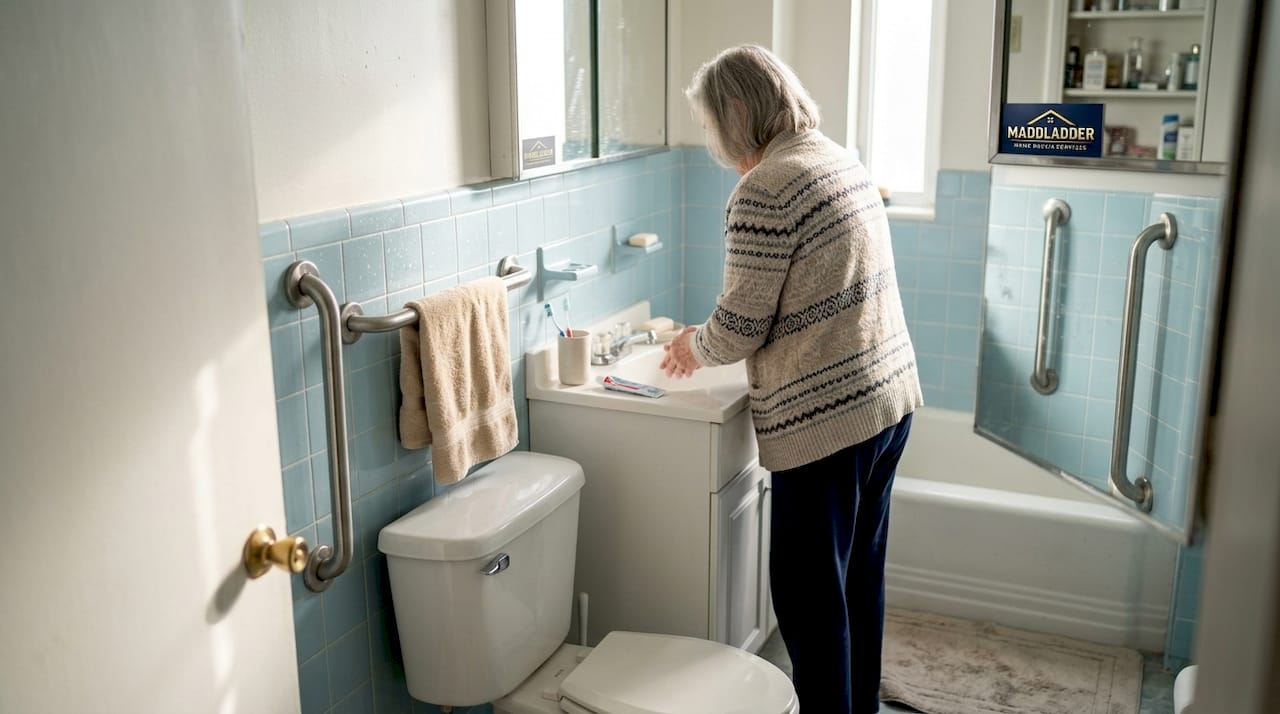
Pro Tip: Install blocking (a solid wood panel behind drywall) in bathroom walls during any renovation. It costs almost nothing upfront and makes future grab bar installation fast and solid anywhere on that wall.
Wheelchair ramps: Materials, codes, and choosing what fits
Once your bathroom is covered, safe home entry and exit becomes the next priority. A wheelchair ramp is not a one-size-fits-all product. The right choice depends on how permanent the need is, your home's entry height, and your budget.
Here is how the three main ramp types compare:
| Ramp type | Cost range | Best for | Durability |
|---|---|---|---|
| Portable/folding | $100 to $800 | Temporary needs, renters | Moderate |
| Modular aluminum | $1,500 to $5,000 | Long-term but removable | High |
| Permanent concrete | $3,000 to $8,000+ | Full-time wheelchair use | Very high |
For slope and safety, Kansas City ramp guidelines follow the 1:12 maximum slope standard, meaning one inch of rise for every 12 inches of ramp length. Handrails are required on both sides for ramps over 6 inches high. Cross-slope (side-to-side tilt) must stay under 2 percent to prevent tipping.
Material choices each have trade-offs:
- Wood is affordable and blends with most homes, but it requires regular sealing and can become slippery when wet.
- Aluminum is lightweight, low maintenance, and weather resistant. It is the most popular choice for modular systems in Kansas City.
- Concrete is the most permanent and durable option, but it cannot be removed and requires a licensed contractor for proper installation.
For more guidance on slope and handrail specifics, the ADA ramp guidance resource is a reliable reference even for residential projects.
Installing a ramp at home can save $5,000 or more per year compared to assisted living or in-home care costs. For homeowners weighing whether the cost is worth it, that math is hard to ignore. If you are exploring Kansas City service alternatives for ramp installation, comparing local providers on experience and code knowledge is essential.
Other smart accessibility upgrades to consider
Grab bars and ramps are the foundation, but a truly accessible home layers in several smaller upgrades that add up to a big difference in daily comfort and safety.
Here are the upgrades with the strongest impact-to-cost ratio:
- Lever door handles. Round knobs are nearly impossible for people with arthritis or limited grip strength. Lever handles cost $20 to $60 per door plus about $40 for installation. It is one of the fastest wins in any accessibility plan.
- Zero or low-step entries. Eliminating a single threshold step at the main entry can prevent falls for elderly residents and make wheelchair access possible.
- Non-slip flooring. Textured tiles, non-slip mats, and anti-slip coatings in bathrooms and kitchens reduce fall risk dramatically.
- Improved lighting. Motion-sensor lights in hallways, stairwells, and bathrooms reduce nighttime fall risk without requiring anyone to find a switch.
- Wider doorways. Standard 32-inch doorways block most wheelchairs. Widening to 36 inches opens the home to full mobility aid access.
- Curbless showers. Roll-in or zero-threshold showers eliminate the tub step entirely and are one of the highest-value smart home upgrades for aging-in-place.
- Comfort-height toilets. These sit 2 to 4 inches higher than standard, making sitting and standing much easier for people with limited leg strength.
Home modifications like lever handles, no-step entries, and improved lighting deliver strong ROI through falls prevention and aging-in-place savings. A full accessible bathroom remodel runs $3,000 to $25,000 depending on scope, but even small changes in the $200 to $500 range make a measurable difference.
Pro Tip: If you are remodeling any bathroom or hallway, ask your contractor or licensed handyman to install blocking in the walls at the same time. It adds almost no cost during a renovation but saves significant money if you add grab bars later.
Kansas City resources and cost-saving strategies
Knowing what upgrades to make is only half the challenge. Knowing where to get help and how to pay for it is just as important, especially in Kansas City where local resources vary widely.
Here are the main local providers and what they offer:
- Sage Restoration KC handles a wide range of accessibility installs, including ramps, grab bars, and bathroom modifications.
- Next Day Access Kansas City specializes in fast-turnaround mobility equipment and ramp installations.
- Lifeway Mobility focuses on stairlifts, ramps, and vertical platform lifts for more complex mobility needs.
- Hopebuilders KC is a nonprofit that provides free and low-cost home modifications for income-qualifying Kansas City residents. Their programs cover everything from grab bars to full ramp builds.
For homeowners who do not qualify for free programs, there are still financial options worth exploring. Some Medicare Advantage plans cover home modification costs. Veterans may qualify for grants through the VA's Specially Adapted Housing program. Missouri's MoRx and other state programs offer limited assistance for seniors and people with disabilities.
Tens of thousands of Kansas City installations have been completed by local specialists. Choosing a provider who knows local codes and home construction styles makes a real difference in quality and compliance.
For a full breakdown of what these upgrades cost nationally, the cost of accessibility upgrades guide from Angi is a useful benchmark. Pairing that with quotes from local upgrade services gives you the clearest picture of what to expect in Kansas City specifically.
Our perspective: The truth about cost versus safety
Here is something most articles will not tell you directly: the homeowners who spend the least on accessibility upgrades often end up spending the most in the long run.
We see it regularly in Kansas City. A homeowner skips professional grab bar installation to save $100. The bar pulls out of the wall six months later. Now there is a damaged wall, a potential injury, and a repair bill that costs more than the original job. Or someone buys a portable ramp that flexes under weight and creates a new hazard instead of solving one.
The smarter approach is to prioritize accessibility upgrades proactively, especially during any renovation when walls are already open. Blocking costs almost nothing mid-project. Widening a doorway during a remodel costs a fraction of what it costs as a standalone job.
Spending more upfront on quality hardware and proper installation is almost always the better financial decision over a two to five year horizon. Safety is the obvious reason. But avoiding repeat repairs, liability exposure for landlords, and the compounding cost of delayed action are equally compelling.
Get expert help with accessibility upgrades
Ready to make your home safer and more accessible? Knowing what to do is a great start, but getting it done right requires the right hands on the job.
MaddLadder provides professional accessibility upgrade services across the Kansas City metro area. From grab bar installation to ramp builds and full bathroom safety retrofits, our licensed team handles every detail. We offer free estimates, fast scheduling, and transparent pricing starting at $75/hour. Whether you need a single bar installed or a full property assessment, Kansas City accessibility services are ready when you are. Explore all upgrade services and see how straightforward it can be to get your home where it needs to be.
Frequently asked questions
What is the best place to install grab bars in a bathroom?
Install grab bars near the toilet, inside the shower or tub, and beside entry and exit points at a height of 33 to 36 inches from the floor for optimal support.
How much does a wheelchair ramp cost in Kansas City?
Wheelchair ramps range from $100 for short portable versions to $8,000 or more for permanent, code-compliant installs depending on material and entry height.
Are Kansas City homeowners required to follow ADA when upgrading for accessibility?
ADA is a recommended guideline for residential homes, not a legal requirement in most private property situations, though following it protects you from liability.
What are the most affordable accessibility upgrades?
Grab bars and lever door handles offer strong safety benefits at low cost, often under $200 including installation for a single location.
Where can I find help paying for home accessibility upgrades in Kansas City?
Local groups like Hopebuilders KC offer grants and discounted home modifications for income-qualifying residents, and some Medicare Advantage plans also cover certain upgrades.