
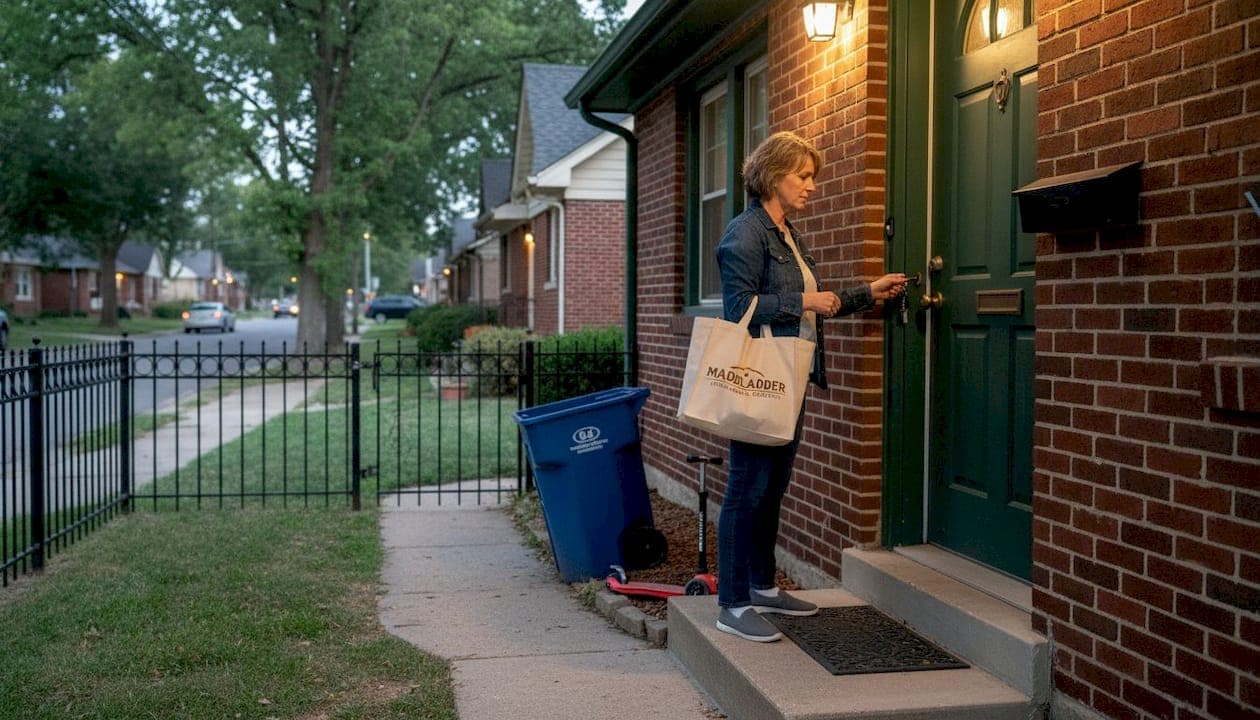
Most Kansas City homeowners assume their property is reasonably secure. But larceny rose 13% YTD in Kansas City even as violent crime declined, which means targeted property crime is quietly climbing while many residents feel falsely reassured. Safety upgrades are not just about deterring burglars. They protect your family, reduce liability, attract better tenants, and can lower your insurance premiums. Whether you own a single-family home in Overland Park or manage a multifamily building in Midtown, understanding what upgrades matter and why they matter is the first step toward a genuinely safer property.
Table of Contents
- Understanding the risks: Crime and liability in Kansas City
- The core benefits of upgrading home safety
- Top safety upgrades to consider for your property
- Meeting codes and compliance: What Kansas City owners need to know
- Get expert help with safety upgrades in Kansas City
- Frequently asked questions
Key Takeaways
| Point | Details |
|---|---|
| Property crime still common | Despite some declines, property crimes like larceny remain a real risk in Kansas City. |
| Layered upgrades deter crime | Homes with camera and alarm systems are much less likely to be targeted by burglars. |
| Compliance avoids legal issues | ADA and FHA rules mean accessibility upgrades protect against lawsuits and expand your tenant pool. |
| Insurance savings matter | Smart safety upgrades can qualify for discounts that help offset installation and monitoring fees. |
| Local experts simplify the process | Professional help ensures upgrades are effective, efficient, and fully code-compliant in Kansas City. |
Understanding the risks: Crime and liability in Kansas City
Kansas City's 2025 crime data tells a story that surprises most people. Violent crime dropped, which is good news. But larceny climbed 13% year over year, and burglaries remain a persistent concern across the metro. That gap between perception and reality is exactly where homeowners get caught off guard.
| Crime category | Trend (2024 to 2025) | Risk level |
|---|---|---|
| Violent crime | Decreased | Lower |
| Larceny | Up 13% YTD | High |
| Burglary | Persistent concern | Moderate to high |
| Property crime overall | Mixed | Elevated |
For property managers, the liability angle is just as important as the crime angle. If a tenant or visitor is injured on your property due to poor lighting, a broken lock, or an unsecured entry point, you could face legal exposure. Insurance companies are paying attention too. Homes without visible security measures often pay higher premiums and receive less favorable claim outcomes.
Even as overall crime dropped in Kansas City, targeted property crime persists. Complacency is the real vulnerability.
The good news is that awareness is growing. 3 in 5 Americans now have a home security system, which shows that homeowners across the country are taking this seriously. Kansas City residents are no exception. You can explore more context in this Kansas City crime and safety guide and see examples that boost value for your specific property type.
Here is what drives most homeowners to finally act:
- A neighbor gets burglarized and it hits close to home
- An insurance renewal comes with a premium increase
- A tenant requests better security as a lease condition
- A family member with mobility challenges moves in
Peace of mind is a real motivator, and it is completely valid. But the financial and legal reasons are just as compelling.
The core benefits of upgrading home safety
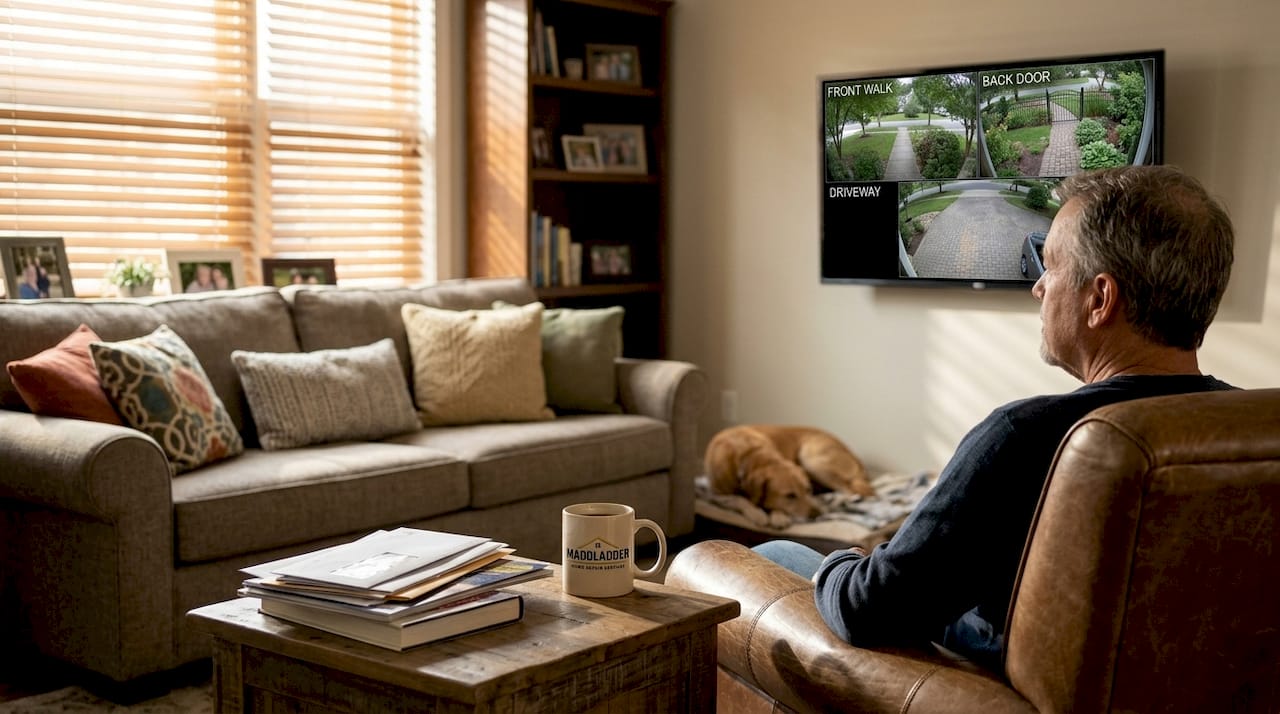
Safety upgrades do more than keep bad actors out. They create a layered environment where risk is reduced at multiple points simultaneously. 60% of burglars avoid homes with cameras, and 50% will abort a break-in attempt the moment they discover an active security system. That deterrence alone justifies the investment for most homeowners.
But the benefits go further than deterrence.
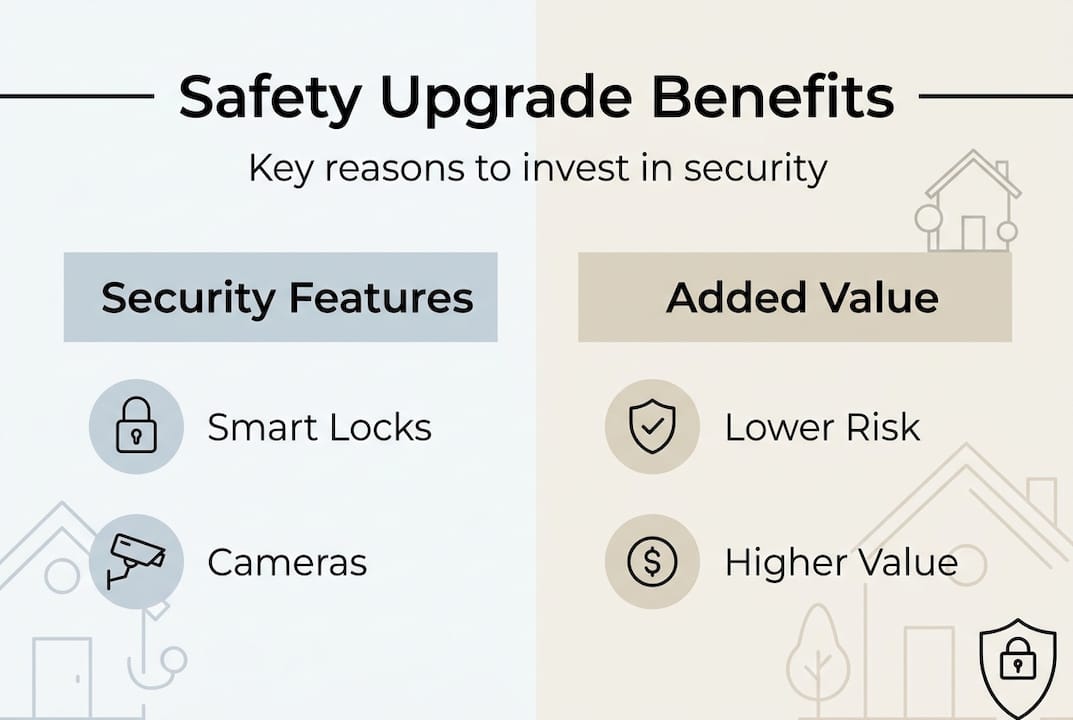
- Reduced insurance premiums. Many insurers offer discounts of 5% to 20% for verified security systems, monitored alarms, and smart locks.
- Higher property marketability. Tenants and buyers increasingly prioritize safety features when choosing a home.
- Faster emergency response. Connected systems can alert emergency services automatically, cutting response times significantly.
- Lower operating costs. Smart integrations reduce energy waste and allow remote monitoring without on-site staff.
Layered defense strategies are far more effective than relying on a single alarm system. Think of it like this: one lock on a door is a barrier, but cameras, motion lighting, a monitored alarm, and reinforced door frames together create a system that is genuinely hard to beat.
| Feature | Single alarm | Layered defense |
|---|---|---|
| Effectiveness | Moderate | High |
| Cost | Low to moderate | Moderate to high |
| Peace of mind | Partial | Strong |
| Insurance benefits | Minimal | Significant |
For property managers, smart security upgrades also reduce the need for frequent on-site visits. Remote access to cameras, locks, and alarms means you can manage multiple units from one dashboard. That is a real operational advantage. You can also review tech upgrades for property management that tenants actually value.
Pro Tip: The monthly cost of a monitored security system is often fully offset by the insurance discount you receive. Run the numbers with your insurer before assuming upgrades are too expensive.
Top safety upgrades to consider for your property
Not all upgrades are created equal. Some deliver outsized returns in deterrence and peace of mind, while others are more about compliance and long-term liability protection. Here is a practical sequence to follow:
- Cameras and exterior lighting. Start here. Visible cameras and motion-activated lights are the fastest way to deter opportunistic crime. Place cameras at entry points, driveways, and any blind spots around the property.
- Layered locks and door reinforcement. Deadbolts, smart locks, and reinforced strike plates work together. A smart lock alone is not enough if the door frame splinters with one kick.
- Connected alarm systems. Move beyond a basic siren. A monitored system that contacts emergency services automatically is worth the monthly fee, especially for rental properties where you are not always on-site.
- Smoke and carbon monoxide detectors. These are non-negotiable. Kansas City code requires working detectors in all residential units. Interconnected detectors that alert every room simultaneously are the current best practice.
- ADA accessibility upgrades. Grab bars in bathrooms, ramps at entries, and accessible parking are not just about compliance. They expand your tenant pool and reduce fall-related liability significantly.
Connected building systems can cut incidents and operating costs by over 20%, which is a compelling number for anyone managing more than one unit. Integration between cameras, alarms, access control, and lighting creates a system that is smarter than the sum of its parts.
Pro Tip: For multifamily buildings, integrated systems that connect all units to a central dashboard reduce both safety incidents and maintenance response times. Tenants feel safer, and you spend less time reacting to problems.
Accessibility upgrades also expand your market and reduce liability in ways that purely security-focused upgrades do not. An aging population and growing awareness of disability rights mean that accessible properties are increasingly in demand. You can also explore top home safety trends to see what buyers and renters are prioritizing right now.
Meeting codes and compliance: What Kansas City owners need to know
Compliance is not optional, and it is not as complicated as many owners fear. The two main frameworks you need to understand are the Americans with Disabilities Act (ADA) and the Fair Housing Act (FHA).
The ADA applies primarily to places of public accommodation and commercial facilities. The FHA applies to most residential rental properties with four or more units. Together, they require barrier removal and full accessibility compliance for new construction, while older properties must make what the law calls "readily achievable" improvements.
"Readily achievable" means changes that are easy to accomplish without significant difficulty or expense. Installing a grab bar, adding a ramp, or widening a doorway often qualifies. You do not need to gut-renovate a 1940s bungalow to comply, but you do need to make reasonable accommodations when a tenant requests them.
Historic buildings get some flexibility, but not a free pass. If your property is listed on the National Register of Historic Places, you can apply for alternative compliance methods that preserve the building's character while still improving accessibility. The key is documenting your efforts and working with a knowledgeable contractor.
Here are the most common compliance mistakes Kansas City owners make:
- Ignoring tenant accommodation requests, which can trigger FHA complaints
- Assuming older buildings are automatically exempt from all accessibility rules
- Installing grab bars without verifying they are anchored to wall studs (a safety issue, not just a code issue)
- Skipping permit pulls for structural changes like ramps or doorway widening
- Overlooking parking lot accessibility, which is one of the most frequently cited violations
For a deeper look at what these upgrades involve, the ADA upgrades explained resource walks through the most common projects and what to expect from each one.
Get expert help with safety upgrades in Kansas City
Knowing what to upgrade is one thing. Getting it done correctly, on budget, and up to code is another. That is where having a reliable local partner makes a real difference.
At MaddLadder, we work with Kansas City homeowners and property managers every day on exactly these kinds of projects. From installing grab bars and exterior cameras to reinforcing entry doors and setting up smart alarm systems, our team handles the details so you do not have to guess. We offer free estimates, fast scheduling, and transparent pricing starting at $75/hour. If you are ready to take the next step, explore our safety upgrade services and find out how straightforward protecting your property can be. One call or message is all it takes to get started.
Frequently asked questions
Do safety upgrades increase my home's value in Kansas City?
Security systems boost marketability and often qualify you for insurance discounts, but they may not fully recoup their installation cost in a direct resale appraisal. The real return comes from faster sales, better tenant retention, and lower ongoing costs.
What's the most effective type of home safety upgrade?
Layered defense strategies that combine cameras, monitored alarms, reinforced locks, and motion lighting offer far greater deterrence than any single system. The combination is what makes the difference.
Are accessibility upgrades required for all buildings in Kansas City?
ADA and FHA require accessibility for new construction and mandate "readily achievable" barrier removal for existing properties. Older buildings are not fully exempt, especially when tenants request reasonable accommodations.
Can safety upgrades lower my insurance premiums?
Yes. Security systems qualify for insurance discounts with most major carriers, and the savings can offset monitoring fees over time. Ask your insurer specifically about discounts for monitored systems and smart locks.
What's a quick way to get started with safety upgrades?
Begin with exterior cameras, upgraded door locks, and motion-activated lighting since these three changes deliver immediate deterrence with minimal disruption. Then schedule a full property assessment with a local expert to identify what else needs attention.