
TL;DR:
- Landlords in Kansas City are legally responsible for maintaining safe and functional electrical systems in rental units. A methodical approach, including proper documentation, use of the right tools, permits, and professional help when needed, ensures tenant safety and legal compliance. Consistently following repair workflows and safety standards builds tenant trust and protects investment value over time.
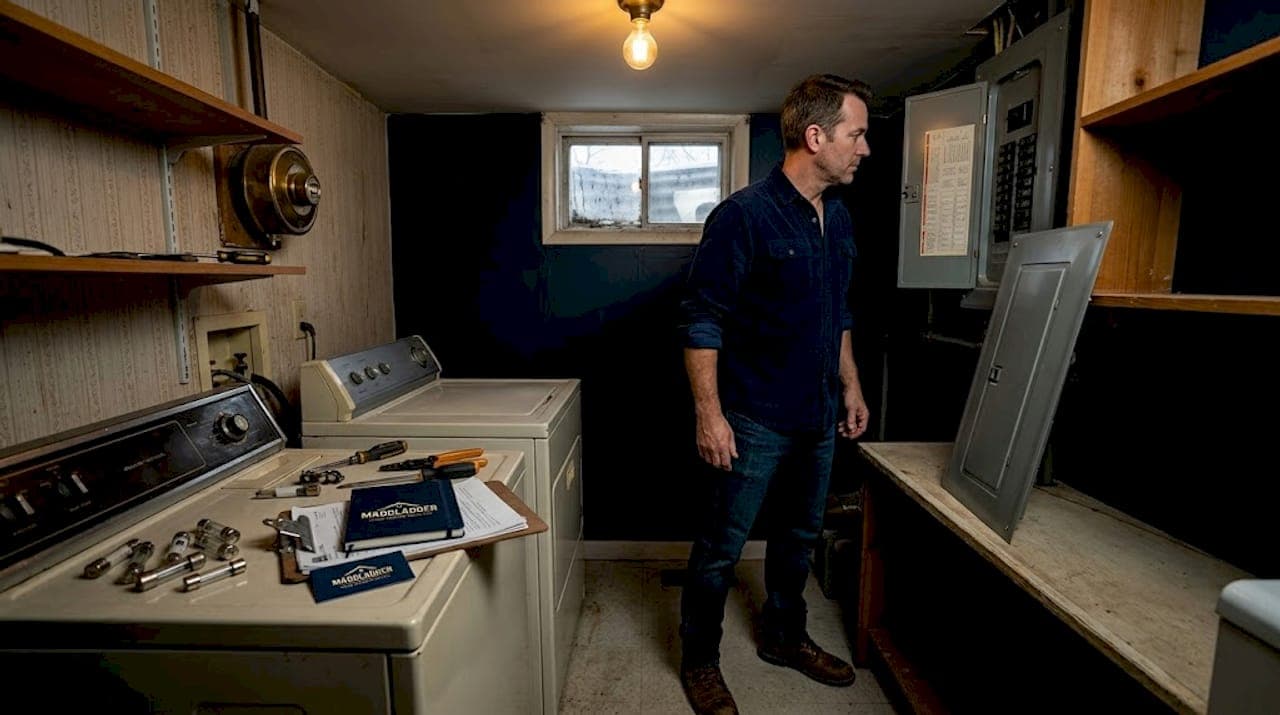
It's 9 p.m. on a Tuesday and your tenant texts you: "No power in the kitchen, and the lights are flickering in the hall." That moment tests every landlord's preparation. In Kansas City, electrical issues aren't just inconveniences; they're legal responsibilities that directly affect habitability, tenant safety, and your exposure to liability. This guide walks you through the exact steps to handle electrical repairs correctly, from knowing your legal duties to running a repeatable repair workflow, so you're never caught flat-footed when the next issue surfaces.
Table of Contents
- Know your legal obligations and safety priorities
- Essential tools, parts, and permits checklist
- Step-by-step electrical repair workflow for landlords
- Common electrical issues and troubleshooting strategies
- Passing inspections: Code compliance for repairs and upgrades
- Our take: Why methodical electrical repair protects landlords and tenants
- Get help or upgrades with MaddLadder
- Frequently asked questions
Key Takeaways
| Point | Details |
|---|---|
| Landlord legal duties | You must keep all rental property electrical systems safe and operational to meet Kansas law. |
| Prep and permit essentials | Know when professional help and permits are required for different types of electrical repairs. |
| Workflow for safe repairs | Follow a clear triage and response plan for all issues, and always address emergencies through professionals. |
| Common troubleshooting steps | Simple outlet or breaker problems can be checked safely, but stop when in doubt and call an expert. |
| Stay inspection ready | Document work, comply with code, and maintain electrical safety to pass rental inspections and protect your property. |
Know your legal obligations and safety priorities
To put these repairs in context, it's vital to start with what you're required to do and why.
Kansas landlords operate under clear statutory expectations. Kansas law requires landlords to maintain, in good and safe working order, all electrical appliances and systems supplied or required in a rental unit. This isn't a gray area. Whether the issue involves a faulty outlet, exposed wiring, or a panel that trips repeatedly, you're on the hook to address it promptly. Kansas habitability standards explicitly include electrical safety as a core requirement, not a cosmetic nicety.
What counts as an electrical hazard you must address? Here are the most common ones landlords encounter:
- Outlets that are dead, sparking, or have discolored faceplates
- Breakers that trip repeatedly without explanation
- Exposed or frayed wiring anywhere in the unit
- Missing or broken outlet covers, especially in kitchens and bathrooms
- Non-functional smoke detectors or CO alarms tied to electrical supply
- Flickering lights that could signal loose connections or overloaded circuits
- Outdoor or garage lighting that stops working, especially in winter months
Failing to act on these issues puts your tenants at real risk of fire or electrocution, and puts you at risk of code violations, habitability disputes, and potential civil liability. Kansas City courts and inspectors take electrical neglect seriously, and tenants have legal remedies including rent withholding and repair-and-deduct if landlords don't respond in a timely way. Review MaddLadder's Kansas City safety upgrades guide to see how proactive investments protect you, and brush up on what qualifies as a routine electrical repair before you touch anything.
Remember: Electrical safety isn't a landlord preference. It's a legal floor. Anything below it puts both your tenants and your investment at serious risk.
Essential tools, parts, and permits checklist
With legal obligations in mind, landlords need the right prep and resources before starting any repair.
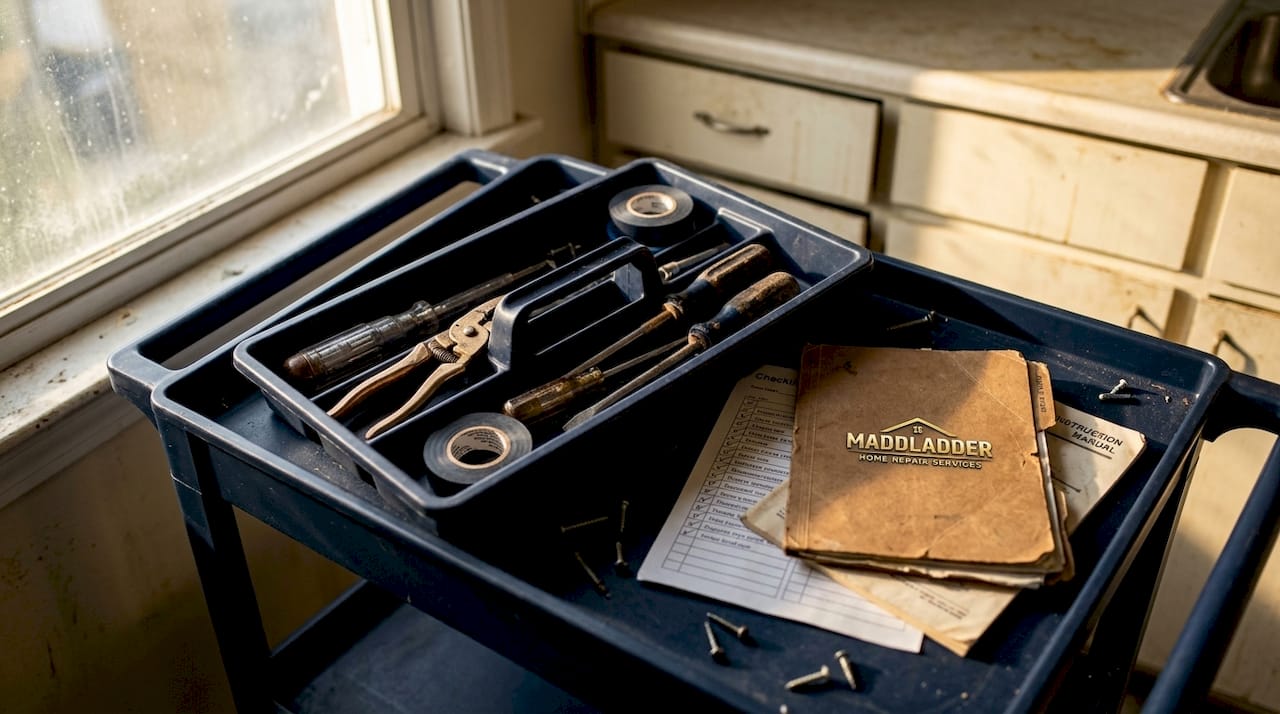
Preparation separates landlords who scramble from those who respond confidently. Keeping a small inventory of tools and knowing your permit requirements saves hours when a tenant reports an issue. Here's a practical breakdown:
| Item or task | DIY-friendly | Requires a licensed pro |
|---|---|---|
| Replacing a standard outlet or switch | Yes | No (check local rules) |
| Resetting a tripped breaker | Yes | No |
| Replacing a light fixture (like-for-like) | Yes | No |
| Installing a GFCI outlet | Yes (with care) | Recommended |
| Adding a new circuit | No | Yes |
| Upgrading the electrical panel | No | Yes, always |
| Wiring new construction or additions | No | Yes |
| Troubleshooting persistent breaker trips | No | Yes |
For your supply kit, keep these basics on hand in every rental property or your maintenance vehicle:
- Non-contact voltage tester (never skip this)
- Flathead and Phillips screwdrivers
- Needle-nose pliers and wire strippers
- Spare GFCI outlets (15A and 20A)
- Standard outlet and switch covers in white and almond
- Circuit breaker identifier tool
- Flashlight or headlamp (you'll be working in dim panels)
- Electrical tape and wire nuts
Ongoing panel inspections and verifying smoke and CO detectors are functional should be scheduled at least once a year, not just when something breaks. Build it into your lease renewal checklist.
Permits are a real issue many landlords underestimate. Kansas City electrical permit rules are clear that adding new circuits or upgrading a panel triggers a permit requirement, while swapping a like-for-like outlet or fixture may be exempt. The keyword is "may." Local authority jurisdiction matters, and the rules in Kansas City, KS differ from those in neighboring suburbs like Overland Park or Lee's Summit. Always verify with your local building department before starting any work that goes beyond a simple swap.
Pro Tip: Keep a folder for each rental property with the panel diagram, permit history, and a record of any licensed electrician work. When an inspector or tenant asks for documentation, you'll have it ready within seconds.
Check the step-by-step KC repairs guide and get familiar with the full range of minor electrical repairs that landlords can safely manage.
Step-by-step electrical repair workflow for landlords
Once you're prepared, use this workflow when an electrical issue is reported or identified.
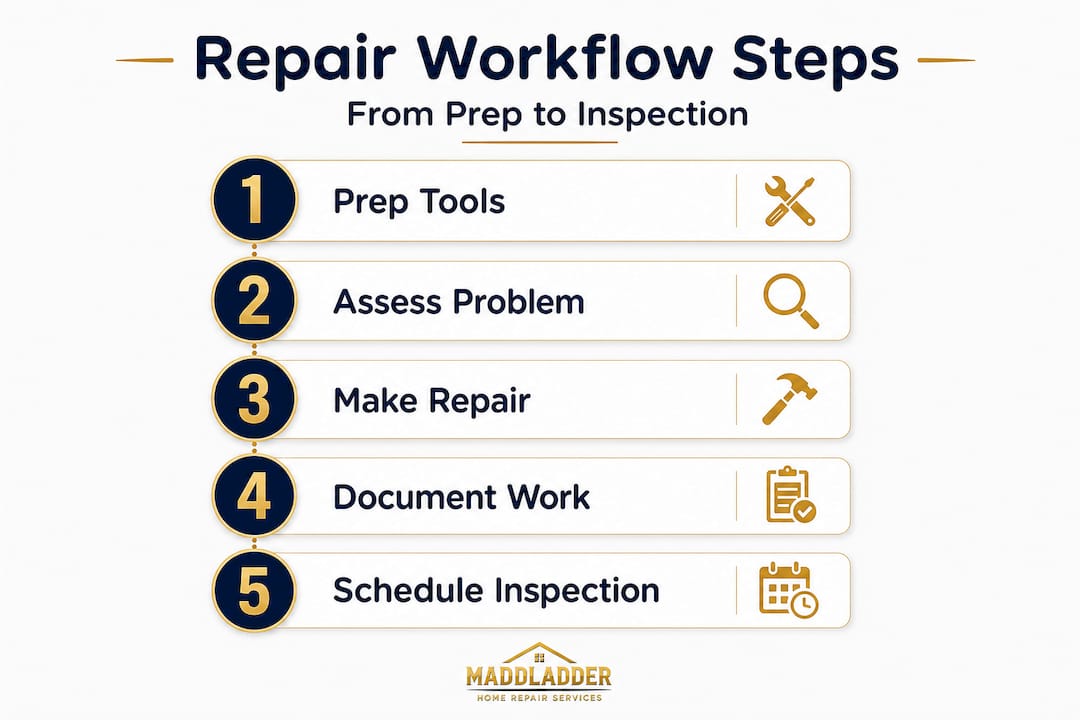
A repeatable process is what separates reactive landlords from professional property managers. When a tenant reports an electrical problem, don't improvise. Walk through these steps every time:
- Triage the issue immediately. Ask the tenant whether there's any smell of burning, visible sparks, or smoke. If yes, that is an emergency. Instruct them not to use the area and call a licensed electrician right away.
- Confirm power safety. If no emergency signs are present, identify whether the issue is isolated (one outlet, one circuit) or affects multiple areas. Never send a tenant to open a panel themselves.
- Disconnect if needed. If the problem circuit is identifiable, turn off that breaker until the repair is made. Tag it clearly so neither the tenant nor another person flips it back on by accident.
- Document everything. Take photos of the reported issue before touching anything. Note the time of the report and when you responded. This record protects you legally.
- Coordinate with your tenant. Give them a realistic timeframe for repair. If a unit is partially without power, communicate which areas are affected and set expectations clearly.
- Dispatch a pro when the scope requires it. When in doubt, err toward professional repair rather than DIY. The cost of a licensed electrician visit is far lower than the cost of a failed inspection or a tenant injury.
- Close the loop. After repair, document that the issue was resolved, confirm with the tenant in writing, and update your property maintenance log.
| Action | Landlord or DIY | Licensed electrician required |
|---|---|---|
| Resetting a GFCI or breaker | Landlord | No |
| Replacing a dead outlet | DIY with care | Recommended for older wiring |
| Diagnosing flickering lights | Initial triage only | Yes for root cause |
| Any panel or main feed work | No | Always |
| Complete power loss in unit | Emergency call | Yes, immediately |
Major electrical failures in occupied units must be treated as emergency maintenance affecting tenant safety, and professional repair should be arranged as fast as possible. Kansas legal guidance also emphasizes that repairs in occupied units must be handled in ways that minimize tenant inconvenience and demonstrate responsible management.
Emergency rule: If the issue involves burning smells, smoke, water near electrical equipment, or full power loss, that's always a professional job. No exceptions.
Pro Tip: Document every repair attempt, every contractor visit, and every tenant communication in writing. Even a simple text exchange counts. If a dispute arises later, your paper trail is your defense.
Read the full DIY electrical repair tips resource for safe self-service boundaries, and understand the professional repair risks before deciding to handle complex issues yourself.
Common electrical issues and troubleshooting strategies
With the workflow in place, some common scenarios can be handled quickly if you stick to safe boundaries.
Most tenant electrical complaints fall into a handful of categories. Here's how to approach each one safely:
Dead outlets
Conservative triage for dead outlets means first confirming the issue isn't a single faulty appliance, then checking the breaker panel for a tripped breaker, and then locating and resetting the upstream GFCI outlet (often found in bathrooms, kitchens, garages, or near the unit entry). If the GFCI trips again immediately after resetting, or simply won't reset, stop. That pattern signals a wiring fault or an overloaded circuit, and it requires a licensed electrician to diagnose.
Tripped breakers
A single tripped breaker that resets and holds is usually not alarming. Remind your tenant not to run high-draw appliances like space heaters on the same circuit as other heavy loads. A breaker that trips repeatedly is a different story. That signals a circuit overload, a short, or a failing breaker and needs professional attention, not repeated resets.
GFCI outlets that won't reset
If a GFCI outlet trips and won't come back, moisture, a wiring fault, or a downstream short is usually the cause. Check that the outlet isn't wet. If it's dry and still won't reset, replace the GFCI outlet (a straightforward DIY swap) or call a pro if you're uncertain about the wiring age or condition.
When to stop and call a professional:
- The breaker trips again within minutes of resetting
- You see burn marks, discoloration, or feel heat near an outlet or panel
- Wires are exposed, frayed, or have deteriorated insulation (common in pre-1970s KC properties)
- The tenant reports a buzzing or humming sound inside walls
- Any outlet or switch is physically broken, cracked, or shows signs of arcing
Always keep your tenant informed during troubleshooting. A simple text saying "I've identified the issue and a technician will be there by Thursday" reduces anxiety and demonstrates that you're on top of it. Review the fixture replacement safety checklist to make sure any swap you make meets current safety standards.
Passing inspections: Code compliance for repairs and upgrades
Making repairs isn't enough; ensuring you pass inspection is part of every successful workflow.
Kansas City and its surrounding municipalities are increasingly active on rental inspections. Independence, MO's rental-ready program explicitly requires that electrical systems are properly maintained and covered. That means open junction boxes, missing outlet covers, or exposed wiring fail an inspection outright.
Here's what triggers an automatic code compliance review and what you need to know:
- Panel upgrades always trigger NEC (National Electrical Code) compliance review. Panel upgrades require current AFCI (arc-fault circuit interrupter) and GFCI (ground-fault circuit interrupter) breaker protection where applicable under the current code cycle.
- Adding a new circuit requires a permit and inspection in virtually all Kansas City jurisdictions.
- Replacing more than one fixture type in a kitchen or bathroom often triggers a code review for the entire room's wiring.
To pass a rental inspection, run through this electrical checklist before the inspector arrives:
- All outlets and switches have intact, properly fitted covers
- GFCI protection is present in all kitchens, bathrooms, garages, and exterior locations
- The breaker panel is labeled, accessible, and free of double-tapped breakers (two wires on one breaker terminal)
- Smoke detectors are functional and within the required distance from each sleeping area
- CO detectors are present where gas appliances or attached garages exist
- No open junction boxes or exposed wire anywhere in the unit
- All light fixtures have functioning bulbs and intact globes or covers
Keep all permit records and contractor invoices. Inspectors in Kansas City's metro may ask for documentation that work was done by a licensed professional, especially for panel or circuit work. Check out the KC safety upgrade essentials resource to stay ahead of compliance requirements before they become violations.
Our take: Why methodical electrical repair protects landlords and tenants
Here's something we've seen play out more than once in Kansas City: a landlord cuts corners on an electrical repair, skips the documentation, and ends up facing a habitability complaint six months later. The repair itself might have taken two hours and cost $150. The resulting dispute, failed inspection, and vacancy cost ten times that.
The landlords who manage electrical repairs well share one trait. They treat the process as a system, not a series of one-off reactions. They use the same triage steps every time, document everything in writing, and know precisely where their DIY competence ends. They don't try to rewire a panel at midnight because they want to avoid an electrician's bill.
There's also a trust dimension here that gets overlooked. Tenants who see that their landlord responds quickly, communicates clearly, and gets the right person for the right job are far less likely to escalate complaints or withhold rent. That relationship has real financial value. A single bad habitability complaint can cost you a tenant, a vacancy, a legal fee, and a reference. Methodical repairs are an investment in tenant retention, not just compliance.
Calling a licensed electrician when the job exceeds your skill level isn't a weakness. It's the mark of a landlord who understands risk management. Understand why professional repairs matter for the long-term health of your rental portfolio, and build those relationships with licensed contractors before you need them in an emergency.
Get help or upgrades with MaddLadder
Running rental properties in the Kansas City metro is demanding enough without having to become an electrical expert on top of everything else.

MaddLadder supports local landlords and property managers with dependable minor electrical repairs, fixture replacements, safety upgrades, and rental-ready compliance work. Whether you need a GFCI outlet swapped, an exterior light replaced before an inspection, or a full safety walkthrough of your unit, we make it easy to get it done right. Explore our plumbing and electrical services and repair or replacement services for practical options that fit your timeline and budget. For free estimates and fast scheduling, the MaddLadder Kansas City team is ready to help you stay compliant and keep your tenants safe.
Frequently asked questions
Are Kansas City landlords allowed to do their own electrical repairs?
Landlords can handle minor repairs like outlet or fixture replacement, but panel upgrades and new circuits usually require a permit and a licensed electrician depending on scope and local jurisdiction.
What counts as an emergency electrical repair in rentals?
Complete power loss, burning smells, smoke, or water near electrical equipment are emergencies. Major electrical failures require rapid professional response, not a landlord workaround.
How often should landlords inspect electrical systems?
Inspect the breaker panel, outlets, and safety devices at least annually. Ongoing panel checks and life-safety device verification should be part of every lease renewal or seasonal walkthrough.
What documentation should landlords keep after electrical repairs?
Keep photos of the issue before and after repair, receipts, contractor license information, and any written communication with the tenant. This paper trail demonstrates timely, compliant action if a dispute or inspection arises later.
Do Kansas City rental inspections check electrical safety?
Yes. Rental-ready inspection programs in the metro explicitly require properly maintained and covered electrical systems, including functional outlets, covered junction boxes, and working safety devices.