
TL;DR:
- Most slow bathroom sink drains can often be fixed without a plumber by cleaning the stopper and using basic tools. If these steps fail, removing and cleaning the P-trap is usually effective, but multiple slow fixtures or gurgling toilets indicate deeper issues needing professional help. Regular maintenance and preventative habits can prevent drain slowdowns, but chemical cleaners should be avoided due to potential pipe damage.
Most slow bathroom sink drains can clear relatively quickly without a plumber. Pull visible hair off the strainer or stopper, then fish deeper with a barbed hair tool, then plunge with a flat cup plunger while sealing the overflow. If those three steps don't restore normal flow, remove and clean the P-trap. That sequence handles the vast majority of bathroom drain problems.
Quick time estimates:
- Remove and clean the stopper: several minutes
- Barbed hair tool sweep: several minutes
- Cup plunger session: several minutes
- P-trap removal and cleaning: typically takes 10–20 minutes
Stop and call a pro if more than one fixture drains slowly at the same time, your toilet gurgles when the sink runs, you smell sewer gas, or the drain slows again within a few days of cleaning. Those are signs the problem lives deeper than your P-trap, and slow drainage can be an early warning of sewer or vent issues that DIY tools won't reach.
Table of Contents
- Why is your bathroom sink draining slowly?
- What tools and supplies do you need before you start?
- How to fix a slow bathroom drain, step by step
- Do home remedies actually work?
- How do you prevent slow drains from coming back?
- When should you call a plumber, and what will it cost?
- Key Takeaways
- The drain fix most people skip
- Maddladder can handle it when DIY runs out
- Sources and further reading
Why is your bathroom sink draining slowly?
Bathroom sinks clog from a shorter list of culprits than kitchen sinks. No food scraps, no cooking grease. The usual suspects are:
- Hair and soap scum caught on the stopper or just inside the trap mouth — the cause in most cases
- Pop-up stopper buildup: the stopper and its linkage collect a sticky mat of hair and residue; clearing the stopper assembly often restores full flow in under 10 minutes
- P-trap sediment: toothpaste, soap, and mineral deposits settle in the curved section under the sink
- Mineral scale in older pipes, particularly in hard-water areas
- Branch line or vent issues: less common, but possible in older homes with galvanized or cast-iron lines
Three questions narrow it down fast. Is only one fixture draining slowly? If yes, the problem is almost certainly local — stopper, trap, or the first few feet of pipe — and DIY will likely fix it. Do other drains or toilets gurgle when this sink runs? That points to a shared branch line or a blocked vent stack, neither of which a plunger reaches. Is there a persistent sewer smell? That's a vent or main line issue, and it warrants a plumber call before you do anything else.
One slow fixture with no gurgling elsewhere: start the DIY ladder below. Multiple fixtures slow simultaneously is a diagnostic marker that the fix is beyond the trap.
What tools and supplies do you need before you start?
Gather everything before you get under the sink. Stopping mid-job to hunt for a bucket is how floors get wet.
Tools:
- Flat-bottom cup plunger (not a bell-shaped toilet plunger)
- Barbed hair tool or zip strip (under $10 at any hardware store)
- Needle-nose pliers
- Adjustable wrench or channel-lock pliers
- 1-gallon bucket
- Old towels or rags
- Flashlight
- Hand auger (drain snake) if available
Consumables:
- Disposable gloves
- Dish soap
- White vinegar and baking soda (for light maintenance, not heavy clogs)
Safety before you touch anything:
- Never plunge after pouring a chemical cleaner down the drain. The liquid can splash back and cause chemical burns.
- Avoid boiling water on PVC pipes. Hot tap water is fine; boiling water can warp plastic joints.
- Keep a bucket directly under the P-trap before loosening any slip nuts. Even an "empty" trap holds a surprising amount of dark, smelly water.
Pro Tip: A handyman arriving for a slow-sink call typically brings a longer cable auger and, for repeat offenders, a drain camera. If your drain has been slow more than twice in six months, mention that when you book — it changes the diagnostic approach.
How to fix a slow bathroom drain, step by step
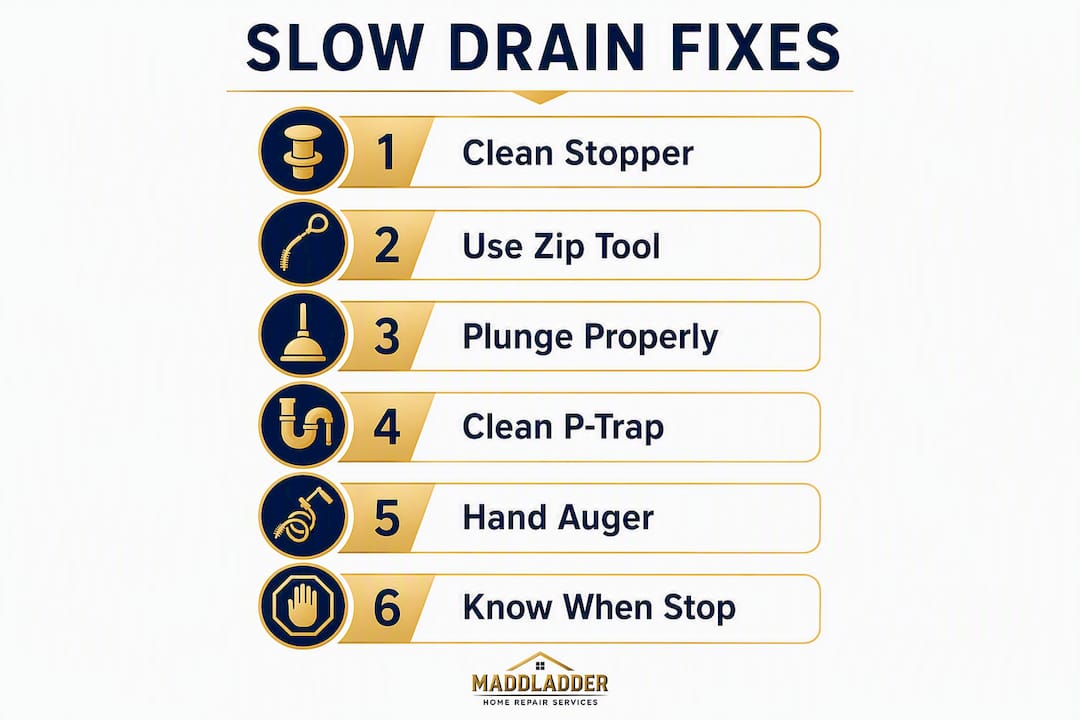
Follow this in order. Each step takes only minutes, and most drains clear before you reach Step 4.
Step 1: Clean the stopper (under 10 minutes)
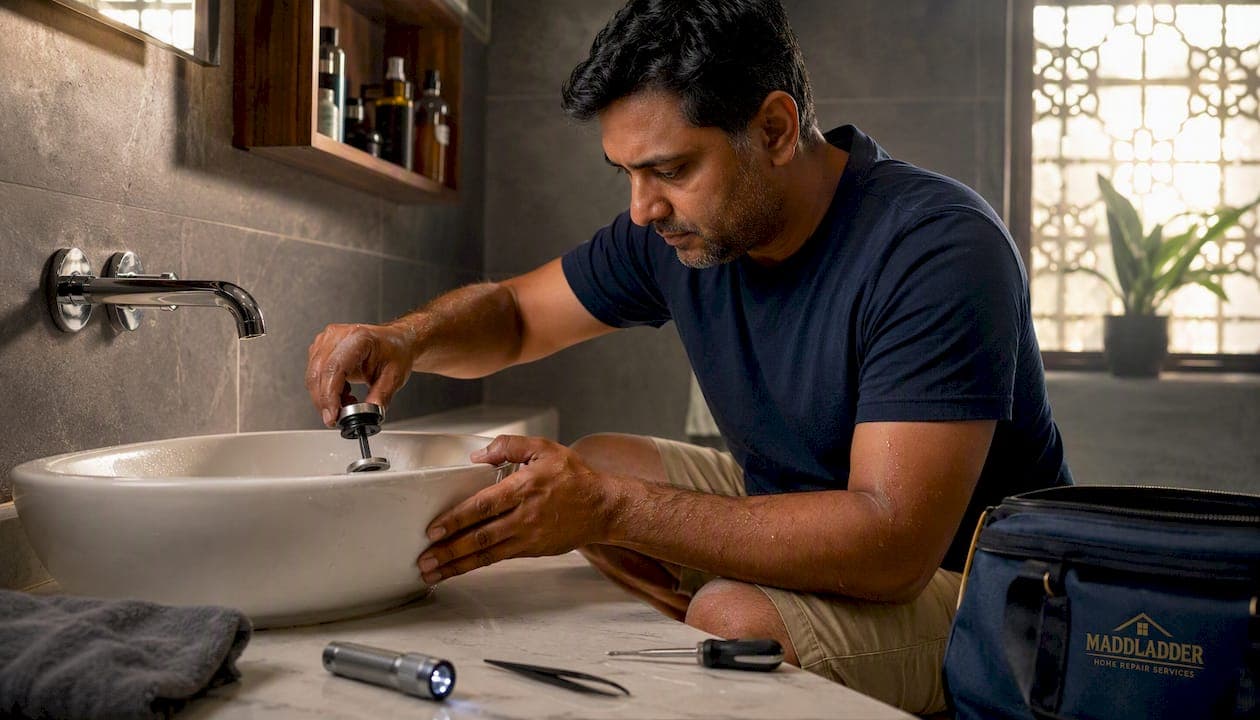
Lift out the pop-up stopper by turning it counterclockwise or pulling straight up, depending on the style. Rinse it under hot water and scrub off the hair-and-soap mat with an old toothbrush. Run the faucet and check the flow. You'd be surprised how often this is the whole problem.
Step 2: Fish with a barbed hair tool (several minutes)
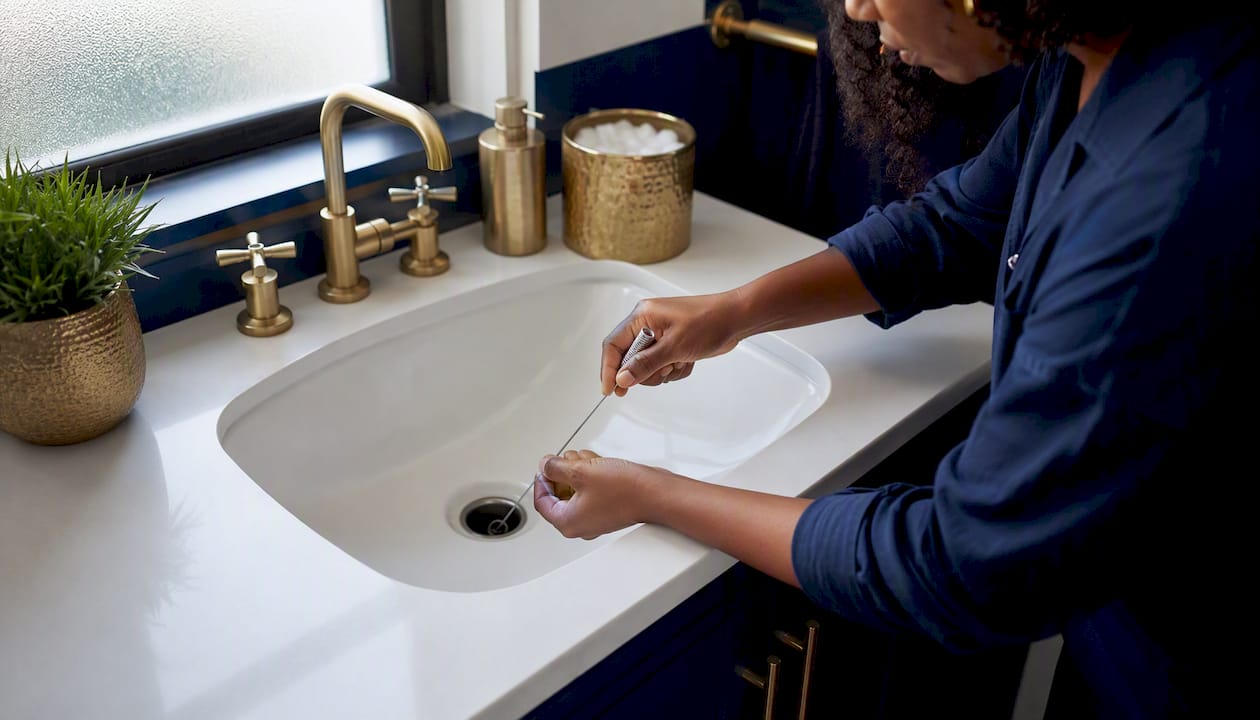
Insert the zip tool or barbed hair strip into the drain opening and rotate it slowly as you push down, then pull up. Inexpensive barbed hair tools are the recommended first mechanical step by tested plumbing pros and often pull out a dense mat of hair in one pass. Repeat two or three times, wiping the tool clean between passes. Run hot water to flush loose debris.
Step 3: Plunge correctly (several minutes)
This step fails more often from wrong technique than wrong effort. A flat-bottom cup plunger is required — a bell-shaped toilet plunger won't seal a sink drain. Stuff a wet rag firmly into the overflow opening (the small hole near the top of the basin). Fill the sink with two to three inches of water. Place the plunger over the drain, press down to create a seal, and pump firmly 10–15 times without breaking the seal. Pull up sharply on the last stroke. The water should rush down. If it does, run the faucet for a full minute to confirm flow.
Step 4: Remove and clean the P-trap (10–20 minutes)
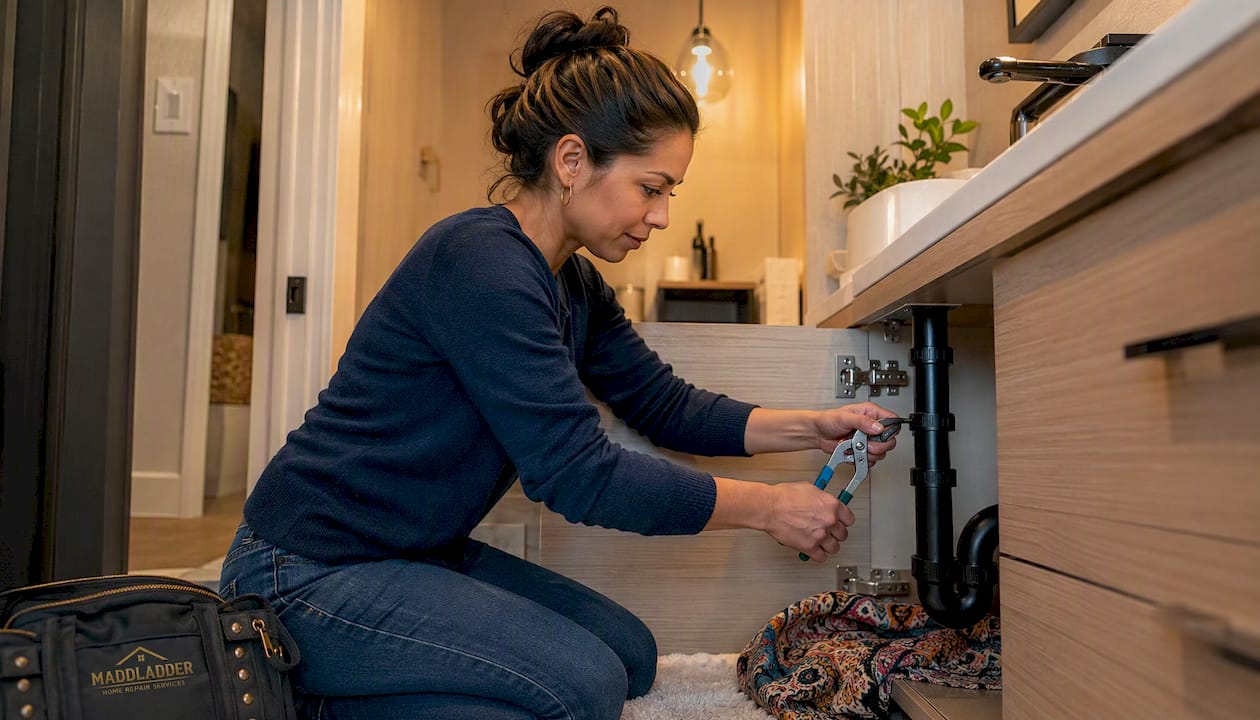
Place your bucket under the curved pipe beneath the sink. Loosen the two slip nuts by hand or with channel-lock pliers. Slide the trap off and empty it into the bucket. Scrub the inside with a bottle brush or old rag. Check the pipe stub coming out of the wall for any visible debris and clear it with your fingers or the hair tool. Reassemble, hand-tighten the slip nuts (no pipe wrench needed), and run water for two minutes while checking for drips.
Step 5: Use a hand auger for deeper clogs (typically under half an hour)
Feed the cable into the pipe stub in the wall, not back down through the sink drain. Crank the handle clockwise as you push forward. When you feel resistance, crank and push simultaneously to break through or hook the clog, then pull back slowly. If the drain improves but doesn't fully clear, the clog may be a coating on the branch line rather than a discrete blockage — a snake bores a tunnel through coating but doesn't scrape the walls clean.
Step 6: Know when to stop
| Situation | Next step |
|---|---|
| Flow restored after Steps 1–3 | Done — add a mesh strainer to prevent recurrence |
| Flow improved but still slow after Step 4 | Try Step 5; if still slow, call a pro |
| Drain clears but slows again within days | Call a pro — likely a branch-line coating |
| Multiple fixtures slow or toilet gurgles | Call a pro immediately — skip further DIY |
Pro Tip: Before calling a plumber, run the faucet for 60 seconds and time how long it takes for the basin to drain. That number gives the pro a useful baseline and can shorten the diagnostic visit.
Do home remedies actually work?
Some help a little. Some cause damage. Here's the honest breakdown.
Baking soda and vinegar produce a fizzing reaction that can loosen light surface residue near the trap mouth. The fizz is typically too weak and too brief to break down hair mats or hardened coatings in branch lines. Use it as a monthly maintenance flush after mechanical cleaning, not as a substitute for it.
Hot tap water and dish soap can flush fresh, soft grease or toothpaste residue. Pour a squirt of dish soap followed by a full kettle of hot (not boiling) tap water. Useful for light buildup; useless against a hair mat.
Chemical drain cleaners are the one to avoid entirely.
Chemical drain cleaners generate intense heat and corrosive reactions that can soften PVC joints, degrade rubber gaskets, and pit metal pipes — often causing leaks that cost far more to fix than the original clog. Mechanical removal is always the safer choice.
Enzyme-based products (Bio-Clean, Green Gobbler Enzyme Cleaner) are a different category. They digest organic biofilm slowly over hours and work well as a monthly maintenance dose, not as a fix for an established clog.
How do you prevent slow drains from coming back?
The fix is quick. Keeping it fixed takes about five minutes a month.
Daily and weekly habits:
- Wipe hair off the stopper after every shower or shave — don't rinse it down
- Run hot tap water for 60–90 seconds after brushing teeth or washing your face to flush toothpaste residue through the trap
- Never rinse greasy products (hair pomade, beard oil) directly down the sink
Inexpensive hardware that pays for itself:
- Silicone hair-catcher or fine-mesh strainer sized for your drain opening (most cost $5–$12)
- Low-profile grid strainer that fits over pop-up stoppers without removing them
- Easier-to-clean stopper styles that lift out with a quarter-turn rather than requiring a screwdriver
Monthly maintenance schedule:
- Pull and rinse the stopper
- Pour a dose of enzyme cleaner down the drain before bed and let it sit overnight
- Every three to four months, do a full P-trap clean as a preventive measure
A simple maintenance program with mesh catchers and monthly cleaning stops most bathroom slow-drain recurrences before they start. Renters should check whether their lease covers drain maintenance — tenant-friendly fixes that don't require tools or modifications are always the right starting point.
When should you call a plumber, and what will it cost?
The professional hierarchy runs from gentlest to most aggressive: manual removal → hair snake → P-trap disassembly → hand auger → flex-shaft or full-diameter cleaning → hydro-jetting → camera inspection. Most homeowners can handle the first four. The last three require professional equipment.
Red flags that mean call now, not later:
- Two or more fixtures draining slowly at the same time
- Toilet gurgles when the sink runs
- Sewer odor that persists after cleaning the trap
- Drain slows again within days of a thorough mechanical cleaning
- Galvanized or cast-iron pipes in an older home (scale buildup requires professional tools)
A flex-shaft or full-diameter cleaning restores the original interior diameter of the pipe, while a hand snake only bores a tunnel through the coating. That's why some drains seem to clear and then slow again within a week.
Ballpark costs (varies by region and job complexity):
| Service | Typical time | Rough cost range |
|---|---|---|
| Handyman drain cleaning (trap + snake) typically takes under half an hour and costs a moderate fee. | ||
| Plumber snake/auger services generally take under half an hour and cost a moderate amount. | ||
| Hydro-jetting usually requires one to two hours and costs several hundred dollars. | ||
| Camera inspection takes around half an hour and costs in the low hundreds. |
Pro Tip: If DIY hasn't cleared a single-fixture slow drain after P-trap cleaning and a snake pass, book a pro. Continuing to snake a branch-line coating just delays the inevitable and risks scratching older pipe walls.
Addressing minor plumbing issues before they escalate almost always costs less than waiting for a full blockage or a leak.
Key Takeaways
Fixing a slow bathroom drain almost always starts with the stopper and ends at the P-trap — most clogs never require a plumber if you work through the gentlest steps first.
| Point | Details |
|---|---|
| Start with the stopper | Removing and cleaning the pop-up stopper clears many slow drains in under 10 minutes. |
| Use a barbed hair tool first | A zip tool under $10 pulls hair mats before you need a plunger or snake. |
| Plunge with the right tool | A flat cup plunger with the overflow sealed builds the pressure a bell plunger cannot. |
| Call a pro for systemic signs | Multiple slow fixtures, gurgling toilets, or a drain that slows again within days need professional equipment. |
| Maddladder handles what DIY can't | For Kansas City homeowners, Maddladder offers minor plumbing repairs and drain cleaning when the DIY ladder runs out. |
The drain fix most people skip
Most guides tell you to buy a snake. The real first move is simpler and cheaper: pull the stopper, look at what's on it, and deal with that before reaching for any tool. The stopper is the single most common source of bathroom drain slowdowns, and it takes less time to clean than it does to read most how-to articles about it.
The other thing worth saying plainly: baking soda and vinegar are not a drain fix. They're a maintenance rinse at best. Pouring them down a slow drain and waiting gives the actual clog more time to harden while you feel like you've done something. Mechanical removal — fingers, zip tool, plunger, trap clean — is the only thing that actually moves the blockage.
Chemical cleaners are worse. The heat and corrosion they generate can soften PVC fittings and degrade rubber seals, turning a $0 clog into a $300 leak repair. Skip them entirely.
The gentlest-first ladder works because bathroom clogs are almost always close to the surface. If yours isn't, that's diagnostic information: the problem is deeper, and a professional with a camera and a flex-shaft cleaner will solve it faster and more permanently than another round of DIY.
Maddladder can handle it when DIY runs out
When the stopper is clean, the trap is clear, and the drain is still slow, the problem is past what household tools can reach. That's exactly where Maddladder steps in for Kansas City homeowners and renters.

Maddladder's minor plumbing and drain services cover trap cleaning, mechanical snaking, and camera inspection referrals for branch-line issues. One-time handyman visits start at $75/hour, and if you have a list of small repairs around the house, batching them into a single visit cuts both cost and scheduling time. Home maintenance subscription plans are also available for landlords and property managers who want regular upkeep without the phone tag. Get a free estimate or book a repair visit online today.
Sources and further reading
- What Plumbers Wish You Knew Before Unclogging Your Sink — Wirecutter: tested tool recommendations including barbed hair tools
- How to Fix a Slow-Draining Sink — The Spruce: correct plunging technique and overflow-sealing method
- Slow Drain Bathroom Sink — StructureTech: chemical cleaner risks to PVC and pipe joints
- Slow Drainage: Early Warnings of Sewer Line Issues — Chicago Home Inspect LLC: when slow drains signal deeper sewer or vent problems