

TL;DR:
- Batching home repairs saves money by reducing trip charges and labor costs through coordinated contractor visits. It also speeds up project completion, minimizes scheduling conflicts, and improves overall home maintenance management. Proper sequencing, clear communication, and grouping repairs by location or trade maximize savings and efficiency.
Batching home repairs together is defined as grouping multiple maintenance tasks into fewer contractor visits to cut costs, reduce disruption, and finish faster. This approach, sometimes called a multi-trade or bundled repair strategy, is the single most effective way homeowners can reduce what they spend on routine upkeep. According to May 2026 industry data, multi-trade strategies help homeowners finish projects 15–30% faster and cut project management time by up to 40%. That is not a marginal gain. It is the difference between a weekend of disruption and a month of back-to-back contractor visits.
Why batch home repairs together: the cost and time case
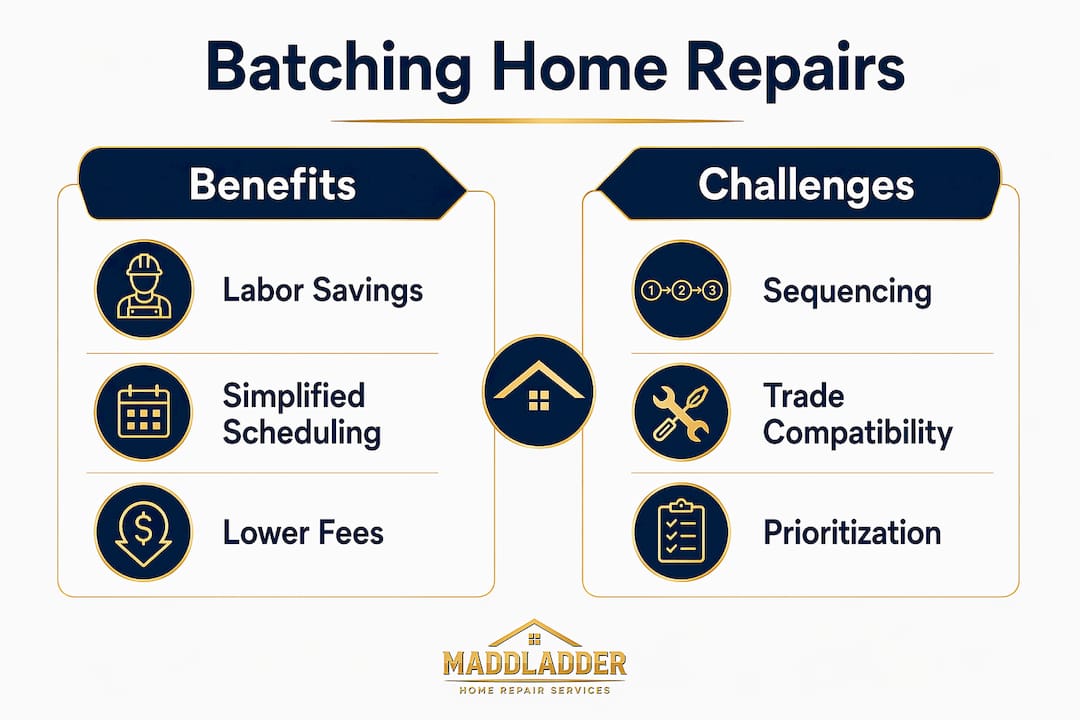
The financial logic behind batching repairs is straightforward. Every time a contractor drives to your home, you pay a trip charge, a setup fee, and sometimes a minimum labor hour. Scheduling five separate visits for five small jobs means paying that overhead five times. Bundling those tasks into one visit can cut labor costs by 50–60% compared to separate service calls. That is money that stays in your pocket without sacrificing any of the actual work.

Economies of scale explain the rest. When you run multiple projects at once, fixed costs like dumpster rental, permit fees, scaffolding, and crew mobilization get shared across all projects instead of charged separately for each one. A roofing crew already on site costs far less to extend into a siding repair than a second crew mobilized weeks later. The same principle applies to a handyman fixing a leaky faucet, patching drywall, and replacing a light fixture in the same visit.
Coordination overhead drops sharply when you consolidate repairs. Homeowners who manage fragmented repair schedules spend hours fielding calls, rescheduling no-shows, and repeating the same explanations to different contractors. Batching collapses that burden into a single conversation, a single schedule, and a single point of accountability.
Pro Tip: Keep a running notes app list of small issues as you notice them. When the list hits 8–10 items, that is your signal to book a bundled visit rather than calling for each one separately.
Here is what the savings look like across common repair scenarios:
- Trip charges eliminated: One visit instead of five means four fewer mobilization fees, which often run $50–$100 each.
- Setup time-shared: A contractor who sets up once for multiple tasks does not charge setup time per job.
- Permit consolidation: Combining electrical and plumbing work under one permit application saves both money and processing time.
- Negotiating power: A larger scope of work gives you more room to negotiate a flat project rate rather than hourly billing.
What repairs should you group together?
Not every combination of repairs makes sense to batch. The most effective groupings share a trade, a location in the home, or a logical sequence that prevents rework.
The clearest natural bundles are room-based. A kitchen refresh that combines new fixtures, updated cabinet hardware, a fresh coat of paint, and a replaced faucet costs far less as one coordinated visit than four separate calls. Bathroom remodels follow the same logic: tile, grout, caulk, and fixture replacement all belong in the same project window. Exterior projects bundle naturally too. Roofing and siding share scaffolding and crew time. Gutter replacement pairs well with fascia repair and exterior painting.
Trade-based groupings work just as well. Minor electrical repairs like outlet replacements, switch upgrades, and fixture swaps all fall within the same skill set and can fill a single electrician's morning. Plumbing spot repairs, including faucet replacements, shut-off valve upgrades, and toilet hardware fixes, group the same way.
Sequencing matters as much as grouping. Completing plumbing before flooring installation is a non-negotiable rule. Laying new floors before fixing a slow leak underneath them means tearing up that floor later. HVAC work should precede drywall and paint finishes. Electrical rough-in comes before insulation. Getting the sequence wrong turns a money-saving batch into an expensive redo.
Pro Tip: Sketch a simple room diagram and mark every known issue in that space. Repairs that share a wall, ceiling, or floor almost always belong in the same batch.
Knowing when not to batch is equally useful. Small, unrelated projects with no shared trades, no shared location, and no overlapping materials rarely benefit from forced grouping. Combining a garage door spring replacement with interior trim painting, for example, adds scheduling complexity without meaningful savings. Batch repairs that share something real, not just a calendar slot.
Prioritization also shapes your batching decisions. Categorizing repairs into urgent items (safety hazards, active leaks, structural issues) and plannable items (cosmetic updates, convenience upgrades) keeps you from delaying a critical fix while waiting to fill a batch list. Fix the urgent items immediately. Build the batch list from the plannable ones.
How to schedule and manage bundled repairs efficiently
A repair punch list is the foundation of any batching strategy. Start one today. Walk through your home room by room and note every issue, no matter how small. A sticking door, a cracked outlet cover, a dripping faucet, a loose towel bar. None of these alone justifies a service call. Together, they fill a productive half-day visit and deliver real value per dollar spent.
Sending photos and time estimates to your contractor before the visit dramatically improves scope clarity. A contractor who arrives knowing exactly what to expect brings the right tools, the right materials, and a realistic schedule. Surprises on the day of service cost everyone time and often money. A clear scope prevents underestimates and avoids the awkward mid-visit renegotiation.
Seasonal timing adds another layer of efficiency to your repair scheduling. Spring and fall are the natural windows for exterior work: inspecting roofs after winter, sealing gaps before the heat, checking gutters before the rains. Batching exterior repairs into these windows means you catch problems early and avoid emergency pricing. Interior work batches well in winter, when contractors have more availability and homeowners are already spending time indoors.
Coordinating trades in the right order prevents one crew from undoing another's work. Confirm the sequence before any work begins. If you are running plumbing and flooring in the same project, the plumber goes first. If painting and fixture installation overlap, the painter finishes walls before the electrician mounts the fixtures. A simple written scope shared with every contractor eliminates most sequencing disputes before they start.
- Build your punch list continuously: Add items as you notice them, not just during seasonal walkthroughs.
- Group by room first, then by trade: Room-based batches are easiest to schedule and communicate.
- Confirm material lead times: Some repairs require ordered parts. Confirm availability before booking the visit.
- Share a written scope: Email or text a clear list with photos to every contractor before they arrive.
Pro Tip: Ask your handyman or contractor for a single estimate covering all items on your list. A flat project rate almost always beats hourly billing for multi-item visits.
Long-term benefits of bundled repairs
The savings from batching extend well beyond the immediate project. Unified repair records from bundled projects give you a complete maintenance history in one place. That history simplifies future planning, supports warranty claims, and provides documentation that buyers value during a home sale. Fragmented repairs spread across a dozen contractors and invoices create gaps that are hard to reconstruct later.
Fewer change orders are another measurable benefit. Integrated scheduling reduces non-owner-driven change orders by about 50%. Change orders are expensive. They delay projects, inflate budgets, and create friction with contractors. Coordinated planning catches conflicts before work begins rather than mid-project.
Bundled exterior projects also deliver energy efficiency gains that compound over time. Replacing windows, adding insulation, and sealing air gaps in the same project window produces results that no single repair achieves alone. The renovation tips from 2026 confirm that multi-trade exterior work consistently outperforms piecemeal upgrades in both energy savings and resale value.
| Benefit | What it means for you |
|---|---|
| Lower labor costs | Bundled visits cut labor fees by 50–60% versus separate calls |
| Faster completion | Multi-trade projects finish 15–30% faster than fragmented work |
| Fewer change orders | Coordinated plans reduce unexpected changes by about 50% |
| Unified maintenance records | One complete history simplifies future repairs and home sales |
| Better energy outcomes | Exterior bundles deliver compounding efficiency gains |
Resale value is the long-term payoff that most homeowners underestimate. A cohesive renovation with documented, coordinated work signals to buyers that the home has been maintained with intention. Scattered, piecemeal repairs tell a different story. Buyers and their inspectors notice the difference.
Key Takeaways
Batching home repairs together is the most cost-effective maintenance strategy available to homeowners, cutting labor costs by up to 60% and finishing projects up to 30% faster than fragmented scheduling.
| Point | Details |
|---|---|
| Labor savings are substantial | Bundled visits eliminate redundant trip fees and cut labor costs by 50–60%. |
| Sequence repairs correctly | Complete plumbing before flooring and HVAC before finishes to avoid costly rework. |
| Build a running punch list | Batch when your list reaches 8–15 items to maximize cost efficiency per visit. |
| Send photos before the visit | Clear scope with photos prevents surprises and improves contractor preparation. |
| Unified records pay off later | Bundled repair documentation simplifies future maintenance and supports resale value. |
What I've learned from watching homeowners batch repairs the wrong way
Homeowners consistently make the same mistake: they call a contractor the moment they notice a problem. One dripping faucet, one cracked outlet cover, one sticky door. Each call feels urgent in the moment. Each one costs a trip charge, a minimum labor hour, and a chunk of the afternoon. By the end of the year, they have spent twice what a coordinated approach would have cost.
The harder lesson is that batching requires patience. You notice the dripping faucet in january and you want it fixed today. But if you also have a loose towel bar, two burnt-out exhaust fans, and a sticking cabinet door, waiting two weeks to bundle those repairs into one visit saves real money. The faucet drip is annoying. It is rarely an emergency. Knowing which repairs are genuinely urgent versus merely inconvenient is the skill that makes batching work.
Contractor communication is where most batching attempts fall apart. Homeowners hand over a vague verbal list and expect the contractor to figure it out. The contractor underestimates the scope, runs out of time, and leaves half the list unfinished. Sending a written list with photos before the visit changes everything. It is a five-minute task that saves hours of frustration.
My honest advice: adopt batching as a philosophy, not just a tactic. Treat your home like a property that needs a maintenance calendar, not a series of emergencies. The homeowners who do this spend less, stress less, and sell for more.
— Jennifer
Maddladder makes bundled home repairs simple in Kansas City
Coordinating multiple repairs across different trades is exactly where most homeowners lose time and money. Maddladder handles that coordination for you, covering general repairs, drywall, fixture replacements, minor plumbing, electrical repairs, and smart home upgrades all under one roof.

One call, one schedule, one trusted crew. Maddladder's repair and replacement services are built for exactly the kind of bundled visit that saves Kansas City homeowners the most money. Free estimates make it easy to scope your punch list before committing. Flexible pricing starts at $75/hour, and subscription maintenance plans keep your home on a proactive schedule year-round. Contact Maddladder to book your bundled visit today.
FAQ
How much can batching home repairs actually save?
Bundling multiple repairs into one visit cuts labor costs by 50–60% compared to scheduling each job separately, primarily by eliminating redundant trip charges and setup time.
How many repairs should I collect before booking a bundled visit?
Booking a visit when your punch list reaches 8–15 items turns each service call into a cost-effective maintenance session rather than an expensive single-task trip.
What repairs should not be batched together?
Avoid forcing unrelated repairs with no shared trade, location, or materials into the same visit. Combining a garage door repair with interior painting, for example, adds complexity without meaningful savings.
Does the order of repairs in a batch matter?
Sequencing is critical. Plumbing must precede flooring installation, and HVAC work should finish before drywall and paint, or you risk expensive rework that wipes out any savings from batching.
How do I communicate a batched repair list to a contractor?
Send photos and time estimates for each item before the visit. A written scope with visuals prevents underestimates, reduces surprises, and helps the contractor arrive fully prepared.