
TL;DR:
- Scheduling a move-out walkthrough early helps reduce vacancy time and coordinate repairs efficiently.
- Perform safety checks before cosmetic work to ensure tenant safety and compliance.
Book a licensed Kansas City handyman through Maddladder for a safety-first bathroom make-ready, and request your free estimate before the move-out date. Here is the immediate action plan:
- Schedule a move-out walkthrough at least 30 days before vacancy. Starting vendor coordination well before vacancy cuts average turnover time significantly.
- Run three safety checks before any cosmetic work: test GFCI outlets in the bathroom, verify smoke and CO detectors, and inspect under sinks for moisture or soft flooring near the toilet base (a sign of wax-ring failure).
A licensed handyman handles the bulk of make-ready bathroom repairs. When a job crosses into licensed-trade territory — a burst supply line, a panel-level electrical fault — Maddladder coordinates the right specialist so you are not chasing three separate vendors.
Table of Contents
- What Maddladder does for Kansas City bathroom turnovers
- Key Takeaways
- What efficient turnovers actually look like on the ground
- Resources to act on now
- The turnover mindset most landlords skip
What Maddladder does for Kansas City bathroom turnovers

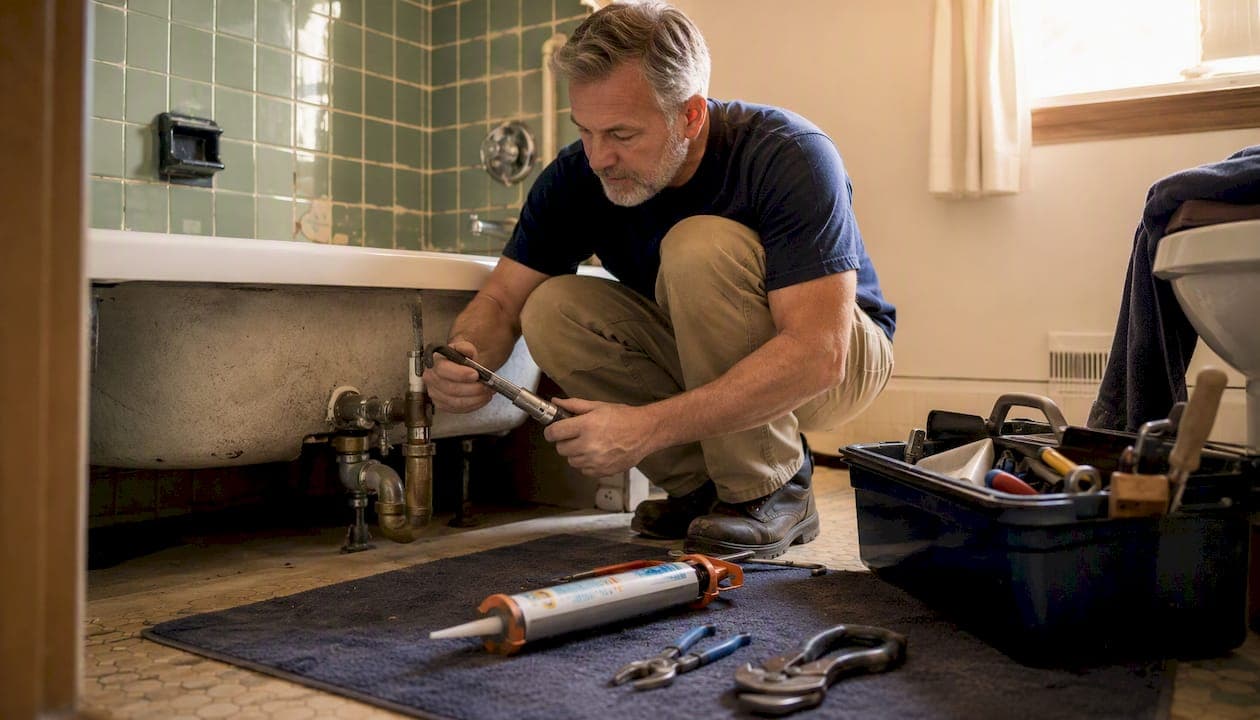
Maddladder's repair and replacement services cover the full bathroom make-ready scope in a single coordinated visit: toilet repairs and seat swaps, faucet and showerhead replacements, tub and shower caulk and grout refresh, drain clearing, fixture swaps, GFCI outlet checks, and smoke/CO detector verification. A deep turnover checklist also flags descaling fixtures, testing the exhaust fan, and inspecting for soft flooring near the toilet — all items a Maddladder tech runs through on arrival.
| Service | Common tasks included | When Maddladder calls a licensed specialist |
|---|---|---|
| Toilet | Flapper, fill valve, seat, wax ring | Drain line replacement, sewer scope |
| Faucet/shower | Cartridge swap, showerhead, supply lines | Valve-in-wall replacement, re-pipe |
| Tub/shower surround | Recaulk, regrout, minor tile reset | Full tile demo, waterproofing membrane |
| Drain/clog | Clearing, stopper replacement | Hydro-jetting, main line work |
| GFCI/outlets | Test, reset, replace outlet | Panel work, new circuit |
| Smoke/CO detectors | Test, battery swap, replace unit | Hardwired alarm wiring |
Pricing at a glance: One-time handyman work starts at an hourly rate typical for licensed handymen in the area. A typical two-bedroom bathroom make-ready involves costs for cleaning, minor repairs, and touch-ups that vary depending on unit condition; water damage or licensed-trade coordination adds to that. Landlords managing multiple units benefit most from Maddladder's tiered subscription plans (Essential, Home Care, Property Manager), which lock in priority scheduling and reduce per-visit costs over time.
Booking: Request a free estimate online, have your move-out photos and any accessibility notes ready, and expect a rapid response. For minor plumbing repairs that need a licensed plumber, Maddladder handles the coordination so you stay out of the scheduling loop.
Key Takeaways
Treating every bathroom turnover as both a safety event and a revenue event is the fastest way to cut vacancy and protect your investment.
| Point | Details |
|---|---|
| Start vendor coordination early | Beginning 30 days before move-out cuts average turnover time significantly. |
| Safety checks come first | Test GFCI outlets, smoke/CO detectors, and moisture under sinks before any cosmetic work. |
| Typical make-ready cost | A standard two-bedroom bathroom turnover runs $400–$800; licensed-trade work adds to that. |
| Spring plumbing timing | Run plumbing inspections in late February through early April to catch winter freeze damage before leasing season. |
| Maddladder books the full scope | One licensed handyman visit covers make-ready repairs, safety checks, and specialist coordination. |
What efficient turnovers actually look like on the ground
The dead time between stages is the biggest hidden cost in any bathroom turnover. A landlord calls a plumber, waits two days, calls a tile guy, waits three more. The unit sits vacant the whole time, and every extra vacant day costs real lost rent — for example, a unit renting at $2,000/month left vacant 14 extra days loses $933 in revenue; industry daily vacancy ranges $75–$200 per unit.
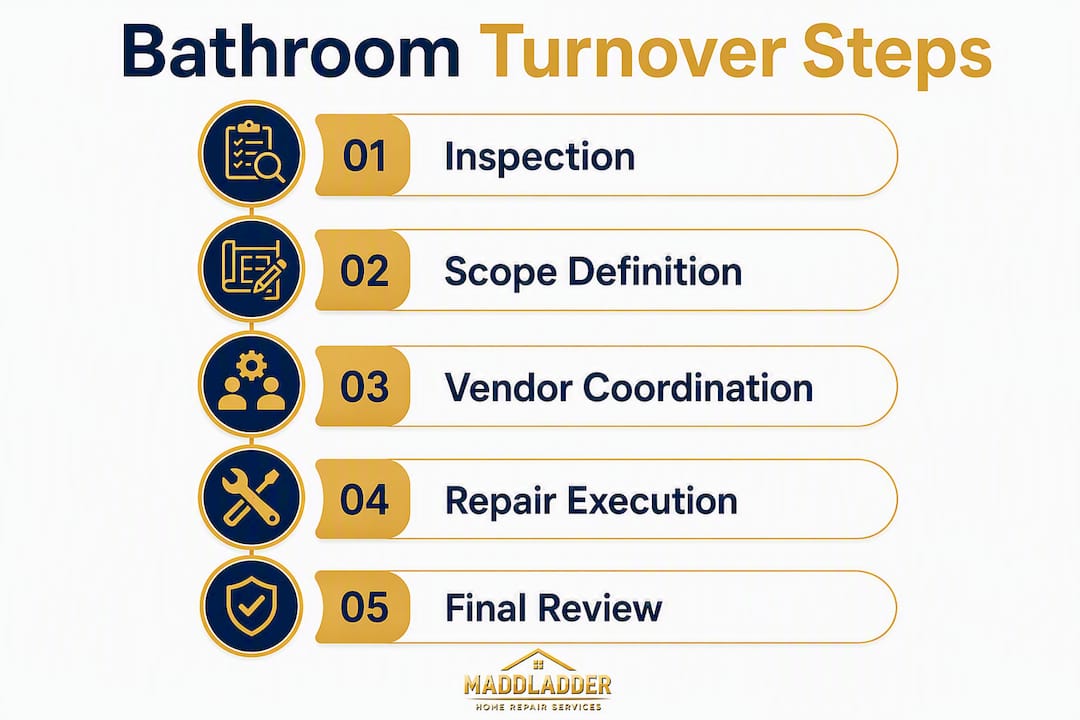
The fix is a single unified scope handed to one provider at the move-out walkthrough. Maddladder treats the turnover as a five-stage pipeline: checkout, scope, make-ready, marketing, and move-in record. The handyman gets the full checklist at once and either completes the work or schedules parallel trades, compressing typical turnaround times to industry-standard durations for a typical unit.
Before hiring any handyman, ask these questions directly:
- Can you show proof of license and general liability insurance?
- Do you carry workers' comp, or are your techs independent contractors?
- What is your warranty on parts and labor?
- Have you worked on rental bathroom turnovers specifically, not just homeowner repairs?
- How do you handle emergency or after-hours calls?
Red flags: no written scope, vague "time and materials" bids with no parts estimate, refusal to provide insurance certificates, and bids that come in 40% below everyone else without an itemized breakdown. That last one almost always means corners cut on materials or unlicensed labor.
Pro Tip: At the move-out walkthrough, photograph every item on the scope and send it to your handyman the same day. That single step lets them order parts, block their schedule, and show up ready to work — cutting a typical 3-day coordination lag down to one.
For a broader look at handling rental property repairs systematically, including vendor coordination workflows that reduce vacancy, that resource is worth bookmarking.
Resources to act on now
- Maddladder repair and replacement services — book a bathroom make-ready or request a free estimate
- Maddladder plumbing and electrical services — for jobs that require a licensed specialist
- Kansas City fixture replacement checklist — code-ready guide for swapping bathroom fixtures
- Rental property safety upgrades guide — GFCI, detector placement, and grab-bar installation for Kansas City rentals
- Seasonal maintenance scheduling — why locking in spring plumbing checks pays off before leasing season
- Ultimate rental property checklist — turnover safety checks and make-ready standards for landlords
This article provides general maintenance guidance and is not a substitute for advice from a licensed contractor, plumber, or electrician. Verify current Kansas City codes and permit requirements with the appropriate local authority before beginning any repair work.
The turnover mindset most landlords skip
Most property owners approach a bathroom turnover as a repair list. Fix the dripping faucet, recaulk the tub, done. That framing misses the bigger opportunity.
Every vacant bathroom is a liability audit waiting to happen. A GFCI outlet that was never tested, a smoke detector running on a dead battery, soft flooring around the toilet base that signals a slow wax-ring leak — these are not cosmetic issues. They are the items that show up in a tenant's personal injury claim or a city inspection notice.
The landlords who compress vacancy fastest are not the ones with the cheapest bids. They are the ones who treat the move-out walkthrough as a scope-generation event, hand that scope to a single trusted provider the same day, and let that provider sequence the work. Chasing three separate vendors for a bathroom that needs a faucet, a GFCI, and a recaulk is a choice, not a necessity.
Kansas City's freeze-thaw cycle adds one more layer: a bathroom that looked fine in October can have a cracked supply line by March. Scheduling a spring plumbing inspection in late February or early March is not optional maintenance — it is the difference between a $150 line repair and a $2,000 water-damage remediation.