
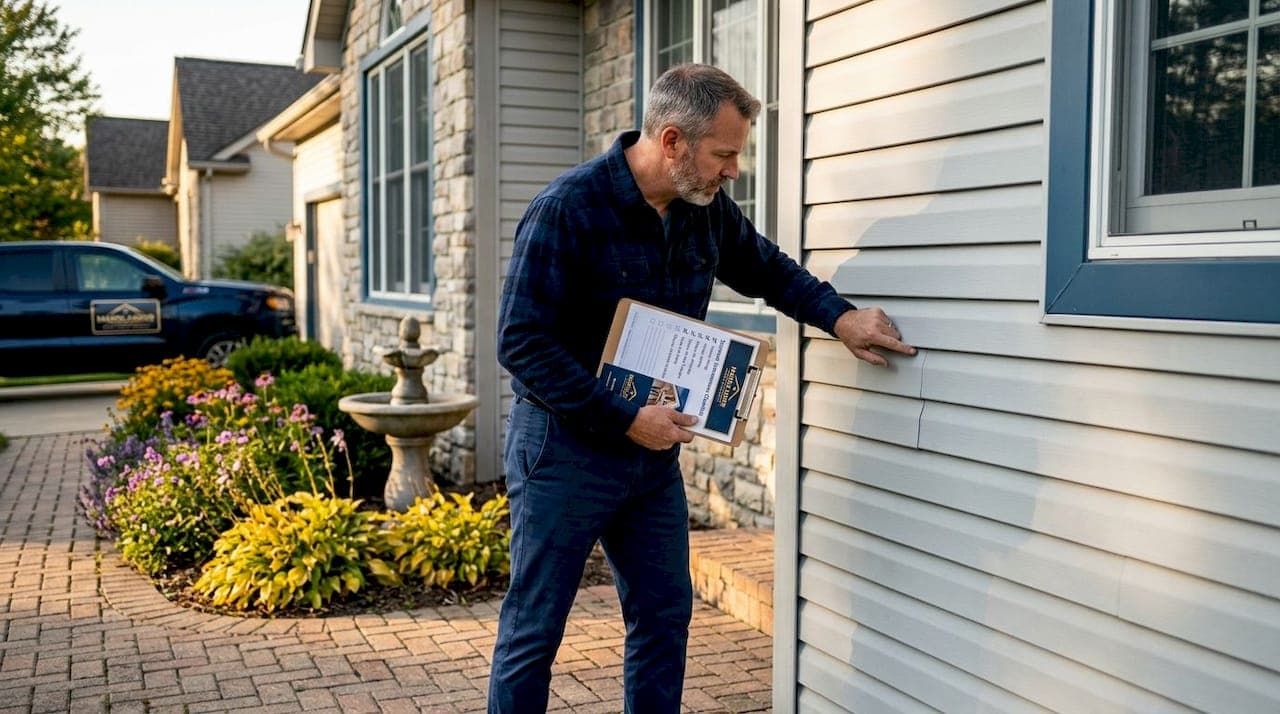
TL;DR:
- Scheduling biannual seasonal maintenance helps prevent costly emergency repairs and extends home system lifespans. Homeowners and property managers should plan inspections before weather extremes, using checklists and documentation to ensure consistency and savings. Treating maintenance as a recurring system rather than a task list provides peace of mind and long-term property value preservation.
Scheduling seasonal maintenance is the practice of planning inspections and servicing for your home's critical systems at each seasonal transition, before weather extremes expose every weakness your property has. Homeowners and property managers who skip this discipline pay for it in emergency repair bills, shortened equipment lifespans, and preventable comfort failures. Biannual tune-ups in spring and fall are the industry standard for HVAC systems alone, and the same logic applies across roofing, plumbing, gutters, and electrical. The core argument for why schedule seasonal maintenance is simple: prevention costs a fraction of what reaction costs.
Why is scheduling seasonal maintenance important for your home?
Seasonal maintenance, known in the property industry as preventive maintenance, is the single most reliable method for avoiding unexpected system failures. When a furnace quits on the coldest night in January or an A/C unit dies during a Kansas City heat wave, the repair bill is always higher than it would have been with a scheduled tune-up. Regular tune-ups reduce emergency repair risks, improve indoor air quality, and lower energy bills by keeping systems running at peak efficiency. That combination of benefits makes preventive maintenance an investment with a measurable return, not just a chore.
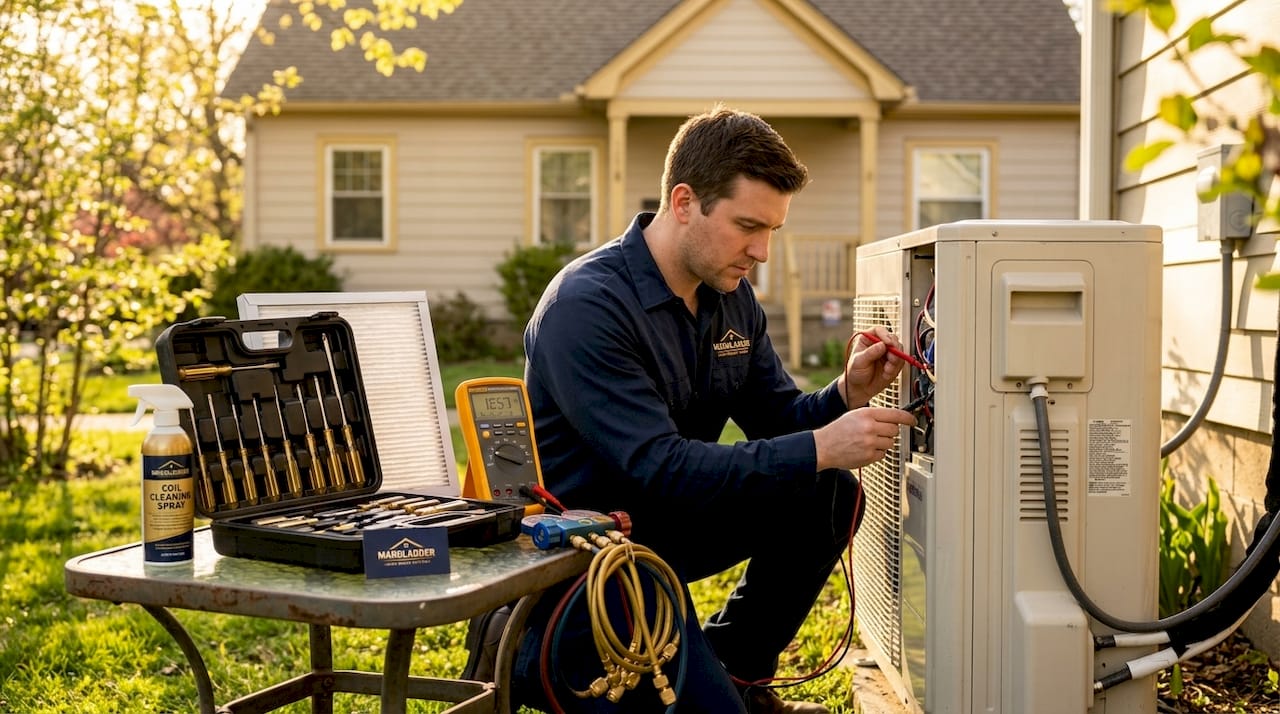
The financial case is concrete. Homeowners who schedule consistent seasonal servicing typically save $10 to $30 per month on energy costs alone, because a well-maintained HVAC system draws less power to reach the same temperature. Multiply that across a full year and the savings offset a significant portion of the service cost. Beyond the numbers, owners who follow seasonal checklists spend less on emergency fixes and maintain comfort with fewer disruptions throughout the year.
Indoor air quality is a benefit that rarely gets enough attention. Dust, debris, and microbial buildup accumulate inside HVAC ducts and filters between seasons. Cleaning during tune-ups leads to better air circulation and healthier living environments, which matters especially for households with children, elderly residents, or anyone with respiratory conditions.
Here are the most common warning signs that your home needs a seasonal inspection scheduled immediately:
- Unusual noises from your HVAC unit or water heater
- Noticeably higher utility bills without a change in usage
- Uneven heating or cooling across rooms
- Visible moisture stains on ceilings or walls after rain
- Doors or windows that suddenly stick or gap
Pro Tip: Set a calendar reminder for the last week of February and the first week of September. Those windows give you enough lead time to book a technician before peak demand hits and service slots fill up.
What seasonal maintenance tasks should be scheduled and when?
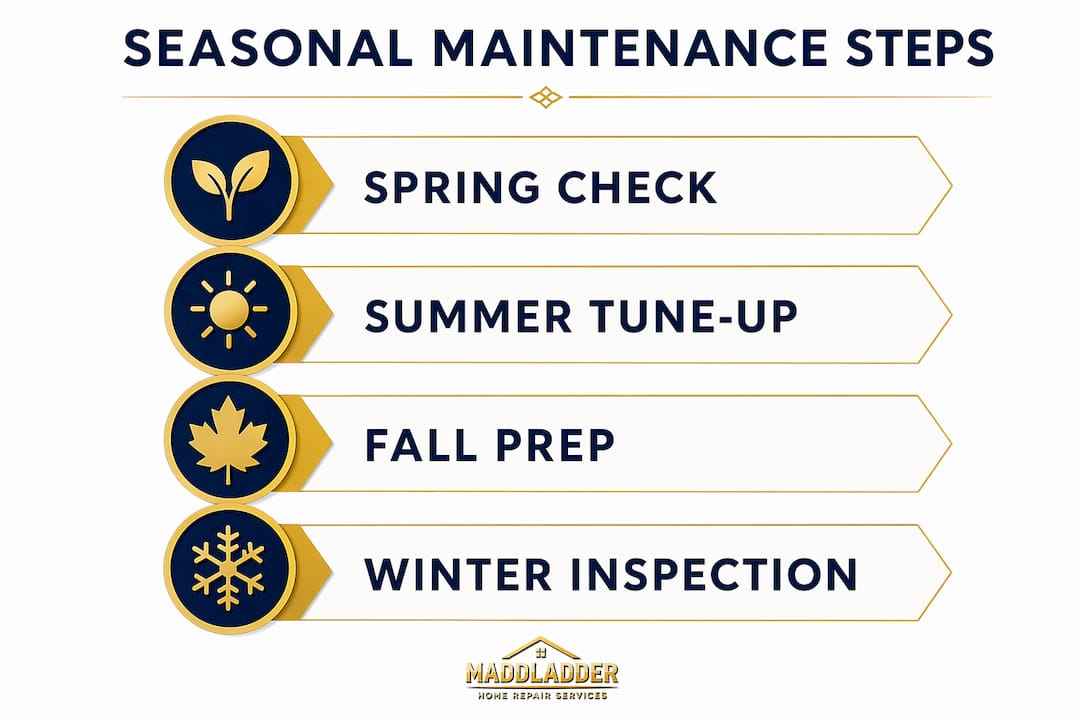
The timing of each task matters as much as the task itself. Seasonal maintenance is structured as distinct categories scheduled at seasonal transitions to capture time-sensitive issues before peak demands compress service availability. A spring inspection that happens in July misses the entire point.
Spring priorities (March through May):
- Schedule A/C servicing and refrigerant check before the first 85°F day
- Inspect the roof and gutters for winter damage, ice dam residue, and loose flashing
- Check crawl spaces and basements for moisture intrusion from snowmelt
- Test smoke detectors, carbon monoxide detectors, and fire extinguishers
- Inspect exterior caulking and weatherstripping around windows and doors
Fall priorities (September through November):
- Schedule a heating system tune-up and safety inspection
- Replace HVAC filters and clean return air vents
- Drain and winterize outdoor faucets and irrigation systems
- Clean gutters after leaves fall to prevent ice dams
- Inspect the attic for insulation gaps and ventilation issues
Spring is optimal for detecting hidden structural and moisture damage caused by winter weather, because rising temperatures make previously concealed problems visible and urgent. Fall inspections serve the opposite purpose: locking in your home's defenses before cold weather arrives.
| Season | Primary focus | Key systems |
|---|---|---|
| Spring | Cooling readiness, damage detection | A/C, roof, foundation, moisture |
| Fall | Heating safety, winterization | Furnace, gutters, plumbing, insulation |
| Summer | Ongoing monitoring, exterior upkeep | Landscaping, deck, exterior paint |
| Winter | Safety checks, interior systems | Water heater, pipes, smoke detectors |
Scheduling your A/C tune-up before the first 85°F day is not just a comfort tip. Peak season technician availability can be limited by two to three weeks during demand spikes, meaning a delay in scheduling translates directly into days without cooling. Your seasonal maintenance checklist should function as a standing document you update each year, not a one-time reference.
Pro Tip: Use a free app like Google Calendar or Todoist to set recurring annual reminders for each seasonal task. Attach a photo of your HVAC filter, water heater, and roof condition each time you complete an inspection so you have a visual record of change over time.
How does seasonal maintenance differ for homeowners vs. property managers?
For individual homeowners, seasonal maintenance is primarily about protecting one property and one household budget. For property managers, the stakes scale with every unit in the portfolio. A single missed fall inspection on a 20-unit building can mean 20 tenant complaints, 20 potential repair calls, and significant liability exposure if a heating failure causes pipe damage.
Property managers schedule seasonal maintenance to reduce tenant complaints and prevent damage from weather and occupancy changes. The approach shifts from personal convenience to operational consistency. Every property in a portfolio needs the same inspection standard applied at the same time of year, which requires scheduling tools and documentation practices that most individual homeowners never need.
Key differences between the two groups:
- Scope: Property managers inspect multiple units, common areas, and building-wide systems simultaneously
- Documentation: Maintenance records are legally and operationally critical for property managers; for homeowners, they are helpful but optional
- Tenant turnover: Move-out and move-in periods create additional seasonal inspection triggers beyond the standard spring and fall calendar
- Risk profile: Weather events like ice storms or flooding carry greater financial exposure across a portfolio than for a single-family home
Proper documentation of inspections supports portfolio-wide consistency and allows property managers to sequence critical repairs before weather worsens underlying problems. Software platforms like Limble CMMS, AppFolio, and Buildium all offer maintenance scheduling modules that automate reminders and track completion across properties.
| Factor | Homeowner | Property manager |
|---|---|---|
| Properties covered | 1 | Multiple |
| Documentation need | Recommended | Required |
| Scheduling complexity | Low | High |
| Risk from missed maintenance | Personal cost | Tenant, legal, financial |
For homeowners, a preventive maintenance plan is the most cost-effective way to stay ahead of repairs. For property managers, it is a professional obligation that directly affects tenant retention and asset value.
What are the best practices for scheduling seasonal maintenance?
The most common mistake homeowners and property managers make is waiting until a problem is visible before scheduling service. By that point, the damage is already done and the repair cost is already higher. The entire value of a seasonal maintenance program comes from acting before the system fails, not after.
Follow these practices to get the most from your seasonal maintenance schedule:
- Book ahead of demand. Schedule spring A/C service in February or early March, and fall heating service in August or early September. Waiting until the season arrives means competing with every other homeowner for the same limited technician slots.
- Use a written checklist. A seasonal inspection checklist removes the guesswork and prevents tasks from being skipped because they seem minor. Minor tasks left undone become major repairs.
- Verify service documentation. After every professional visit, request a written summary of what was inspected, what was found, and what was done. This record protects you if a warranty claim or insurance issue arises later.
- Budget by season. Allocate a maintenance fund of roughly 1% to 2% of your home's value annually. Spreading that budget across spring and fall service visits makes the cost predictable and manageable.
- Work with licensed professionals. DIY maintenance has its place, but HVAC, electrical, and plumbing systems require licensed technicians. Unlicensed work can void manufacturer warranties and create safety hazards.
Pro Tip: If you own a home in the Kansas City metro area, scheduling repairs early in the season gives you access to better technician availability and often lower rates before peak demand pricing kicks in.
The benefits of seasonal maintenance compound over time. A home that receives consistent biannual attention retains more of its value, requires fewer emergency interventions, and costs less to operate year over year. That is not a theory. It is the documented outcome of treating maintenance as a system rather than a reaction.
Key takeaways
Scheduling seasonal maintenance twice a year, before peak weather stress, is the most cost-effective strategy for protecting property value, reducing energy costs, and preventing emergency repairs.
| Point | Details |
|---|---|
| Schedule before peak demand | Book spring A/C and fall heating service weeks ahead to avoid technician shortages. |
| Use a seasonal checklist | Written checklists prevent skipped tasks and keep maintenance consistent year over year. |
| Document every service visit | Written records protect against warranty disputes and support property management compliance. |
| Homeowners and managers differ | Property managers need portfolio-wide scheduling tools; homeowners benefit from simple recurring reminders. |
| Prevention beats reaction | Biannual tune-ups cost a fraction of emergency repairs and extend system lifespans significantly. |
The case for treating maintenance as a system, not a to-do list
I have worked with enough homeowners and property managers over the years to recognize a pattern. The ones who treat seasonal maintenance as a fixed system, something that happens on a schedule regardless of whether anything seems wrong, almost never call in a panic. The ones who wait until something breaks always do.
What surprises most people is how much of the value is psychological. When you know your furnace was inspected in September, your A/C was serviced in March, and your gutters were cleared before the first freeze, you stop carrying that low-level anxiety about what might go wrong next. That peace of mind is real, and it is worth something.
The other observation I keep coming back to is how often the "small" seasonal tasks prevent the large ones. A $150 gutter cleaning in October prevents a $3,000 ice dam repair in February. A $90 HVAC filter replacement in March prevents a $2,500 compressor replacement in July. The math is not complicated. What makes people skip these tasks is not ignorance of the math. It is the absence of a system that makes the task automatic.
My advice is to stop thinking about seasonal maintenance as a list of things you should do and start treating it as a recurring appointment your property has with itself. Put it on the calendar. Hire the same trusted professional each time. Keep the records. The compounding effect of that consistency is the closest thing to a guarantee you will find in home ownership.
— Jennifer
Keep your home ready with Maddladder

Maddladder serves homeowners and property managers across the Kansas City metro area with dependable, licensed maintenance and repair services built for every season. Whether you need a minor plumbing fix identified during a fall inspection, an electrical repair uncovered in spring, or a smart thermostat installed to improve year-round efficiency, Maddladder handles it with fast response times and transparent pricing. Explore repair and replacement services or check out plumbing and electrical options to address whatever your seasonal inspection turns up. Free estimates make it easy to start.
FAQ
Why is seasonal maintenance necessary for homeowners?
Seasonal maintenance prevents unexpected system failures, reduces energy costs, and protects property value by addressing issues before they become expensive emergencies. Homeowners who follow a biannual schedule consistently spend less on reactive repairs than those who wait for problems to appear.
What does a seasonal maintenance checklist typically include?
A standard seasonal checklist covers HVAC servicing, roof and gutter inspection, moisture checks, filter replacements, safety equipment testing, and exterior weatherproofing. The specific tasks shift by season, with spring focused on cooling readiness and fall focused on heating safety and winterization.
When should you schedule an HVAC tune-up?
Schedule your A/C tune-up before the first 85°F day in spring, typically in February or March, and your heating tune-up in August or early September. Waiting until peak season means technician availability can be limited by two to three weeks.
How does seasonal maintenance benefit property managers specifically?
Property managers use seasonal maintenance programs to reduce tenant complaints, prevent weather-related damage across multiple units, and maintain documentation required for legal and operational compliance. Consistent scheduling across a portfolio also helps prioritize critical repairs before conditions worsen.
How much should you budget for seasonal home maintenance?
A widely used guideline is to allocate 1% to 2% of your home's value annually for maintenance costs. Splitting that budget between spring and fall service visits makes expenses predictable and prevents the larger costs that come from deferred upkeep.