
TL;DR:
- Preventive home maintenance involves regularly inspecting and servicing your property to avoid costly emergencies caused by neglected issues. It is especially critical in Kansas City's variable climate and older homes to protect your investment and reduce expenses. Building a seasonal schedule and seeking professional support can enhance property value, save money, and minimize stress over time.
Most homeowners don't think about their roof until water is dripping through the ceiling, or their HVAC system until it dies on the hottest day in July. That reactive mindset is one of the most expensive habits a property owner can have. Preventive home maintenance is the practice of regularly inspecting, servicing, and caring for your home before problems develop into costly emergencies. In Kansas City, where weather swings from brutal winter freezes to humid summer storms, that practice isn't just smart, it's essential. This guide will show you exactly how to approach it, what to prioritize, and how much you can realistically save.
Table of Contents
- What preventive home maintenance really means
- Why preventive maintenance matters for Kansas City homes
- How to build your preventive home maintenance schedule
- How preventive home maintenance saves money and stress
- What most homeowners get wrong about preventive maintenance
- Expert help for preventive home maintenance in Kansas City
- Frequently asked questions
Key Takeaways
| Point | Details |
|---|---|
| Prevention beats reaction | Regular checks and maintenance tasks help you avoid expensive emergency repairs. |
| KC homes have unique needs | Kansas City’s climate and property styles require tailored maintenance especially for weather issues. |
| Annual schedules save money | Tracking and organizing maintenance by season spreads out costs and protects your investment. |
| Small tasks make a big difference | Simple jobs like gutter cleaning or HVAC checks lead to major long-term savings. |
What preventive home maintenance really means
Preventive maintenance means taking action on your home's systems and structures before something fails. It's the difference between spending $150 on an annual HVAC tune-up and spending $4,000 on a full system replacement because worn parts were never caught. The logic is simple, but the follow-through is where most homeowners fall short.
Reactive maintenance, by contrast, is everything you do after something breaks. A burst pipe, a collapsed gutter, a cracked foundation wall. These aren't just expensive fixes, they're also stressful, disruptive, and often avoidable. Organizing and regularly conducting preventive maintenance tasks helps avoid major repairs that drain your budget and your energy.
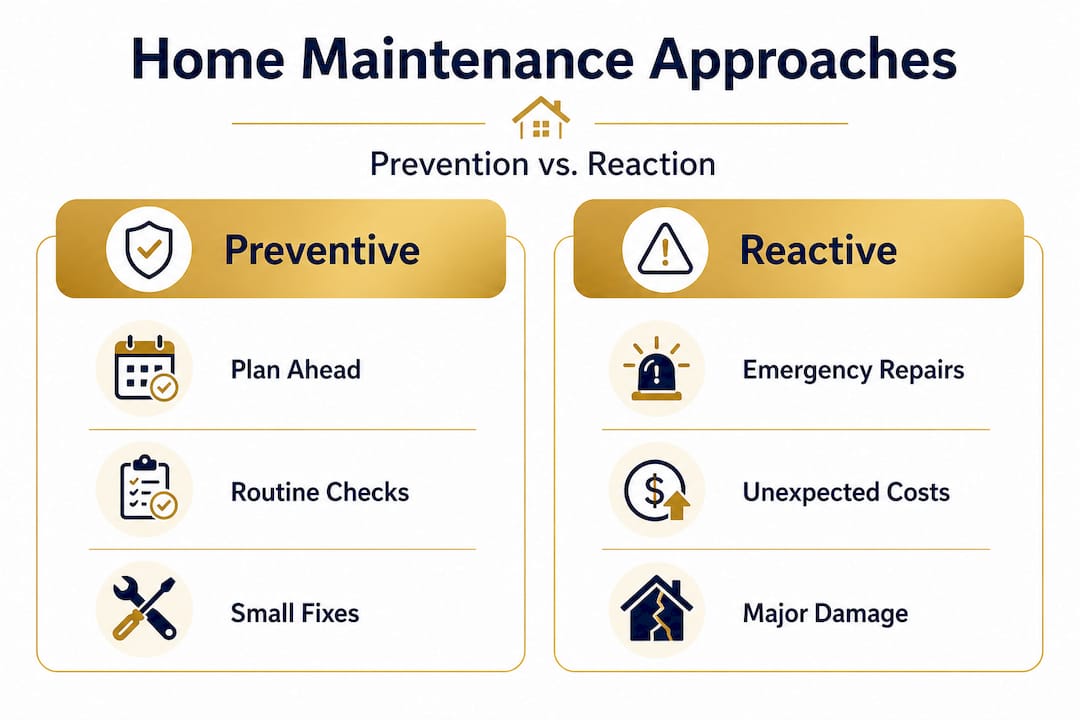
Here's a quick look at how the two approaches compare:
| Situation | Preventive approach | Reactive approach |
|---|---|---|
| Gutters | Cleaned twice a year | Cleaned after overflow damages fascia |
| HVAC | Serviced each spring and fall | Replaced after full breakdown in July |
| Roof | Inspected annually | Patched after leak causes ceiling damage |
| Sump pump | Tested before spring rains | Replaced after basement floods |
| Caulking | Resealed every 2 to 3 years | Redone after water damage behind walls |
The financial difference between those two columns is dramatic. But beyond cost, preventive maintenance gives you something reactive repairs never can: control. You decide when work gets done, who does it, and how much you spend. Emergencies take all of that away.
Common preventive tasks include:
- Roof inspections every fall and spring to catch missing shingles and flashing gaps
- HVAC servicing twice a year to change filters, clean coils, and check refrigerant
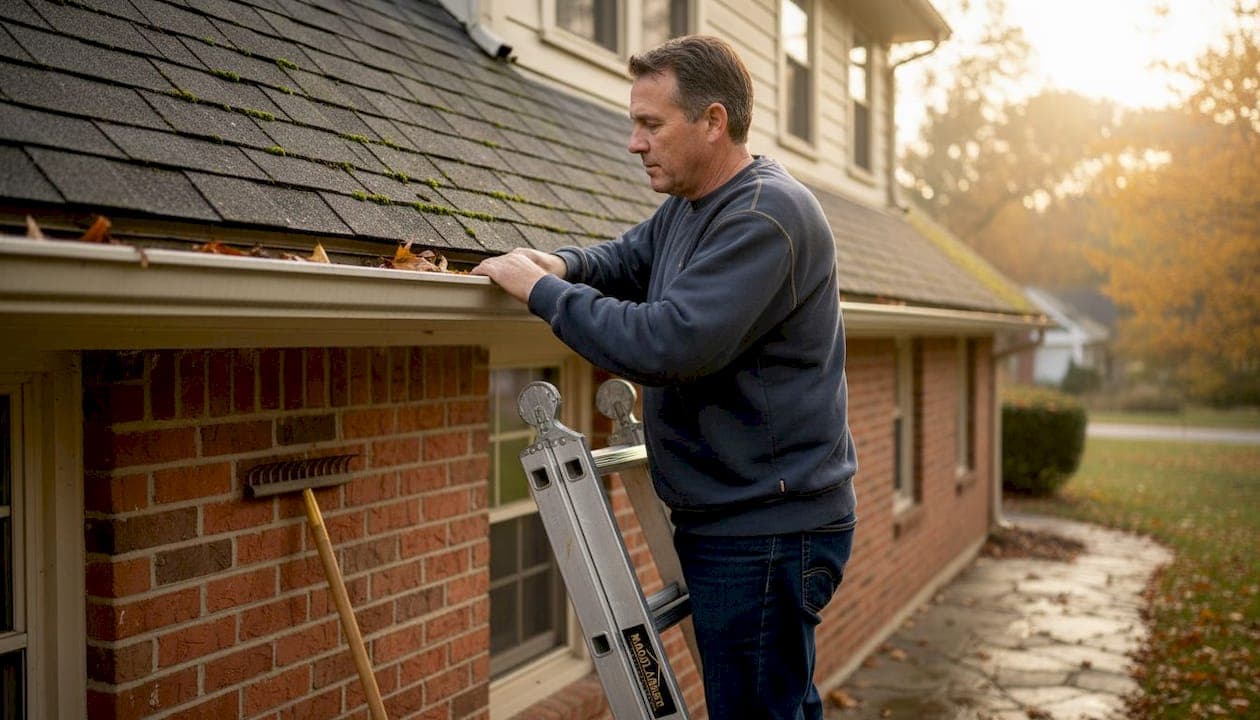
- Gutter cleaning in late fall after leaves drop and again in early spring
- Caulk and weatherstripping checks before winter to prevent drafts and moisture intrusion
- Sump pump tests before the rainy season to confirm it activates properly
- Foundation inspections to catch early signs of settling or water infiltration
Use a seasonal home maintenance checklist to keep these tasks organized and ensure nothing slips through the cracks across the year.
Pro Tip: Set a recurring calendar event for the first weekend of each season. Use that time to run through a short inspection checklist. It takes under an hour and catches issues early before they grow. If you have DIY safety upgrades on your list, that seasonal check is also a great time to knock those out.
Why preventive maintenance matters for Kansas City homes
Kansas City doesn't have a mild, forgiving climate. Winters bring hard freezes that stress pipes, foundations, and roofing materials. Spring arrives with heavy rain, flooding, and rapid temperature swings. Summer brings intense heat and humidity that push HVAC systems to their limits. Then fall strips the trees bare and fills your gutters with wet leaves. Every season here creates a new set of risks, and that means every season is a reason to be proactive.
Timely maintenance is critical for Kansas City homes due to these seasonal extremes and the rapid weather changes that characterize the region. Homes here also tend to be older. Large portions of the Kansas City metro were built in the 1950s through 1980s, and those properties come with aging plumbing, original roofing, and outdated weatherproofing. The combination of older construction and aggressive weather is a recipe for expensive problems if maintenance is ignored.
The reality is simple: a home that is regularly maintained holds its value, costs less to insure, and avoids the surprise expenses that force homeowners into high-interest emergency loans or rushed contractor decisions.
The top local trouble spots that Kansas City homeowners need to watch include:
- Gutters and downspouts that pull away from the home or overflow, directing water toward the foundation
- Sump pumps that sit untested for years until the spring melt overwhelms them
- Siding and exterior caulking that cracks under freeze-thaw cycles, letting moisture into wall cavities
- HVAC systems that run inefficiently due to dirty filters and neglected ductwork
- Decks and outdoor structures that develop rot or loose fasteners after prolonged exposure to weather
- Foundation walls that show efflorescence (white mineral deposits) or small cracks that widen over time
These aren't exotic problems. They're the exact issues that show up on home inspection reports across the metro every single day. Catching them early through Kansas City home maintenance tasks is how experienced homeowners stay ahead of the repair cycle.
One commonly cited industry estimate is that homeowners spend roughly 1% to 4% of their home's value on maintenance each year. Neglecting that investment doesn't eliminate the cost, it just shifts it into larger, more painful repair bills down the road.
How to build your preventive home maintenance schedule
Knowing you should do preventive maintenance is one thing. Actually doing it consistently is another. The key is building a realistic schedule that fits your life, your property type, and the Kansas City calendar.
Organizing your maintenance by season ensures nothing is missed and spreads the costs and effort out across the year rather than cramming it all into a single stressful weekend.
Here's a sample annual schedule to get you started:
| Season | Key tasks |
|---|---|
| Spring | HVAC tune-up, gutter cleaning, sump pump test, check roof for winter damage |
| Summer | Inspect deck and fence, check caulking around windows and doors, clean dryer vent |
| Fall | Gutter cleaning, weatherstripping check, furnace inspection, trim tree limbs |
| Winter | Inspect pipes in unheated spaces, test smoke and CO detectors, check attic insulation |
| Monthly | Replace HVAC filter, test GFCI outlets, check under sinks for leaks |
To build your own customized plan, follow these steps:
- Walk through your entire property and list every system and structure: roof, gutters, HVAC, plumbing, electrical, foundation, exterior, decks, and yard drainage.
- Assign a maintenance frequency to each item. Some tasks need monthly attention, others are seasonal, and a few are annual.
- Group tasks by season based on what Kansas City weather demands. Spring prep is different from fall prep.
- Add reminders to your phone or calendar at the start of each season with the specific task list attached.
- Track what you've done in a simple notebook or a shared document. This is especially useful for property managers handling multiple units.
- Review your schedule each year and adjust based on what you found during inspections or any new repairs completed.
Pro Tip: If you own a rental property or manage multiple units, look into home maintenance subscription options that bundle regular service visits into a predictable monthly cost. This eliminates the guesswork entirely and ensures your properties stay in top shape without requiring you to manage every task yourself.
For older homes, built before 1980, add extra scrutiny to plumbing connections, electrical panels, and insulation levels. These are areas where deferred maintenance compounds quickly and where small issues become major safety concerns.
How preventive home maintenance saves money and stress
Let's talk numbers. A standard HVAC service call runs $80 to $150. A full replacement, if you skip that maintenance, can run $5,000 to $12,000 depending on the system size. Cleaning your gutters costs $100 to $200 per visit. Repairing foundation damage caused by years of water overflow near the foundation can cost $5,000 to $30,000. The math is not subtle.
Investing in routine upkeep helps you avoid surprise repairs and save money over time, but the benefits go well beyond your bank account. Emergency repairs come with added costs that rarely show up in estimates: time off work, the stress of finding an available contractor fast, living with damage while repairs are scheduled, and the ripple effect of one problem causing secondary damage elsewhere.
The most impactful preventive tasks from a pure savings standpoint include:
- Replacing HVAC filters monthly to keep the system running efficiently and extend equipment life
- Cleaning gutters twice yearly to protect the foundation, fascia, and siding from water damage
- Sealing gaps and cracks around windows, doors, and the foundation to cut heating and cooling costs
- Testing and replacing smoke detectors and CO alarms to protect your household and your insurance standing
- Servicing your water heater annually by flushing sediment to extend its lifespan by several years
- Inspecting your roof after every major storm to catch small issues before water infiltrates the structure
Tracking home repair trends in your area also helps you understand which investments provide the strongest return and what buyers or renters in Kansas City prioritize.
Pro Tip: A simple rule for deciding when to call a pro versus tackle something yourself: if a task involves electricity, gas lines, or structural elements, call a licensed professional. For surface-level inspections, filter changes, caulking, and cleaning, most homeowners can handle those confidently with basic tools and a good checklist. The home maintenance subscription savings model works especially well for homeowners who want professional oversight without paying emergency rates.
The stress reduction angle is real and often underappreciated. Homeowners with a solid maintenance routine report far fewer middle-of-the-night crises, less anxiety about what might be wrong behind their walls, and greater confidence when it comes time to sell. A well-documented maintenance history can actually speed up a home sale and support a stronger asking price.
What most homeowners get wrong about preventive maintenance
After working with homeowners and property managers across the Kansas City metro, we've noticed a consistent pattern. People invest in what they can see. They remodel kitchens, replace flooring, update light fixtures. And those projects have their place. But the homeowners who stay financially ahead are the ones paying attention to the invisible infrastructure: the pipe connections, the attic insulation, the sump pump float switch, the weatherstripping on a door nobody uses.
The most dangerous maintenance mistakes aren't the dramatic ones. They're the slow, quiet failures that nobody notices until they've caused thousands in damage. A dryer vent that hasn't been cleaned in four years. A roof flashing that lifted slightly in a windstorm but looks fine from the ground. A bathroom exhaust fan that stopped working and let moisture build inside the wall cavity for two winters.
There's also a timing problem. Most homeowners think about maintenance in response to seasons or visible damage, not on a consistent schedule. But consistency is exactly what makes the difference. A roof inspected every spring will almost never fail catastrophically. A roof inspected "when we think about it" eventually will.
The counterintuitive truth about great maintenance is that you barely notice it. When everything is working, when no pipes burst and no ceilings collapse and no utility bills spike unexpectedly, that's not luck. That's the result of boring, consistent, scheduled care. Monitoring property value trends in Kansas City reinforces this point: well-maintained properties consistently outperform neglected ones in appraisals and sale prices.
The mindset shift worth making is this: stop thinking of maintenance as a chore and start treating it as a financial strategy. Every task on your checklist is a small premium you're paying to avoid a much larger claim later.
Expert help for preventive home maintenance in Kansas City
Preventive maintenance is manageable with the right plan, but keeping up with every task across every season can feel overwhelming, especially if you're managing a rental property or a larger home. That's where local professional support makes a real difference.

MaddLadder serves homeowners, landlords, and property managers across the Kansas City metro with dependable, licensed handyman services built around your schedule. From repair and replacement services that catch and fix issues before they escalate, to plumbing and electrical experts who handle the jobs you shouldn't DIY, the goal is simple: keep your property in excellent shape without the stress of managing it all alone. MaddLadder also offers tiered home maintenance subscription plans, including the Essential, Home Care, and Property Manager levels, so you get consistent professional oversight at a predictable cost. Contact us today for a free estimate and let's build a maintenance plan that works for your property.
Frequently asked questions
What are the most important preventive home maintenance tasks in Kansas City?
The most critical tasks include roof inspections, gutter cleaning, HVAC servicing, foundation checks, and sump pump tests. These priorities address Kansas City's weather-related maintenance demands specific to the region's seasonal extremes.
How much can preventive home maintenance save me per year?
Preventive maintenance can save Kansas City homeowners thousands annually by avoiding major repairs and protecting property value. Routine upkeep avoids surprise repairs and keeps costs predictable rather than reactive.
How often should I schedule preventive maintenance?
Many tasks should be handled seasonally while others need monthly or annual attention. Organizing home care by season helps homeowners cover all key tasks without anything falling through the cracks.
Can preventive maintenance boost my property's value?
Consistent preventive care helps keep your property in top condition and supports long-term value in the Kansas City market. Well-maintained homes retain value and attract buyers more effectively than properties with deferred maintenance histories.