
TL;DR:
- Regularly replacing fixtures enhances home safety, efficiency, and resale value.
- Upgrading fixtures saves water, energy, and reduces maintenance costs over time.
- Proactive fixture replacement prevents costly damages and improves tenant satisfaction.
Your home's fixtures are quietly working around the clock, and when they start to fail, the consequences aren't always obvious right away. A slow drip under the sink, a flickering light in the hallway, a toilet that runs a little longer than it should — these feel minor until they're not. Building maintenance research shows that 38% of building damage comes from failing building services like fixtures. For Kansas City homeowners and property managers, understanding when and why to replace fixtures isn't just about aesthetics. It's about protecting your investment, your wallet, and the people living in your home.
Table of Contents
- Why fixtures matter to your home's health and value
- The real risks: what can go wrong if you don't replace fixtures
- How and when to replace: finding the right fixture schedule
- Modern fixture benefits: water, energy, and aesthetics (with numbers)
- Our take: why proactive fixture replacement saves more than you think
- Ready to upgrade? How MaddLadder can help
- Frequently asked questions
Key Takeaways
| Point | Details |
|---|---|
| Fixtures impact property health | Neglecting to replace old fixtures can lead to costly damage and lower home value. |
| Proactive replacement saves money | Timely upgrades prevent emergencies and reduce water and energy bills. |
| Modern fixtures boost efficiency | Switching to newer models means better aesthetics, lower bills, and increased safety for your property. |
| Kansas City homes benefit most | Local property owners see the biggest improvements by replacing fixtures before they fail. |
Why fixtures matter to your home's health and value
Fixtures are the working parts of your home that you interact with every single day. Faucets, toilets, light switches, ceiling fans, showerheads, outlets — they handle water, electricity, and airflow. When they work well, you don't think about them. When they don't, everything feels off.
The condition of your fixtures directly ties to your property's value. Real estate agents and home inspectors flag outdated or failing fixtures immediately because buyers and renters notice them. A dripping faucet or a yellowed light switch suggests neglect, even if the rest of the home is in good shape. Staying current with repair trends and property value shows that small upgrades consistently move the needle on what a home is worth.
Here's what fixture condition affects in your home:
- Water usage and bills: Worn faucets and toilets waste water every hour they run
- Electrical safety: Old outlets and light fixtures increase shock and fire risk
- Energy efficiency: Outdated fixtures draw more power for the same output
- Indoor comfort: Poor ventilation fixtures affect air quality and humidity
- Curb appeal and resale: Modern fixtures signal a well-maintained home to buyers
"Inadequate maintenance causes 25% of building damage, with 20% linked to fixtures exceeding their service life and 38% from building services failures."
For landlords, the math is clear. Fixtures in rental units wear faster due to higher occupancy. A proactive replacement schedule keeps your units competitive, reduces tenant complaints, and protects you from liability when something breaks down at the worst possible time.
The real risks: what can go wrong if you don't replace fixtures
Most homeowners assume a fixture is fine as long as it technically works. That's a costly assumption. Fixtures degrade gradually, and the problems they cause often show up long before the fixture fully fails.
Here are the top risks of ignoring aging fixtures:
- Fire hazards: Flickering lights aren't just annoying — they signal loose wiring or an overloaded fixture that can ignite insulation or nearby materials
- Water damage: A slow faucet leak or running toilet causes mold, rot, and structural damage over time
- Rising utility bills: Inefficient fixtures quietly inflate your monthly costs without any obvious sign
- Legal and insurance exposure: Many homeowner insurance policies won't cover damage caused by deferred maintenance
- Failed inspections: Rental properties must meet safety codes, and outdated fixtures are a common violation
Pro Tip: Review your homeowner's insurance policy language around "deferred maintenance." If an inspector determines your leaky pipe or failing outlet was a known issue you ignored, your claim could be denied outright.
Light fixtures are a good example of how quickly small issues escalate. Fixture failures from flickering, overheating, and rust are leading causes of residential fire risk — and replacing them with modern LED-compatible units delivers 40 to 70% energy savings on top of eliminating the hazard.
Our plumbing and electrical services team sees this pattern constantly in Kansas City homes: a small problem that sat too long turned into a major repair. The fix wasn't hard — the delay was.
How and when to replace: finding the right fixture schedule
Knowing that you should replace fixtures is one thing. Knowing when is where most homeowners get stuck. There's no single rule that covers every fixture type, but there are practical guidelines that take the guesswork out.
Start by looking at age and wear. Most fixtures have a manufacturer-rated service life. When a fixture starts showing visible wear, corrosion, inconsistent performance, or requires frequent minor repairs, it's signaling that replacement is more cost-effective than continuing to patch it.
| Fixture type | Typical service life | Modern efficiency gain |
|---|---|---|
| Incandescent bulbs | 1,000 hours | LEDs last 25x longer |
| Standard faucet | 15–20 years | WaterSense models save 30%+ |
| Toilet (pre-1994) | Still running, often | Cuts flush use by 50%+ |
| Electrical outlets | 15–25 years | GFCI models add safety |
| Showerhead | 10–15 years | Low-flow saves 2,700 gal/year |
Signs it's time to replace a fixture:
- Rust, corrosion, or visible mineral buildup that won't clean off
- Frequent dripping, running, or inconsistent water temperature
- Flickering, buzzing, or slow-to-respond switches and lights
- A fixture that needs repair more than once per year
- Parts that are no longer available or supported
A dripping faucet wastes 3,000 gallons of water every year — that's not a small leak, that's a utility bill problem stacking up month after month.
As a general rule: repair when the fixture is relatively new and the issue is isolated. Replace when the fixture is aging, repairs are recurring, or an upgrade delivers meaningful savings. Our repair and replacement services and home repair scheduling guide can help you map out a realistic timeline for your specific home.
Modern fixture benefits: water, energy, and aesthetics (with numbers)
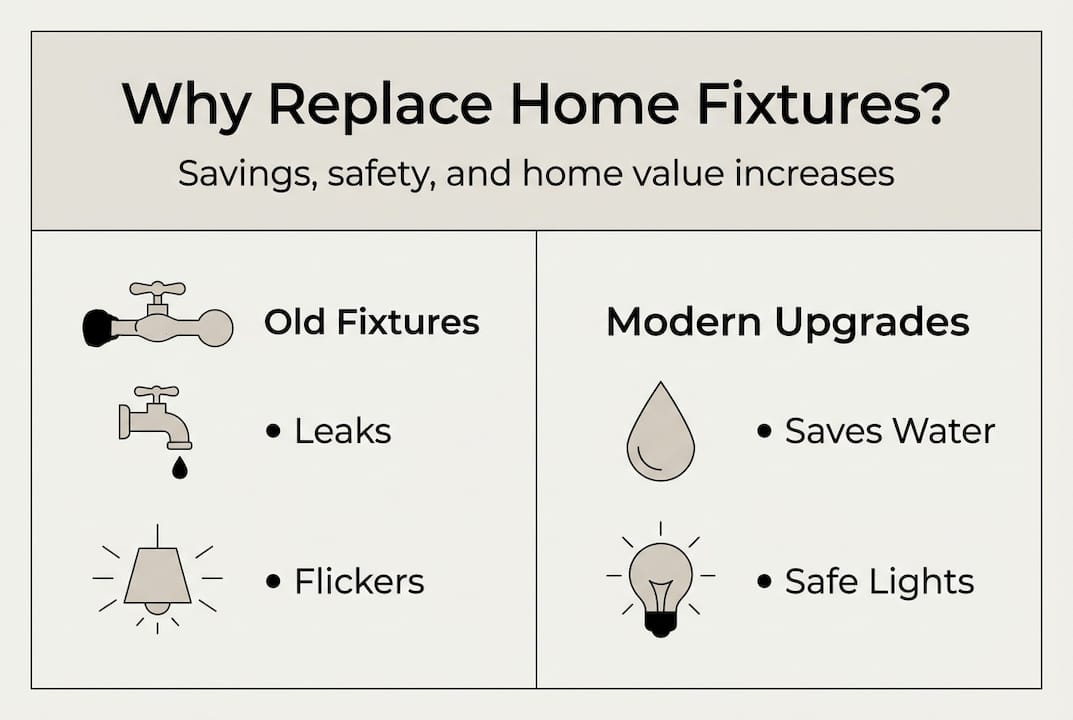
Upgrading your fixtures isn't just damage control. It's one of the highest-return moves a homeowner or landlord can make. The savings are real, measurable, and they compound over time.
Let's look at what the numbers actually say:
| Category | Old fixture | Modern fixture | Annual savings |
|---|---|---|---|
| Toilet (pre-1994) | 3.5–7 gallons per flush | 1.28 gallons per flush | Thousands of gallons/year |
| Faucet | 2.2 gal/min | 1.5 gal/min (WaterSense) | Up to 30% water reduction |
| Light fixture | Incandescent | LED equivalent | 40–70% energy savings |
| Showerhead | 2.5 gal/min | 1.8 gal/min | ~2,700 gallons/year |
Beyond the savings, modern fixtures dramatically improve how a home feels. Clean lines, brushed finishes, and updated designs in kitchens and bathrooms signal quality to guests, buyers, and renters alike. For property managers, upgraded units justify higher rents and see lower vacancy rates.
Benefits landlords and occupants both notice:
- Lower monthly utility bills that tenants appreciate immediately
- Fewer maintenance calls and repair emergencies
- A fresher, more modern aesthetic that photographs well for listings
- Improved water pressure and consistent temperatures
- Reduced risk of damage claims or lease disputes over failing systems
Pro Tip: Pair your fixture upgrades with smart home technology like smart thermostats and leak detectors. Together, they create a system that conserves energy passively and alerts you to problems before they become expensive. You can explore how smart efficiency upgrades stack with fixture replacements for even greater ROI.
Our take: why proactive fixture replacement saves more than you think
Here's the uncomfortable truth we've seen play out in Kansas City homes more times than we can count: the homeowners who "wait and see" almost always end up paying significantly more than the ones who stay ahead of it.
The reactive mindset feels logical. Why spend money on something that's still working? But fixtures don't fail cleanly. A toilet that's nearing the end of its life doesn't just stop flushing one day — it starts running constantly, drives up water bills for months, and eventually leaks into the subfloor. What could have been a $200 replacement becomes a $1,500 repair job.
The real cost of a failing fixture isn't the fixture itself — it's everything around it that gets damaged while you're deciding whether to act.
We've seen this same pattern with light fixtures, faucets, and electrical outlets. The fixture holds on just long enough for the surrounding damage to become serious. Tracking home repair trends shows that proactive homeowners consistently spend less over time because they control the timing and scope of repairs.
For landlords specifically, a failing fixture in a rental unit becomes a tenant relations problem fast. Complaints, emergency repair calls, and potential habitability disputes are all avoidable with a simple annual inspection schedule. The peace of mind that comes from knowing your home is current isn't just emotional — it's financial.
Ready to upgrade? How MaddLadder can help
Now that you've seen what's at stake, getting started doesn't have to be complicated.

MaddLadder serves homeowners and property managers across the Kansas City metro with reliable, licensed handyman services designed to make fixture upgrades simple and stress-free. Whether you need repair and replacement help for worn faucets and outdated lighting, or you're looking for plumbing and electrical pros to safely handle the technical work, our team handles it all. We also offer smart home upgrade services to pair your new fixtures with modern tech for maximum savings. Get a free estimate today and take the first step toward a safer, more efficient home.
Frequently asked questions
How often should I replace fixtures in my home?
Most plumbing and lighting fixtures should be inspected annually and replaced every 10 to 15 years, or sooner when efficiency or safety is compromised. Research confirms that 20% of building damage ties directly to fixtures that have exceeded their service life.
Do water-saving fixtures really lower utility bills?
Yes — upgrading to WaterSense-certified fixtures reduces water use meaningfully, and a single dripping faucet wastes 3,000 gallons per year, making replacement a fast payback investment.
Does replacing light fixtures really make my home safer?
Absolutely. Aging fixtures that flicker or overheat create genuine fire risk, while new LED-compatible fixtures eliminate that hazard and cut energy use by 40 to 70%.
Is it better to replace or repair an old fixture?
If a fixture is aging, shows recurring problems, or wastes energy or water, replacement is usually the smarter financial call. Fixtures exceeding service life account for 20% of all building damage, meaning repair costs tend to keep climbing on old units.