
TL;DR:
- Fixing a sticking door promptly prevents structural damage, security issues, and escalating repair costs.
- Most problems can be fixed easily by tightening hinges, upgrading screws, or lubricating hinges, often in under 30 minutes.
Fix a sticking door as soon as you notice it. That single action prevents escalating structural damage, security gaps, and repair bills that grow every week you wait. Tom Silva of This Old House puts it plainly: re-anchoring loose hinge leaves with longer screws is often all it takes, and most homeowners can do it in under 15 minutes. According to Angi, professional door repairs typically run hundreds of dollars, but a small investment in longer screws and minimal time can avoid that expense. The EPA recommends keeping indoor relative humidity within a moderate range to prevent wood swelling, which is the leading cause of seasonal sticking.
Delay carries real costs:
- Hinge screws strip further with every forced open/close cycle
- Wood fibers compress and warp, making the problem permanent
- Exterior doors lose their weatherseal, raising heating and cooling costs
- A door that won't close fully is a security vulnerability
- Rot sets in when moisture sits against unfinished or damaged wood edges
Table of Contents
- Why does delaying a sticking door repair make things worse?
- How do you diagnose exactly where a door is sticking?
- Quick fixes you can try right now (10–30 minutes)
- When should you sand or plane, and when is replacement smarter?
- When should you stop DIY and call a handyman?
- How do you keep doors from sticking again?
- Key Takeaways
- The fix that pros always try first
- Maddladder fixes sticking doors fast in Kansas City
- Useful sources
Why does delaying a sticking door repair make things worse?
A sticking door is never a static problem. Every time someone forces it open or slams it shut, the hinge screws work a little looser, the wood fibers compress a little more, and the finish on the rubbing edge wears away. What starts as a five-minute tighten-and-lubricate job can become a full jamb replacement within a season.
Cofer Brothers identifies the most common causes as humidity and wood swelling, loose or worn hinges, paint buildup, warping, rot, and house settling. Each of those causes gets worse with neglect. Loose hinges become stripped mortises. Paint buildup thickens until the door won't latch. Seasonal swelling that would have resolved with a dehumidifier instead compresses the wood grain permanently.
The financial stakes are real. A quick DIY fix costs almost nothing. A handyman visit to re-anchor hinges and plane a door typically runs $130–$375. Full door replacement, once rot or a warped frame is involved, can push well past that range, especially for an exterior door with a new frame and finish work. For a high-traffic rental property exterior door, a week of delay can mean the difference between a quick, low-cost fix and a much costlier replacement.
Secondary risks compound fast on exterior doors specifically. A door that won't fully close or latch is a security issue. A door with a worn or compressed weatherstrip leaks conditioned air year-round. And if the wood edge is bare where the finish has worn off from repeated rubbing, moisture gets in and rot follows.
How do you diagnose exactly where a door is sticking?
Run this checklist in under 10 minutes before you touch a screwdriver or sandpaper.
Tools you need: flathead screwdriver, Phillips screwdriver, a sheet of paper, a flashlight, and optionally a hygrometer to check indoor humidity.
- Open and close the door slowly. Watch and listen for where it catches, drags, or binds.
- Slide a sheet of paper around the door perimeter while it's closed. Where the paper won't slide, that's your contact zone.
- Look at the door edges for shiny spots, worn paint, or bare wood. Those rub marks tell you exactly where the friction is.
- Check the gap around the door with a flashlight. An uneven gap (wide at the top, tight at the bottom, or vice versa) points to a hinge problem or settling.
- Inspect all three hinges. Loose screws, visible gaps between the hinge leaf and the jamb, or a hinge that's pulling away from the wood are the most common culprits.
- Note whether the sticking is seasonal. If it started in summer or after a stretch of rain, humidity is the likely cause.
Decision hints: If sticking is seasonal and the door closes fine in winter, try humidity control before anything else. If multiple doors and windows are sticking at the same time, that pattern points to foundation or frame movement, not a door problem.
Pro Tip: Rub a piece of chalk or carbon paper on the door edge, then close and open the door once. The transfer mark on the jamb shows the exact binding point, so you sand only where it's needed.
Quick fixes you can try right now (10–30 minutes)
Most sticking doors respond to one of five fast fixes. Work through them in order before reaching for a plane or calling anyone.
- Tighten the hinge screws by hand. Use a manual screwdriver, not a drill. Power tools strip the holes before you know it. If screws spin without biting, move to step 2.
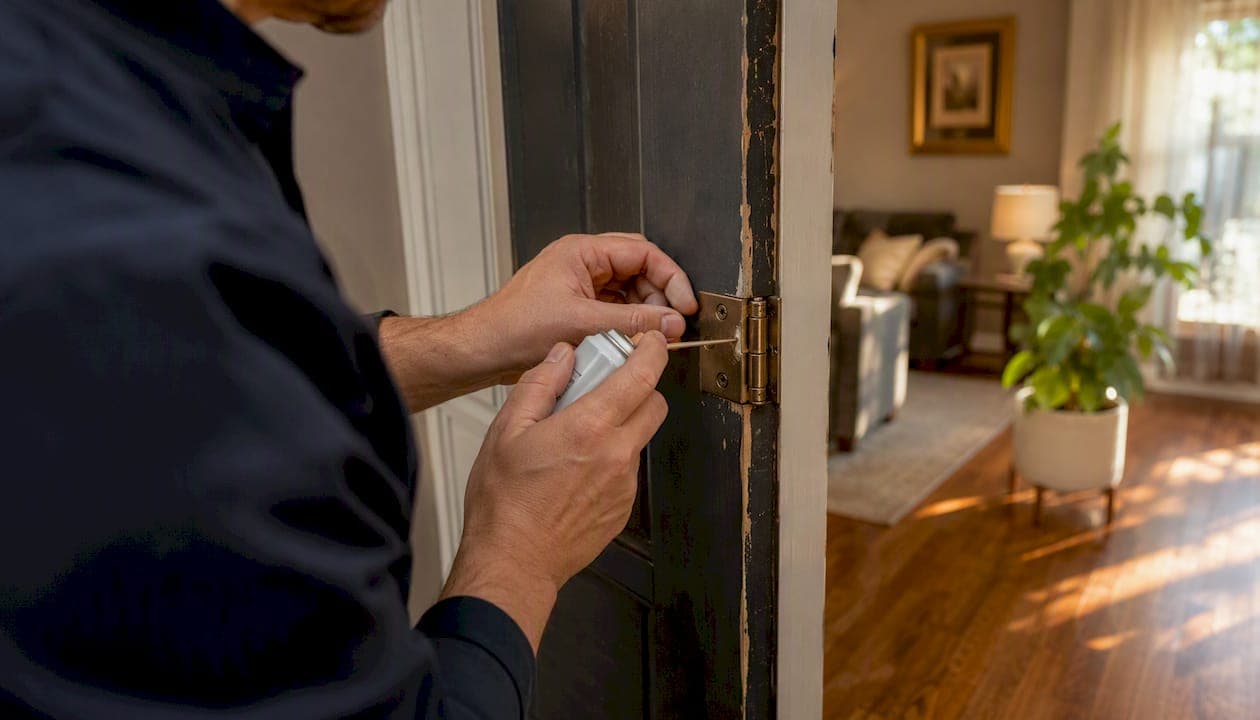
- Fix stripped screw holes with toothpicks and wood glue. Pack the hole with two or three wooden toothpicks and a dab of wood glue, let it dry for an hour, then snap off the excess and drive the screw back in. Bob Vila's guide confirms this is one of the most reliable DIY repairs before replacement is considered.
- Upgrade to longer screws. Swap standard ¾-inch hinge screws for 3-inch screws that reach the wall stud behind the jamb. This re-anchors the entire hinge leaf and often eliminates binding without any material removal. Tom Silva at This Old House recommends this step before assuming any structural cause.
- Lubricate the hinge pins. Lift each pin slightly and apply a dry lubricant or silicone spray. Avoid WD-40 on hinges; it attracts dust and gums up within months.
- Wax or soap the rubbing edge. Run a bar of soap or a candle along the door edge where it contacts the jamb. Takes 60 seconds and often buys enough clearance to close cleanly while you plan a longer fix.
- Adjust the strike plate. If the door closes but the latch won't catch, the strike plate may have shifted. Loosen its screws, tap it into alignment with a hammer and wood block, and retighten. The Home Depot's guide lists this as one of the standard first steps for interior doors.
Pro Tip: If the door still sticks after tightening and lubricating, check whether the hinge mortise (the recess cut into the jamb) is too shallow. A hinge sitting proud of the jamb surface pushes the door out of alignment. Shimming with a thin piece of cardboard under the hinge leaf often corrects this instantly.
When should you sand or plane, and when is replacement smarter?
Sanding or planing removes wood permanently, so it's the right call only after the quick fixes above have failed and you've confirmed the exact binding location.
Sand or plane when: the sticking is localized to one edge, caused by paint buildup or minor seasonal swelling, and the door and frame are otherwise sound.
Replace when: the wood is rotted, the door is severely warped (more than ¼ inch out of flat), the frame is out of square, or the door has been trimmed multiple times and is already undersized. For rental properties weighing repair versus replacement, this guide on upgrading entry doors lays out the decision clearly.
How to sand or plane safely
- Mark the binding area precisely using the chalk/carbon method above.
- Remove the door from its hinges and lay it flat on sawhorses.
- Use a hand plane or belt sander. Remove a thin pass, then rehang and test.
- Repeat until the door moves freely, then stop. Over-trimming creates permanent drafts.
- Seal or prime the trimmed edge immediately. Bare wood absorbs moisture and swells again within weeks.
As Popular Mechanics stresses, pinpoint the contact zone before removing any material and test frequently. One pass too many is a permanent mistake.
Safety note: Homes built before 1978 may have lead paint on door edges. Wear an N95 respirator and use wet-sanding methods to keep dust down.
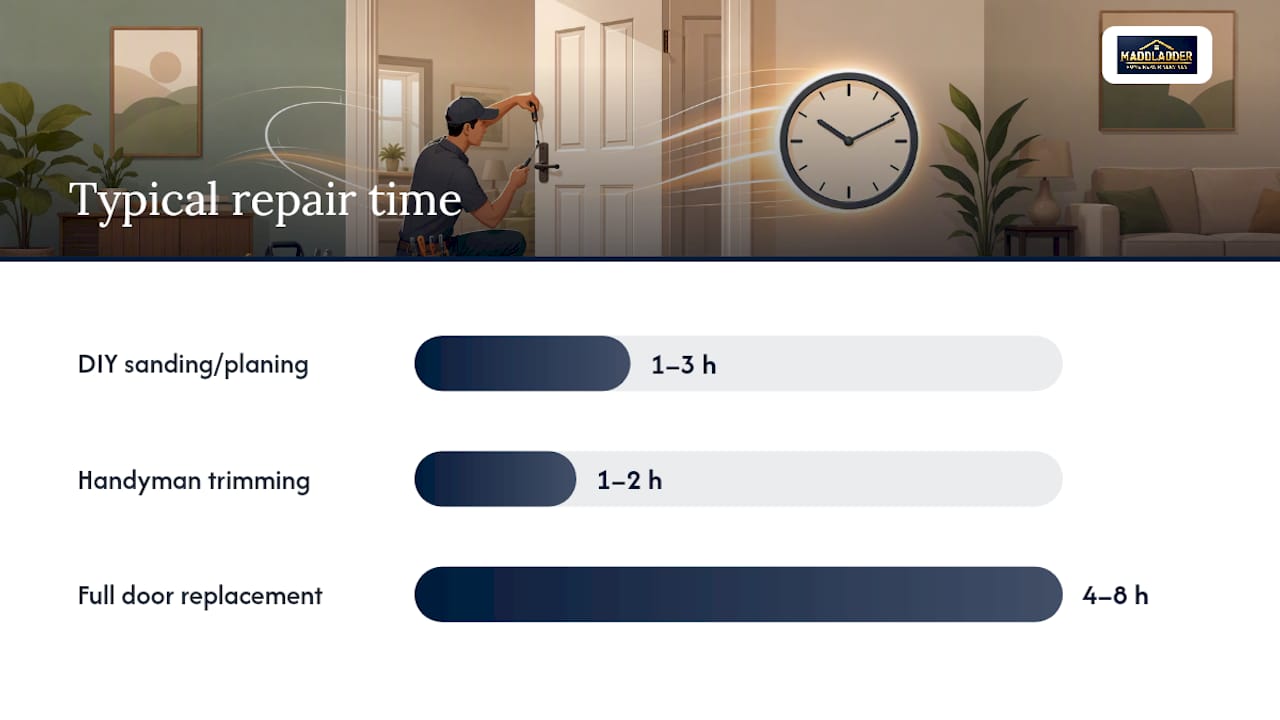
| Fix type | Typical cost | Time |
|---|---|---|
| DIY sanding/planing | — | 1–3 hours |
| Handyman trimming and refinishing | $130–$375 | 1–2 hours on-site |
| Full door replacement | $375+ | Half to full day |
Pro Tip: Always seal the trimmed edge with primer or exterior paint before rehanging. Skipping this step is the single most common reason a door swells and sticks again within one season.
When should you stop DIY and call a handyman?
Some door problems are beyond what a screwdriver and sandpaper can solve. Call a professional when you see any of these:
- Multiple doors or windows sticking simultaneously (possible foundation movement)
- Visible cracks in the drywall near door corners or uneven floors
- Rotted wood in the door, jamb, or sill
- A door that's warped enough to see daylight around the edges when closed
- Hinge mortises that are stripped beyond what toothpick repairs can fix
- A frame that's visibly out of square
A licensed handyman will typically re-anchor the jamb with long structural screws, re-mortise or shim hinges, plane and refinish the door edge, or measure for a replacement door. Expect a single-door handyman repair to take one to two hours on-site. A full replacement with a new pre-hung door runs longer.
Questions to ask before booking:
- Are you licensed and insured in Missouri/Kansas?
- Do you seal or prime the trimmed edge after planing?
- What's your warranty on the repair?
- Will you assess whether the frame is square before trimming the door?
How do you keep doors from sticking again?
Prevention costs almost nothing compared to repairs. A simple annual routine handles most of what causes sticking.
Quarterly checks:
- Open and close every exterior door and note any new drag or resistance
- Check that all hinge screws are snug (hand-tight, not over-torqued)
- Look for paint buildup on door edges, especially after repainting rooms
Annual maintenance:
- Lubricate all hinge pins with dry lubricant or silicone spray.
- Inspect weatherstripping on exterior doors and replace any sections that are compressed or cracked.
- Re-seal the bottom and side edges of exterior doors with a quality exterior primer or paint.
- Check indoor humidity with a hygrometer. Keep it between 30% and 50% year-round. A whole-house dehumidifier or consistent AC use in summer handles most of the work. Lowe's guidance on seasonal humidity confirms that controlling moisture and sealing door edges prevents most recurring sticking.
Pro Tip: Paint door edges at the same time you paint the face. Bare wood edges are the most common entry point for moisture, and most homeowners skip them entirely.
For landlords and property managers, keeping a simple log of which doors were checked and when takes two minutes per unit and prevents the kind of deferred maintenance that turns a $15 fix into a costly repair bill.
Key Takeaways
Fixing a sticking door quickly prevents stripped hinges, rot, energy loss, and security gaps that cost far more to correct than the original problem.
| Point | Details |
|---|---|
| Start with hinge screws | Tighten by hand first; upgrade to 3-inch screws if holes are stripped. |
| Diagnose before sanding | Use the paper or chalk test to find the exact binding point before removing any material. |
| Quick fixes work most of the time | Lubrication, wax, and screw tightening resolve the majority of sticking doors in under 30 minutes. |
| Call a pro for rot or frame issues | Multiple sticking doors, visible cracks, or rotted wood require a licensed handyman or contractor. |
| Maddladder handles it all | For Kansas City homeowners and property managers, Maddladder offers licensed door repairs, hinge re-anchoring, and planing from $75/hour. |
The fix that pros always try first
The most common mistake homeowners make is skipping straight to sanding. A door that drags along the top corner almost always has a loose bottom hinge, not a swollen top edge. Sand the top and you've removed material you can never put back. The hinge is still loose.
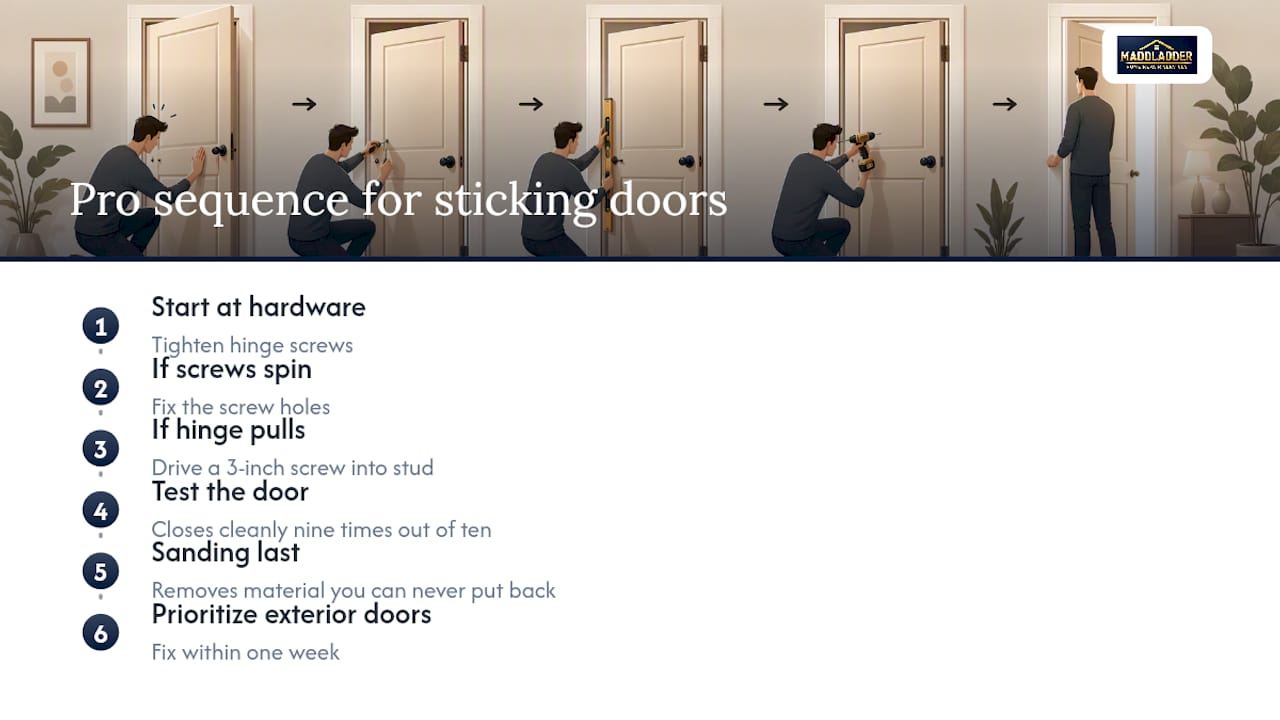
What actually works, consistently, is starting at the hardware. Tighten the screws. If they spin, fix the holes. If the hinge leaf is pulling away from the jamb, drive a 3-inch screw into the stud. Nine times out of ten, the door closes cleanly before you've touched the wood itself. That's the sequence Tom Silva teaches, and it's the sequence that saves homeowners from unnecessary replacements.
The other thing worth saying: exterior doors deserve more urgency than interior ones. A bedroom door that sticks is annoying. A front door that won't latch is a security problem and an energy drain. Prioritize by location and frequency of use, and don't let an exterior door problem sit past one week.
Maddladder fixes sticking doors fast in Kansas City
Sticking doors are one of the most common calls Maddladder gets from Kansas City homeowners and property managers, and most jobs are resolved in a single visit. The team handles hinge re-anchoring, strike plate adjustments, door planing and refinishing, and full door replacement when the situation calls for it. All work is done by licensed, insured technicians.

One-time handyman service starts at $75/hour, with free estimates available before any work begins. For landlords managing multiple units, Maddladder's subscription maintenance plans cover routine door checks, hinge lubrication, and seasonal inspections so small problems never become expensive ones. Whether you need a quick fix today or want a repair and replacement partner you can count on year-round, getting a free estimate takes less than two minutes. Call or book online at maddladder.com.
Useful sources
- How to Fix a Door That Sticks — This Old House
- How to Fix a Sticking Door | Popular Mechanics
- Repairing a sticky door — Lowe's
- How to fix an interior door — The Home Depot
- What Causes Doors to Stick and How Do I Fix It? — Cofer Brothers
- Sticking Doors and Windows: Is It Just an Old House or a Foundation Issue | Foundation Restoration
- How to Fix a Sticking Door — Bob Vila