
TL;DR:
- Upgrading entry doors in rental properties improves security, energy efficiency, and curb appeal, boosting tenant retention. Steel and fiberglass doors recover their costs through increased property value and lower maintenance expenses. Proper hardware and timely replacement enhance durability, reduce repairs, and maximize investment returns.
Upgrading entry doors in rental properties is one of the highest-return improvements a landlord can make. A new steel or fiberglass door improves security, cuts energy bills, and signals to prospective tenants that the property is well maintained. Understanding why upgrade entry doors rentals matter goes beyond aesthetics. The right door reduces emergency repair calls, lowers vacancy rates, and can recover its full installation cost through increased property value. This guide covers every angle: security, energy efficiency, curb appeal, cost analysis, and material selection.
Why upgrade entry doors in rentals: the core case
Entry door replacement is an asset strategy, not just a maintenance task. A worn or hollow-core door tells tenants the property is neglected. A solid steel or fiberglass door tells them the opposite. That perception directly affects how long tenants stay and how quickly vacant units fill.
Exterior entry doors last 15–20 years. Proactive replacement before failure avoids emergency repair costs and can save up to 20% annually on energy bills. That combination of avoided costs and energy savings makes door replacement one of the few upgrades that pays you back on two separate tracks simultaneously.
Steel entry doors recover up to 100% of their installation cost through increased property value. Fiberglass doors recover about 80%. Those figures put entry doors ahead of most interior upgrades in terms of financial return.
What security improvements come from upgrading rental entry doors?
Security is the most immediate benefit of entry door upgrades for rentals. Tenants notice the door before they notice anything else about a unit. A door that looks and feels solid creates confidence. One that rattles or has a worn frame creates doubt.
Modern steel and fiberglass doors resist forced entry far better than hollow-core or aging wood doors. Steel doors in particular offer high resistance to kicks and pry attacks because the material does not flex the way wood does under pressure. Fiberglass doors resist denting and warping, which keeps the frame seal tight over time.
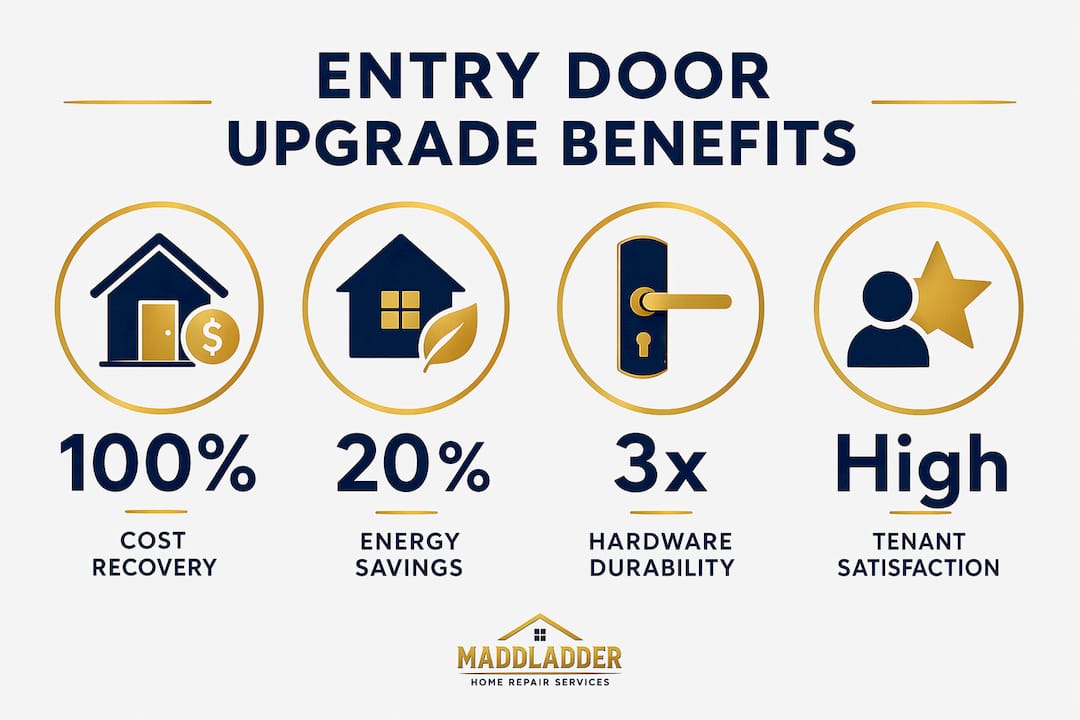
Hardware selection matters as much as the door itself. ANSI Grade 1 or Grade 2 hardware lasts up to three times longer than standard residential-grade hardware, with only a 15–20% higher upfront cost. For high-turnover rentals, that lifespan difference eliminates multiple hardware replacement cycles over a single tenancy period.
Key security features to prioritize:
- Multi-point locking systems that engage the frame at three or more points instead of one
- Reinforced strike plates secured with 3-inch screws that reach the wall stud
- Through-bolts on hinges and locksets to prevent hardware from ripping out under force
- ANSI Grade 1 deadbolts rated for high-cycle use in shared or multi-unit buildings
Pro Tip: Use through-bolts on all locksets in rental units. Standard screws pull out under repeated heavy use or a single forced-entry attempt. Through-bolts anchor the hardware through the door itself, not just the surface.
Visible, solid entry doors reassure tenants and reduce vacancy by improving perceived security and satisfaction. That is not a soft benefit. Lower vacancy means more consistent rental income.
How do upgraded entry doors reduce energy costs in rentals?
Energy efficiency is the second major reason to replace aging entry doors. Old doors lose heat and air conditioning through three failure points: gaps in the weatherstripping, cracks in the frame seal, and poor insulation in the door core itself. Modern doors address all three.
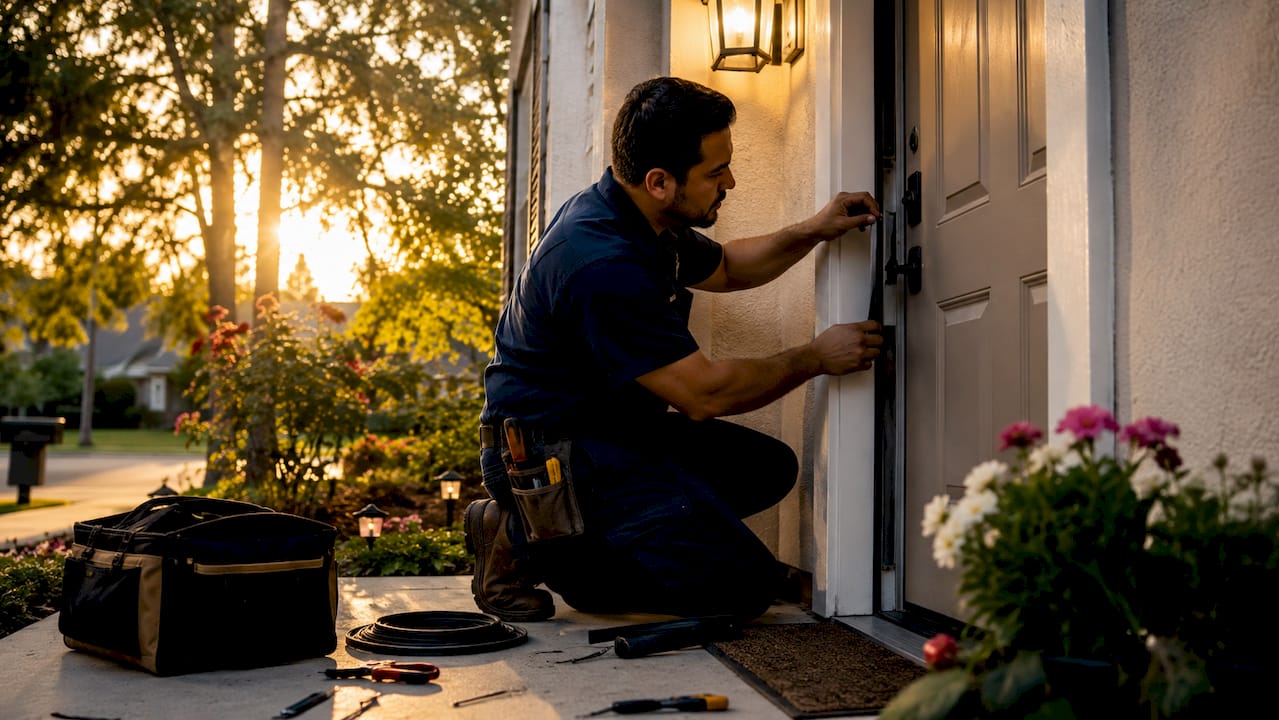
New entry doors reduce air infiltration, which leads to immediate improvements in indoor comfort and HVAC efficiency. Less air leakage means the heating and cooling system runs less often to maintain temperature. That reduction shows up directly in monthly utility bills.
| Door type | Insulation core | Weatherstripping | Energy savings potential |
|---|---|---|---|
| Steel with foam core | High | Multi-point seal | Up to 20% annually |
| Fiberglass with foam core | High | Multi-point seal | Up to 20% annually |
| Hollow-core wood | None | Basic or worn | Minimal |
| Solid wood | Moderate | Variable | Moderate, degrades over time |
Fiberglass and steel doors with polyurethane foam cores outperform solid wood on thermal resistance. Solid wood expands and contracts with humidity, which breaks the frame seal over time and creates drafts. Steel and fiberglass hold their shape, keeping weatherstripping compressed and effective.
Pro Tip: When installing a new door, replace the weatherstripping on the frame at the same time. A new door against old, compressed weatherstripping loses a significant portion of its energy benefit within the first season.
Proper installation is non-negotiable. A high-quality door installed with gaps in the frame performs no better than the door it replaced. Shimming, sealing, and threshold adjustment all affect the final energy performance.
What aesthetic and marketability advantages come from entry door upgrades?
Curb appeal is a direct driver of rental demand. A prospective tenant's first impression of a unit forms at the front door. A fresh, well-fitted door in a neutral, modern color signals quality before they step inside.
The benefits of upgraded entry doors extend to how tenants treat the property. Tenants who feel they are renting a quality unit tend to take better care of it. That behavioral shift reduces wear and tear costs over the lease term.
Practical aesthetic choices for rental entry doors:
- Neutral colors such as charcoal gray, black, or deep navy photograph well for listings and appeal broadly
- Standard sizing (32-inch or 36-inch width) makes future replacement faster and cheaper
- Simple panel styles age better than ornate designs and suit multiple property types
- Satin or matte finishes hide fingerprints and minor scuffs between turnovers
Avoid custom colors, decorative glass inserts, or oversized doors in rental units. These choices narrow the appeal to future tenants and complicate replacement. The goal is a door that looks sharp, fits the property style, and is easy to source again in five years.
Steel doors recover up to 100% of their cost through property value increases. That figure reflects both the material quality and the marketability signal a new door sends to appraisers and prospective buyers if the property is ever sold.
What are the cost and maintenance benefits of replacing rental entry doors?
The financial case for replacement over repeated repair is straightforward. Emergency technician visits for door repairs cost $300–$500 per incident. A door that requires two or three emergency calls per year generates $600–$1,500 in unplanned costs before any parts are counted.
A quality steel or fiberglass door with ANSI Grade 1 hardware eliminates most of those calls. The door does not warp, the hardware does not fail under normal use, and the frame seal holds. That reliability reduces the time your maintenance staff or outside contractors spend on door-related issues.
Replacing low-quality doors with fewer high-quality ones saves property managers more than 20 staff hours per month across a portfolio. That time savings translates directly to lower labor costs and faster response on other maintenance priorities.
- Calculate your current repair spend. Add up all door-related service calls, hardware replacements, and weatherstripping repairs over the past 12 months.
- Compare against replacement cost. A quality steel door with installation typically runs $500–$1,200 depending on size and hardware.
- Factor in energy savings. A 20% reduction in annual energy costs adds to the return calculation on top of avoided repair costs.
- Account for tenant retention. A unit that fills faster and holds tenants longer generates more revenue than one that sits vacant between repairs.
Repair is appropriate for a door with years of useful life remaining. Replacement is the right call when the door is past its 15-year mark, when repair costs are recurring, or when the door is failing on security or energy performance.
How to choose the right entry doors and hardware for rental properties
Rental properties need durable, low-maintenance doors that minimize repair calls and hold up through multiple tenant turnovers. The material choice drives everything else.
Steel is the top choice for exterior entry doors in rentals. It resists forced entry, holds paint well, and does not warp or crack. Steel doors with a polyurethane foam core deliver strong thermal performance alongside physical durability.
Fiberglass is the best alternative where corrosion is a concern, such as in humid climates or coastal areas. Fiberglass does not rust, resists denting, and can be finished to mimic wood grain if the property style requires it. It recovers about 80% of installation cost through property value.
Solid wood is the wrong choice for most rentals. It warps with humidity changes, requires periodic refinishing, and degrades faster in high-traffic settings. The maintenance burden outweighs any aesthetic benefit.
For hardware, use ANSI Grade 1 deadbolts and Grade 2 or better lever handles. Avoid polished brass or chrome finishes. Satin stainless steel or PVD-coated finishes maintain their appearance through multiple turnovers without showing wear. Polished finishes scratch and tarnish quickly, which makes units look neglected even when the door itself is in good condition.
Pro Tip: Standardize your door size and hardware brand across your portfolio. When a lockset or handle needs replacement, you can order the same part without measuring or sourcing a match. That consistency cuts maintenance time significantly.
For landlords thinking about broader property improvements, tech upgrades in rental properties such as smart locks and video doorbells pair naturally with a new entry door installation and can justify higher rent. Maintaining strong home exterior maintenance practices alongside door upgrades keeps the full first impression consistent.
Key Takeaways
Entry door upgrades deliver measurable returns through security improvements, energy savings, and reduced maintenance costs, making them one of the most financially sound investments in a rental property portfolio.
| Point | Details |
|---|---|
| Energy savings are real | New steel or fiberglass doors can cut annual energy costs by up to 20%. |
| Hardware grade matters | ANSI Grade 1 hardware lasts up to 3x longer with only 15–20% higher upfront cost. |
| Steel doors pay for themselves | Steel entry doors recover up to 100% of installation cost through property value gains. |
| Emergency repairs are expensive | Unplanned door repair visits cost $300–$500 each; replacement eliminates most of them. |
| Material choice drives outcomes | Steel and fiberglass outperform solid wood on durability, energy efficiency, and maintenance. |
What I've learned after watching landlords patch the same door twice
Most landlords I work with wait too long to replace entry doors. They patch the weatherstripping, replace the lockset, and call it done. Then six months later, the frame is drafty again, the new lockset is stiff, and a tenant is complaining about security. The door was never the problem they thought it was. The door was past its useful life, and every repair was just delaying the inevitable.
The landlords who get ahead of this treat door replacement as a scheduled asset decision, not a reactive fix. They look at the door's age, count the repair calls from the past two years, and make the call before a tenant complains or a lock fails at midnight. That approach saves money and keeps tenants happy. A tenant who never has a door problem never thinks about leaving because of one.
The other thing I have seen consistently: landlords who standardize their door and hardware choices across their portfolio spend dramatically less time on maintenance coordination. Same door model, same lockset brand, same finish. When something needs attention, the part is already familiar and easy to source. That kind of operational discipline is what separates a profitable portfolio from one that constantly bleeds small costs.
— Jennifer
Maddladder handles entry door upgrades for Kansas City landlords
Replacing an entry door is straightforward when you have the right team. Maddladder serves landlords and property managers across the Kansas City metro with professional door installation, hardware upgrades, and frame repairs that get done right the first time.
Maddladder's repair and replacement services cover everything from single-unit door swaps to multi-property portfolio upgrades. The team also handles smart home upgrades like video doorbells and smart locks that pair with new door installations. Free estimates are available, and response times are fast. If your rental doors are overdue for an upgrade, Maddladder makes the process simple and cost-effective.
FAQ
How long do rental property entry doors last?
Exterior entry doors typically last 15–20 years. Proactive replacement before that threshold avoids emergency repair costs and maintains energy performance.
What door material is best for rental properties?
Steel and fiberglass are the best choices for rental entry doors. Both resist warping, hold up through high-traffic use, and outperform solid wood on durability and energy efficiency.
How much can a new entry door save on energy costs?
A new steel or fiberglass door with proper installation and weatherstripping can reduce annual energy costs by up to 20% by cutting air infiltration and reducing HVAC load.
What hardware grade should landlords use for rental doors?
ANSI Grade 1 or heavy-duty Grade 2 hardware is the standard for rental properties. It lasts up to three times longer than residential-grade hardware with only a 15–20% higher upfront cost.
Do entry door upgrades increase rental property value?
Steel doors recover up to 100% of their installation cost through increased property value. Fiberglass doors recover about 80%, making both strong investments for landlords planning to hold or sell.