

TL;DR:
- A routine home inspection is a non-invasive visual assessment of major systems and structural components by a licensed inspector. It typically lasts 2 to 4 hours and helps identify safety hazards, maintenance needs, and potential repairs to protect property value. Most inspections reveal issues, making the report a vital tool for negotiation, planning maintenance, and increasing long-term home safety.
A routine home inspection is a visual, non-invasive evaluation of a property's major systems and structural components to identify current condition, safety hazards, and maintenance needs. Conducted by a licensed inspector, this process covers everything from the foundation to the roof, including HVAC, plumbing, and electrical systems. The industry standard term is "property condition assessment" for commercial properties, but for residential homes, "home inspection" is the recognized professional term used by organizations like ASHI (American Society of Home Inspectors) and InterNACHI. A typical inspection takes 2 to 4 hours and costs between $200 and $500 depending on home size and age. That investment can save you thousands in unexpected repairs or give you real leverage at the negotiating table.
What is routine home inspection and what does it cover?
A routine home inspection covers every major system and structural element a licensed inspector can observe without cutting into walls or moving furniture. The scope is defined by professional standards set by ASHI and InterNACHI, which together represent the two most widely recognized credentialing bodies in the U.S. residential inspection industry. A thorough home inspection checklist covers 200 or more items across structural, mechanical, and safety categories. That breadth is what makes the inspection so useful as a baseline document for any property.
Here is what a standard inspection includes:
- Structural elements: Foundation, framing, walls, ceilings, floors, and roof structure
- Roofing: Shingles, flashing, gutters, and drainage
- Exterior: Siding, grading, driveways, decks, and porches
- Electrical systems: Panel condition, wiring type, outlets, and grounding
- Plumbing: Pipes, water heater, fixtures, and drainage
- HVAC: Heating and cooling equipment, ductwork, and filters
- Interior: Doors, windows, stairs, and visible insulation
- Safety features: Smoke detectors, carbon monoxide detectors, and fire hazards
- Fireplaces and appliances: Visible condition and basic function
What inspections do NOT cover is equally important to understand. Inspectors cannot perform invasive tests, analyze code compliance, or move personal belongings. Blocked access areas get labeled "not inspected," which can trigger buyer concern and sometimes require costly follow-up inspections. Inspections also do not include specialized tests for radon, mold, asbestos, or lead paint unless those are added as separate services.
Pro Tip: Ask your inspector upfront whether they follow ASHI or InterNACHI standards. Both require written reports and carry liability protections, but knowing which standard applies helps you interpret the report's scope accurately.

What common issues do home inspections reveal?
86% of home inspections find at least one issue requiring professional attention. That figure means a clean inspection report is the exception, not the rule. Buyers and homeowners who expect a perfect report are setting themselves up for unnecessary disappointment.
The most frequently discovered problems fall into predictable categories:
- Roofing defects: Missing shingles, improper flashing, and aging materials that risk water intrusion
- Electrical hazards: Outdated wiring types like aluminum or knob-and-tube, double-tapped breakers, and missing GFCI outlets near water sources
- Plumbing issues: Slow drains, corroded pipes, water heater age or improper venting, and leaking fixtures
- HVAC problems: Dirty filters, aging equipment, and ductwork leaks that reduce efficiency
- Moisture and mold: Water staining, active leaks, and mold growth in basements, attics, and bathrooms
- Structural concerns: Foundation cracks, uneven floors, and compromised framing
One in four homes has critical defects, meaning hazards serious enough to affect safety, habitability, or major system function. That statistic reframes the importance of home inspections from a formality into a genuine risk management tool.
The financial stakes are real. Buyers who use inspection reports as negotiating tools save an average of $14,000 off purchase prices. That number reflects the leverage a documented defect list creates. A cracked heat exchanger or aging electrical panel is not just a safety issue. It is a line item you can negotiate as a repair credit or price reduction before closing.
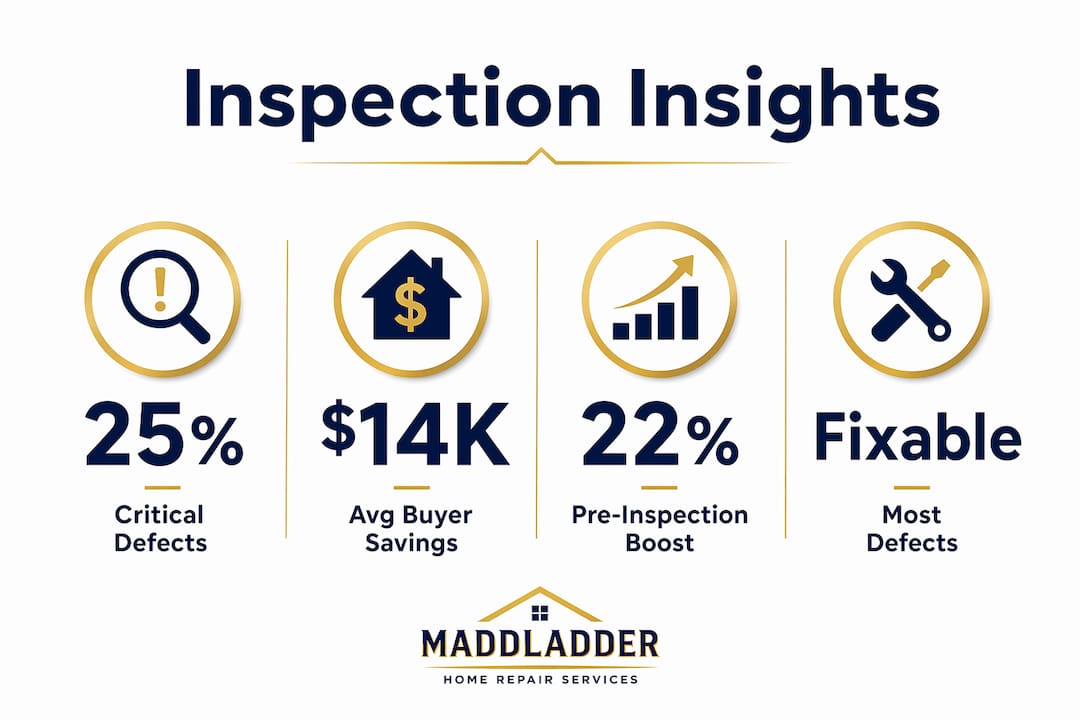
For sellers, the calculus is different but equally compelling. Homes with pre-inspection reports are 22% more likely to close successfully because buyers enter negotiations with fewer surprises. Sellers who invest in a pre-listing inspection control the narrative around their property's condition rather than reacting to a buyer's inspector findings under contract pressure.
The National Association of Realtors confirms that most defects are fixable and should be treated as negotiating points rather than deal-breakers. A long defect list is not a reason to walk away from a property. It is a roadmap for what needs attention and who should pay for it.
How does the home inspection process work?
The inspection process follows a consistent structure regardless of the inspector or property. Understanding what to expect during a home inspection removes anxiety and helps you get more value from the experience.
- Schedule the inspection early. For buyers, schedule the inspection immediately after an offer is accepted. The inspection contingency window is typically 7 to 14 days, and you want time to review the report and negotiate before the deadline.
- Hire a credentialed inspector. Look for ASHI or InterNACHI certification. Both organizations require continuing education and carry professional standards that protect you legally.
- Attend the inspection in person. Attending in person gives buyers an understanding of defects that no written report can fully replicate. You can see the difference between a cosmetic crack and a structural one when the inspector points it out directly.
- Prepare the property for access. Sellers should unlock all panels, clear access to the attic and crawl space, and move items away from the water heater and electrical panel. Blocked areas get marked "not inspected" and create buyer concerns.
- Review the written report carefully. Most reports arrive within 24 hours and include photos, severity ratings, and recommended actions. Read every section, not just the summary.
- Use the report strategically. For buyers, prioritize safety and structural items for negotiation. For homeowners, treat the report as a maintenance schedule and address items by urgency.
The inspection report carries an important legal caveat. Reports are informational snapshots, not warranties or insurance policies. Liability is typically capped at the inspection fee itself. This means the inspection tells you what was visible on the day of the inspection. It does not guarantee the home's condition going forward.
Pro Tip: Keep your inspection report permanently. Consumer Reports notes that inspectors often provide free follow-up consultations years after the inspection. That report becomes a reference document for every repair, renovation, or future sale.
How to use inspection findings for maintenance and home value
A routine property assessment does not end when the inspector leaves. The report is most valuable when you treat it as a living maintenance document rather than a one-time transaction record.
Prioritizing repairs from an inspection report follows a clear logic. Safety hazards come first: faulty wiring, gas leaks, structural instability, and mold. These are not cosmetic issues and they do not improve with time. Deferred maintenance items like aging roofs or HVAC systems come next because they have predictable failure timelines. Cosmetic issues like peeling paint or worn caulking can be scheduled around budget and season.
For homeowners who have lived in their homes for years, periodic inspections serve a different purpose than a pre-purchase assessment. Regular home safety checks catch slow-developing problems like foundation settlement, plumbing corrosion, and insulation degradation before they become expensive emergencies. Many experienced homeowners schedule an inspection every three to five years as a proactive maintenance strategy.
The connection between inspection findings and home value is direct. Buyers and appraisers both discount properties with deferred maintenance. Addressing items from an inspection report, especially in categories like roofing, electrical, and HVAC, protects your appraised value and reduces the discount buyers will demand at sale. Reviewing home repair trends that align with inspection findings helps homeowners prioritize upgrades that deliver the strongest return.
| Inspection category | Maintenance action |
|---|---|
| Electrical system | Schedule an electrician to address panel issues, outdated wiring, or missing GFCI outlets |
| Plumbing | Replace aging water heaters, fix slow drains, and seal any active leaks promptly |
| HVAC | Follow a year-round HVAC maintenance checklist to extend equipment life and efficiency |
| Roofing | Address missing shingles and flashing before the next rain season to prevent water damage |
| Safety features | Install or replace smoke detectors, carbon monoxide detectors, and update any fire hazards |
Key takeaways
A routine home inspection is the single most effective tool for understanding a property's true condition, negotiating from knowledge, and building a maintenance plan that protects long-term value.
| Point | Details |
|---|---|
| Inspection scope is broad | A standard checklist covers 200-plus items across structure, mechanical systems, and safety features. |
| Defects are the norm | 86% of inspections find issues, so a long report is expected, not alarming. |
| Attend in person | Physical presence during the inspection gives buyers context no written report can replace. |
| Reports are not warranties | Liability is capped at the inspection fee; treat the report as a diagnostic snapshot, not a guarantee. |
| Use findings as a roadmap | Prioritize safety and structural repairs first, then schedule deferred maintenance by timeline and budget. |
Why I think most homeowners misuse their inspection report
I have seen the same pattern repeat itself across hundreds of conversations with homeowners and buyers. They treat the inspection report as a pass/fail verdict on the property rather than what it actually is: a detailed medical chart for a building. A doctor's report listing high cholesterol, a vitamin deficiency, and a minor knee issue does not mean the patient is dying. It means the patient has a clear picture of what to address and in what order.
The biggest missed opportunity I see is sellers who skip the pre-listing inspection entirely. They hand the buyer's inspector full control of the narrative at the most financially sensitive moment in the transaction. A seller who already knows about the aging water heater can price it in, disclose it confidently, and avoid the panic negotiation that happens when a buyer's inspector flags it under contract. That 22% higher close rate for homes with pre-inspection reports is not a coincidence. It reflects the power of controlling information.
The second mistake is treating the inspection report as a one-time document. Homeowners who pull out their inspection report five years later and use it to benchmark what has changed are doing something genuinely smart. They are comparing current conditions against a documented baseline, which makes every repair decision more informed and every contractor conversation more specific.
My honest advice: schedule a home estimate before any major move or renovation, attend every inspection yourself, and keep the report in a permanent home file. The inspection is not a formality. It is the most honest document your property will ever generate.
— Jennifer
How Maddladder helps you act on inspection findings
After an inspection surfaces issues, the next step is finding a reliable professional to address them. Maddladder serves homeowners and property managers across the Kansas City metro with exactly the services that inspection reports most commonly flag.

From plumbing and electrical repairs to drywall, fixture replacements, and smart home upgrades like thermostats and security cameras, Maddladder covers the full range of post-inspection repair needs. Flexible pricing starts at $75/hour for one-time services, and subscription maintenance plans keep your property in shape year-round. Free estimates make it easy to get started without commitment. Contact Maddladder today to turn your inspection report into a completed repair list.
FAQ
What is a routine home inspection exactly?
A routine home inspection is a visual, non-invasive evaluation of a residential property's major systems and structural components, conducted by a licensed inspector. It covers structural elements, HVAC, plumbing, electrical, and safety features, and typically takes 2 to 4 hours.
How much does a routine home inspection cost?
A standard home inspection costs between $200 and $500 depending on the size and age of the home. That cost is minor compared to the average $14,000 buyers save in negotiations when they use inspection findings effectively.
Does a home inspection pass or fail a property?
No. A home inspection is informational, not a pass/fail evaluation. The report documents current conditions and identifies defects, but it does not determine whether a property is legally habitable or code-compliant.
How should I prepare my home for an inspection?
Sellers should unlock all access panels, clear space around the water heater and electrical panel, and provide access to the attic and crawl space. Blocked areas are marked "not inspected," which can raise buyer concerns and require costly follow-up visits.
How often should homeowners schedule a routine property assessment?
Homeowners who are not buying or selling benefit from scheduling an inspection every three to five years. Periodic assessments catch slow-developing issues like foundation settlement, plumbing corrosion, and insulation loss before they become major repair expenses.