
The fastest way to reduce rental repair costs is to stop treating maintenance as a reactive expense. Fund a dedicated reserve, run a preventive schedule, screen tenants carefully, write a tight lease, and build a vetted vendor network before you need one. Those five levers, applied consistently, keep small problems from becoming large bills.
Start this week:
- Open a separate maintenance reserve account and transfer 1–2% of your property's value annually into it
- Schedule your first preventive inspection using a seasonal checklist
- Pull your lease and add damage-reporting timelines, renters insurance requirements, and a clear wear-and-tear clause
- Identify two or three licensed contractors in your area and get their emergency rates in writing
- Log every open maintenance request with a timestamp and status
Deferred maintenance incidents can be costly when small problems escalate, and preventive programs can cut annual repair costs significantly according to industry data. The math is straightforward: a $200 seasonal inspection prevents a $4,000 emergency call.
Key Takeaways
Proactive maintenance, funded reserves, and documented inspections are the three pillars that consistently lower rental repair costs over time.
| Point | Details |
|---|---|
| Fund the reserve first | Set aside 1–2% of property value annually in a dedicated account before anything breaks. |
| Preventive schedule cuts costs significantly | A calendar-based maintenance program reduces emergency repairs and annual costs measurably. |
| Inspections protect your deposit rights | Signed, photo-backed move-in and move-out reports are the evidentiary foundation for deductions. |
| Vendor network beats emergency search | Pre-vetted contractors with agreed rates avoid the typical emergency pricing premium. |
| Maddladder subscription plans | Scheduled preventive visits and pre-negotiated rates convert emergency costs into predictable monthly expenses. |
Table of Contents
- 1. Know what counts as maintenance versus a repair
- 2. Budget correctly: the 1–2% rule and your reserve account
- 3. Build a preventive maintenance schedule you'll actually use
- 4. Run move-in, mid-tenancy, and move-out inspections properly
- 5. Use tenant screening and lease language to shift cost risk
- 6. Design a maintenance request workflow that stops small problems from growing
- 7. Build a vendor network before you need it
- 8. Invest in durable materials and energy-efficient upgrades
- 9. Know the real cost ranges and the cheap fixes that prevent big bills
- 10. Know when to DIY and when to call a licensed professional
- 11. A maintenance plan template you can copy today
- The trade-offs worth accepting and the ones worth fighting
- Maddladder keeps your rental running without the emergency markup
- Sources
1. Know what counts as maintenance versus a repair
Not every cost is the same kind of cost, and misclassifying them leads to bad budgets and bad lease language.
Preventive maintenance is scheduled work done before anything breaks: changing HVAC filters, flushing water heaters, cleaning gutters. Routine maintenance covers minor recurring tasks like re-caulking a tub or tightening door hardware. Repairs are reactive: a burst pipe, a failed water heater, a broken window. Capital expenditures (CapEx) are major replacements with multi-year useful life: a new roof, HVAC system, or kitchen appliances.
Why does the distinction matter? Because preventive and routine maintenance are predictable and budgetable. Repairs and CapEx are not, which is exactly why a reserve fund exists. Landlords who lump all four into one "maintenance" line item consistently underfund the reserve and overspend on emergencies.
Tenant responsibility is the other side of this. Lease language should clearly assign minor upkeep to tenants: replacing light bulbs, keeping drains clear, changing smoke detector batteries. Landlords cover structural systems, appliances, and anything that affects habitability. Spell it out in writing. Vague leases produce expensive disputes.
2. Budget correctly: the 1–2% rule and your reserve account
Based on property value, an appropriate annual reserve amount can be calculated and saved monthly.
Budget callout: Older properties (pre-1980), properties in harsh climates, or units with aging HVAC and plumbing systems should sit at the higher end or above it. The 1% rule is a floor, not a target.
Keep this money in a dedicated account, completely separate from operating funds. Mixing reserve cash with rent deposits or operating income is how landlords end up borrowing from next month's rent to pay for this month's broken furnace. A separate account also makes tax recordkeeping cleaner.
Pro Tip: Set up an automatic monthly transfer equal to one-twelfth of your annual reserve target. Round up to $400 and let the buffer accumulate.
Track every maintenance transaction with at minimum: date, vendor name, invoice number, work category (preventive, repair, CapEx), and whether the issue was tenant-caused or normal wear. A simple spreadsheet works. Property management software like Buildium or AppFolio adds automation, but the fields matter more than the tool.
3. Build a preventive maintenance schedule you'll actually use
A calendar-based preventive maintenance schedule prevents many emergency repairs and creates a dated paper trail that helps in disputes. The schedule below covers the highest-impact systems.
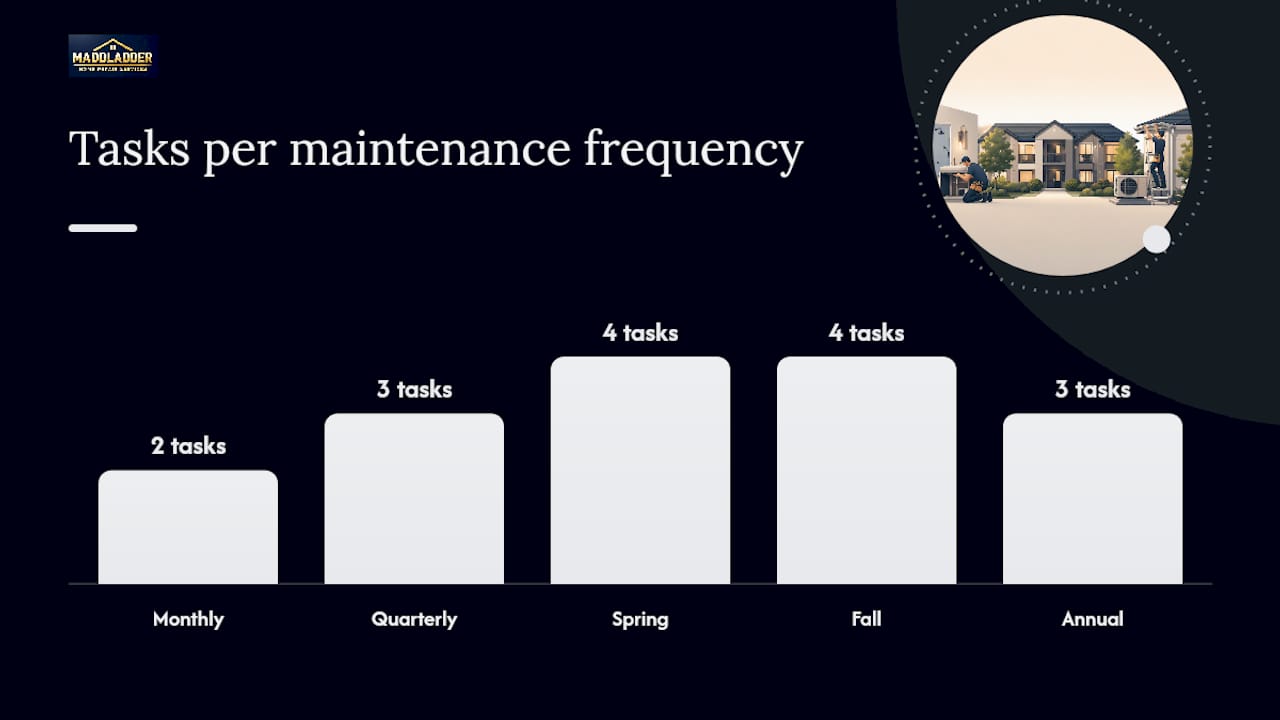
| Frequency | Task | System |
|---|---|---|
| Monthly | Replace HVAC filters, test smoke/CO detectors | HVAC, Safety |
| Quarterly | Inspect plumbing under sinks, check caulk/grout, test GFCIs | Plumbing, Electrical |
| Spring | Clean gutters, inspect roof, check exterior caulk, service A/C | Exterior, HVAC |
| Fall | Drain hoses, inspect furnace, clean dryer vents, check weatherstripping | HVAC, Appliances |
| Annual | Flush water heater, inspect attic/crawlspace, test all appliances | Plumbing, Structural |
Document every visit with timestamped photos, the name of whoever performed the work, and the invoice or receipt attached to the record. That paper trail is what separates a landlord who wins a deposit dispute from one who loses it.
Simple tenant behaviors like running exhaust fans, clearing lint traps, and reporting leaks materially reduce mold, fire risk, and premature appliance failure. Include a one-page tenant maintenance guide at move-in. It costs nothing and pays back in fewer calls.
Pro Tip: Label every appliance with a small sticker showing the purchase date, model number, and warranty expiration. When a technician arrives, you know immediately whether the repair is covered.
For a complete HVAC-specific checklist, the landlord HVAC maintenance checklist from Air Control is worth bookmarking.
4. Run move-in, mid-tenancy, and move-out inspections properly
A written, photo-backed move-in inspection signed by both landlord and tenant is the evidentiary starting point for any damage claim. Without it, you have no baseline to compare against at move-out.
Move-in inspection checklist:
- Photograph every room from multiple angles before the tenant takes possession
- Document the condition of walls, flooring, fixtures, appliances, windows, and doors individually
- Note any pre-existing damage in writing on the inspection form
- Have the tenant sign and date the completed form; give them a copy
- Store photos with timestamps in a cloud folder organized by unit and date
Mid-tenancy inspections are the most overlooked tool in a landlord's kit. Conduct them every 6–12 months with proper written notice (check your state's required notice period, typically 24–48 hours). Look for unreported leaks, unauthorized pets, HVAC filter condition, and any damage developing before it worsens. Log findings with photos and share a written summary with the tenant.
Move-out inspection:
- Walk the unit within 24 hours of vacancy
- Photograph everything again using the same angles as move-in
- Compare side-by-side and note damage beyond normal wear and tear
- Attach itemized repair invoices to any deduction from the security deposit
- Return the deposit (or itemized deduction statement) within your state's statutory deadline, typically 14–30 days
A brief legal note: every state sets its own deposit-return deadline and documentation requirements. Missing the deadline can forfeit your right to deduct anything, regardless of the actual damage. Know your state's rules.
5. Use tenant screening and lease language to shift cost risk
The single most cost-effective decision you make is who you rent to. A tenant who pays on time, reports issues promptly, and treats the unit with care will cost you a fraction of what a careless or dishonest tenant costs.
Screening checklist:
- Credit score: most landlords set a minimum of 620–650; higher for luxury units
- Income verification: gross monthly income at least 3x the monthly rent
- Eviction history: any prior eviction is a serious red flag; verify through a dedicated screening service
- Rental references: call previous landlords directly, not just the most recent one
- Criminal background: follow Fair Housing Act guidelines and apply criteria consistently
Lease clauses that reduce your exposure:
- Damage vs. wear: define normal wear and tear explicitly (small nail holes, minor scuffs) versus tenant-caused damage (large holes, stains, broken fixtures)
- Reporting timelines: require tenants to report leaks, HVAC issues, and appliance failures within 24–48 hours of discovery; make delayed reporting a lease violation
- Right of entry: specify notice requirements for inspections (typically 24 hours) and emergency access rights
- Pet addendum: charge a pet deposit or pet rent, require flea treatment at move-out, and specify damage liability
- Renters insurance: require a minimum $100,000 liability policy and list yourself as an interested party so you receive cancellation notices
Requiring renters insurance and listing yourself as an interested party channels certain tenant-caused damage claims to the tenant's insurer rather than to your reserve fund. It also signals to the tenant that they carry financial responsibility for their own negligence. For more on protecting deposits through tenant-friendly repair practices, see tenant-friendly repair ideas that protect your deposit.
6. Design a maintenance request workflow that stops small problems from growing
A missing workflow is how a $200 running toilet becomes a $1,800 subfloor replacement. Tenants who don't know how to report issues, or who don't believe anyone will respond, stop reporting. Problems fester.
Triage rubric:
- Emergency (same-day response): active water leak, no heat in winter, gas smell, electrical hazard, broken exterior lock. Call the tenant back within 2 hours and dispatch within 4.
- Urgent (24–48 hours): no hot water, HVAC malfunction in moderate weather, appliance failure affecting habitability. Acknowledge within 24 hours with a diagnosis and timeline.
- Routine (3–7 days): running toilet, loose cabinet hinge, minor drywall damage, dripping faucet. Acknowledge within 48 hours; schedule within the week.
Log every request with: date and time received, tenant name and unit, issue description, triage category, assigned vendor, date completed, and invoice amount. Link the invoice and any photos to the log entry. This record becomes your cost-tracking database and your legal protection if a tenant later claims the issue was ignored.
A consistent, fast-acknowledgment workflow does something counterintuitive: it increases tenant reporting. Tenants who trust you'll respond tell you about the slow drain before it backs up. That early warning is worth more than any single repair.
7. Build a vendor network before you need it
Emergency contractor rates are often substantially higher than standard pricing. The most expensive time to find a contractor is during a crisis. Build your preferred network now, when you have time to vet properly.
Vendor vetting checklist:
- Valid state license and proof of insurance (general liability + workers' comp)
- At least three verifiable references from other landlords or property managers
- Written emergency rate schedule agreed to in advance
- Committed response time for urgent calls
- Warranty terms on parts and labor
- Willingness to provide written estimates before starting work
Preferred network strategy: assign recurring tasks (HVAC tune-ups, gutter cleaning, appliance checks) to two or three trusted vendors who earn your loyalty through consistent work. For large projects, get at least three competitive bids. Never use a single-source contractor for major work.
| Approach | Cost Stability | Emergency Priority | Predictability |
|---|---|---|---|
| Ad-hoc contractors | Low | None | Low |
| Preferred vendor network | Medium | Moderate | Medium |
| Subscription handyman plan | High | High | High |
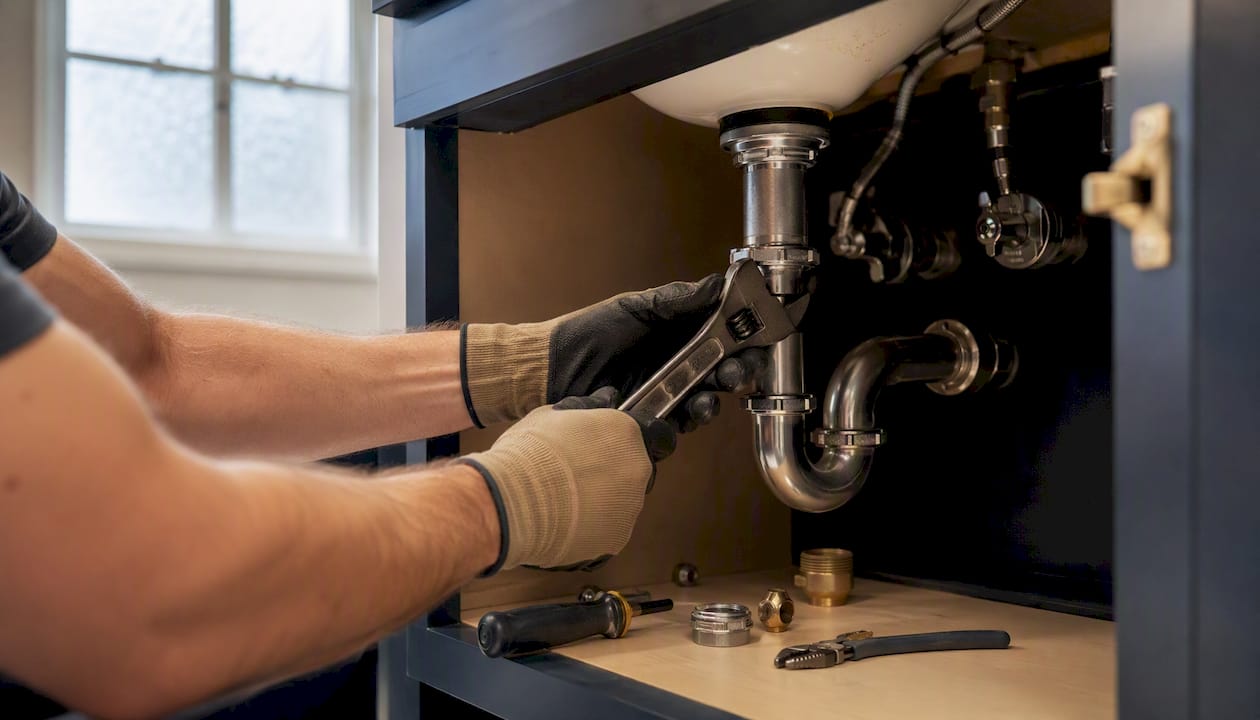
A subscription handyman plan, like those offered by Maddladder, locks in pre-negotiated rates, schedules preventive visits automatically, and puts your property at the front of the queue when something urgent comes up. For landlords managing multiple units, that predictability converts what would be a series of emergency calls into a manageable monthly line item. See why landlords need professional repairs for a detailed breakdown of the liability case for licensed work.
8. Invest in durable materials and energy-efficient upgrades
Cheap materials cost more over time. A $0.89/sq ft laminate floor that needs replacing every four years costs more than a $2.50/sq ft vinyl plank that lasts fifteen. The math applies across the property.
High-return durability choices:
- Flooring: luxury vinyl plank over cheap laminate or carpet in high-traffic areas
- Fixtures: brushed nickel or stainless over chrome; they hide wear and resist corrosion
- Paint: eggshell or satin finish in living areas; it wipes clean and resists scuffing
- Tile: sealed grout in bathrooms and kitchens; unsealed grout absorbs moisture and mold
Energy-efficiency upgrades extend equipment life and lower operating costs, providing measurable reductions in utility-related maintenance. LED lighting lasts roughly 25 times longer than incandescent bulbs and uses a fraction of the energy. A programmable or smart thermostat reduces HVAC runtime and wear. An annual HVAC tune-up costs $80–$150 and can extend system life by years while catching refrigerant leaks before they become compressor failures.
Upgrade callout: Prioritize investment by cost-risk system. Water damage is the most expensive and most preventable. HVAC failure drives the most emergency calls. Roof condition affects everything below it. Spend there first.
Pro Tip: When replacing an appliance, register the warranty immediately and attach the receipt to the unit's maintenance log. You'd be surprised how often a still-warranted water heater gets replaced because no one checked.
For smart home upgrades that add both convenience and early-warning capability, Maddladder's smart home upgrade services cover thermostats, cameras, and video doorbells that can flag issues before they escalate.
9. Know the real cost ranges and the cheap fixes that prevent big bills
Knowing what repairs actually cost helps you decide when a $50 part is worth buying today.
Quick actions you can take today:
- Replace washing machine and refrigerator water supply hoses if they are more than five years old
- Clean or schedule gutter cleaning before the next rain season
- Change HVAC filters and note the date on the unit
- Install GFCI outlet covers in bathrooms and kitchens if not already present
- Check under every sink for slow drips or water stains
The decision rule is simple: if a $50 fix prevents a claim that would exceed your deductible or drain your reserve, do it now. Use the reserve for genuine emergencies, not for deferred $30 parts. For more budget-friendly property fixes with strong ROI, the pattern holds across most common repair categories.
10. Know when to DIY and when to call a licensed professional
Some repairs are safe and appropriate for a hands-on landlord. Others carry liability, code, and safety risks that make DIY a false economy.
Safe DIY territory:
- Paint touch-ups and full interior repaints
- Replacing weatherstripping and door sweeps
- Swapping faucet aerators and showerheads
- Patching small drywall holes (under 6 inches)
- Replacing light switch covers, outlet plates, and cabinet hardware
- Caulking tubs, sinks, and windows
Always hire a licensed professional:
- Any electrical wiring beyond replacing a switch or outlet cover
- Gas line work of any kind
- Structural changes, load-bearing wall modifications
- Plumbing beyond fixture swaps (supply line replacements, drain work inside walls)
- Roof repairs beyond minor shingle replacement
The liability exposure from improper electrical or gas work is not theoretical. A fire or injury traced to unpermitted work can void your insurance and expose you to personal liability. For plumbing and electrical work specifically, Maddladder's licensed plumbing and electrical services handle the repairs that carry real risk if done wrong.
For drywall specifically, drywall repair tips for Kansas City rentals walks through what a landlord can handle versus what needs a pro.
11. A maintenance plan template you can copy today
A good maintenance plan has four components: a calendar, a vendor contact sheet, an inspection checklist, and a request log. Here is a compact version you can adapt immediately.
Calendar (by frequency):
- Monthly: HVAC filter, smoke/CO detector test, visual check of unit exterior
- Quarterly: Under-sink plumbing, GFCI test, caulk and grout condition, dryer vent check
- Spring: Gutters, roof, A/C service, exterior caulk, hose bibbs
- Fall: Furnace service, dryer vent cleaning, weatherstripping, drain hoses
- Annual: Water heater flush, attic/crawlspace inspection, appliance condition review
Inspection checklist items:
- Walls and ceilings (stains, cracks, holes)
- Flooring (scratches, stains, lifting edges)
- Fixtures (faucets, toilets, showerheads)
- Appliances (operation, cleanliness, hoses)
- Windows and doors (seals, locks, hardware)
- Smoke and CO detectors (test and date)
- HVAC filter condition and date last changed
Sample tenant message (move-in): "Welcome to [Address]. Enclosed is your maintenance guide. Please report any leaks, HVAC issues, or appliance problems within 24 hours by texting [number] or emailing [address]. Prompt reporting protects your deposit and keeps the unit in good condition for you."
Sample vendor message (scheduling): "Hi [Vendor], I'd like to schedule the fall HVAC tune-up at [Address] during the week of [Date]. Please confirm availability and send a written estimate beforehand."
Pro Tip: Drop the calendar into Google Calendar with annual recurrence and invite your property manager or maintenance contact. Every task becomes a reminder, not a memory test.
For a comprehensive template and additional guidance, the property maintenance guide for landlords covers customization by property age, climate, and unit count.
The trade-offs worth accepting and the ones worth fighting
Most landlords overspend in one of two places: emergency repairs they could have prevented, or capital improvements that don't move the needle on rent or retention. The real discipline is knowing which category you're in before you write the check.
Normal wear and tear is not a battle worth fighting. Paint fades. Carpet compresses. Grout discolors. Trying to charge tenants for every minor cosmetic issue burns goodwill, invites disputes, and often costs more in small-claims time than the item is worth. Accept it, budget for it, and price your rent to cover it.
What you should fight for: documented damage, unreported leaks that worsened, and any cost that a signed inspection report and a clear lease clause can support. That documentation is what converts a dispute into a recovery. Without it, you're arguing from memory against someone who has nothing to lose.
The one thing to prioritize if you do only one thing: fund the reserve and enforce the inspection protocol. Every other strategy in this guide builds on those two. A landlord with a funded reserve and a signed move-in inspection can absorb almost any single repair event without panic. One without either of those is always one bad month away from a cash crisis.
Subscription handyman services fit here as a structural answer to the vendor-availability problem.
Maddladder keeps your rental running without the emergency markup
Landlords managing even one or two units know the math: a single emergency plumbing call at after-hours rates can wipe out two months of positive cash flow. Maddladder's subscription maintenance plans for property managers are built specifically to prevent that scenario.

With tiered plans starting at the Essential level and scaling to a dedicated Property Manager plan, Maddladder covers routine preventive visits, small repairs, smart home installs, and rental turnover make-ready work, all at pre-negotiated rates. No scrambling for a contractor at midnight. No inflated emergency premiums. Scheduled visits mean problems get caught in the $50 range, not the $4,000 range.
One-time jobs start at $75/hour for landlords who need a specific repair handled fast. For ongoing coverage, the subscription plans convert unpredictable repair bills into a fixed monthly line item you can actually plan around. Maddladder serves the Kansas City metro area with licensed, insured technicians and free estimates on every job.
Request a free estimate or browse Maddladder's full service and plan options to find the right fit for your portfolio.
Sources
- The Rental Property Maintenance: A Season-by-Season Preventive Plan (2026) · DiscoveryMark
- How to handle tenant-caused property damage without losing money — VerticalRent
- Rental Property Maintenance: $4,200/Deferred Repair 2026
- How to Reduce Rental Property Maintenance Costs: 25 Proven Strategies for Landlords
- Preventive Maintenance for Rental Property: Investor Guide