

TL;DR:
- A professional building-envelope inspection identifies the true failure point, ensuring durable, code-compliant repairs.
- Landlords should document repairs with verification tests and detailed records to protect legal interests and prevent repeat issues.
Schedule a licensed building-envelope inspection, then authorize a documented, code-compliant repair. That's the move. Not tape, not plastic film, and not a rolled-up towel on the sill. A professional building-envelope inspection identifies the actual failure point, whether that's failed sealant, a misaligned sash, or rotted framing, so the repair lasts years instead of one winter.
After the inspection, expect your contractor to recommend one or more of these durable paths:
- Reseal and caulk: Complete removal of old sealant, substrate prep, and application of UV-resistant elastomeric or silicone sealant
- Weatherstripping and hardware replacement: Full sash and jamb weatherstrip systems with properly adjusted latches and compression hardware
- Reglazing or partial sash replacement: When glass or glazing beads have failed but the frame is still sound
- Retrofit thermal inserts: Custom-fit interior panels that create an insulating air pocket without touching the original sash
- Targeted full-unit replacement: Required when rot, structural failure, or severe glazing failure makes everything else a temporary fix
Every option above should come with post-repair verification, either a blower-door test or thermal imaging, plus a written workmanship warranty.
Table of Contents
- Why do drafts keep coming back in rental windows?
- How professionals diagnose window air leaks
- Permanent, code-compliant repair options contractors use
- What do repairs typically cost and how long do they take?
- What are landlords legally required to do about drafty windows?
- How do you choose the right contractor for rental window repairs?
- Key Takeaways
- The tradeoff most landlords get wrong
- Maddladder handles the inspection, the repair, and the paperwork
- Useful resources for landlords and property managers
Why do drafts keep coming back in rental windows?
Most recurring drafts trace to one of six root causes, and most quick fixes miss all of them.
- Failed exterior or interior sealant: UV exposure and thermal cycling crack sealant within a few seasons, especially when new material was applied over old without full removal.
- Deteriorated glazing or IGU failure: Glazing compound dries out and shrinks; insulated glass units lose their seal and allow air infiltration at the glass edge.
- Sash or frame misalignment: Wood frames swell, settle, and warp. Vinyl frames can rack. Either way, the sash no longer compresses against the weatherstrip.
- Rotted framing or sill: Rot destroys the substrate that sealant and weatherstripping need to grip. No amount of caulk holds on punky wood.
- Failing hardware and locks: A latch that doesn't pull the sash tight leaves a gap. Hardware failure is one of the most overlooked causes of air leakage in double-hung and casement windows.
- Building settlement: Gaps open at jambs and trim as a structure shifts over time, creating air paths that have nothing to do with the window unit itself.
Layering new materials over degraded ones almost always fails within a season. Proper weatherproofing requires full removal of brittle or adhesion-compromised material before anything new goes on.
Pro Tip: If you press a putty knife into the sill and it sinks more than a quarter inch, you have rot. No sealant repair is permanent until that substrate is replaced.
How professionals diagnose window air leaks
A contractor worth hiring doesn't guess. The diagnostic process runs in a specific order.
- Visual inspection (interior and exterior): Check sealant condition, glazing integrity, frame and sill for rot or deformation, and gap measurements at all four sash edges.
- Operational checks: Open and close every sash. Test every latch and lock. A sash that binds or a latch that doesn't seat fully is a documented defect.
- Blower-door or whole-unit pressurization test: Depressurizes the building to amplify air movement, making leaks detectable that are invisible under normal conditions.
- Infrared or thermal imaging: Maps temperature differentials across the wall assembly, pinpointing air paths behind trim, at jambs, and through glazing edges.
- Smoke pencil or fog test: Used for localized leak confirmation once the blower-door identifies a zone.
- Water intrusion check: Combined air and moisture failures often share the same gap; document both to avoid callbacks.
Documenting the defect matters as much as finding it. The inspection report should include annotated photos, gap measurements, and a written scope that ties each recommended repair to a specific habitability or code requirement. That paper trail protects you legally and gives any contractor a clear target.
Permanent, code-compliant repair options contractors use
Reseal and exterior caulking
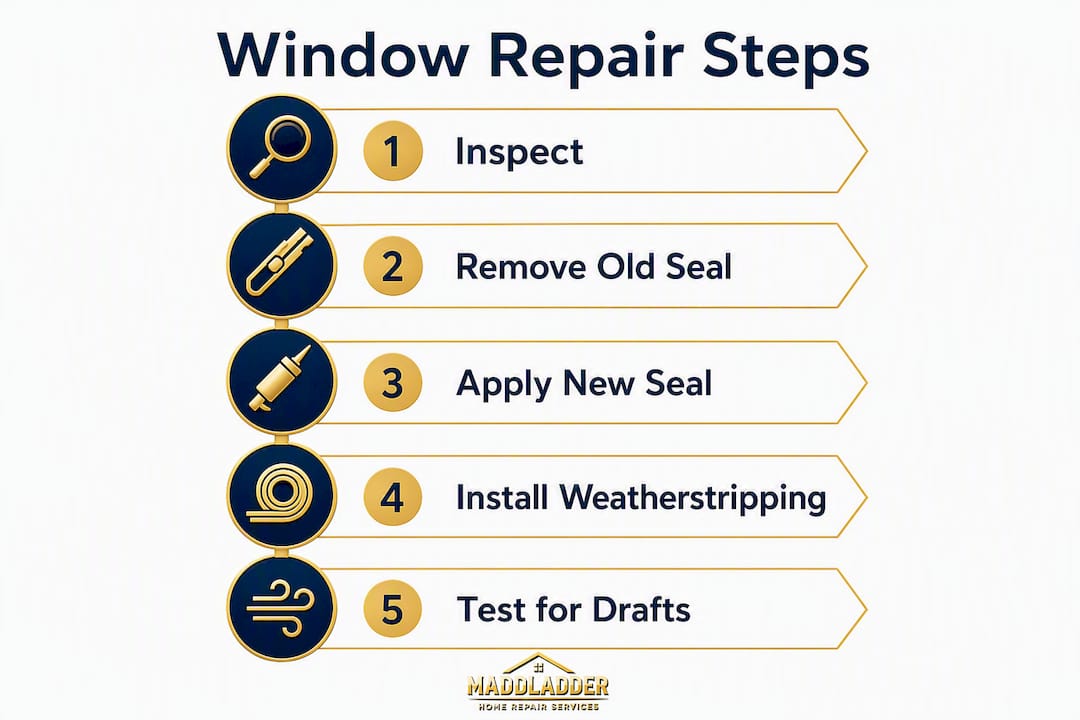
Complete removal of the old sealant is non-negotiable. Contractors use a heat gun or oscillating tool to strip the joint, then clean and prime the substrate before applying a UV-resistant silicone or elastomeric sealant. Joint depth and width matter: a joint that's too shallow fails in thermal movement; one that's too wide doesn't cure properly.
Weatherstripping and hardware replacement
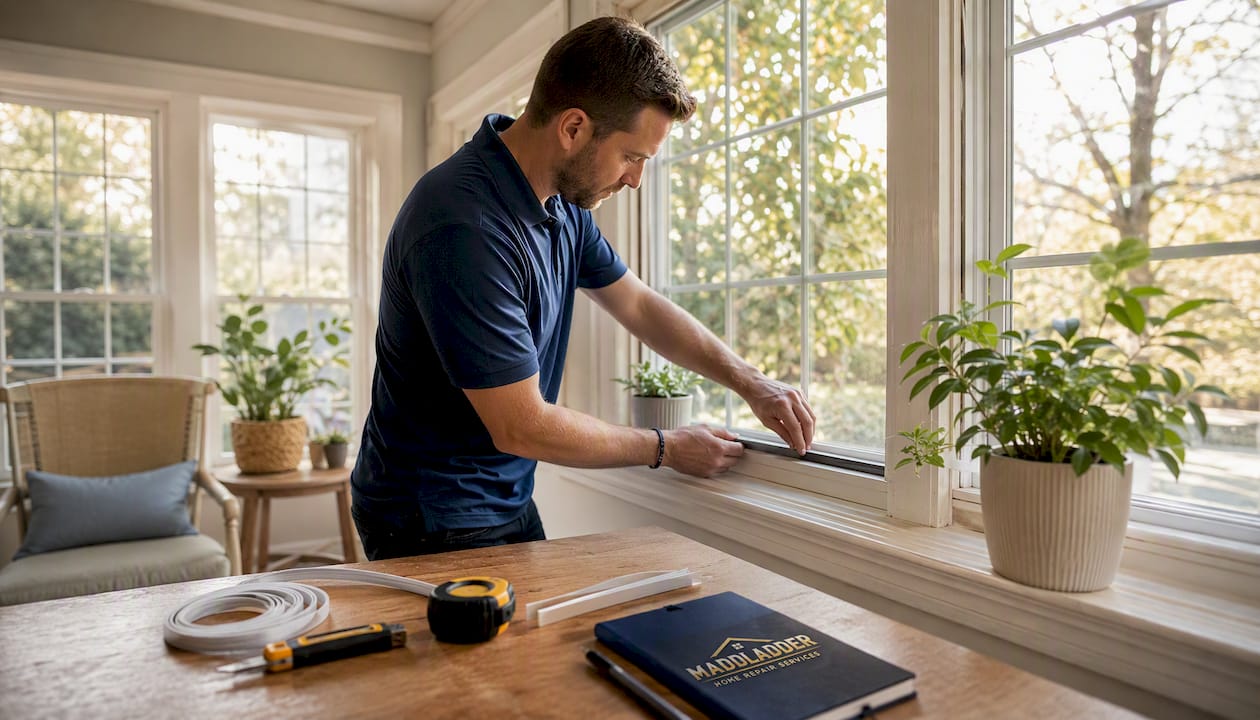
The right weatherstrip is sized to the sash profile, not grabbed off a shelf. Foam tape is not a professional repair. Contractors install compression bulb or fin-seal weatherstrip systems matched to the sash type, then adjust or replace hardware so the latch actually pulls the sash into compression. This step alone resolves a surprising number of persistent drafts.
Reglazing and sash repair
When the glass is intact but glazing compound has failed, a contractor reglazed the unit: remove the old compound, prime the rabbet, bed the glass in fresh glazing compound, and tool it smooth. If the sash itself is damaged, partial sash replacement is often cheaper than full-unit replacement and preserves the original frame.
Retrofit thermal inserts
Custom interior storm panels use a compression gasket or frame to seal inside the existing opening, creating an insulating air pocket that meaningfully reduces air leakage. Sash-mounted retrofit systems, like those using slim aluminum frames with high-performance glass, allow contractors to meet modern energy standards for historic windows without altering the original sash. These are professional-installation products, not hardware-store kits. Insulating single-pane windows this way can reduce heating and cooling costs by 10–25% depending on climate and window condition.
Full-unit replacement
When rot has compromised the rough opening, when the frame has racked beyond adjustment, or when glazing failure is structural, replacement is the only permanent answer. Egress window modifications and structural sash replacements typically require a local building permit and inspector sign-off. Budget accordingly.
Pro Tip: Require post-repair verification in writing before final payment. A blower-door retest or thermal imaging scan after the work is done is the only objective proof the repair worked.
What do repairs typically cost and how long do they take?
| Repair Type | Typical Cost Range (per unit) | Timeline |
|---|---|---|
| Reseal and caulk | Moderate cost | Few hours |
| Weatherstripping and hardware | Moderate cost | Half to one day |
| Reglazing or partial sash repair | Higher cost | One to two days |
| Retrofit thermal insert | Higher cost | One to three days |
| Full-unit replacement | Variable cost | One to several days (permit-dependent) |
These are rule-of-thumb ranges. Historic trim, difficult access, permit fees, and discovered rot all push costs up. Budget a 15–20% reserve for surprises, especially in older rental stock.
Budgeting checklist:
- Inspection fee (often $100–$300, sometimes credited toward repair)
- Permit costs where required (varies by municipality)
- Material warranties and contractor workmanship warranty documentation
- Reserve for substrate repairs (rot, damaged framing) discovered during work
For broader context on energy-focused property upgrades and their return on investment, the cost math often favors retrofit inserts over replacement when the frame is still structurally sound.
What are landlords legally required to do about drafty windows?
Under U.S. landlord-tenant law, windows must be weathertight, with working latches and no chronic water intrusion. Habitability duties cannot be waived by lease clauses, and missed repairs can trigger tenant remedies including repair-and-deduct in states that allow it.
Response timelines by severity:
- Emergency (broken glass, active water intrusion): Respond within approximately 24 hours
- Urgent (significant draft, failed latch): Respond within 24–72 hours
- Routine (minor seal failure, cosmetic gap): Up to 30 days is typically acceptable
Permits matter. Structural sash or frame replacement and any egress modification require a local building permit. Documenting repairs with before/after photos, signed inspection reports, and permit copies is standard proof of compliance and your best protection if a tenant dispute arises.
Recordkeeping checklist:
- Signed inspection report with root-cause findings
- Written scope of work tied to specific defects
- Permits and inspector sign-off documents
- Invoices and material receipts
- Warranty documents (manufacturer and workmanship)
- Tenant notice and entry records
Pro Tip: Keep a dedicated folder per unit, physical or digital, with every repair document. If a habitability complaint reaches a housing court, that folder is your defense.
Understanding the legal risks of delayed or DIY repairs is worth a few minutes before you decide how to respond to a tenant's draft complaint.
How do you choose the right contractor for rental window repairs?
- Verify credentials: State contractor license where required, general liability insurance, and worker's compensation coverage. Ask for certificates, not just verbal confirmation.
- Ask about their diagnostic process: A contractor who skips the inspection and goes straight to a quote is guessing. Ask specifically whether they use blower-door testing or thermal imaging.
- Request examples of similar rental work: Before/after photos and local references from comparable projects tell you more than a website.
- Review warranty terms before signing: A written workmanship warranty with a defined corrective-action window, for example a 48-hour return to fix persistent drafts, is a standard expectation from a professional.
- Require a detailed written scope: The scope should reference the inspection findings, specify materials and brands, list verification tests to be performed after the work, and include payment milestones tied to completion stages.
Contractor evaluation checklist:
- License number verifiable with your state licensing board
- Proof of insurance (liability and workers' comp)
- Experience with local building department permit processes
- Written scope referencing inspection findings
- Post-repair verification method stated in the contract
- Explicit workmanship warranty with corrective-action terms
Key Takeaways
Fixing drafty rental windows permanently requires a licensed inspection, a documented repair scope, and post-repair verification, not a surface patch.
| Point | Details |
|---|---|
| Start with a professional inspection | Root-cause diagnosis prevents repeat work; document findings before authorizing any repair. |
| Match the repair to the failure | Rot needs substrate replacement; sash misalignment needs hardware and weatherstrip work, not caulk. |
| Require post-repair verification | Blower-door or thermal imaging after the work is the only objective proof the repair held. |
| Document everything for legal protection | Permits, invoices, photos, and warranty records are your defense against habitability complaints. |
| Maddladder for Kansas City landlords | Maddladder provides licensed inspections, code-compliant repairs, and warranty-backed workmanship in the Kansas City metro area. |
The tradeoff most landlords get wrong
The instinct to go with the cheapest bid is understandable, but the math usually runs the other way. A $150 reseal job on a window with rotted framing will fail before the next heating season, and the callback costs more than the original repair would have if done right. The question isn't "what's the cheapest fix?" It's "what's the cheapest fix that won't generate a second call?"
Retrofit inserts deserve more attention than they typically get. When a frame is structurally sound and the original sash is intact, a custom-fit interior panel delivers near-double-pane performance at a fraction of full replacement cost, with no permit required in most jurisdictions. That's the right answer for a lot of rental units that landlords reflexively send to full replacement.
Full replacement is sometimes the only answer, and pretending otherwise wastes everyone's time. When rot has reached the rough opening or the frame has racked beyond adjustment, no insert or reseal holds. A good contractor tells you that upfront, not after three callbacks.
The documentation step is where most landlords cut corners and pay for it later. Before/after photos and a signed inspection report take twenty minutes to collect and can resolve a housing court complaint in twenty seconds.
Maddladder handles the inspection, the repair, and the paperwork
Drafty windows in a rental unit aren't just a comfort issue. They're a liability, and the clock starts when your tenant puts the complaint in writing. Maddladder serves landlords and property managers across the Kansas City metro with licensed building-envelope inspections, code-compliant window repairs, and warranty-backed workmanship, handling everything from reseal and weatherstrip replacement to retrofit insert installation and full-unit replacement.

Every engagement includes a written inspection report, a detailed scope tied to the findings, and post-repair verification so you have documentation that holds up. Maddladder's repair and replacement services cover the full range of window repair options, and the team handles permit coordination where required. Request a free estimate or schedule an inspection directly at maddladder.com.
Useful resources for landlords and property managers
Vetted references for habitability standards, permitting, and technical guidance:
- California DRE Habitability Guidebook: Covers weathertight windows, ventilation requirements, and landlord obligations under California law; useful as a model for habitability standards in other states.
- Florida Statutes § 83.51: Florida's landlord maintenance statute, including structural components and windows; a clear example of state-level habitability law.
- ENERGY STAR Residential Windows Specification: The federal performance standard for replacement windows; use this when specifying replacement units to ensure code-appropriate thermal performance.
- 2021 International Energy Conservation Code (IECC): The model energy code adopted (with amendments) by most U.S. jurisdictions; governs minimum insulation and fenestration requirements for replacement work.
- Window frames and energy efficiency: Practical explanation of how frame materials affect thermal performance; useful context when choosing between retrofit and replacement.
| Resource | Best Used For |
|---|---|
| State building department website | Permit requirements, local code amendments, inspector contacts |
| ENERGY STAR window specification | Specifying replacement units that meet federal performance standards |
| IECC 2021 | Confirming minimum insulation and fenestration requirements for your jurisdiction |
| Landlord-tenant statute (your state) | Response timelines, habitability thresholds, repair-and-deduct rules |
Before your contractor arrives, collect: the original window manufacturer name and model if available, photos of visible damage, any written tenant complaints, and your local building department's permit application. That prep cuts inspection time and gives the contractor a documented starting point.
This article provides general information about window repair standards and landlord obligations in the United States. It is not legal advice. Confirm current habitability requirements and permit rules with your local building department or a licensed attorney in your jurisdiction.