
TL;DR:
- Handling household emergencies requires acting within the first 60 seconds to stop damage and protect household members. Preparation includes locating shutoffs, building an emergency kit, and pre-vetting repair contractors to respond quickly when crises occur. Reacting promptly and following safety protocols minimizes repair costs, prevents injuries, and ensures household safety during disasters.
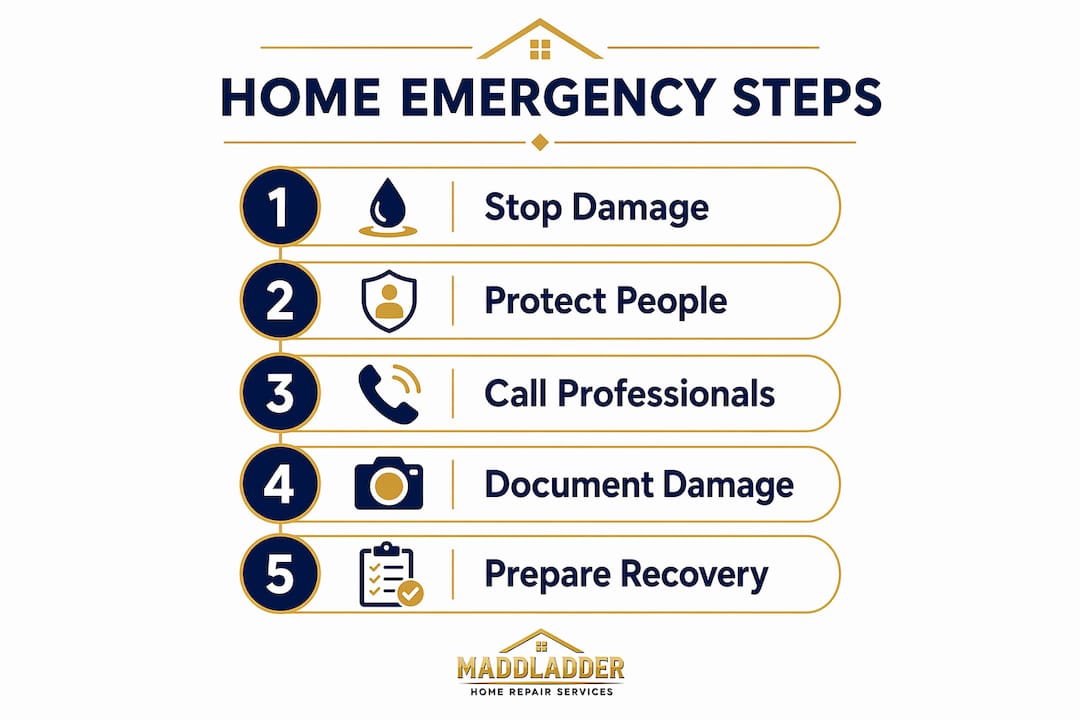
Handling home emergencies means stopping damage immediately and protecting your household first. The first 60 seconds after a household crisis begins are the most critical. Acting within that window can reduce repair costs from thousands of dollars to hundreds by cutting off the source of damage before it spreads. Whether you are facing a burst pipe, a gas leak, a power outage, or a fire, the core principle is the same: secure the source, protect people, then assess the damage.
How to handle home emergencies before they happen
The best emergency response starts before any crisis occurs. Homeowners who locate their shutoffs, stock a preparedness kit, and pre-vet contractors respond faster and spend less money when things go wrong.
Locate and label your shutoffs
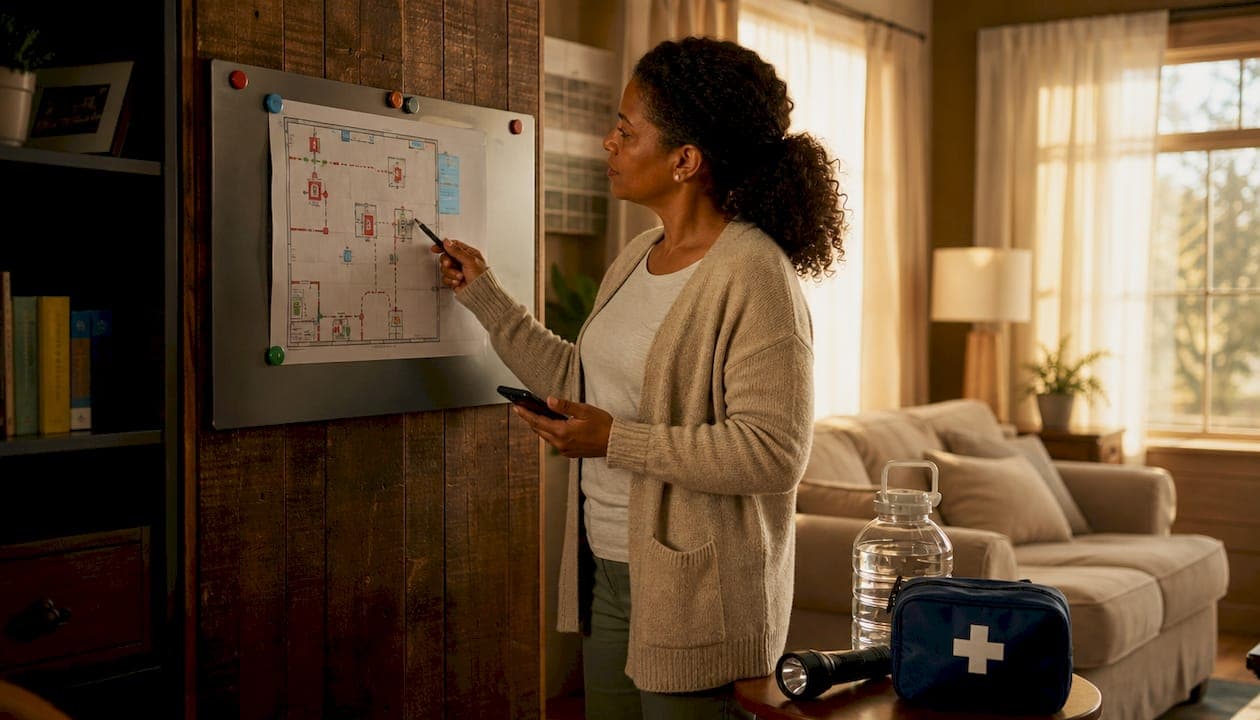
Every adult in your household should know where the main water shutoff, gas valve, and electrical breaker panel are located. Walk through your home and physically tag each one with a bright label. Labeled critical circuits at the breaker panel reduce response time and errors during high-stress situations. This single step costs nothing and can prevent thousands of dollars in water or electrical damage.
Build your emergency preparedness kit
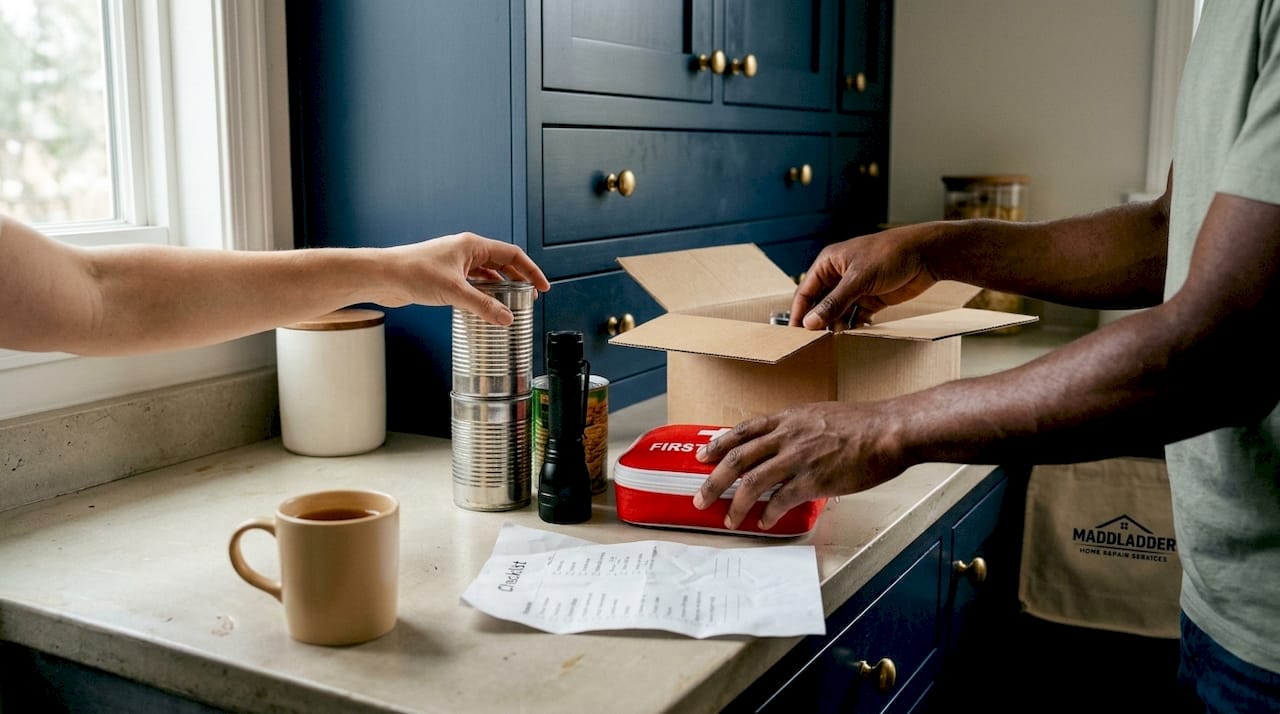
A proper home emergency kit covers at least 3–7 days of self-sufficiency. Industry guidance recommends storing 1 gallon of water per person per day, along with non-perishable food, a flashlight, extra batteries, a first aid kit, and any prescription medications. Keep the kit in an accessible location, not buried in a closet.
| Kit Item | Recommended Quantity |
|---|---|
| Water | 1 gallon per person per day, 3–7 days |
| Non-perishable food | 3–7 day supply per person |
| Flashlight and batteries | 1 flashlight, spare batteries |
| First aid kit | 1 fully stocked kit |
| Prescription medications | 7-day supply minimum |
Pro Tip: Print a one-page emergency reference sheet listing shutoff locations, your utility company numbers, and your pre-vetted contractor contacts. Tape it inside a kitchen cabinet door so every household member can find it fast.
Pre-vet your emergency contractors
Pre-vetting emergency vendors before a crisis removes panic from the equation. Keep contacts saved for at least three specialists: a licensed plumber, a licensed electrician, and an HVAC technician. Searching for a contractor while water is flooding your basement costs you critical minutes. Knowing who to call in advance means you spend those minutes stopping damage instead.
What are the right steps for each type of home emergency?
Every household crisis follows a different script, but the opening move is always the same: stop the source of damage before doing anything else.
Water leaks and burst pipes
Shut off the main water supply the moment you spot a serious leak. Do not try to diagnose the cause first. In water emergencies, water spreads exponentially while you investigate, and every minute of delay multiplies repair costs. After shutting off the main, contain standing water with towels or a wet-dry vacuum, then move valuables and electronics off the floor.
- Turn the main water shutoff valve clockwise until it stops.
- Open a faucet on the lowest floor to drain remaining pressure from the pipes.
- Contain standing water with towels, buckets, or a wet-dry vacuum.
- Move electronics, documents, and valuables to a dry area.
- Call a licensed plumber and document the damage with photos before cleanup.
For guidance on safe plumbing repairs and which fixes you can handle yourself, review established DIY protocols before attempting any work on your pipes.
Power outages
A power outage is less immediately dangerous than a leak or fire, but mishandling it causes real damage. Unplug sensitive electronics like computers, televisions, and smart appliances before power returns. Surge damage when electricity comes back on is a leading cause of appliance failure after outages. Keep your refrigerator and freezer closed to preserve food for as long as possible.
During a power outage, your priority is protecting electronics from surge damage and preserving food. Turn off or unplug all non-essential appliances. Keep the refrigerator closed. If the outage lasts more than four hours, move perishables to a cooler with ice. Never run a generator indoors or in an attached garage, as carbon monoxide buildup is fatal.
Fire emergencies
Get out first. Do not stop to collect belongings. Feel doors with the back of your hand before opening them. A hot door means fire is on the other side. Use an alternate exit. Call 911 from outside the building, never from inside. Practicing a two-route evacuation plan with every household member twice a year is the single most effective fire safety preparation you can make.
Gas leaks
Gas leaks require immediate evacuation with zero electrical interaction. Do not flip any light switches, use your phone, or touch any appliance inside the home. Even a small electrical spark can ignite accumulated gas. Leave the front door open as you exit to help disperse gas, then call your gas utility's emergency line from a neighbor's home or from the street.
What mistakes do homeowners make during home emergencies?
Most emergency mistakes fall into two categories: acting too slowly on the source, or acting too aggressively on the fix.
- Diagnosing before stopping damage. Trying to figure out why a pipe burst while water spreads across your floor is the most expensive mistake you can make. Stop the water first, always.
- Resetting tripped breakers repeatedly. A breaker that trips repeatedly signals a wiring fault, not a fluke. Reset it once. If it trips again, call a licensed electrician.
- Touching electrical equipment near water. Never touch electrical switches or outlets if any water is present. Shut off power at the breaker panel first, using dry hands and standing on a dry surface.
- Attempting DIY repairs on gas lines or structural damage. Gas leaks, electrical faults behind walls, and structural cracks require licensed professionals. No YouTube tutorial is worth the risk.
- Skipping documentation. Before you clean up or repair anything, photograph every area of damage. Insurance adjusters require visual evidence, and photos taken before cleanup carry the most weight.
Pro Tip: Keep a dedicated folder on your phone labeled "Home Emergency" with photos of your shutoff locations, breaker panel layout, and contractor contacts. You will find it faster than any paper sheet during a real crisis.
For a deeper look at why fast repairs matter and how quickly damage escalates without professional intervention, the cost difference between a one-hour and a four-hour response is significant.
How do you stay ready for future household crises?
Preparedness is not a one-time setup. It requires a maintenance routine that keeps your knowledge, equipment, and contacts current.
- Annual walkthrough. Walk every adult in your household through shutoff locations and emergency steps once a year. Practicing emergency procedures annually measurably improves household calm and response speed when a real crisis hits.
- Kit refresh every 6–12 months. Replace expired food, batteries, and medications in your preparedness kit at least every six months. Set a calendar reminder for every april and october.
- Label your breaker panel. Mark which circuits power your refrigerator, sump pump, and any medical devices. Clear labeling at the breaker panel reduces errors during high-stress shutdowns.
- Test your generator monthly. Run it under load for at least 30 minutes each month. Store fuel in an approved container and rotate it every 90 days to prevent degradation.
- Seasonal HVAC checks. Schedule HVAC inspections each spring and fall. A failing furnace in january or a broken AC in july creates a temperature emergency that compounds quickly, especially for elderly residents or young children.
| Maintenance Task | Frequency |
|---|---|
| Emergency kit review | Every 6 months |
| Shutoff location walkthrough | Annually |
| Generator test run | Monthly |
| HVAC inspection | Twice yearly (spring and fall) |
| Breaker panel label check | Annually |
For a full breakdown of routine home safety checks and what to look for each season, a structured inspection schedule is the most reliable way to catch problems before they become emergencies.
Key Takeaways
Effective home emergency response requires stopping the damage source first, protecting people second, and calling licensed professionals for anything involving gas, electrical faults, or structural damage.
| Point | Details |
|---|---|
| Stop the source first | Shut off water, gas, or electricity within 60 seconds to limit repair costs. |
| Build a 3–7 day kit | Stock water, food, batteries, and medications and review the kit every six months. |
| Pre-vet your contractors | Save contacts for a plumber, electrician, and HVAC tech before any emergency occurs. |
| Avoid electrical hazards | Never touch switches or outlets near water; cut power at the breaker panel first. |
| Document before you clean | Photograph all damage before repairs begin to support insurance claims. |
What I've learned from watching homeowners freeze in a crisis
The most common failure I see is not ignorance. Homeowners generally know they should shut off the water or evacuate during a fire. The failure is hesitation. When a pipe bursts at 2:00 AM, the instinct is to grab towels, call a spouse, and stare at the ceiling. Those two minutes of hesitation can turn a $400 repair into a $4,000 one.
The psychological fix is rehearsal. Households that have physically walked through shutoff locations at least once respond faster and with less panic. It sounds obvious, but almost nobody does it. Having a printed reference sheet with shutoff locations and contractor contacts posted in the kitchen removes the need to think clearly under pressure.
The second pattern I see is misplaced heroics. Homeowners try to save the flat-screen TV or the laptop before shutting off the water main. Prioritizing belongings over utility shutoff is consistently counterproductive and sometimes dangerous. Property is replaceable. The 60 seconds you spend grabbing electronics is 60 seconds of water spreading under your subfloor.
My honest advice: treat your home like a workplace with a safety protocol. Post the reference sheet. Walk the household through it once a year. Save your contractor contacts now, not during the emergency. And when something goes wrong, stop the source first, get people out second, and call a professional third. That order saves money and lives.
— Jennifer
Maddladder is ready when home emergencies strike
After an emergency, the repair work begins. That is where having a trusted local professional makes the difference between a quick recovery and weeks of unresolved damage.

Maddladder serves homeowners and renters across the Kansas City metro area with licensed plumbing and electrical repairs, drywall patching, fixture replacements, and more. The team offers free estimates and fast response times, so you are not waiting days to get your home back to normal. Save Maddladder's number before you need it. When an emergency hits, having a vetted professional one call away is the preparation that pays off most. Explore Maddladder's full repair and replacement services to know exactly what help is available when you need it.
FAQ
What should I do first in any home emergency?
Shut off the source of damage immediately. Turn off the main water valve, gas supply, or electrical breaker within the first 60 seconds to limit how far damage spreads.
How much water should I store in an emergency kit?
Store 1 gallon of water per person per day for a minimum of 3–7 days. A household of four needs at least 12–28 gallons of stored water.
When should I call a professional instead of fixing it myself?
Call a licensed professional for any gas leak, repeated electrical breaker trips, water damage affecting walls or subfloors, or any structural damage. DIY repairs on these systems create safety and liability risks.
How often should I update my home emergency preparedness kit?
Review and replace expired items every 6–12 months. Set calendar reminders each spring and fall to check food, batteries, and medications.
Is it safe to use my phone during a gas leak?
No. Operating a phone indoors during a gas leak can create a spark that ignites the gas. Evacuate the building first, then call your gas utility's emergency line from a safe distance outside.