
TL;DR:
- A home safety audit is a thorough room-by-room inspection designed to identify hazards before they cause harm or property damage. It covers critical systems such as detectors, entry points, fall risks, and emergency routes, ideally performed twice annually with professional input for hidden issues. Modern technology and proactive maintenance greatly enhance a home's safety, reducing injury, theft, and long-term repairs.
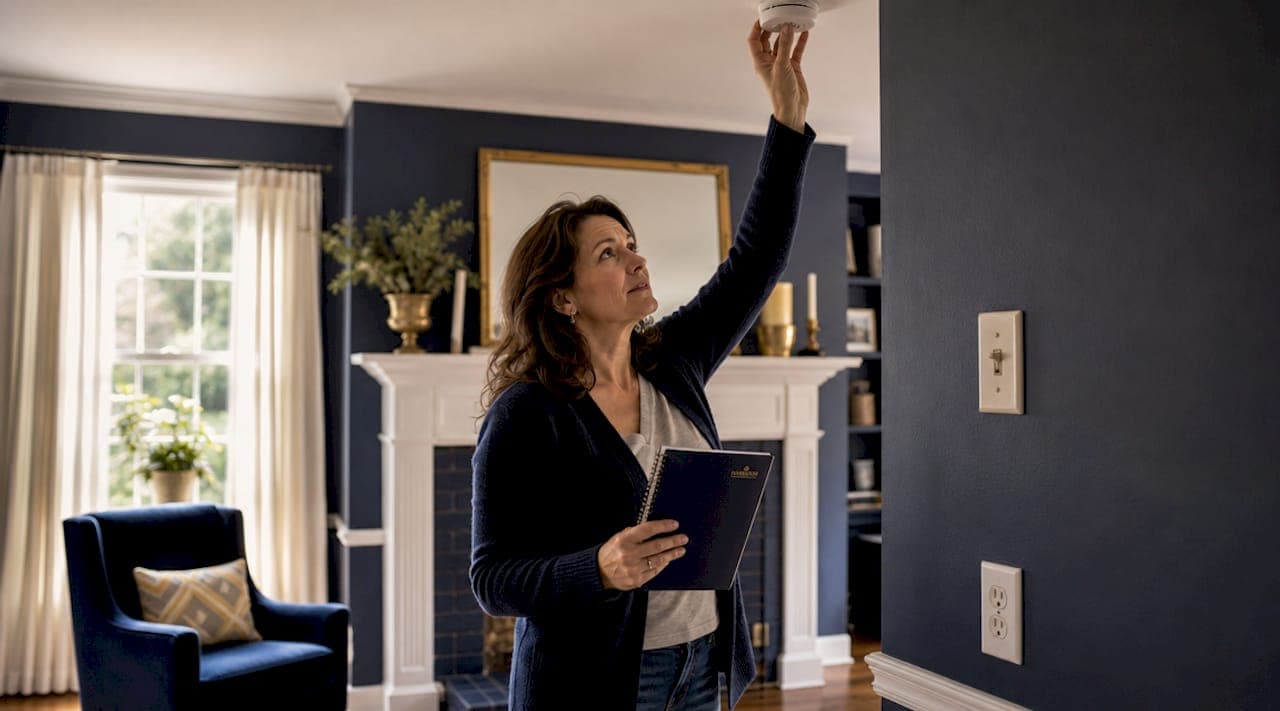
A home safety audit is a systematic, room-by-room inspection of your residence designed to identify hazards before they cause injury, property damage, or worse. The standard diagnostic walkthrough takes about 60 minutes and covers critical systems including smoke detectors, carbon monoxide alarms, electrical panels, entry point security, and fall risks. Think of it as a physical exam for your house. Most homeowners only discover problems after something goes wrong. A home safety audit flips that equation entirely.
What does a home safety audit involve?
A home safety audit covers every system and space where a hazard could develop undetected. The inspection is not a casual walkthrough. It follows a structured home safety checklist that touches on life-safety devices, structural vulnerabilities, and environmental risks room by room.

Core systems evaluated
The most critical systems in any home safety assessment guide include:
- Smoke and carbon monoxide detectors: Are they present on every level, including inside and outside sleeping areas? Are batteries fresh? Detectors older than 10 years need replacement.
- Fire extinguishers: Is one accessible in the kitchen? Is it charged and within its service date?
- Electrical panel: Look for tripped breakers, signs of overheating, or outdated wiring like aluminum branch circuit wiring in older homes.
- Entry points: Check every exterior door, window lock, and sliding door latch for vulnerabilities.
- Fall hazards: Loose rugs, poor stair lighting, missing handrails, and cluttered hallways all qualify.
- Emergency escape routes: Every bedroom needs a clear, accessible exit path. Windows should open fully and without obstruction.
- Lighting: Dark hallways, unlit stairwells, and dim exterior entries are consistent contributors to nighttime falls and break-ins.
Sample inspection categories
| Area | What to check |
|---|---|
| Kitchen | Extinguisher access, stove clearance, cabinet locks for chemicals |
| Bedrooms | Smoke detector placement, window egress, cord hazards |
| Bathrooms | Grab bars, non-slip mats, water heater temperature (below 120°F) |
| Garage | CO detector, door auto-reverse function, chemical storage |
| Exterior | Lighting, lock quality, fence integrity, pathway trip hazards |
Pro Tip: Test every mechanical safety device during the audit. Press the test button on each detector. Physically open and close every window latch. Devices that look fine can fail silently, and a proactive testing habit is the only reliable way to catch degradation before it matters.
Why is a home safety audit important?
The importance of home safety becomes concrete when you look at what goes wrong in homes that skip regular assessments. The risks are not hypothetical.
Falls among adults 65+ are the leading cause of injury and death in that age group, with 25.7% reporting a fall in the previous 12 months. That figure means roughly one in four older adults in your neighborhood fell last year. Most of those falls happen in familiar spaces like bathrooms, kitchens, and stairways where hazards have simply gone unaddressed.
Security is equally pressing. Over 30% of residential burglaries occur through unlocked doors or windows. That is not a forced-entry problem. It is a complacency problem that a 10-minute entry point check during an audit would catch every time. The same source notes that sleep-related suffocation causes approximately 3,700 deaths annually in the United States, many linked to unsafe sleeping environments that a basic audit would flag.
Here is the structured case for conducting regular audits:
- Injury prevention: Identifying fall hazards, faulty wiring, and gas leaks before they cause harm is the primary function of any home safety assessment.
- Property protection: Undetected water leaks, electrical faults, and fire risks cause billions in property damage each year. Early detection is far cheaper than repair.
- Security hardening: Auditing locks, lighting, and entry points closes the gaps that burglars exploit most.
- Insurance benefits: Some insurance providers cover or discount professional home safety audits as part of loss-prevention programs. Documenting your audit can support claims and lower premiums.
- Peace of mind: Knowing your home has been systematically checked reduces the low-grade anxiety that comes with uncertainty about hidden risks.
"Every home's mechanical equipment is unique. A one-size-fits-all approach to safety is ineffective. You must learn your home's specific systems." — Building Safety Professionals, ICC
How to conduct a home safety audit: DIY vs. professional approaches
Both approaches have real value, and the best strategy combines them. Here is how to execute each one.
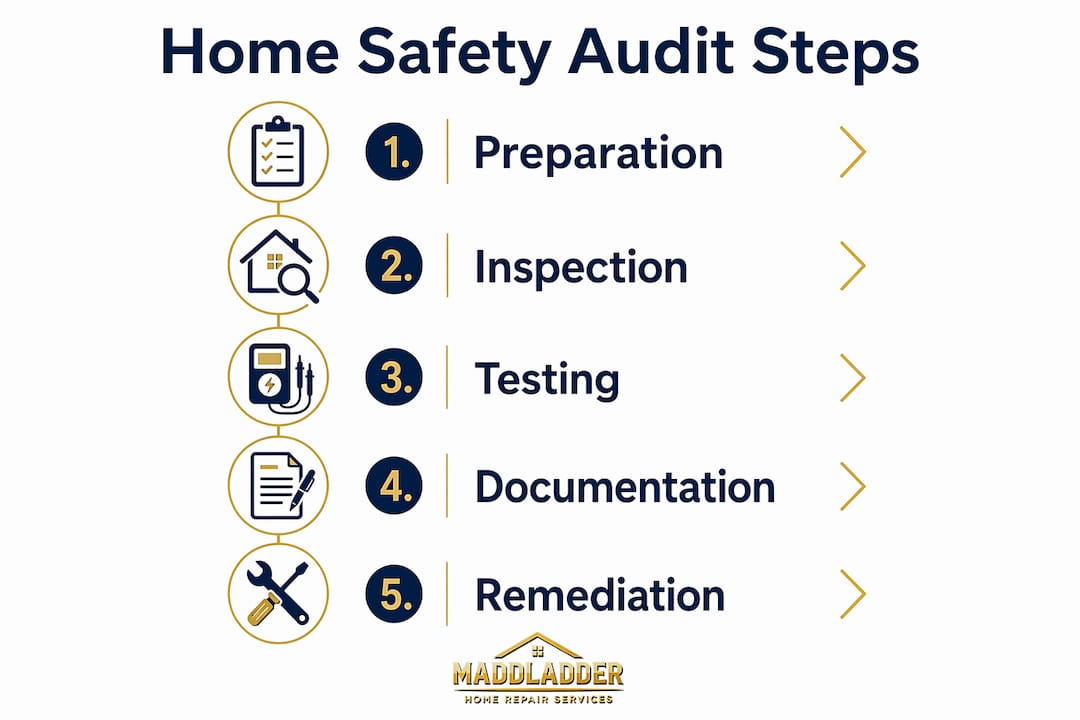
DIY home safety audit: step by step
- Print or build a checklist. Use a room-by-room format. Free templates from sources like the University of Georgia Cooperative Extension or Penn State Health cover the major categories.
- Start at the top floor and work down. This mirrors how smoke and fire travel, and it keeps your inspection logical.
- Test every device. Press detector test buttons, check extinguisher pressure gauges, and verify that GFCI outlets in bathrooms and kitchens trip and reset correctly.
- Check the electrical panel for warning signs. Tripped breakers, burn smells, or warm panel surfaces all warrant professional follow-up.
- Evaluate every entry point. Deadbolts, window locks, sliding door pins, and exterior lighting all belong on your list.
- Document everything. Photograph hazards and note their location. This creates a repair priority list and a record for insurance purposes.
Pro Tip: Conduct a "Test Walk" through your home while carrying a laundry basket or a box. Narrow doorways, awkward turns, and poor lighting become immediately obvious when your hands are full. Also, get down to a child's eye level in each room. Accessible cords, sharp corners, and reachable chemicals disappear from adult sight lines but are obvious from 24 inches off the floor.
When to call a professional
DIY audits catch visible hazards well. They miss what is inside walls, behind panels, and under floors. A licensed professional brings diagnostic tools, code knowledge, and liability-backed recommendations that a checklist cannot replicate. Professionals recommend combining DIY awareness with periodic professional assessments for maximum protection. Schedule professional audits twice annually, ideally timed with the spring and fall daylight saving time changes. That timing also serves as a natural reminder to replace detector batteries.
Modern home safety technologies and evolving best practices in 2026
Home safety technology has moved well beyond battery-powered smoke detectors. The current standard integrates hardware, software, and emergency infrastructure in ways that change what a thorough audit needs to cover.
Modern home safety now incorporates "Secure by Design" principles, AI-enabled detection devices, and real-time emergency data transmission to 911 via platforms like RapidSOS. Smart smoke detectors can distinguish between cooking smoke and structural fire smoke, dramatically reducing false alarms while accelerating genuine emergency response. Carbon monoxide detectors with digital displays show parts-per-million readings rather than just triggering an alarm at dangerous thresholds.
| Feature | Traditional | Modern (2026) |
|---|---|---|
| Smoke detection | Ionization or photoelectric alarm | AI-enabled dual-sensor with false-alarm filtering |
| Emergency response | Manual 911 call | Automatic RapidSOS 911 data transmission |
| Carbon monoxide | Single-threshold alarm | Digital PPM display with trend monitoring |
| Entry security | Deadbolt locks | Smart locks with access logs and remote control |
| Lighting | Manual switches | Motion-activated, app-controlled exterior lighting |
Key upgrades worth adding to your 2026 audit checklist:
- Smart detectors that connect to your phone and your neighbors' systems
- Video doorbells with motion zones and cloud storage
- Wi-Fi garage door openers with open/close alerts, which close a common security gap many homeowners overlook
- Environmental sensors that detect water leaks, temperature drops, and humidity spikes before damage occurs
Common hazards found during home safety audits and how to fix them
Most audits surface the same categories of problems. Knowing what to look for makes your inspection faster and your fixes more targeted.
Dead or missing detectors top the list. Smoke and carbon monoxide detectors are temporary devices that degrade over time. Replace batteries annually and replace the entire unit every 10 years. Never rely on a detector that has not been tested in the past six months.
Unsecured entry points come next. Doors with weak strike plates, windows with broken latches, and sliding doors without secondary pins are all fixable in under an hour. Upgrading to a 3-inch screw in your door strike plate costs under $5 and makes a standard door frame significantly harder to kick in.
Poor lighting is a hazard in every room category. Add motion-sensor lights to stairwells, hallways, and exterior paths. Replace burned-out bulbs immediately. Consider grab bars and improved lighting in bathrooms as a paired upgrade, since most bathroom falls involve both poor grip and poor visibility.
Trip hazards include loose rugs, extension cords across walkways, and uneven thresholds. Secure rugs with non-slip pads or double-sided tape. Route cords along baseboards. Address uneven transitions between flooring types before they cause a fall.
Appliance and HVAC issues round out the most common findings. Dryer lint traps, gas line connections, and water heater pressure relief valves all require periodic checks. A regular appliance check prevents the kind of slow-developing failures that audits are specifically designed to catch.
Key takeaways
A home safety audit is the single most effective way to identify and eliminate household hazards before they cause injury or property damage.
| Point | Details |
|---|---|
| Definition and scope | A home safety audit is a 60-minute, room-by-room inspection of detectors, entry points, fall risks, and emergency systems. |
| Audit frequency | Schedule audits twice per year, timed with daylight saving time changes, to stay ahead of seasonal hazards. |
| DIY plus professional | DIY audits catch visible hazards; professionals identify hidden risks inside walls, panels, and systems. |
| Modern technology matters | AI-enabled detectors, smart locks, and RapidSOS-connected devices represent the current standard for home safety. |
| Fix priorities | Address dead detectors, unsecured entry points, and trip hazards first. These three categories cover the majority of preventable home injuries. |
Why I think most homeowners wait too long
I have walked through enough homes to recognize a pattern. People treat home safety as something to address after a close call. A smoke detector beeps at 2 a.m., batteries get replaced, and the whole system gets ignored for another two years. That is not a safety strategy. It is reactive maintenance dressed up as caution.
The homes that genuinely protect their occupants treat safety as an ongoing practice, not a one-time project. That means scheduling audits on the calendar the same way you schedule HVAC service. It means updating your checklist when you add a new appliance, a new family member, or a new piece of technology. And it means being honest about the limits of what you can assess yourself.
I have seen homeowners spend hours on DIY checklists and completely miss a double-tapped breaker in the electrical panel or a gas line fitting that had been weeping for months. Those are not failures of effort. They are failures of expertise. The combination of DIY awareness and professional assessment is not optional for thorough protection. It is the only approach that actually covers all the bases.
The payoff is not just physical safety. It is the confidence that comes from knowing your home has been looked at carefully, by someone who knows what they are looking for. That peace of mind is worth the two hours a year it takes.
— Jennifer
Ready to act on your home safety audit findings?
Once your audit surfaces hazards, the next step is fixing them. That is where Maddladder comes in.

Maddladder serves homeowners and landlords across the Kansas City metro with licensed, dependable repair and installation services. From repair and replacement work on safety-critical fixtures to plumbing and electrical upgrades that address the hazards audits most commonly flag, Maddladder handles the fixes that go beyond a DIY checklist. Free estimates make it easy to understand your costs before committing. If your audit turned up electrical concerns, water heater issues, grab bar installations, or entry point upgrades, contact Maddladder to schedule a service call and get the work done right.
FAQ
What is a home safety audit in simple terms?
A home safety audit is a structured walkthrough of your home that identifies hazards like faulty detectors, unsecured entry points, fall risks, and electrical issues. The standard audit takes about 60 minutes and follows a room-by-room checklist.
How often should you conduct a home safety audit?
Conduct a home safety audit at least twice per year. Timing audits with the spring and fall daylight saving time changes is a practical way to remember, and it aligns with the recommended schedule for replacing detector batteries.
What is the difference between a DIY and a professional home safety audit?
A DIY audit covers visible hazards using a checklist and costs nothing beyond your time. A professional audit adds diagnostic tools, code knowledge, and the ability to identify hidden risks inside walls, panels, and mechanical systems that a checklist cannot reach.
Do home safety audits affect home insurance?
Some insurance providers offer discounts or coverage for professional home safety assessments as part of loss-prevention programs. Documenting your audit findings and completed repairs can also support future claims by demonstrating proactive maintenance.
What are the most common hazards found in a home safety audit?
The most common findings are dead or expired smoke and carbon monoxide detectors, unlocked or weak entry points, poor stairwell and hallway lighting, loose rugs and trip hazards, and unchecked appliances like dryers and water heaters.