
TL;DR:
- Upgrading electrical outlets reduces fire risks and ensures compliance with modern safety standards. Most outlets age silently, with internal contacts wearing out over 15 to 25 years, increasing the chance of heat buildup and hazards. Modern outlets like GFCI, AFCI, and tamper-resistant types provide enhanced safety and energy efficiency benefits, especially in older or high-risk areas.
Upgrading electrical outlets is the most direct way to reduce fire risk, prevent electrical shock, and bring your home's wiring up to current National Electrical Code (NEC) standards. Most homeowners never think about their outlets until something goes wrong. The problem is that outlets age silently. Their internal contacts wear out, their safety features fall behind code, and their design can't keep up with modern appliances. Understanding why upgrade electrical outlets is worth your attention now, before a loose plug or a hidden spark forces the decision for you.
Why upgrade electrical outlets before they fail?
Electrical outlets have a service lifespan of 15–25 years before their internal contacts begin to fail. That's not a long time when you consider that most homes in the Kansas City area were built decades ago and have never had their outlets replaced.
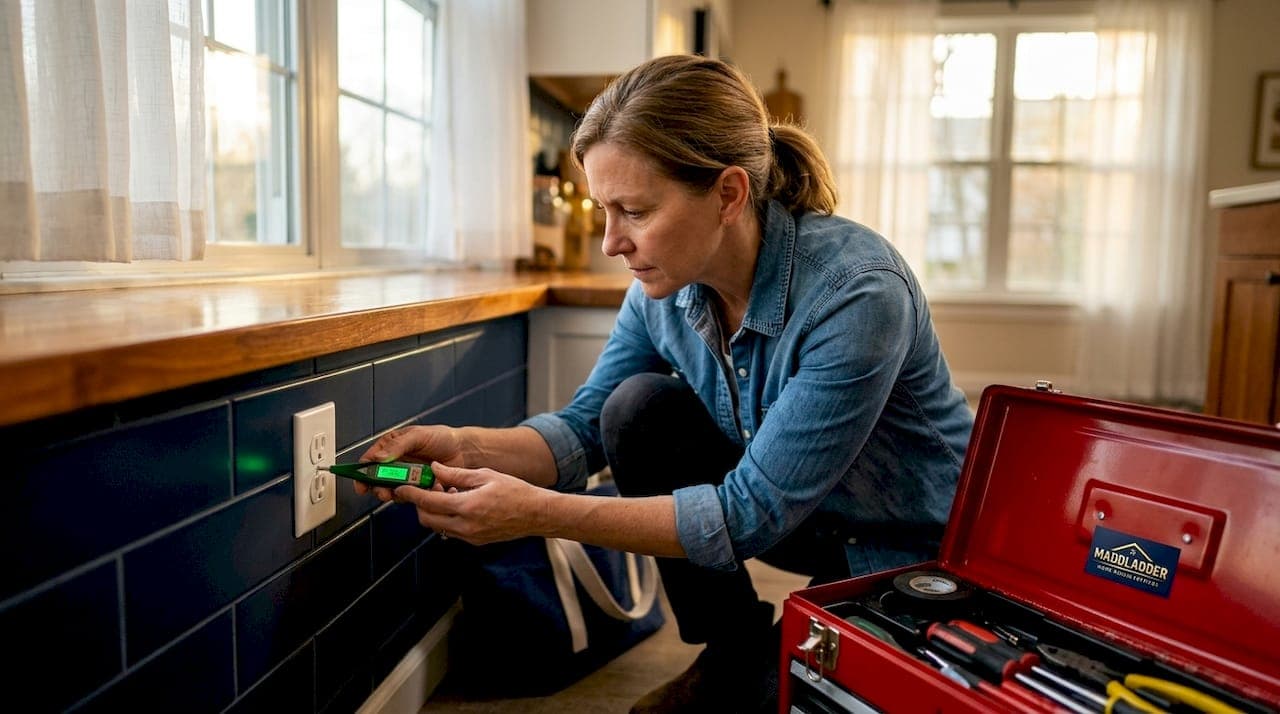
The failure mechanism is straightforward. The brass contacts inside an outlet lose spring tension over time. A plug that once fit snugly starts to feel loose. That looseness creates electrical resistance, and resistance creates heat. Loose contacts generate heat hidden behind your walls, and hidden heat is one of the leading causes of electrical fires in residential homes.
The warning signs are easy to miss if you don't know what to look for:
- Plugs that fall out of the outlet on their own
- Outlets that feel warm or hot to the touch
- Discoloration or scorch marks around the outlet face
- A burning smell near the outlet, even briefly
- Lights flickering when you plug in an appliance
Pro Tip: If an outlet in your home is more than 20 years old and you've never had it inspected, treat it as a potential hazard. Age alone is enough reason to have a licensed electrician take a look.
Homes over 30 years old should have a professional electrical inspection every 10 years at minimum. That interval accounts for the cumulative wear on contacts, insulation, and wiring connections that standard visual checks can't catch. For older homes, a Maddladder minor electrical repair assessment is a practical first step.
What safety features do modern outlets provide?
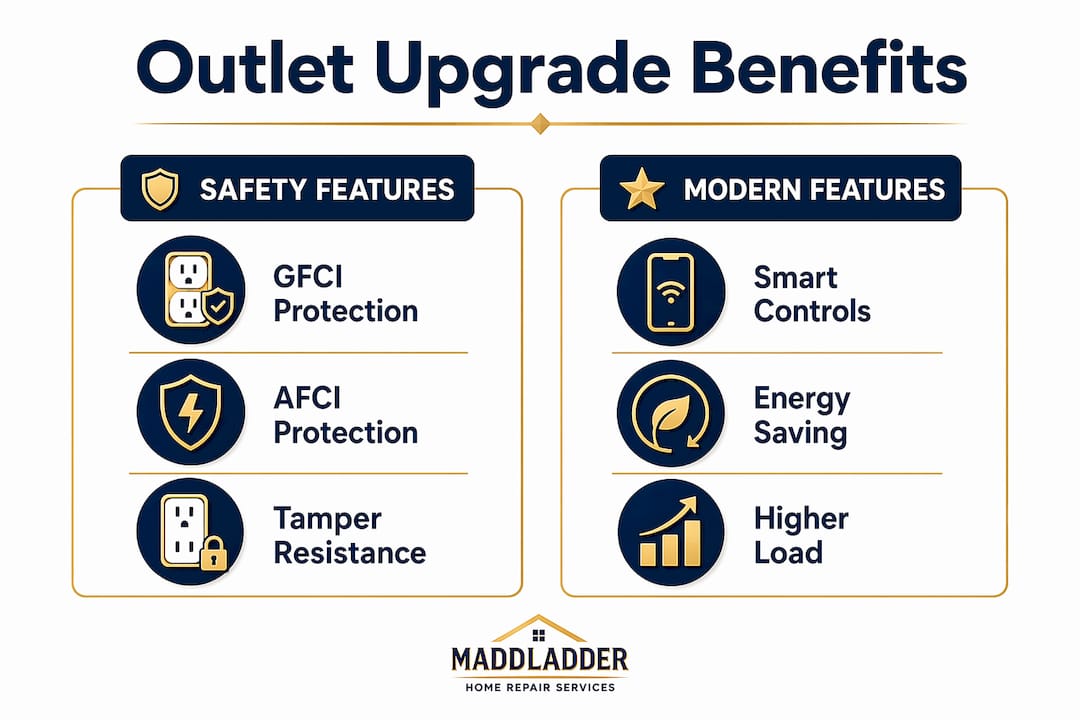
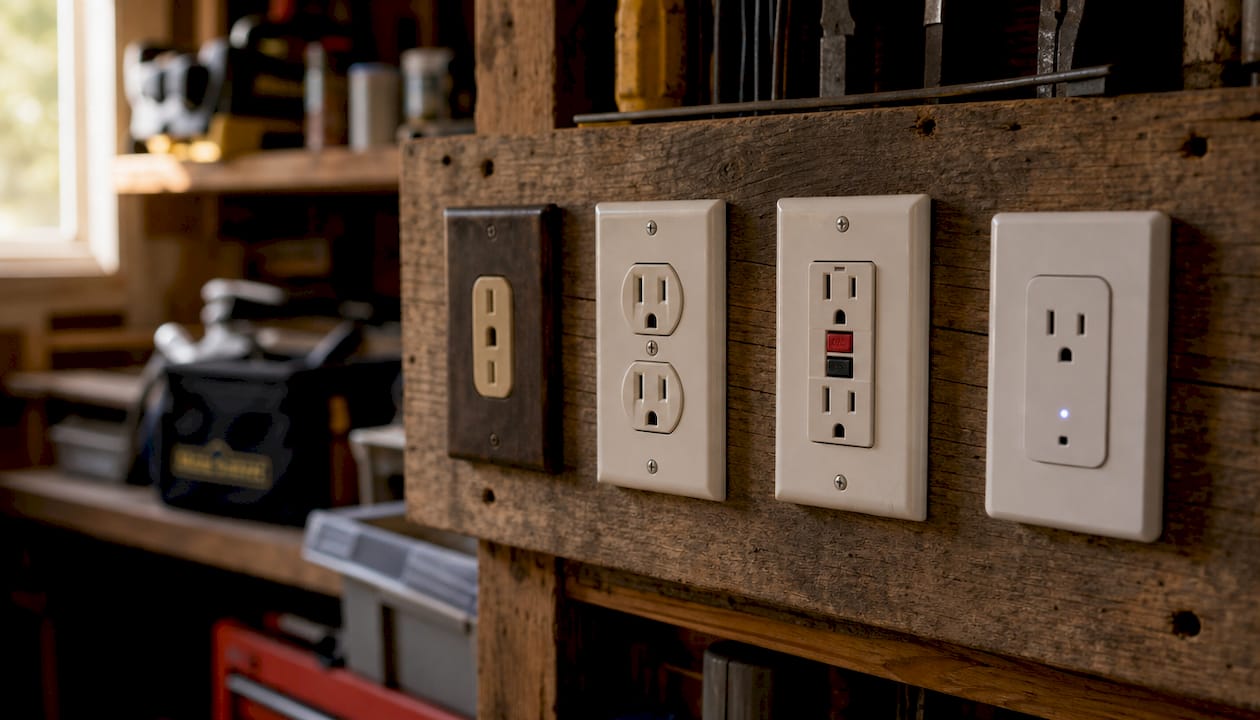
Modern outlet technology has advanced well beyond the simple two or three prong designs most older homes still use. Three outlet types stand out for their safety impact: GFCI, AFCI, and tamper resistant.
GFCI outlets: protection in wet areas
A Ground Fault Circuit Interrupter (GFCI) outlet monitors the flow of electricity through a circuit. The moment it detects an imbalance, which happens when current is flowing somewhere it shouldn't, such as through a person, it cuts power in a fraction of a second. The NEC requires GFCI outlets in bathrooms, kitchens, garages, and outdoor areas for exactly this reason. The good news for older homes is that the NEC allows GFCI outlets as a code compliant replacement for ungrounded two prong outlets, even without rewiring. That makes GFCI one of the most accessible safety upgrades available.
AFCI outlets: stopping fires before they start
Arc Fault Circuit Interrupter (AFCI) outlets address a different threat. Electrical arcs occur when current jumps across a gap in damaged or deteriorated wiring. That arc generates intense heat and can ignite nearby materials inside your walls. AFCI outlets use microprocessors to distinguish between normal appliance operation and a hazardous arc, then cut the circuit before a fire can start. Standard circuit breakers cannot detect arcs. AFCI protection fills that gap.
Tamper resistant outlets: child safety built in
Tamper resistant (TR) outlets contain spring loaded shutters that block the slots unless equal pressure is applied to both sides simultaneously. A child pushing a key or a fork into one slot cannot open the shutter. The NEC has required TR outlets in new residential construction since 2008. Older homes still have millions of standard outlets that offer no such protection.
Here is a quick summary of when each outlet type is required or recommended:
- GFCI outlets: Required in kitchens, bathrooms, garages, basements, and outdoor locations
- AFCI outlets: Required in bedrooms and living areas in new construction; strongly recommended in older homes
- Tamper resistant outlets: Required in all new residential construction; recommended wherever children are present
- 20A outlets: Recommended for kitchen circuits and home offices running multiple high draw devices
Pro Tip: Modern outlets handle 15A–20A compared to older designs rated for lower loads. Upgrading to 20A outlets on dedicated circuits reduces strain on your wiring and lowers the risk of overheating from high draw appliances like microwaves and space heaters.
How do smart outlets and energy efficiency factor in?
The benefits of upgrading outlets go beyond safety. Smart outlets add a layer of control and energy awareness that traditional outlets simply cannot offer.
Phantom power, also called vampire power, is the electricity your devices draw even when they appear to be off. Televisions, gaming consoles, phone chargers, and coffee makers all pull standby power around the clock. Smart outlets allow scheduling to cut off this standby draw automatically, something a standard outlet has no ability to do.
The practical benefits of smart outlets include:
- Remote control via smartphone, so you can cut power to devices when you leave home
- Scheduling to turn outlets off overnight or during peak rate hours
- Energy monitoring to see exactly how much power each device uses
- Voice control compatibility with platforms like Amazon Alexa and Google Home
- Integration with broader smart home systems for automated routines
Smart outlets also work well with modern appliances that expect consistent, stable power delivery. Older outlets with worn contacts can cause voltage fluctuations that shorten the life of sensitive electronics. A new outlet with solid contacts and proper grounding protects your devices as much as it protects your home.
For homeowners thinking about home maintenance as part of a broader upgrade, electrical improvements and smart outlet installations rank among the highest return on investment projects you can make before a home sale or refinance.
What should you know before upgrading outlets in your home?
Outlet upgrades are not all equal in complexity, and the age of your home determines which approach is safe and code compliant.
The most common mistake homeowners make is replacing a two prong ungrounded outlet with a three prong grounded outlet without actually adding a ground wire. Replacing ungrounded outlets without proper grounding is a code violation and creates a false sense of security. The three prong outlet looks correct but offers no ground fault protection. A GFCI outlet installed in its place is the legal, safe alternative.
Homes built in the 1960s and 1970s present a specific challenge. Aluminum wiring requires CO/ALR rated outlets or a pig tailing technique using copper wire to prevent galvanic corrosion at the connection point. Standard outlets connected to aluminum wiring can loosen over time, creating the same resistance and heat problem described earlier, but faster and with greater risk.
| Situation | Recommended upgrade | Why it matters |
|---|---|---|
| Two prong outlets, no ground wire | GFCI outlet (NEC compliant) | Provides shock protection without rewiring |
| Outlets over 20 years old | Full outlet replacement | Restores contact tension and reduces fire risk |
| Aluminum wiring (1960s–1970s homes) | CO/ALR rated outlets or pig tailing | Prevents galvanic corrosion and loose connections |
| Bedrooms and living areas | AFCI outlets | Detects and stops arc faults before fires start |
| Homes with young children | Tamper resistant outlets | Blocks foreign objects from entering slots |
A licensed electrician also needs to assess your panel capacity before you add 20A outlets or smart outlet hubs to circuits designed for lower loads. Upgrading the outlet without confirming the circuit can handle the demand creates a new hazard. A certified electrical upgrade also becomes a documented asset when you sell your home, helping you avoid repair credits during negotiation.
Key Takeaways
Upgrading electrical outlets is the single most cost effective way to reduce fire risk, prevent shock, and bring your home's electrical system in line with current NEC standards.
| Point | Details |
|---|---|
| Outlets age and fail silently | Internal contacts wear out in 15–25 years, creating heat and fire risk behind walls. |
| GFCI and AFCI protect differently | GFCI stops shock in wet areas; AFCI stops arc fires in living spaces and bedrooms. |
| Smart outlets cut energy waste | Scheduling and remote control eliminate phantom power that traditional outlets cannot address. |
| Older homes need special attention | Aluminum wiring and ungrounded circuits require specific outlet types to stay code compliant. |
| Upgrades add real home value | Certified electrical upgrades reduce repair negotiations and strengthen home sale outcomes. |
The upgrade most homeowners put off too long
Homeowners tend to treat electrical outlets the same way they treat smoke detector batteries. They know the upgrade matters, but they wait until something forces the issue. I've seen this pattern repeat itself in older homes across the Kansas City area. The outlet looks fine from the outside, so it gets ignored.
The problem is that the real damage happens behind the wall. By the time you notice discoloration or smell something burning, the heat has already been building for months. Wet areas are the highest priority. A bathroom or kitchen outlet that hasn't been updated to GFCI is a genuine shock hazard every time someone uses it near water.
My honest advice is to start with a room by room check of your oldest outlets. If any of them are two prong, warm to the touch, or more than 20 years old, schedule a professional assessment before winter. Cold weather increases electrical load, and stressed outlets fail faster under demand. Proactive upgrades cost a fraction of what emergency repairs or fire damage remediation will run you.
— Jennifer
Maddladder handles outlet upgrades the right way
Outlet upgrades done correctly require the right parts, the right tools, and a clear understanding of your home's wiring. Maddladder serves homeowners and renters across the Kansas City metro with licensed, code compliant electrical repair and outlet replacement services, including GFCI, AFCI, tamper resistant, and smart outlet installations.

Whether you need a single outlet replaced or a whole home assessment before a sale, Maddladder provides free estimates and fast scheduling. The team also handles smart outlet installations that connect to your home automation setup. Contact Maddladder today for a free estimate and get your outlets working safely and efficiently.
FAQ
How long do electrical outlets typically last?
Electrical outlets last 15–25 years before their internal contacts lose the tension needed for safe operation. After that point, loose connections and heat buildup become real risks.
Can I replace a two prong outlet with a three prong outlet myself?
Replacing a two prong outlet with a three prong outlet without a proper ground wire is a code violation. A GFCI outlet is the NEC approved alternative that provides shock protection without rewiring.
What is the difference between GFCI and AFCI outlets?
GFCI outlets protect against electrical shock by cutting power when current flows through an unintended path, such as a person. AFCI outlets protect against fires by detecting dangerous electrical arcs in wiring.
Do smart outlets actually save money on energy bills?
Smart outlets reduce phantom power by cutting standby electricity to devices on a schedule or remotely. The savings depend on how many devices you control, but the reduction in standby draw adds up across multiple outlets over a year.
When should I call a licensed electrician for outlet upgrades?
Call a licensed electrician any time you are dealing with aluminum wiring, ungrounded circuits, panel capacity questions, or AFCI installation. These situations require professional assessment to stay safe and code compliant.