
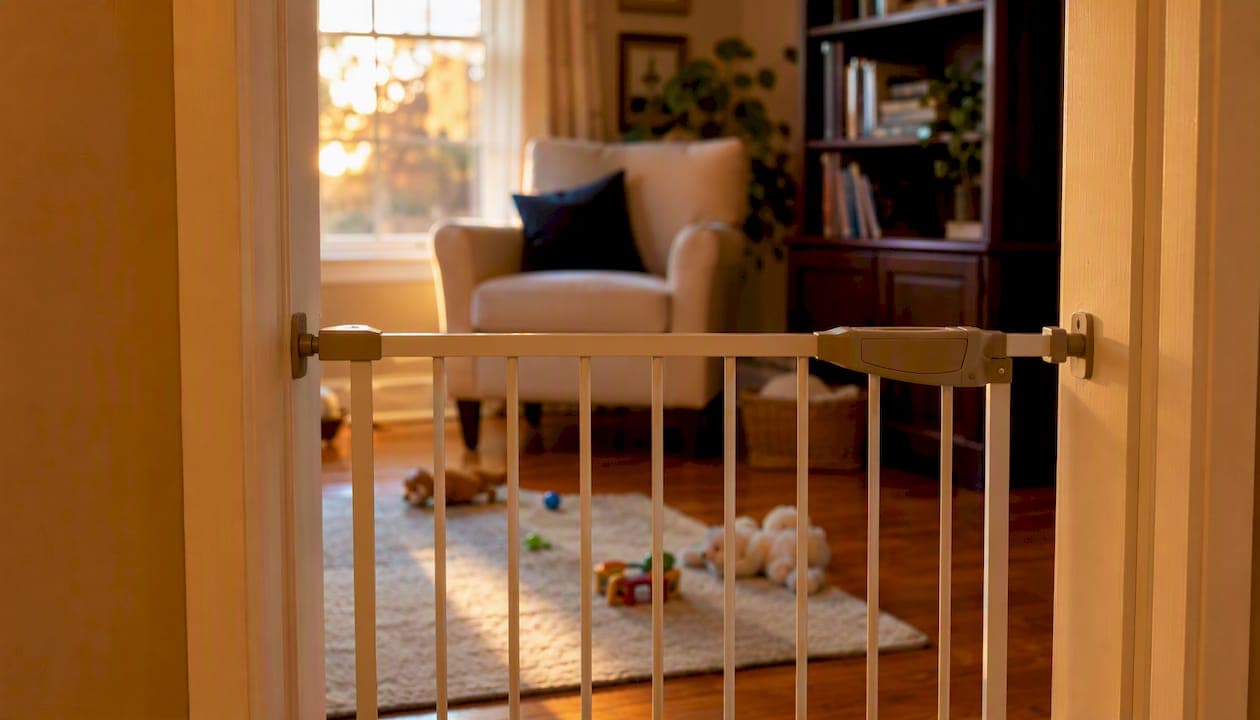
You can make your home significantly safer for infants and toddlers by completing these ten high-impact steps today. This guide pairs authoritative U.S. safety guidance from the AAP, CDC, CPSC, and Poison Control with a realistic 7-day timeline and clear advice on when to call a licensed handyman.
Start here — ten actions to take right now:
- Install and test smoke and CO detectors on every level and outside every sleeping area (AAP/HealthyChildren.org)
- Lock up all medications, cleaning products, and button batteries out of sight and reach (AAP Poison Prevention)
- Install safety gates at the top and bottom of every staircase, mounted to studs
- Anchor tall furniture (dressers, bookcases, TV stands) to the wall
- Get down to your child's eye level and remove all small objects that could cause choking
- Secure or replace window coverings with dangling cords (CPSC guidance)
- Fence or lock every pool, spa, or portable pool access point
- Set your water heater to 120°F or below
- Cover unused electrical outlets with tamper-resistant receptacles or outlet covers
- Save Poison Control: 1-800-222-1222 and bookmark webPOISONCONTROL
Key Takeaways
Layered protection — devices, supervision, and routine checks — is the only approach that keeps pace with a growing child's abilities.
| Point | Details |
|---|---|
| Detectors save lives | Install smoke and CO detectors on every level and outside bedrooms; test monthly. |
| Water supervision is non-negotiable | Drowning is silent and fast; maintain arm's-length supervision near any water, including buckets. |
| Lock up every poison | Medications, cleaners, and button batteries must be locked, not just placed out of reach. |
| Anchor heavy furniture | Dressers, bookcases, and TVs need wall anchors; tip-overs injure thousands of children annually. |
| Maddladder handles the hard installs | Kansas City families can book a home-safety walkthrough and professional installation at Maddladder. |
Table of Contents
- What to do first: a 7-day priority timeline and typical costs
- Fire, smoke, and carbon monoxide: detectors, escape plans, and burn prevention
- Water safety: baths, pools, spas, and portable pools
- Poisoning and medication safety
- Electrical safety: outlets, cords, and GFCIs
- Falls, stairs, and safety gates
- Furniture and TV tip-overs: anchoring and mounting
- Choking hazards and toy safety
- Windows, window coverings, and doors
- Firearms and weapon safety
- Prepare for emergencies: first aid, CPR, and essential supplies
- Routine safety checks and updating childproofing as your child grows
- When to hire a pro: what licensed handymen or technicians should handle
- Safe sleeping environment and crib safety guidelines
- Poisonous plants and safe gardening practices indoors and outdoors
- Car seat installation and transportation safety
- Why "set it and forget it" childproofing will eventually fail your child
- Maddladder's home-safety installation services in Kansas City
- Sources
What to do first: a 7-day priority timeline and typical costs
Not everything can happen in one afternoon. Here is a realistic sequence that front-loads the highest-risk fixes.
Days 1–2: High-impact installs and checks
- Test every existing smoke and CO detector. Replace any that fail or are older than 10 years.
- Walk every room at toddler height and collect choking hazards into a bag.
- Lock up all medications, vitamins, cleaning products, and vaping liquids.
- Cover unused outlets with outlet covers or schedule a tamper-resistant receptacle upgrade.
Days 3–4: Quick fixes
- Secure or replace window blind cords; tuck or tie off any dangling loops.
- Anchor at least one high-risk furniture piece (the tallest dresser or bookcase).
- Set water heater to 120°F.
Days 5–7: Larger installs or schedule a pro
- Mount safety gates at stair tops and bottoms (hardware-mounted, not pressure-mounted, at the top).
- Evaluate pool or spa access and add barriers, alarms, or locks.
- Schedule a licensed handyman for hardwired detector installs, GFCI outlets, or secure TV mounting.
Typical cost ranges: Outlet covers run a few dollars each. A quality hardware-mounted safety gate costs roughly $40–$100. Furniture anchor kits are typically under $20. Hardwired smoke/CO detector installation by a licensed pro varies by home size and local rates; minor electrical upgrades in the Kansas City area generally fall in a low-to-mid cost band. Pool barrier work is the most variable and often requires a licensed contractor.
Fire, smoke, and carbon monoxide: detectors, escape plans, and burn prevention
Healthychildren placing at least one smoke detector on every level of the home and outside every sleeping area, with monthly testing. Carbon monoxide detectors follow the same placement logic. If you have a gas stove, attached garage, or any fuel-burning appliance, a CO detector near those areas is not optional.
Detector checklist:
- One smoke detector per floor, plus outside each bedroom
- CO detector near sleeping areas and near gas appliances
- Test every detector the first Sunday of each month
- Replace detectors older than 10 years; replace CO detectors per manufacturer guidance (typically 5–7 years)
- Know where to find smoke alarm placement tips if you are unsure about positioning
Pro Tip: Sealed, 10-year lithium battery smoke alarms eliminate the "dead battery" failure mode entirely. You never open them to swap batteries — you simply replace the whole unit at the 10-year mark. For families with young children, this is the single most reliable upgrade over standard battery models.
Fire escape plan basics:
- Identify two exits from every room (door plus window where possible)
- Pick one outdoor meeting spot the whole family knows
- Practice the plan at least twice a year, including a nighttime drill
- Teach children never to hide from firefighters
Kitchen burn prevention is where most household scald injuries happen. Use stove knob covers so toddlers cannot turn burners on. Keep hot liquids well back from counter edges. Never carry a hot drink and a child at the same time. Your water heater set at or below 120°F cuts tap-water scald risk significantly.
Water safety: baths, pools, spas, and portable pools
Drowning happens quickly and is often silent, which is the CDC's core message for parents of young children. A toddler can drown in the time it takes to answer a phone. The supervision rule for bathtubs is arm's-length, touch supervision — not across-the-room supervision. That same rule applies to buckets, wading pools, and even large planters holding standing water.
Drowning is the leading cause of unintentional injury death for children ages 1–4 in the United States. Swimming lessons reduce risk but do not replace active adult supervision. Designate one adult as the "water watcher" and avoid distractions entirely.
Pool and spa barrier checklist (per CPSC pool safety guidance):
- Four-sided fence, minimum 4 feet tall (5 feet preferred), completely surrounding the pool
- Self-closing, self-latching gate that opens away from the pool
- Door alarms on any house door that leads directly to the pool area
- Power safety cover maintained in working condition
- Barriers are a critical layer of protection but do not replace supervision
Portable pools deserve the same respect as in-ground pools. Empty and store them when not in use, or fence them the same way you would a permanent pool. A toddler can drown in just a few inches of water.
Poisoning and medication safety
The AAP's poison prevention guidance is direct: keep all medicines, cleaning products, vaping liquids, and edible cannabis products locked and out of sight. "Up high" is not enough — toddlers climb. Locked means a cabinet latch a child cannot open, not just a high shelf.
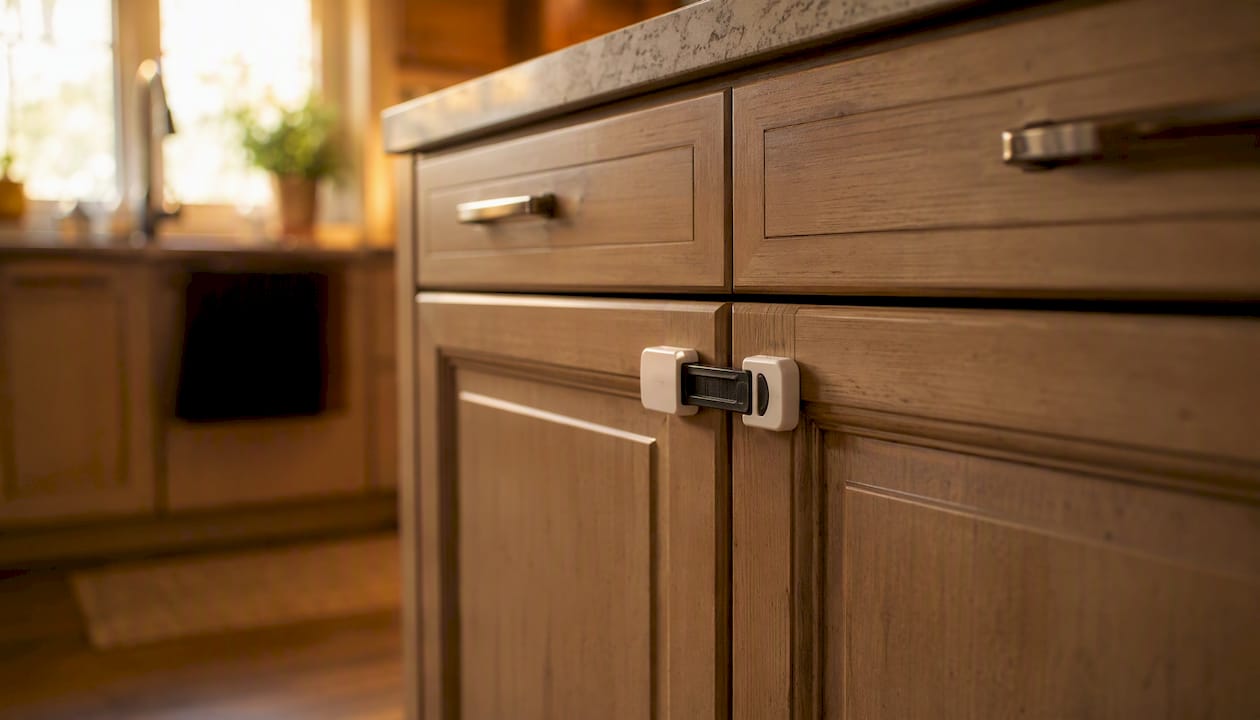
Button and coin batteries are a separate, urgent risk. A swallowed button battery can cause severe internal injury within two hours. If you suspect ingestion, go to the emergency room immediately — do not induce vomiting and do not wait.
Quick storage fixes:
- Use child-resistant cabinet latches on every cabinet containing chemicals or medications
- Keep all products in their original containers
- Store purses, bags, and guests' belongings out of reach (they often contain medications)
- Dispose of unused medications promptly through a DEA take-back program
Poison Control's guidance is explicit: calling immediately is the right first step. The specialists there will give you substance-specific instructions, including whether to go to the ER or manage at home.
Electrical safety: outlets, cords, and GFCIs
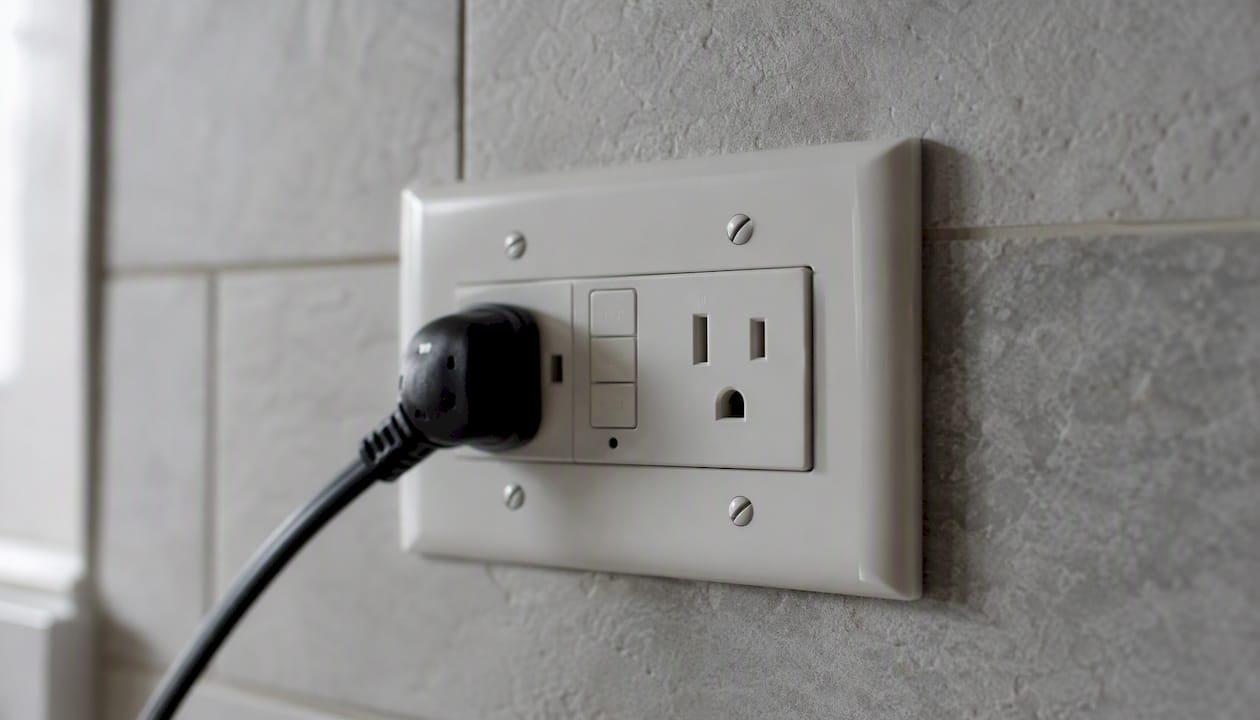
Unused outlets are a direct hazard for curious toddlers. The CPSC recommends tamper-resistant receptacles as the most reliable solution — they have built-in shutters that only open when equal pressure is applied to both slots simultaneously, which a child's finger or a single object cannot do. Standard plastic outlet covers work too, but choose ones large enough that they cannot become a choking hazard if removed.
Electrical safety checklist:
- Cover all unused outlets with tamper-resistant receptacles or outlet covers
- Block outlets behind furniture where possible as a secondary layer
- Keep all cords out of reach and out of sight; use cord shorteners or hide-away solutions
- Never run cords under rugs (fire risk) or across walkways (trip hazard)
- Install GFCIs in kitchens, bathrooms, garages, and outdoor outlets
Pro Tip: Replacing standard outlets with tamper-resistant receptacles is a minor electrical job, but it does require turning off the circuit breaker and working inside the outlet box. If you are not comfortable with that, it is a fast, affordable job for a licensed handyman. Check outlet upgrade options before deciding whether to DIY or hire.
GFCIs (ground fault circuit interrupters) cut power in milliseconds when they detect a ground fault. They are required by code in new construction near water sources, but many older homes lack them. If your kitchen or bathroom outlets do not have the test/reset buttons, they likely need upgrading. That is a job for a licensed electrician or a qualified handyman.
Falls, stairs, and safety gates
Falls are among the most common causes of injury for children under five. The fix at stairs is straightforward: hardware-mounted gates at the top and bottom. Pressure-mounted gates are acceptable at the bottom of stairs but should never be used at the top, where a child's weight can push them out. HealthyChildren.org specifically warns against accordion-style gates, which have V-shaped openings that can trap a child's head or neck.
Stair and fall safety checklist:
- Hardware-mounted gate at the top of every staircase, screwed into studs
- Pressure-mounted or hardware-mounted gate at the bottom
- Secure all area rugs with non-slip pads or double-sided tape
- Remove loose cords and clutter from all walkways
- Add lighting at the top and bottom of stairs; fix any burned-out bulbs now
- Check handrails for stability; tighten any that wobble
For bathroom safety and secure mounting of grab bars or rails, the same stud-mounting principle applies. A safe DIY guide to grab bar installation covers the anchoring technique in detail if you want to tackle it yourself.
Furniture and TV tip-overs: anchoring and mounting
Furniture tip-overs injure tens of thousands of children in the United States every year. The highest-risk pieces are tall dressers, bookcases, and TV stands — anything a toddler can grab, pull, or climb. The fix is anchoring to wall studs with anti-tip straps or L-brackets.
Priority order for anchoring:
- Identify the tallest, heaviest, or most climbable pieces in your home
- Remove any toys or attractive objects from the tops of those pieces
- Anchor each piece to a wall stud using an anti-tip strap kit
- Mount TVs to the wall rather than leaving them on stands
- Test every anchor by applying firm pressure in the direction a child would pull
When to hire a pro: Large flat-screen TVs on masonry or tile walls, or any situation where you cannot locate studs confidently, call for a licensed handyman. An improperly mounted TV is more dangerous than an unmounted one. Maddladder's installation and assembly services cover TV mounting and furniture anchoring throughout the Kansas City metro area.
Choking hazards and toy safety
Get down to your child's eye level in every room. You will see things you missed from standing height: coins under the couch, small toy parts behind the TV stand, a button battery that rolled under the dresser. Anything that fits through a standard toilet paper tube is a choking hazard for a child under three.
Common choking items to remove:
- Coins, marbles, small magnets
- Button batteries (also a poisoning risk)
- Balloons (deflated or broken pieces)
- Small toy parts from older siblings' toys
- Pen caps, small erasers, hair ties
Toy safety: Check age labels on every toy. "Not for children under 3" means small parts are present. Inspect older siblings' toys regularly — a Lego set left on the floor is a hazard for a toddler even if it is age-appropriate for the older child.
Food choking prevention: Cut grapes, cherry tomatoes, and hot dogs lengthwise (not just in rounds). Avoid whole nuts and large chunks of raw vegetables for children under four. Always supervise eating — no running, walking, or lying down while eating.
Windows, window coverings, and doors
Window screens are not fall barriers. They are designed to keep insects out, not to hold a child's weight. Install window guards or window stops that limit how far a window can open (no more than 4 inches) on any window above the first floor.
Window and door safety checklist:
- Replace corded window coverings with cordless options wherever possible
- If cords remain, use a floor mount or wall wrap to eliminate dangling loops entirely
- Install window guards or stops on upper-floor windows
- Never rely on a screen to prevent a fall
Pro Tip: The CPSC warns that some retrofit cord-management kits do not fully eliminate the dangling pull-cord hazard — they address the inner lift cord but leave the pull cord accessible. If you are retrofitting rather than replacing, verify that the specific kit you buy addresses both cord types. When in doubt, replacing the covering entirely is the safer and often cheaper long-term choice.
For doors, glass sliding doors should have visible decals at child height so children do not walk into them. Any door that leads directly to a pool area should have a door alarm that sounds when opened.
Firearms and weapon safety
The AAP's position is clear: the safest option for a home with young children is no firearms present. If firearms are in the home, store them unloaded in a locked safe, with ammunition locked separately in a different location. Gun locks add a second layer of protection.
Safe storage checklist:
- Unloaded firearm in a locked safe
- Ammunition stored separately, also locked
- Gun lock on every firearm as a backup
- Ask about storage practices at every home your child visits
Many communities offer free gun lock programs through local law enforcement. Check with your local police department or sheriff's office. For legal questions about storage requirements in your state, consult a licensed attorney — storage laws vary by jurisdiction.
Prepare for emergencies: first aid, CPR, and essential supplies
Knowing what to do in the first two minutes of a choking or drowning incident can determine the outcome. CPR training for every adult caregiver in the household is one of the highest-return investments you can make.
- Take a CPR and first aid class. The American Red Cross and American Heart Association both offer in-person and online courses. Refresh every two years.
- Build a home first-aid kit. Include bandages, antiseptic wipes, a digital thermometer, tweezers, a cold pack, and a first-aid manual.
- Post emergency numbers. Poison Control (1-800-222-1222), your pediatrician's after-hours line, and your nearest children's hospital ER.
- Practice mock scenarios. Walk through what you would do for a small burn, a choking episode, or a water incident. Rehearsal reduces panic and speeds response.
Pro Tip: Run a 10-minute scenario drill with every adult who regularly cares for your child — grandparents, babysitters, older siblings. The drill does not need to be dramatic; just talk through "what would you do if..." for the three most likely emergencies in your home. People who have thought through a scenario once respond faster when it happens.
Routine safety checks and updating childproofing as your child grows
Childproofing is not a one-time project. A setup that worked for a crawling infant needs a full review when that child starts walking, and another when climbing begins. CPSC guidance recommends scheduling a "new skill audit" after each major developmental milestone.
Monthly:
- Test all smoke and CO detectors
- Check that safety gates are still firmly mounted and latches engage properly
- Inspect outlet covers and cabinet latches for damage or loosening
Quarterly:
- Re-evaluate furniture placement and anchor integrity
- Inspect pool barriers, gate latches, and door alarms
- Refresh first-aid kit supplies (replace expired items)
Annually:
- Review car seat fit and installation (children outgrow seats faster than parents expect)
- Replace any smoke or CO detectors that have reached end-of-life
- Schedule professional inspections for electrical systems or pool barriers as needed
A regular home safety check routine keeps your childproofing current as your child's abilities change.
When to hire a pro: what licensed handymen or technicians should handle
Some childproofing tasks carry real risk if done incorrectly, and a few require permits or code compliance. Here is a clear split:
Tasks best handled by a licensed pro:
- Hardwired smoke and CO detector installation
- GFCI outlet wiring and tamper-resistant receptacle upgrades in older homes
- TV mounting on masonry, tile, or walls where studs cannot be located
- Pool barrier construction or major gate installation
- Door alarm wiring for pool-access doors
Decision criteria for hiring:
- Would a failure injure my child or create a fire/electrical hazard?
- Does the task require a permit or code compliance in my area?
- Do I lack the tools or confidence to do it correctly?
- Is the wall material (masonry, tile) outside my DIY experience?
If you answer yes to any of those, call a pro. A Maddladder-style home-safety walkthrough covers the full home, identifies priority fixes, handles small repairs on the spot, and provides a written estimate for larger work. That kind of structured audit is especially useful for families moving into a new home or after a major renovation.
Safe sleeping environment and crib safety guidelines
Safe sleep for infants follows the AAP's ABCs: Alone, on their Back, in a Crib. The sleep surface should be firm and flat, with a fitted sheet and nothing else — no pillows, bumper pads, loose blankets, stuffed animals, or positioners. These items increase the risk of suffocation and SIDS.
Cribs should meet current CPSC safety standards. Drop-side cribs are banned in the United States; if you have one, do not use it. Check that crib slats are no more than 2⅜ inches apart. The mattress should fit snugly with no gap at the sides. Once a child can pull to standing, lower the mattress to the lowest setting and remove any large toys that could be used as a step to climb out.
Room temperature matters too. Keep the sleep environment between 68°F and 72°F and dress the infant in a sleep sack rather than a loose blanket.
Poisonous plants and safe gardening practices indoors and outdoors
Many common houseplants and garden plants are toxic to young children. Philodendron, pothos, dieffenbachia, oleander, and foxglove are among the plants that cause symptoms ranging from mouth irritation to serious systemic effects. The safest approach is to move all houseplants out of reach or replace them with non-toxic varieties while children are young.
Practical steps:
- Use the ASPCA's toxic plant database or call Poison Control to check any plant you are unsure about
- Move potted plants to high shelves or rooms children do not access
- In the yard, identify and remove highly toxic plants (oleander, yew, lily of the valley) near play areas
- Teach children not to put any plant, berry, or seed in their mouth
- Store all fertilizers, pesticides, and garden chemicals in locked storage, treated exactly like household cleaners
If a child eats or chews on any plant and you are unsure of its toxicity, call Poison Control at 1-800-222-1222 immediately.
Car seat installation and transportation safety
Car crashes remain a leading cause of injury for children in the United States. Correct car seat installation and use are the primary defenses. The National Highway Traffic Safety Administration (NHTSA) estimates that a large percentage of car seats are installed or used incorrectly.
Car seat basics:
- Rear-facing seats are recommended until the child reaches the seat's maximum height or weight limit, not just a specific age
- Forward-facing with a harness comes next, kept rear-facing as long as possible
- Booster seats follow once the child outgrows the harness
- The seat belt alone is appropriate only when the child fits it correctly (typically 4'9" and 8–12 years old)
Register your car seat with the manufacturer so you receive recall notices. Have the installation checked at a certified Child Passenger Safety Technician (CPST) inspection station — NHTSA maintains a locator at nhtsa.gov. Never use a car seat that has been in a moderate or severe crash, and check the expiration date printed on the seat's base.
Why "set it and forget it" childproofing will eventually fail your child
Most parents childproof once — usually right before a baby starts crawling — and then assume the job is done. That assumption is where the risk creeps back in.
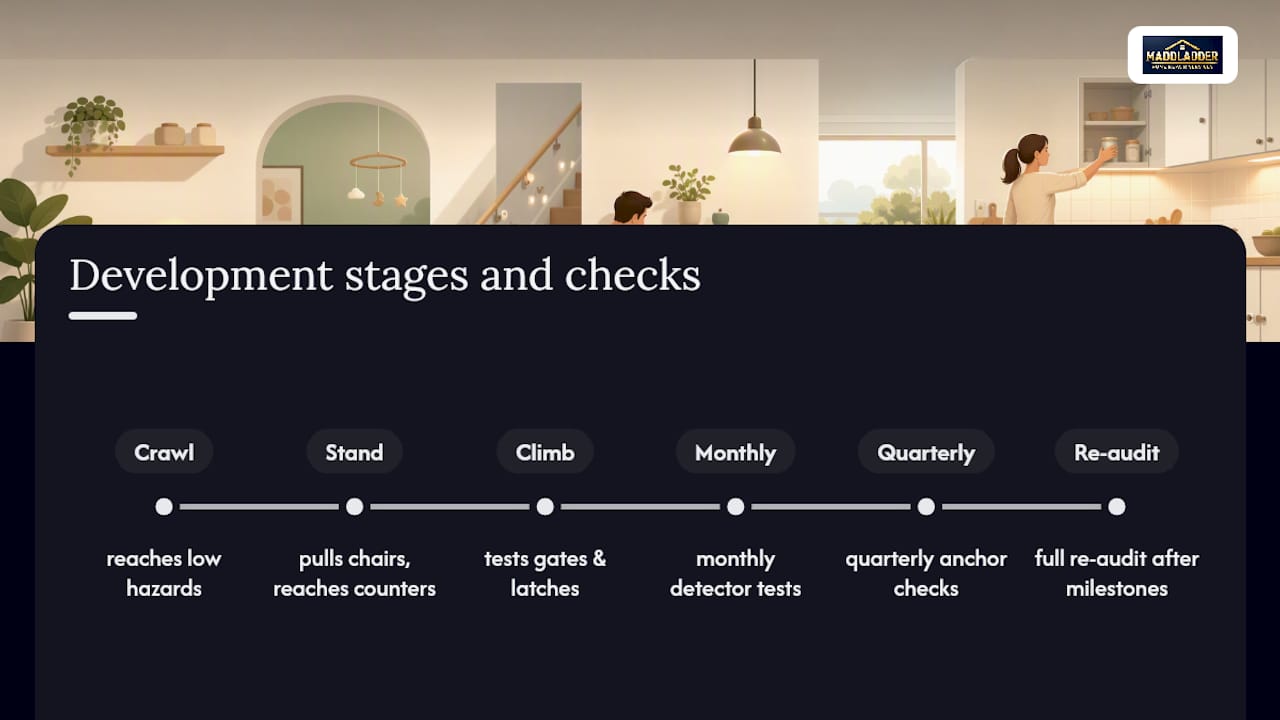
Every developmental leap changes the threat map. A child who could not reach the kitchen counter last month can now pull a chair over and climb. The gate that held firm against a 20-pound crawler gets tested very differently by a 30-pound climber who has figured out the latch mechanism. Devices are not completely childproof, as the CPSC explicitly notes — they buy time and reduce opportunity, but they do not replace active supervision and regular reassessment.
The families who maintain the safest homes treat childproofing as a habit, not a project. Monthly detector tests, quarterly anchor checks, and a full re-audit after each developmental milestone are what actually keep the protection current. A one-time setup gives you a false sense of security precisely when your child is becoming more capable of defeating it.
Maddladder's home-safety installation services in Kansas City
Childproofing a home thoroughly takes time, the right tools, and confidence in the installation. For families in the Kansas City metro area who want professional help, Maddladder handles the installs that matter most.

A Maddladder home-safety visit covers a full walkthrough, on-the-spot small repairs, and a prioritized estimate for larger work. Services that map directly to this guide include:
- Smoke and CO detector installation (hardwired and battery)
- Tamper-resistant outlet and GFCI upgrades
- Safety gate mounting (hardware-mounted, stud-anchored)
- Furniture and TV anchoring and wall mounting
- Cabinet latch and door alarm installation
Book a free estimate or browse the full repair and replacement services at Maddladder.com. Fast response, licensed work, and no long-term contract required.
Sources
These U.S. agencies and hotlines provide the authoritative guidance this guide is built on. Save the emergency numbers now.