

TL;DR:
- Choosing the correct trim or fixture type depends on matching product categories, materials, and compatibility before purchase.
- Proper installation order and material selection are crucial for optimal aesthetics and durability in interior and lighting projects.
Trim and fixture replacement types fall into three main categories: recessed lighting trims, interior molding profiles, and bathroom fixture trim kits. Each category carries distinct styles, materials, and compatibility requirements that directly affect how your finished project looks and functions. Getting the category wrong before you buy means wasted money and a second trip to the hardware store. Popular products like Delta faucet trim kits, baffle and reflector lighting trims, and MDF baseboard profiles each serve specific purposes, and knowing which one fits your project is the first decision you need to make.
1. Baffle trims for recessed lighting
Baffle trims are the most common recessed lighting trim type sold in the U.S. They feature a ridged or grooved interior surface that absorbs excess light and reduces glare, making them the right choice for living rooms, bedrooms, and dining areas where you want soft, comfortable illumination. The trim type at the ceiling defines both fixture aesthetics and light behavior, so this is not a purely cosmetic decision. Baffle trims come in white, black, and brushed nickel finishes to match surrounding decor.
The ridged interior is the functional element. It scatters light slightly before it reaches the room, cutting the harsh hot-spot effect you get with bare bulbs. If your current recessed cans produce uncomfortable glare, swapping to a baffle trim is often the fastest fix without touching the wiring.
2. Reflector trims for focused brightness
Reflector trims use a smooth, curved interior surface to bounce light downward in a concentrated beam. They increase perceived brightness compared to baffle trims without requiring a higher-wattage bulb. This makes them the preferred choice for kitchens, home offices, and task-lighting areas where you need directed, functional light.
Reflector trims are available in specular (mirror-like) and semi-specular finishes. Specular finishes produce the tightest, most focused beam. Semi-specular versions spread light slightly wider, which works well over countertops or reading areas. The key trade-off is that reflector trims show the bulb more directly, which can feel harsh in relaxed spaces.
Pro Tip: Match your trim finish to the room's function. Reflector trims belong in work areas; baffle trims belong in living spaces. Mixing them in the same ceiling sightline creates uneven light quality.
3. Gimbal and adjustable trims
Gimbal trims, also called eyeball or adjustable trims, allow you to pivot the light source in multiple directions after installation. They are the correct choice for accent lighting, artwork illumination, or any situation where you need to direct light at a specific object rather than straight down. Recessed lighting trims in the gimbal category include both single-axis and multi-axis pivot designs.
The pivot mechanism sits inside the trim ring, so the visible ceiling opening looks similar to a standard trim. The difference becomes obvious when you angle the light. Gimbal trims require slightly more ceiling clearance than flat trims, so confirm your housing depth before purchasing.
4. Wall washer and open trims
Wall washer trims use an asymmetric reflector to push light horizontally across a wall surface rather than straight down. They create an even wash of light that highlights texture, artwork, or architectural features. Open trims take the opposite approach: they expose the bulb directly with no baffle or reflector, producing maximum light brightness suited for workspaces needing broad coverage.
| Trim Type | Best Use | Light Quality |
|---|---|---|
| Baffle | Living rooms, bedrooms | Soft, glare-reduced |
| Reflector | Kitchens, task areas | Bright, focused |
| Gimbal | Accent, artwork | Directional |
| Wall washer | Feature walls, galleries | Even, horizontal |
| Open | Garages, workshops | Maximum brightness |
Open trims are the least expensive option and the easiest to install, but they are not appropriate for spaces where people spend extended time due to visible glare.
5. Retrofit LED versus full housing replacement
Retrofit LED can lights fit inside existing housings with minimal ceiling modification, making them the practical choice for most upgrade projects. Integrated LED units combine the housing, trim, and light source into one sealed fixture, which requires removing the old housing entirely. Retrofit kits cost less and take under 20 minutes per fixture. Full integrated replacements deliver better long-term efficiency but require more labor and ceiling patching if the old housing is a different size.
Before buying a retrofit kit, verify that your existing housing supports it. Some older IC-rated or non-IC housings have internal baffles or socket positions that prevent retrofit trims from seating correctly. Existing housing compatibility is the step most homeowners skip, and it is the most common reason for a return trip to the store.
Pro Tip: Write down your existing housing brand and model number before shopping for retrofit trims. It is printed on a label inside the can. This single step eliminates most compatibility problems.
6. Interior trim types: baseboards, casings, and crown molding
Interior trim replacements cover four primary profiles: baseboards, door and window casings, crown molding, and chair rails. Each serves a different architectural function, and mixing incompatible profiles within a single room sightline creates visual disruption that buyers and guests notice immediately. Baseboards cover the gap between wall and floor. Casings frame door and window openings. Crown molding transitions between wall and ceiling. Chair rails divide wall surfaces horizontally.
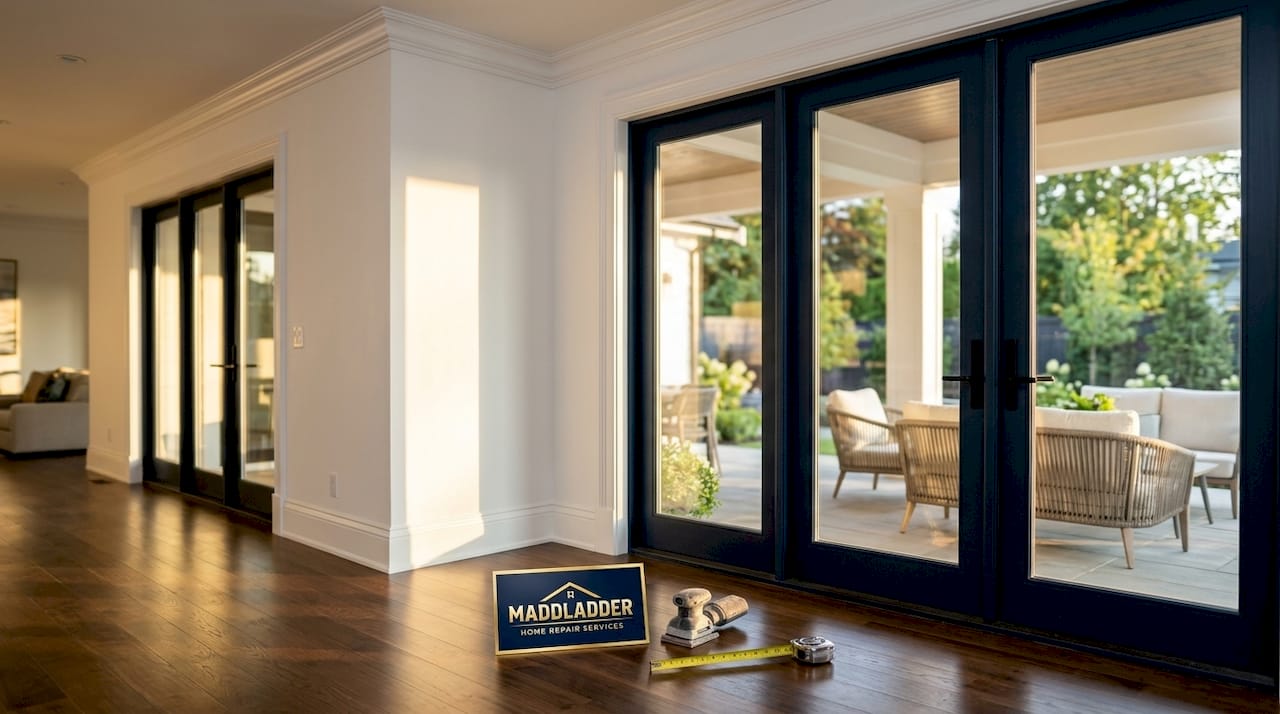
The profile shape is what defines the style category. Traditional profiles use curved, layered details like ogee curves and cove cuts. Modern flat profiles use clean, square edges with minimal ornamentation. Matching the profile family across all trim types in a room is the single most important style decision you will make during a trim replacement project.
7. Common trim materials and when to use each
Material choice affects durability, paintability, and cost across all types of trim replacements. The five most common options are solid wood, MDF (medium-density fiberboard), primed finger-jointed wood, PVC, and polystyrene.
- Solid wood accepts stain and paint equally well, holds nails without splitting when pre-drilled, and is the correct choice for stained natural finishes.
- MDF is the most popular painted trim material because its smooth surface requires no grain filling and holds paint without raising. It does not tolerate moisture well, so avoid it in bathrooms or laundry rooms.
- Primed finger-jointed wood costs less than solid wood and comes ready to paint, but visible finger joints can telegraph through paint on close inspection.
- PVC trim is waterproof and rot-resistant, making it the right material for exterior applications and high-moisture interior spaces.
- Polystyrene is lightweight and inexpensive, but it dents easily and is best reserved for low-traffic decorative applications like ceiling medallions.
Repairing window trim with the wrong material is a common mistake that leads to premature failure, especially in Kansas City's climate where temperature swings stress exterior joints.
8. Correct installation sequence for interior trim
The correct installation order for interior trim is door and window casings first, then crown molding, then wall trim or panel molding, and baseboards last. This sequence matters because each layer references the one before it. Baseboards must meet door casings cleanly at the floor, and that joint only works if the casing is already set and the flooring height is finalized.
Skipping this sequence is the most common cause of visible gaps where trim pieces meet. Crown molding installed before casings often requires awkward coping cuts that would not be necessary with the correct order. If you are replacing only one trim type in a room, plan your cuts around the existing pieces to maintain the original sequence logic.
Pro Tip: If you are replacing baseboards in a room that already has door casings, undercut the casing with an oscillating tool so the baseboard slides beneath it. This creates a cleaner joint than a coped or mitered return.
9. Shower and bathroom fixture trim kits
Shower trim kits include the handle, escutcheon plate, and decorative cover. They do not include the valve body or rough-in unless the product listing specifically states otherwise. This distinction matters because replacing only the trim is a renovation-level task, while replacing the valve body crosses into remodel territory that may require a licensed plumber and permit.
Delta, Kohler, Moen, and American Standard each use proprietary stem sizes and cartridge connections. A Moen trim kit will not fit a Delta valve body, even if the escutcheon plate looks identical from the outside. Manufacturer compatibility is the controlling factor in every bathroom trim replacement decision.
- Confirm your existing valve brand before purchasing any trim kit.
- Locate the model number stamped on the cartridge or inside the escutcheon plate.
- Cross-reference that number with the manufacturer's trim kit compatibility chart.
- Purchase trim-only kits for existing valve bodies in good condition.
- Purchase complete kits (trim plus rough-in) only for new installations or full valve replacements.
Minor plumbing repairs that involve only trim swaps cost a fraction of full valve replacements, which is why confirming compatibility before purchase protects your budget.
10. Renovation versus remodel scope for bathroom fixtures
Bathroom fixture updates without major plumbing work involve replacing visible trim and hardware rather than valve rough-in components. This is the renovation category. A remodel involves structural changes, new rough-in locations, or valve replacements that require opening walls. Understanding which category your project falls into determines your budget, timeline, and whether you need a licensed contractor.
Most homeowners replacing a faucet handle, showerhead, or tub spout are doing renovation work. The fixture replacement checklist for Kansas City homes covers the code considerations that apply even to trim-only swaps, which is worth reviewing before you start. Regularly replacing fixtures also protects home value in ways that many owners underestimate until they reach the listing stage.
Key takeaways
Choosing the right trim and fixture replacement type requires matching the product category, material, and manufacturer compatibility to your specific project before purchasing anything.
| Point | Details |
|---|---|
| Lighting trim type affects function | Baffle, reflector, gimbal, and open trims each produce different light quality for different room types. |
| Shower trim kits are brand-specific | Delta, Kohler, Moen, and American Standard trims are not interchangeable; always confirm valve model numbers first. |
| Interior trim installation order matters | Install casings first, then crown molding, then wall trims, then baseboards to prevent visible gaps. |
| Material choice drives durability | Use PVC for moisture-prone areas, MDF for painted interior trim, and solid wood for stained finishes. |
| Retrofit LED trims save time and money | Retrofit kits fit existing housings without ceiling modification, but housing compatibility must be verified first. |
What I've learned after years of trim and fixture projects
The single most expensive mistake I see homeowners make is buying a shower trim kit based on appearance alone. Two escutcheon plates can look nearly identical on a shelf and be completely incompatible. The part number stamped inside the existing escutcheon is the only reliable guide, and most people throw that information away with the old trim. Pulling the handle before you shop takes five minutes and saves you a second plumbing call.
On the lighting side, most homeowners underestimate how much the trim style shapes the feel of a room. I have seen kitchens transformed not by new fixtures but by swapping open trims for reflector trims, which focused the light on work surfaces instead of scattering it toward the ceiling. The lighting selection process is worth thinking through before you commit to a trim style, because changing your mind after installation means buying twice.
Interior trim is where I see the most style inconsistency in older homes. Someone replaces a damaged baseboard with a flat modern profile in a room full of traditional colonial casings, and the mismatch is immediately visible to anyone who walks in. Matching the profile family is not optional if you care about resale value. Coordinating trim styles within a room signals attention to detail that buyers notice, even when they cannot articulate why the room feels right.
My honest advice: spend 20 minutes identifying your existing trim profiles, valve brands, and housing models before you buy anything. That research session eliminates 90% of the compatibility problems that turn a two-hour project into a two-day ordeal.
— Jennifer
Let Maddladder handle your trim and fixture replacements
Identifying the right trim type is step one. Installing it correctly, with the right tools and the right sequence, is where most DIY projects stall. Maddladder handles all categories of trim and fixture work across the Kansas City metro, from recessed lighting trim swaps to bathroom fixture kit installations and full interior molding replacements.

Whether you are a homeowner updating a single bathroom or a property manager coordinating repairs across multiple units, Maddladder provides licensed, dependable service with free estimates and fast response times. The plumbing and electrical services team handles the complex fixture work that goes beyond a simple trim swap, so you get the right scope of work done without guessing. Contact Maddladder for a free estimate and get your project moving.
FAQ
What are the main trim and fixture replacement types?
The three main categories are recessed lighting trims (baffle, reflector, gimbal, open, wall washer), interior molding profiles (baseboards, casings, crown molding, chair rails), and bathroom fixture trim kits (handles, escutcheons, and decorative covers). Each category has distinct compatibility and style requirements.
Can I replace a shower trim kit without replacing the valve?
Yes, in most cases. Shower trim kits include the handle, escutcheon, and cover but not the valve body, so you can update the visible hardware without touching the plumbing rough-in. You must confirm the trim kit matches your existing valve brand and model number before purchasing.
What is the difference between a retrofit LED trim and an integrated LED fixture?
A retrofit LED trim fits inside an existing recessed housing and replaces only the visible trim and light source. An integrated LED fixture combines housing, trim, and light into one sealed unit that requires removing the old housing entirely. Retrofit kits are faster and less expensive for most upgrade projects.
What interior trim material works best in bathrooms?
PVC is the correct material for bathroom trim because it is waterproof and will not swell or rot in high-moisture environments. MDF is the most popular choice for painted interior trim in dry areas but should not be used in bathrooms or laundry rooms where moisture exposure is likely.
Does installation order matter for interior trim?
Yes. The correct sequence is door and window casings first, then crown molding, then wall trim, and baseboards last. This order prevents visible gaps where trim pieces meet and ensures each layer references the correct reference point from the piece installed before it.