

Replacing a standard electrical outlet costs between $80 and $350, with most homeowners paying around $150 to $200 once labor and materials are factored in. A licensed electrician makes sense for anything beyond a simple like-for-like swap. Prices increase significantly when the job involves GFCI or AFCI protection, a dedicated 240V circuit, or a wall that's hard to access.
TL;DR:
- GFCI outlets can add $50 to $100 to the cost of a basic swap, especially in kitchens and bathrooms where code requires testing and compliance.
- A 240V outlet for appliances like dryers or ranges costs between $350 and $750 depending on wiring complexity and panel work, significantly more than standard outlets.
- Labor fees often include a minimum trip charge, making small jobs seem expensive, but costs decrease per outlet when multiple are done in one visit.
- Combining several outlet replacements in a single job can reduce the per-outlet cost to as low as $80 to $140, compared to individual swaps.
- For simple, same-location swaps with no code updates, homeowners can typically do the work themselves, but complex jobs require a licensed electrician to ensure safety and compliance.
Table of Contents
- How Much Does It Cost to Replace an Outlet by Type?
- What Actually Drives the Price of an Outlet Swap?
- How Much Time Does an Outlet Replacement Actually Take?
- Can You Replace an Outlet Yourself, or Do You Need a Pro?
- How Do You Budget for a Multi-Outlet Project?
- What Maddladder Checks Before Quoting an Outlet Job
- Get a Straightforward Estimate From Maddladder
- Sources
How Much Does It Cost to Replace an Outlet by Type?
The device itself is rarely the expensive part. A standard receptacle costs $1 to $25, so labor, code requirements, and wiring complexity drive most of the per-outlet price swing. GFCI outlets cost more because they require testing and often trigger code compliance checks in kitchens and bathrooms, and MaddLadder's own GFCI pricing breakdown shows why that device alone can add $50 to $100 over a basic swap.
AFCI outlets follow a similar logic, since bedrooms and living areas built or renovated under newer code cycles often require arc-fault protection. Smart outlets add cost mainly through the device price ($30 to $60) plus a little extra setup time for Wi-Fi pairing. Exterior outlets need weatherproof, in-use covers and often a GFCI breaker, which pushes labor up. A 240V outlet for a dryer or range is its own animal entirely: heavier gauge wire, a dedicated circuit, and sometimes panel work.
Floor outlets are the outlier on labor, since they usually mean cutting into finished flooring or working around joists.
| Outlet Type | Low | Average | High |
|---|---|---|---|
| Standard | $80 | $150 | $200 |
| GFCI | $130 | $150 to $200 | $350 |
| AFCI | $150 | $150 to $200 | $350 to $500 |
| Smart | $80 to $140 | $200 | $350 to $500 |
| Exterior (weatherproof) | $140 | $240 | $350 to $500 |
| 240V (dryer/range) | $150 to $200 | $350 to $500 | $750 |
| Floor outlet | $200 | $350 to $500 | $650 |
Homewyse puts the national average closer to $276 to $334 once supplies and job conditions are included, while Angi reports a broader $150 to $350 range. Both numbers are right. The gap between them is exactly the kind of variation the next section explains.
What Actually Drives the Price of an Outlet Swap?
Two pricing models dominate this trade: hourly rates and flat per-outlet fees. Hourly pricing rewards you on bigger jobs, but almost every electrician charges a minimum visit fee, often one to two hours' worth, even if the actual swap takes fifteen minutes. That's why a single outlet replacement can feel expensive relative to the work involved.
Beyond the rate structure, a handful of physical factors decide whether your quote lands near the low end or the high end:
- Multi-gang boxes (two or three switches/outlets in one box) take longer to wire correctly.
- Outlets behind cabinets, appliances, or furniture add access time.
- Masonry or plaster walls resist easy fishing of new wire.
- Finished flooring or tile near a floor outlet often means patching after the work.
- Old boxes that are too small for a new device sometimes need replacing outright.
Panel or circuit upgrades enter the picture when a home's electrical panel is already near capacity, or when a new 240V circuit needs its own breaker slot. That's a different job, priced separately from a routine swap.
Permits usually aren't required for a one-for-one outlet replacement, but relocations, new circuits, and panel changes commonly trigger permit and inspection fees, according to HomeGuide. Local permit fees vary by city and typically run somewhere between $50 and $300, so it's worth a quick call to your local building department before assuming you're in the clear.
How Much Time Does an Outlet Replacement Actually Take?
A simple device swap, same box, same wiring, takes most electricians 30 to 60 minutes. More involved jobs, like adding a dedicated circuit or fishing wire through a finished wall, run 1.5 to 3 hours. Here's how the math plays out on a real job:
- One outlet: You're mostly paying the trip fee. Expect $150 to $200 total, even though the labor itself is under an hour.
- Three outlets, same visit: The trip fee gets spread across three jobs. Total cost often lands around $350 to $500, or roughly $115 to $165 per outlet.
- Ten outlets, whole-home style: Per-outlet cost drops further, sometimes to $80 to $140 each, because the electrician isn't re-billing a minimum fee ten separate times.
The Bureau of Labor Statistics shows electrician hourly wages vary widely by metro area, which is part of why quotes differ from one company to the next. When comparing quotes, ask each electrician to break out the trip fee, hourly rate, and materials separately, so you're comparing apples to apples.
Can You Replace an Outlet Yourself, or Do You Need a Pro?
A straightforward outlet swap, same location, same wiring, no code changes, is within reach for a reasonably careful homeowner. Turn off the breaker, confirm it's dead with a non-contact voltage tester, and install a tamper-resistant device if your local code requires one (most do, for new work). MaddLadder's step-by-step outlet replacement guide walks through the exact sequence.
Certain situations call for a licensed electrician, no exceptions:
- Adding a new circuit or moving an outlet box to a different wall location.
- Wiring that looks scorched, brittle, or aluminum (common in homes built before the 1970s).
- Any job that triggers a permit, since unpermitted electrical work can complicate a home sale later.
- Outlets near water sources that need GFCI protection but don't currently have it.
Licensed, insured electricians also protect you legally: if something goes wrong, their bonding and insurance covers the liability, not your homeowner's policy. That matters more than most people realize when it comes time to sell.
Pro Tip: Keep every permit, receipt, and inspection sign-off in a labeled folder or a phone scan. Buyers and their inspectors ask about electrical work history, and a paper trail speaking to code-compliant upgrades can smooth over what would otherwise be a red flag.
How Do You Budget for a Multi-Outlet Project?
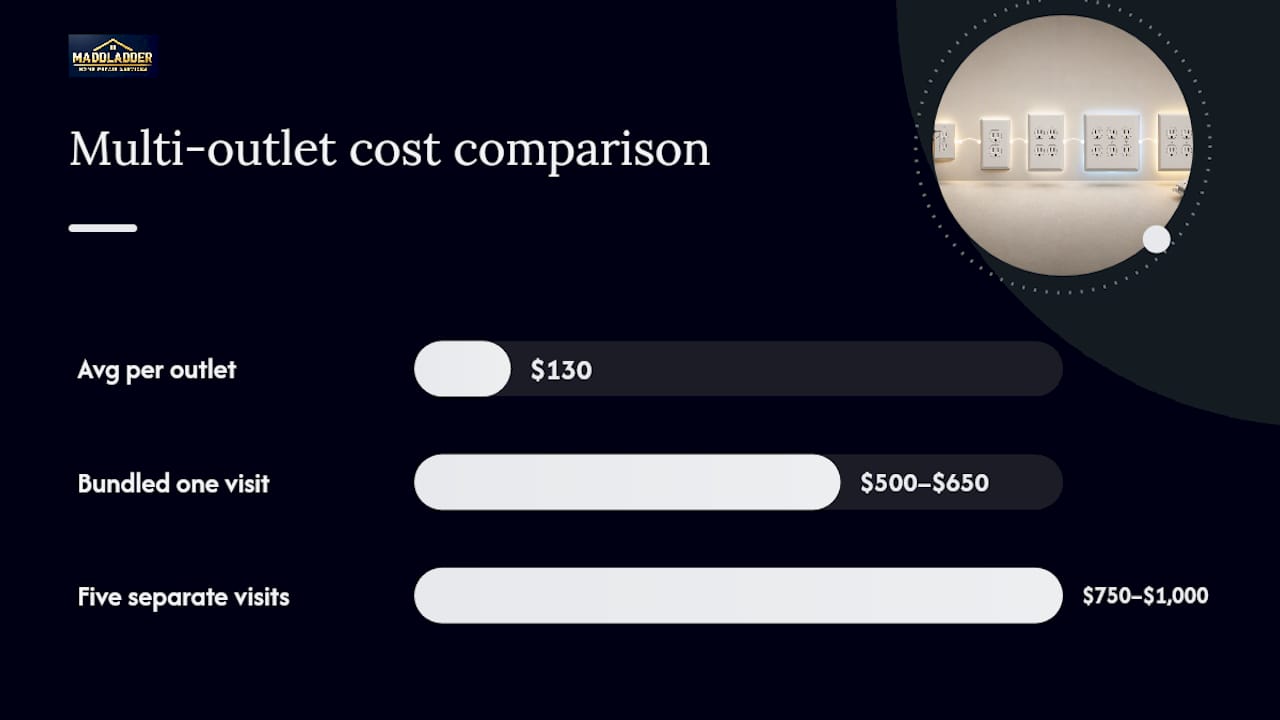
A workable formula: (number of outlets × average per-outlet cost) minus bundling savings, plus any permit fees. For five standard outlet swaps in one visit, that's roughly 5 × $130 minus a bundling discount, landing somewhere around $500 to $650 total instead of $750 to $1,000 if booked as five separate visits.
Here's where savings are real, and where they aren't:
- Bundle everything in one visit. This is the single biggest lever, since it eliminates repeat trip fees.
- Buy your own devices for simple swaps if you're comfortable, and let the electrician focus on labor, but skip this on GFCI or AFCI units where code compliance and warranty matter more than the $10 you'd save.
- Get two or three written estimates, and ask specifically about weekend or after-hours premiums, since emergency-style pricing can add 25% or more to an otherwise routine job.
Don't cut corners on licensed labor or code-required GFCI protection to save money. Those aren't the places where "cheaper" pays off later.
What Maddladder Checks Before Quoting an Outlet Job
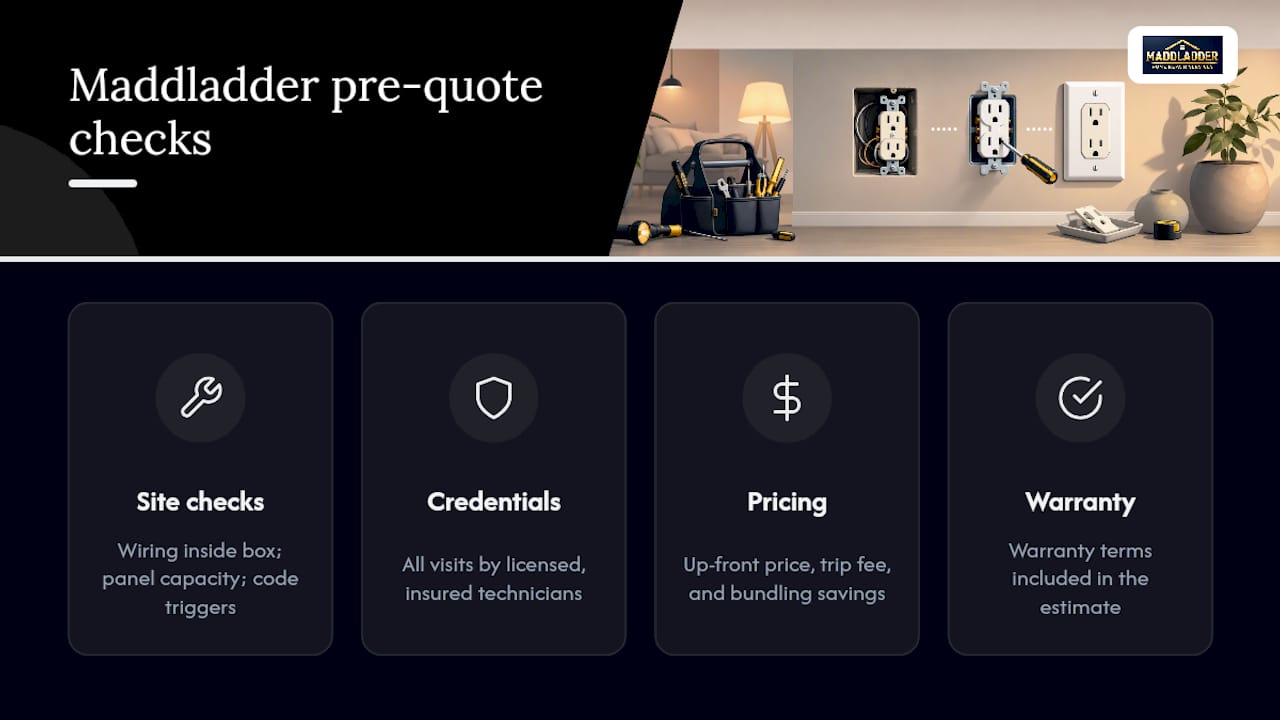
Maddladder scopes every outlet job with the same short checklist: wiring condition inside the box, panel capacity if a new circuit is involved, and whether the location triggers a code requirement like GFCI or tamper-resistant protection. That's how surprise add-ons get avoided instead of discovered mid-job.
Every visit comes from licensed, insured technicians, and pricing gets communicated up front, including any trip fee and what bundling multiple outlets saves. Warranty terms on the work are part of the estimate, not an afterthought added later.
— Jennifer
Get a Straightforward Estimate From Maddladder
Maddladder is the direct alternative to guessing at a quote or gambling on unlicensed labor for outlet work in the Kansas City metro. You get a licensed, insured technician who scopes wiring condition and code requirements before naming a price, not after the wall's already open.

Requesting service takes a phone call or a quick form on the plumbing and electrical services page, and having a rough count of outlets and their locations ready speeds up an accurate quote. Maddladder also handles related upgrades, like swapping outdated devices for tamper-resistant or smart models, in the same visit if you want to bundle work and cut per-outlet cost. Reach out through the repair and replacement services page to book a free estimate and get a number you can actually plan around.
Sources
- Cost to Replace Electrical Outlet
- How Much Does It Cost to Replace an Outlet? 2026 Data
- How Much Does It Cost to Replace an Electrical Outlet?
- Bureau of Labor Statistics — Occupational Employment and Wages