
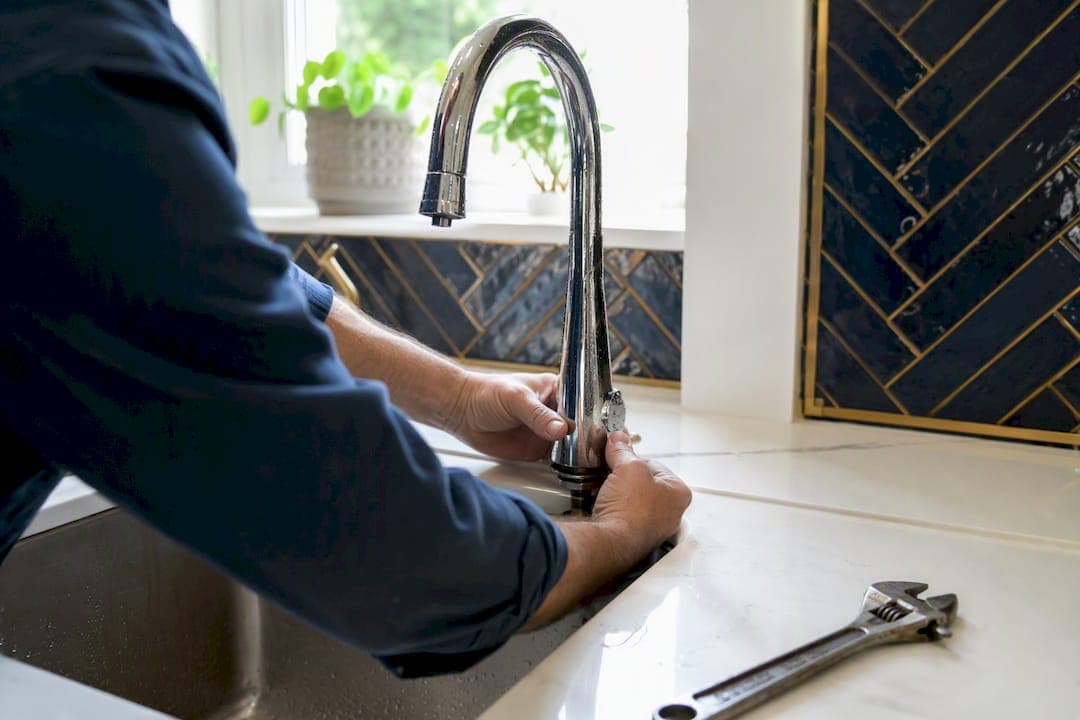
A standard faucet swap typically runs $200 to $600 all in, with labor alone landing between $100 and $350 depending on the fixture and your plumbing's condition. If your shutoff valves work and the new faucet matches your existing sink holes, DIY is realistic and can save $100 to $250. If valves are seized, you're changing hole configurations, or you're installing a touchless model, call a licensed pro.
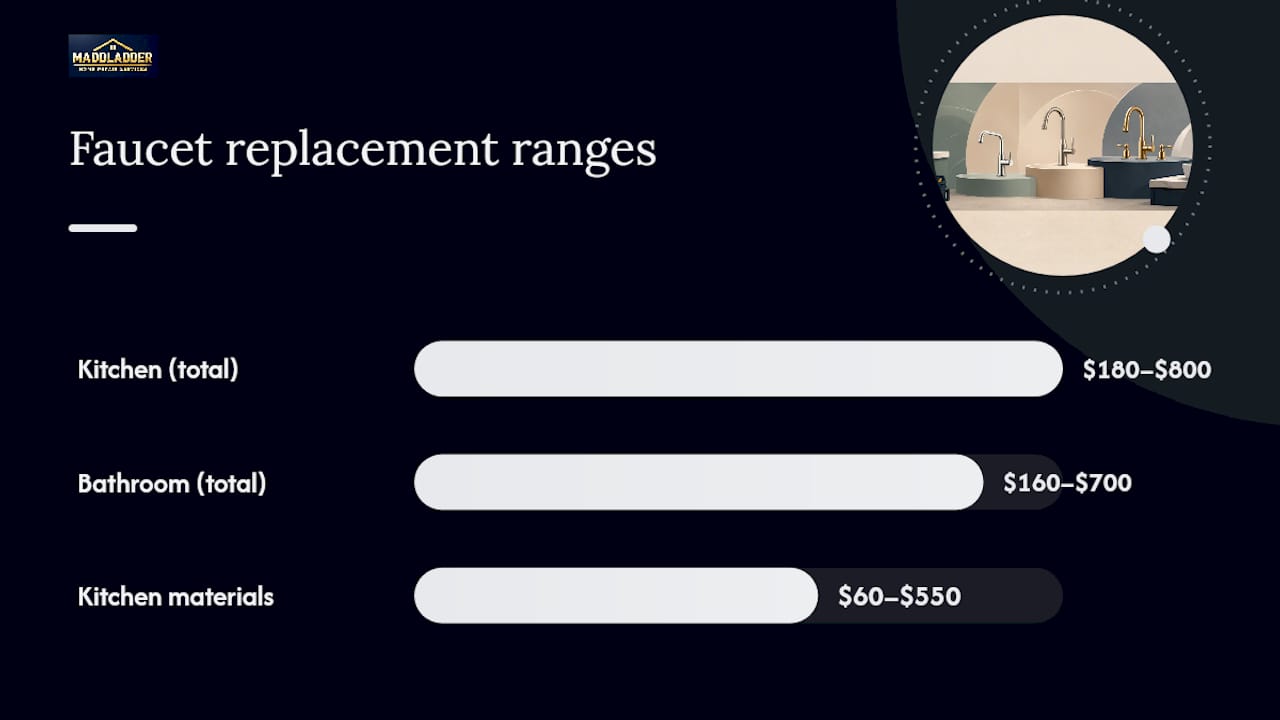
- Bathroom faucet replacement: $160 to $700
- Kitchen faucet replacement: $180 to $800
- Check your shutoff valves first. If they turn easily, DIY is on the table.
- If they're stuck, corroded, or you smell trouble, skip the wrench and book a plumber.
Pro Tip: Turn the shutoff valves under your sink before you buy anything. A valve that won't budge turns a $150 DIY job into a $400 professional one, fast.
Wage data from the Bureau of Labor Statistics shows plumbing trades command steady hourly rates nationwide, which is part of why labor, not the faucet itself, often drives the final bill. Maddladder, serving the Kansas City metro, quotes faucet replacement jobs with free on-site estimates so you know the number before work starts.
Key Takeaways
Faucet replacement cost in the U.S. typically runs $200 to $800 all in, with labor and hidden valve repairs driving most of the variation between low and high estimates.
| Point | Details |
|---|---|
| Bathroom range | Budget $160 to $700, with widespread faucets and drain assemblies pushing costs higher. |
| Kitchen range | Budget $180 to $800, with sprayers, disposals, and tight cabinet access adding labor time. |
| Check valves first | Seized or corroded shutoff valves are the top reason a DIY job turns into a professional one. |
| Touchless costs more | Smart and touchless faucets add $100 to $500 or more over basic single-handle models. |
| Local licensed option | Maddladder offers free on-site estimates and flat or hourly pricing for faucet replacement across Kansas City. |
Table of Contents
- Faucet Replacement Cost: Kitchen vs. Bathroom
- How Much Does Faucet Type and Finish Change the Price?
- What Site Conditions Push the Price Higher?
- What Do Plumbers and Handymen Charge for Labor?
- What Hidden Costs Should You Budget For?
- Is DIY Faucet Replacement Worth It?
- Sample Faucet Replacement Cost Scenarios
- What Should You Ask Before Hiring a Faucet Installer?
- How Were These Cost Ranges Calculated?
- A Local Handyman's Take on Faucet Jobs
- Get a Free Faucet Replacement Estimate in Kansas City
- Primary Sources and Further Reading
- Sources
Faucet Replacement Cost: Kitchen vs. Bathroom
Kitchen and bathroom faucet jobs price out differently, and the gap is bigger than most people expect.
Bathroom faucet replacement commonly runs $160 to $700, with most homeowners landing in the $200 to $550 range. Kitchen faucet replacement typically costs more: a national planning range of $180 to $800, with material costs alone spanning $60 on the low end to $550 for high-end pull-down units.
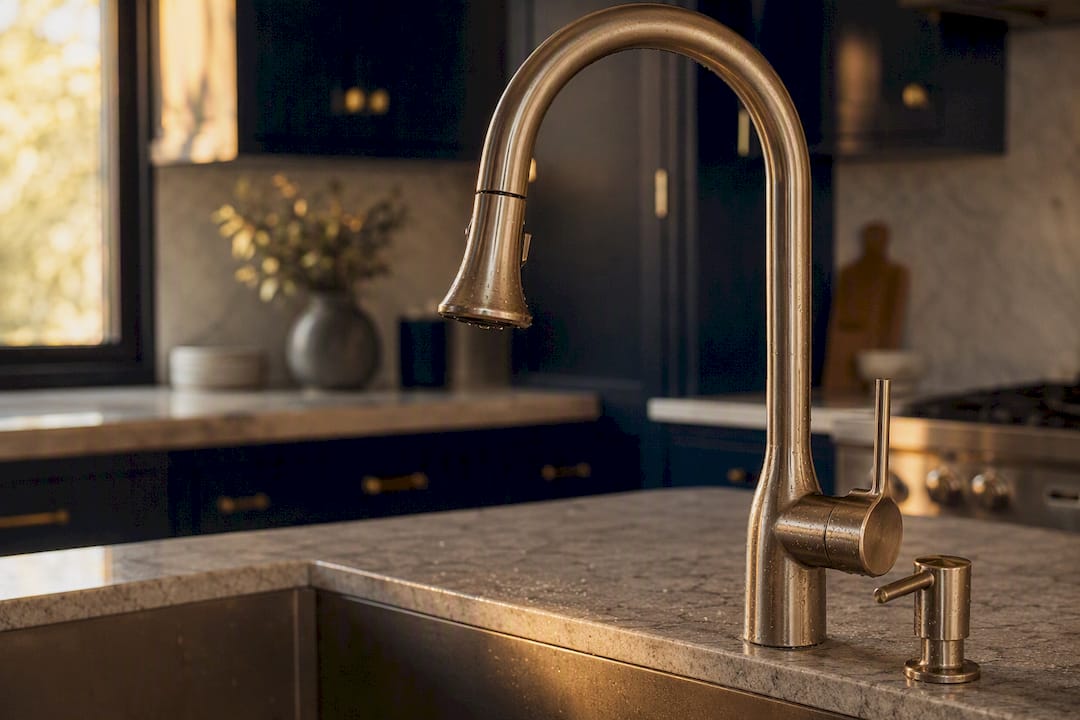
Why the difference? Kitchen sinks often come loaded with extras: sprayers, soap dispensers, disposals, and under-sink filtration systems that all have to be disconnected and reconnected. Congested cabinet space and multiple accessories add labor time that a simple bathroom swap never sees. Bathroom costs climb for a different reason: widespread faucets (with separate hot, cold, and spout pieces) and full drain assembly replacements cost more in parts and alignment time than a single-hole centerset model.
| Room | Typical Range | Main Cost Driver |
|---|---|---|
| Bathroom | $160–$700 | Fixture style (centerset vs. widespread vs. wall-mount) |
| Kitchen | $180–$800 | Add-ons and access (sprayer, disposal, tight cabinets) |
How Much Does Faucet Type and Finish Change the Price?
The fixture itself can swing your total by hundreds of dollars before a wrench ever touches a pipe. Basic single-handle faucets sit at the low end of the retail spectrum, while feature-rich models climb fast.
- Single-handle faucets: generally the cheapest option, often under $150 retail.
- Pull-down and pull-out kitchen faucets: mid-range, commonly $150 to $400, with premium brushed finishes pushing higher.
- Widespread bathroom faucets: priced higher than centerset models due to three separate pieces and more precise installation.
- Touchless and smart faucets: carry the steepest premium, adding $100 to $500 or more over a basic model because of sensors, batteries, and sometimes a dedicated power adapter.
- Pot fillers: among the priciest fixtures to both buy and install, since they usually require new water lines run to a stovetop location that never had plumbing before.
Finish matters too. Chrome is typically the budget choice, brushed nickel and stainless sit in the middle, and specialty finishes like matte black, brass, or bronze often carry a 15 to 30 percent premium over standard chrome for the same base model. Extra features like integrated water filters or instant-hot attachments add both fixture cost and installation complexity, since they usually need a separate small tank or filter cartridge mounted under the sink.
What Site Conditions Push the Price Higher?
The faucet is only half the equation. What's underneath your sink often decides whether the job stays cheap or turns expensive.
- Tight access: cabinets crowded with a garbage disposal, water filter, or dishwasher connection add labor time because the plumber has to work around, not through, other equipment.
- Old shutoff valves: valves that won't turn or drip when touched usually need replacing before the new faucet goes in, adding parts and time.
- Mismatched hole counts: swapping from a three-hole to a single-hole faucet (or vice versa) requires a deck plate or new drilling, and drilling through granite or quartz counters costs more than laminate.
- Hidden corrosion: what looks like a simple swap can reveal corroded supply lines, rusted P-traps, or soft, rotted wood under a bathroom vanity once the old fixture comes off.
Pro Tip: Ask your plumber to inspect the shutoff valves and supply lines during the estimate, not after the old faucet is already off. Catching a bad valve early avoids an emergency mid-project change order.
What Do Plumbers and Handymen Charge for Labor?
Labor is usually the biggest line item on your invoice, running $100 to $350 for a standard job. Bureau of Labor Statistics wage data for plumbing trades supports hourly rates in this range across most U.S. markets, though coastal and major metro areas skew higher.
- Simple swap, same configuration: 30 to 90 minutes, often billed at a flat rate of $130 to $250.
- Standard installation with new supply lines: 1 to 2 hours.
- Complex jobs (widespread bathroom faucets, pot fillers, or hole reconfiguration): 2 to 4+ hours, sometimes billed hourly rather than flat.
Many handymen and plumbers charge a flat per-faucet rate for straightforward jobs and switch to hourly billing once hidden repairs surface.
What Hidden Costs Should You Budget For?
The faucet and labor quote rarely tells the whole story. Plan a contingency, because these surprises show up more often than homeowners expect.
- Shutoff valve replacement: commonly adds $15 to $50 per valve in parts, plus labor time.
- Supply line upgrades: braided stainless lines cost more than basic ones but resist corrosion far longer.
- New hole drilling or deck plates: drilling through stone counters or adding a deck plate for a mismatched hole pattern adds to the bill.
- Water damage repair: a slow leak under a vanity can mean replacing rotted wood or drywall, a cost that escalates quickly the longer a leak goes unnoticed.
- Disposal fees: hauling away an old fixture is sometimes bundled, sometimes billed separately.
Is DIY Faucet Replacement Worth It?
DIY makes sense for a like-for-like swap when your shutoff valves work and the new faucet matches your existing hole configuration. A basin wrench, adjustable wrench, plumber's tape, and plumber's putty or silicone sealant together cost roughly $30 to $60, and that investment can save $100 to $250 in labor on a straightforward job.
But the savings evaporate fast in a few common situations.
- Seized or corroded shutoff valves that won't budge without breaking.
- A need to drill new holes in stone, tile, or laminate countertops.
- Touchless or smart faucets, where improper installation can void the manufacturer's warranty.
- Any sign of an existing leak, soft cabinet flooring, or mineral buildup around the old fixture base.
Pro Tip: If you're not sure whether your valves will cooperate, don't buy the faucet first. A licensed plumber can check in five minutes and save you a return trip to the store.
Readers weighing the tool investment against a one-time job can compare options in this DIY fixture replacement guide before deciding which way to go.
Sample Faucet Replacement Cost Scenarios
Real budgets depend on your fixture choice, your home's plumbing condition, and your region. Here's how three common scenarios shake out.
Bathroom, low to high:
- Low: Basic centerset faucet ($60) + labor ($130) + supply lines ($20) = $210
- Mid: Widespread faucet ($200) + labor ($200) + new supply lines ($40) = $440
- High: Widespread faucet with valve replacement ($300) + labor ($250) + valves and lines ($100) = $650
Kitchen, low to high:
- Low: Single-handle faucet ($100) + labor ($150) = $250
- Mid: Pull-down faucet with sprayer ($300) + labor ($200) + supply lines ($30) = $530
- High: Touchless faucet with hidden valve corrosion ($450) + labor ($250) + valve replacement ($60) = $760
| Scenario | Bathroom | Kitchen |
|---|---|---|
| Low | $210 | $250 |
| Mid | $440 | $530 |
| High | $650 | $760 |
Regional labor rates and local market pricing shift these numbers, so treat them as planning ranges rather than a quote. The high-end examples above both include a hidden valve repair, the single most common reason a straightforward job runs over budget.
What Should You Ask Before Hiring a Faucet Installer?
A written, itemized estimate protects you from surprise charges. Before you sign off on any bid, ask these questions.
- Is the price flat-rate or hourly, and what triggers a change order?
- Does the quote separate parts from labor?
- Are you licensed and insured for plumbing work in this state?
- What's the warranty on labor, and does it cover the fixture too?
- Will you haul away the old faucet, or is that a separate fee?
- Get at least two written estimates before committing.
- Ask if bundling other small repairs (a running toilet, a loose towel bar) can offset a service call minimum.
- Request references if the estimate feels vague or unusually low with no line-item breakdown.
Red flags include estimates with no itemization, contractors unwilling to show proof of insurance, and anyone who wants to expand the job's scope before showing you the actual defect. Big-box retailers also offer installation services tied to in-store fixture purchases, which can work for simple swaps but often lack the flexibility of a local handyman for jobs with complications.
How Were These Cost Ranges Calculated?
These figures come from a blend of trade cost guides covering kitchen and bathroom faucet projects, paired with Bureau of Labor Statistics wage data for plumbing occupations.
- Fixture price bands come from retail and trade pricing across faucet types and finishes.
- Labor ranges combine flat-rate examples from multiple cost guides with regional wage variance.
- Ranges stay wide on purpose. Local labor markets, home age, and plumbing condition all move the number. Get a written local quote for a firm price.
A Local Handyman's Take on Faucet Jobs
Most cost overruns don't come from the faucet. They come from what's hiding under the sink. Check your shutoff valves before you shop for a fixture; a valve that won't turn is the single biggest reason a "quick swap" turns into a half-day job.
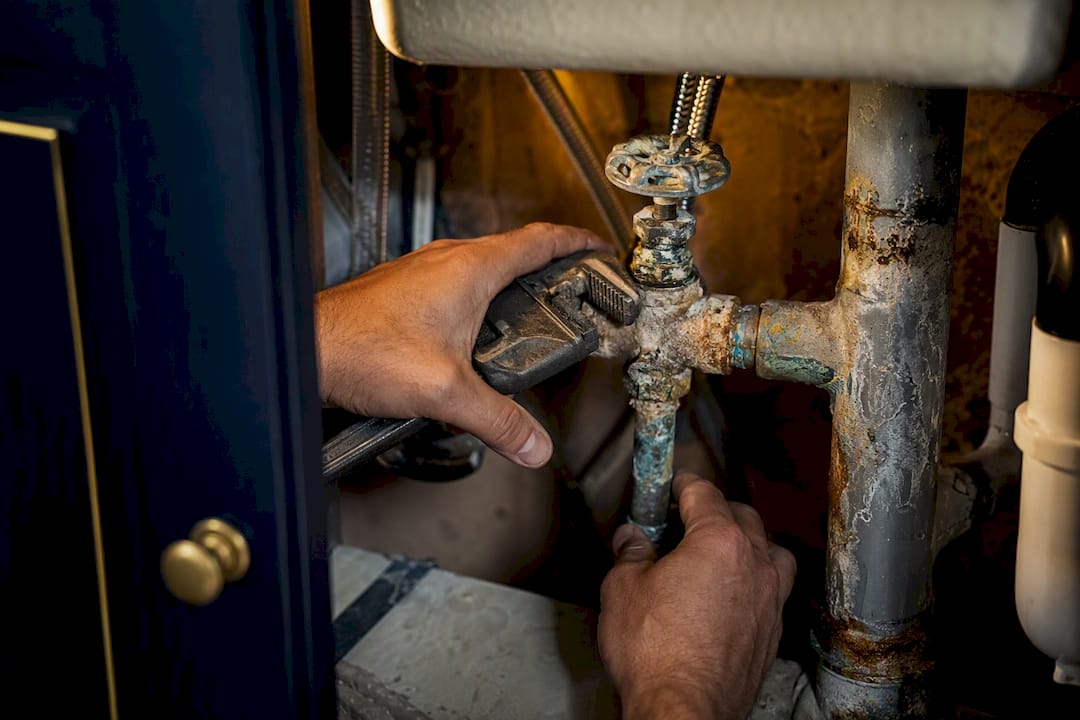
In the Kansas City area specifically, older housing stock means corroded galvanized supply lines show up more often than homeowners expect, especially in homes built before 1980. That's the detail that separates a $250 estimate from a $500 invoice.
Get a Free Faucet Replacement Estimate in Kansas City
Maddladder is the licensed alternative to guessing at a repair yourself or gambling on an unlicensed handyman off a classifieds app. For faucet replacement across the Kansas City metro, a technician checks your shutoff valves, supply lines, and hole configuration on site before quoting a price, so you're not surprised by a change order halfway through the job.

Pricing runs flat-rate for standard swaps and hourly for jobs that turn up hidden repairs, with the choice explained upfront rather than buried in fine print. Maddladder also runs subscription home maintenance plans (Essential, Home Care, and Property Manager tiers) for landlords and homeowners who want plumbing, drywall, and fixture work handled on an ongoing basis instead of one job at a time. If your bathroom or kitchen faucet needs replacing, request a free estimate and get a firm number before any work starts.
Primary Sources and Further Reading
Labor rate ranges come from Bureau of Labor Statistics occupational wage data for plumbing trades. Fixture price bands and room-specific totals draw from kitchen and bathroom trade cost guides, with additional labor and parts breakdowns from HomeRepairCalc. Readers doing their own swap can also review this step-by-step fixture replacement guide for tool and process details.
Sources
- Faucet Installation Cost 2026: $100–$350 Labor or $200–$600 All-In
- Faucet Replacement Cost: Kitchen, Bathroom, Labor, Parts, and When to Replace | HomeRepairCalc
- Bathroom Faucet Replacement Cost in 2026
- BLS Occupational Employment Statistics