
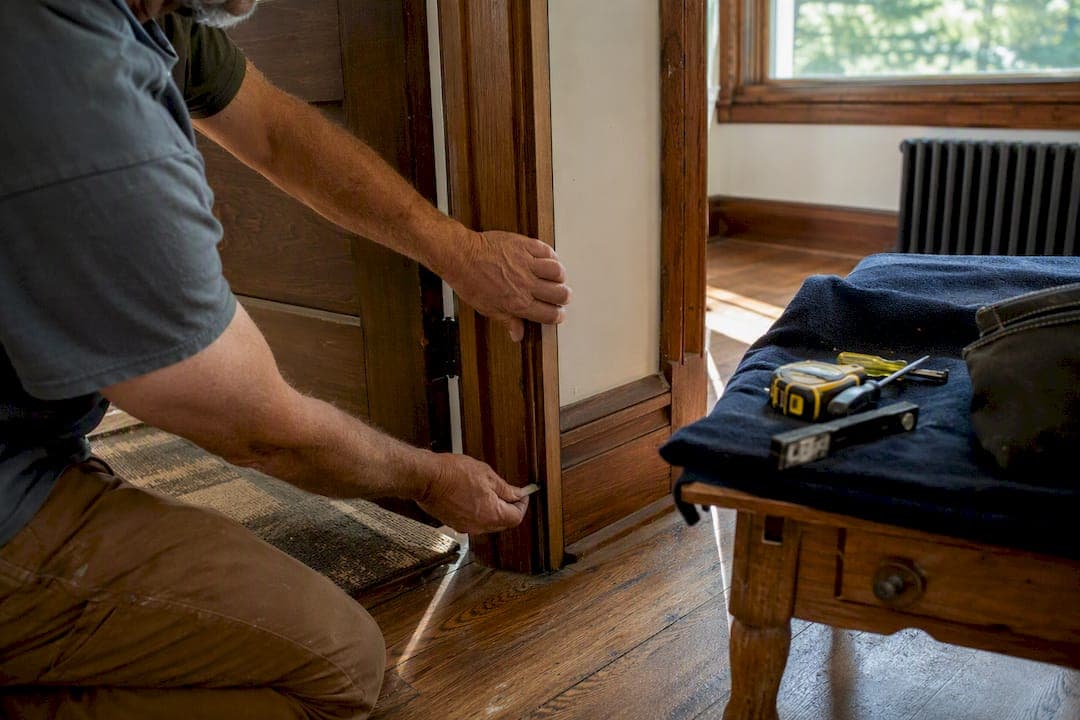
Hire a licensed handyman for most interior door replacements. Budget $444 to $675 per door as your starting point for a standard prehung or slab install, according to Homewyse's national cost data. A professional catches out-of-square openings, damaged jambs, and hardware mismatches before they turn into a callback.
- Bottom line: DIY is fine for a straightforward swap on a square opening; anything else calls for a pro.
- Headline range: $444 to $675 per door, materials and labor included.
- Why it pays off: correct shimming and plumbing prevents the sticking doors and uneven gaps that generate repeat service calls, a real cost for landlords managing multiple units.
Key Takeaways
Hiring a licensed handyman for interior door replacement costs $444 to $675 per door on average and prevents the sticking, gapping, and repeat calls that come with rushed DIY installs.
| Point | Details |
|---|---|
| Budget the national range | Plan for $444 to $675 per door, covering materials, labor, supplies, and disposal. |
| Insist on an itemized quote | Separate materials, labor, and disposal so you can compare bids apples to apples. |
| Know the contractor threshold | Reframing, load-bearing changes, or major rot mean you need a contractor, not a handyman. |
| Batch multi-door jobs | Scheduling several doors in one visit lowers per-door cost and cuts tenant vacancy time. |
| Book through MaddLadder | MaddLadder offers licensed, insured installs with free estimates and itemized written quotes for Kansas City metro properties. |
Table of Contents
- What a Licensed Handyman Does During Interior Door Replacement
- What Does Interior Door Replacement Cost? A Full Breakdown
- How Long Does an Interior Door Replacement Take?
- When You Need a Contractor, Not a Handyman
- What Should You Ask For in a Written Quote?
- Where Can You Save Money Without Cutting Corners?
- How MaddLadder Handles Interior Door Replacement
- Sources
What a Licensed Handyman Does During Interior Door Replacement
A written quote should spell out the full scope, not just "install door." Expect these steps on a typical job:
- Measure the opening and confirm door size, swing direction, and handing (left or right).
- Remove the old door and, when needed, the old jamb and casing.
- Transfer or re-mortise hinge locations, or cut new mortises for a fresh jamb.
- Trim or plane the slab to fit an opening that's slightly out of square.
- Shim and plumb the unit so it hangs true in the rough opening.
- Cut for the lockset and strike plate, then install hinges, knobs, and stops.
- Adjust and test the swing, latch, and reveal before calling the job done.
Minor framing corrections, like adding a shim pack or squaring a slightly racked jamb, are usually part of a handyman's scope. Structural reframing, painting, and full trim or casing replacement typically are not, and should show up as separate line items if you want them included.
Pro Tip: Ask your installer what they check first before they touch a screwdriver. Experienced pros look at reveal consistency around the frame, floor slope under the threshold, and whether existing hinges are still tight in the wood. Skipping that inspection is how a one-hour job turns into a half-day rebuild.
What Does Interior Door Replacement Cost? A Full Breakdown
Homewyse puts the national example range at $444 to $675 per door, covering materials, labor, supplies, an equipment allowance, and disposal of the old unit. That range assumes a standard-size prehung door going into a serviceable opening. Custom sizes, solid-core upgrades, or multiple hidden problems push costs toward the top of the range or beyond it.
Here's how a typical quote breaks down by category:
| Cost Category | What It Covers |
|---|---|
| Door slab or prehung unit | The door itself, plus jamb and casing if buying prehung |
| Hardware | Hinges, knob or lever set, strike plate, sometimes stops |
| Labor | Removal, fitting, shimming, hanging, and hardware install |
| Supplies and consumables | Shims, screws, caulk, touch-up materials |
| Equipment allowance | Tools and gear amortized into the job rate |
| Disposal | Hauling away the old door, jamb, and packaging |
A few choices swing that number more than anything else:
- Prehung vs. slab: a prehung unit costs more upfront but saves labor time since the jamb is already square. A slab-only replacement is cheaper in materials but requires more precision fitting.
- Hollow-core vs. solid-core: solid-core doors run higher in material cost but block more sound and hold up better in high-traffic units.
- Primed vs. prefinished: primed doors need paint after install, adding a labor step; prefinished doors cost more per unit but skip that step entirely.
- Bulk ordering: replacing five or six doors in one visit spreads the equipment allowance and often earns a per-door discount on hardware.
Pro Tip: Ask for the itemized unit-cost breakdown Homewyse recommends, separating materials, labor, and disposal. It's the fastest way to compare two quotes that look wildly different on the surface but cover the same actual work.
How Long Does an Interior Door Replacement Take?
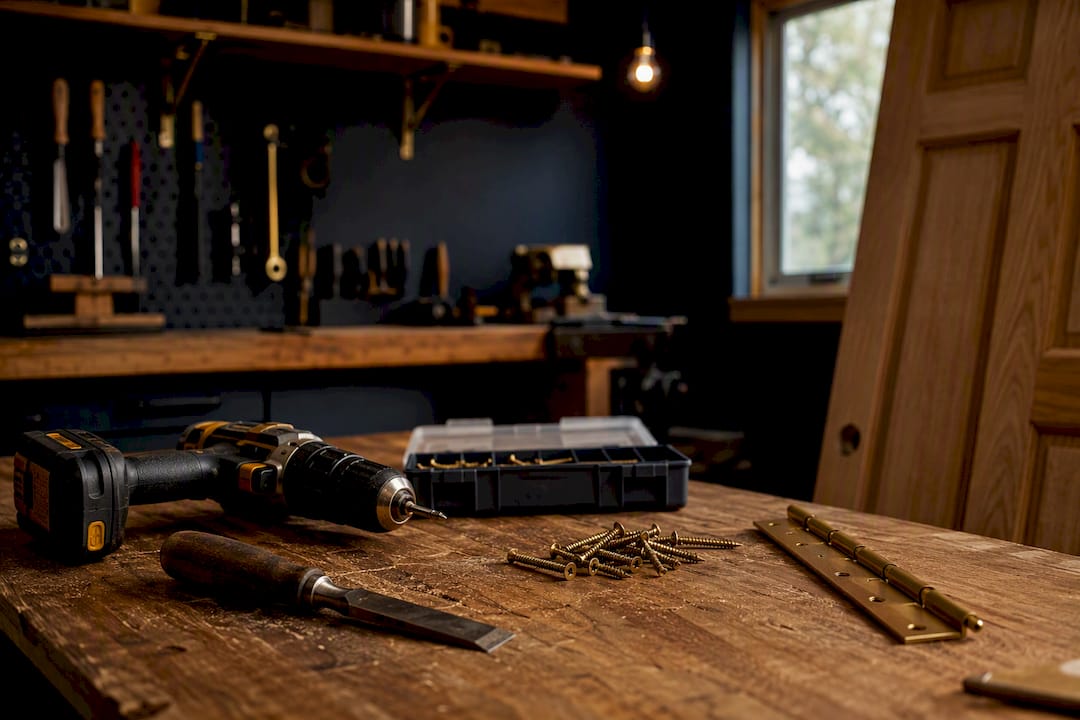
A standard prehung interior door usually takes about two to four hours on-site for a licensed installer. Custom sizes, pocket doors, or sliding systems add time, sometimes stretching a single door into most of a day.
A few things stretch that window further:
- Custom or special orders can add days to weeks of lead time before the crew even arrives.
- Hardware availability matters too. Confirming hinges, knobs, and strike plates are in hand before scheduling avoids a job stalling mid-install while parts get sourced.
- Multi-door projects for landlords benefit from batching. Scheduling four or five doors in one visit cuts total labor time compared to four separate trips.
Pro Tip: If you're coordinating a tenant turnover, schedule door replacement before flooring and paint touch-ups, not after. Installers need to trim and shim without worrying about protecting fresh finishes.
When You Need a Contractor, Not a Handyman
Most interior door swaps sit comfortably inside a handyman's scope. Some situations don't:
- Reframing or resizing the opening to fit a different door size or style.
- Load-bearing wall changes, even minor ones near a doorway.
- Major water damage or rot in the surrounding studs or subfloor.
- Electrical or plumbing lines running through or near the wall you're opening up.
A handyman can typically install slabs, prehung units, sliding doors, and some pocket systems as long as the opening and surrounding structure are in reasonable shape. Once you're changing the size of the opening or touching structural framing, permits often come into play, and the responsible party varies by local code. Ask upfront who pulls the permit if one's needed.
Pro Tip: When requesting quotes, describe the problem specifically: "door sticks and won't latch" reads very differently to a contractor than "opening seems out of square and jamb is cracked." The second description flags scope creep before anyone shows up with the wrong tools.
What Should You Ask For in a Written Quote?
Getting quotes you can actually compare starts with giving providers the same information upfront.
- Send photos of each door and its frame, including any visible gaps, cracks, or water stains.
- List door sizes and handing for each opening, or note if you need the installer to measure.
- State your preference: slab or prehung, hollow-core or solid-core, primed or prefinished.
- Share your timeline, especially if you're coordinating around a tenant move-in or move-out.
Once quotes come back, compare them against this checklist:
- Does the estimate separate materials, labor, and disposal, the way Homewyse recommends?
- Are minor framing corrections included, or billed as an add-on?
- What's the warranty or satisfaction guarantee on the finished work?
- How does the provider handle change orders if hidden damage turns up mid-job?
- Can they show proof of license and insurance, plus recent references?
Out-of-square openings and damaged jambs are the two most common reasons a "simple swap" quote grows mid-project. A provider who asks about these upfront, rather than after arriving, is the one worth booking.
Where Can You Save Money Without Cutting Corners?
A few adjustments trim cost without sacrificing quality, though each comes with a trade-off worth knowing about.
- Ordering hollow-core slabs for low-traffic rooms saves on materials, but they carry sound and impact worse than solid-core doors.
- Reusing an existing jamb cuts labor time, but only works if the jamb is square and undamaged. A warped jamb reused now often means a service call later.
- Scheduling multiple doors in one visit spreads the equipment allowance across units and usually earns better per-door pricing.
- Buying hardware in bulk for a multi-unit property standardizes the look and simplifies future repairs.
- Doing cosmetic paint prep after install rather than before saves a step, since touch-up work often happens anyway during hanging.
Pro Tip: For property managers juggling several turnovers a month, standardizing on one door type and one hardware finish across units pays off twice: faster replacement quotes and fewer mismatched parts sitting in a supply closet.
How MaddLadder Handles Interior Door Replacement
MaddLadder handles interior door replacement as part of its repair and replace services across the Kansas City metro, covering everything from a single sticking door to a full rental turnover with five or six units needing new doors at once. Requests get an itemized written quote, separating door materials, hardware, labor, and disposal, so you know exactly what you're paying for before work starts.

Every job comes from a licensed and insured handyman, backed by a satisfaction guarantee and free estimates before you commit to anything. If you're a landlord managing turnovers, MaddLadder can bundle multiple doors into a single visit to reduce vacancy time between tenants, similar to the batching approach that saves Kansas City homeowners hours on larger projects. Homeowners dealing with a single problem door get the same itemized approach, just scaled to a smaller job.
Ready to see actual numbers for your doors? Request a free, itemized quote through MaddLadder's services page and get a scope of work in writing before anyone shows up with a toolbox.
A note from a licensed-handyman perspective
The quotes that go sideways almost always skip the walk-through. Ask for an itemized estimate before you agree to anything, and don't be surprised if the "quick swap" turns up a shim job nobody mentioned on the phone.
Sources
What's the average cost to replace an interior door? Expect $444 to $675 per door nationally, covering the door, hardware, labor, and disposal, based on Homewyse's cost data. Custom sizes or hidden framing issues can push costs higher.
Can a handyman install interior doors, or do I need a contractor? A licensed handyman can typically handle slabs, prehung units, and most sliding or pocket doors. You need a contractor only when the job involves reframing the opening, structural changes, or major water damage.
How long does it take to replace one interior door? A standard prehung door usually takes two to four hours on-site. Custom doors, pocket systems, or damaged frames extend that window.
Should I choose a prehung door or a slab-only replacement? Prehung units cost more but include a square jamb, saving labor time. Slab-only replacements cost less in materials but require more precise fitting if your existing jamb isn't perfectly true.
What should I ask for before accepting a quote? Request an itemized breakdown separating materials, labor, and disposal, confirmation of license and insurance, and a clear warranty or satisfaction policy before scheduling any work.