
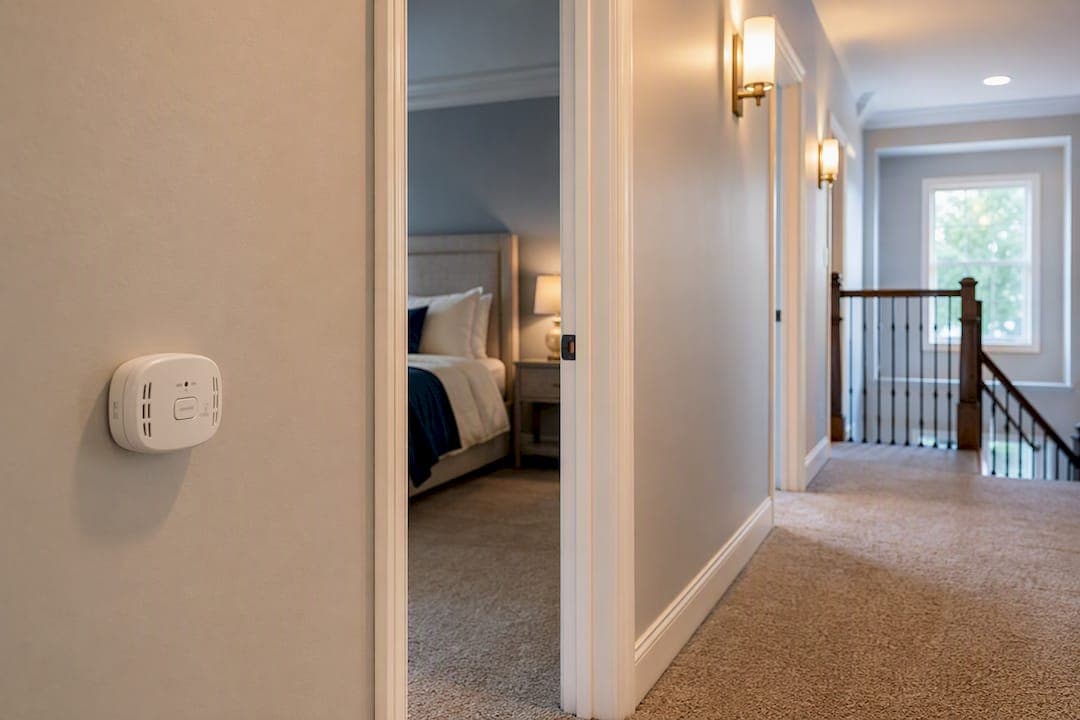
Put a carbon monoxide detector outside every sleeping area and on every level of your home, including the basement. If you're only installing one unit right now, mount it near the bedrooms first and test it today. If you already have detectors, walk your home floor by floor and confirm each level and each sleeping zone is actually covered.
TL;DR:
- One detector per level and outside each sleeping area is essential, with more units needed in large or spread-out homes, especially in basements and rental units.
- Avoid placing detectors in kitchens, garages, near fuel appliances, or in drafty areas to prevent false alarms and dead zones.
- Mount detectors at eye level or according to manufacturer instructions, disregarding deprecated advice to place them low because CO is heavier than air.
- Choose the right installation type based on convenience and reliability, with hardwired interconnected systems offering the safest coverage for larger or multiple-unit homes.
- Regular testing monthly and replacing batteries or units at end-of-life ensures detectors remain functional when needed.
Table of Contents
- CO Detector Placement by Room and Floor
- Where Not to Put a CO Detector
- How Many CO Detectors Do You Actually Need?
- Does Mounting Height Actually Matter?
- Battery, Plug-In, or Hardwired: Choosing an Installation Type
- Testing and Replacing Detectors on Schedule
- What to Do If a CO Alarm Sounds
- Field Notes on Placement and Nuisance Alarms
- Get CO Detectors Installed and Maintained the Right Way
- Sources
CO Detector Placement by Room and Floor
The National Fire Protection Association recommends a CO alarm outside each sleeping area and on every floor of the house, and interconnecting them so one alarm sounds them all. That's the backbone of any placement plan, but the details matter once you start walking through an actual floor plan.
A single detector in a hallway can usually cover multiple bedrooms if they sit reasonably close to it. You don't need one inside every bedroom door unless your layout spreads sleeping areas far apart, like a primary suite on one wing and kids' rooms on the other.
Cover these areas:
- Outside each sleeping area, ideally in the hallway leading to bedroom doors
- On every level, including finished basements and occupied attics
- Near common living spaces where family spends waking hours
- In a central spot roughly 5 to 20 feet from fuel-burning appliances like a furnace or gas water heater, never right on top of them
The EPA advises that if you're only buying one unit, put it near the sleeping areas and confirm the alarm is loud enough to wake a sleeping adult. A finished basement used as a bedroom or media room counts as an occupied level, so it needs its own alarm even if the main floor already has one.
Where Not to Put a CO Detector
Bad placement causes two problems: nuisance alarms that get people annoyed enough to disable the unit, and dead zones where a real leak goes unnoticed. Both defeat the purpose.
Skip these spots:
- Kitchens, where cooking exhaust can trigger false readings
- Garages, where car exhaust overwhelms the sensor constantly
- Directly beside a furnace or water heater, where startup exhaust spikes readings
- Bathrooms prone to steam, which can damage sensors over time
- Right next to windows, doors, or vents, where drafts dilute or skew readings
- Inside cabinets, behind curtains, or under furniture that blocks airflow
Kidde's placement guidance specifically flags these avoidance zones because turbulent air and exhaust plumes throw off sensor accuracy, not because CO itself behaves differently there. The fix is almost always a few feet of repositioning, not a different room entirely.
If you rent and can't drill into walls, a battery-powered unit plugged into an outlet or mounted with adhesive strips in the hallway near bedrooms still meets the core placement guidance.
Pro Tip: If a detector keeps false-alarming near a kitchen or bathroom, don't just silence it and forget it. Move it 10 to 15 feet away first. A unit that gets muted repeatedly is a unit nobody trusts when it matters.
How Many CO Detectors Do You Actually Need?
The floor plan minimum is one alarm per level and one outside each sleeping area, per CPSC guidance. A one-story, three-bedroom house with bedrooms clustered together might get by with two units. A sprawling two-story with a finished basement and a detached bedroom wing needs more.
Add extra coverage when:
- Bedrooms sit more than 15 feet from the nearest hallway detector
- Your home has a finished basement used for living or sleeping
- You have a separate living unit, like an in-law suite or rental apartment, which needs its own alarm
- Hallways run long enough that one unit can't realistically alert both ends
Landlord obligations vary by state, and some jurisdictions mandate CO alarms in every rental unit regardless of appliance type. Check your state's specific statute before assuming your rental meets code.
Does Mounting Height Actually Matter?
No. The old advice to mount CO detectors low because "carbon monoxide is heavier than air" doesn't hold up. CO mixes evenly into room air rather than settling near the floor, a point supported by peer-reviewed research and echoed directly by manufacturers.
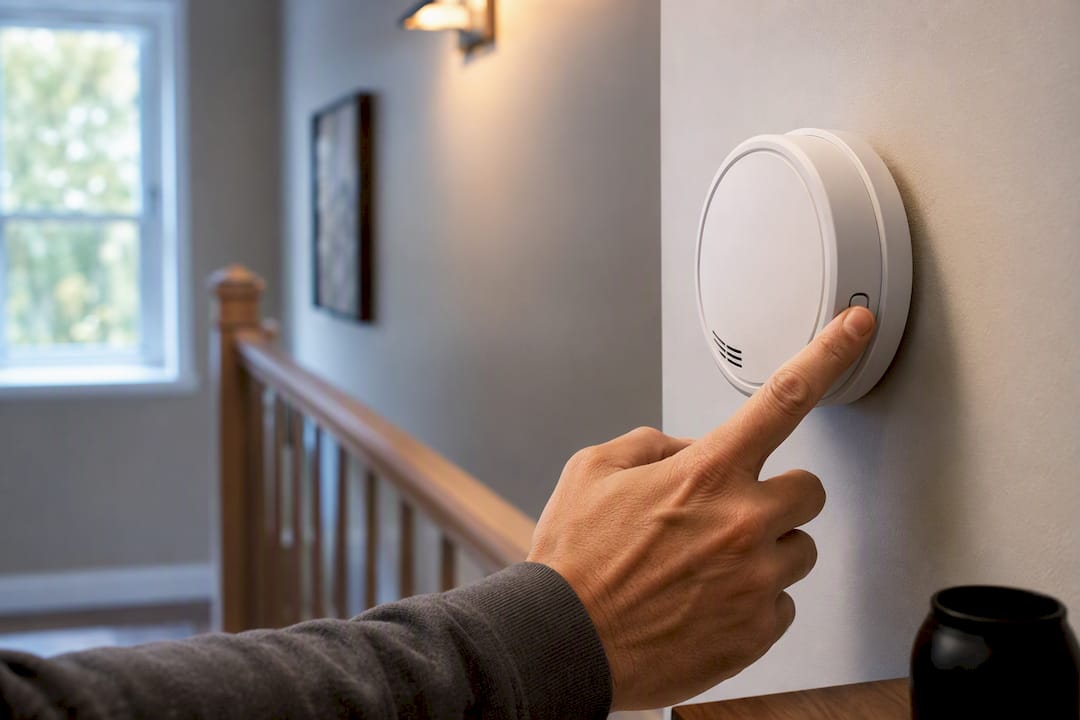
First Alert's own installation guidance states there's no strict height requirement. What matters more is whether you'll actually reach the unit to test it monthly and swap batteries. Mount it at eye level, or wherever your specific model's instructions recommend, so it stays part of your routine instead of an afterthought bolted near the baseboard. For seniors, renters, or anyone with limited mobility, that reachable height also means less climbing on a stool to silence a chirping battery warning at 2 a.m.
Battery, Plug-In, or Hardwired: Choosing an Installation Type
Each power option trades convenience for reliability differently.
- Battery-powered units install in minutes with no tools, making them the practical choice for renters or anyone who wants coverage today rather than next week.
- Plug-in models work well in hallways with accessible outlets, but avoid any outlet controlled by a wall switch. A flipped switch means no detector.
- Hardwired units tie into your home's electrical system and, when interconnected, are the most reliable option for whole-house coverage, since one triggered alarm sounds every unit in the house.
The NFPA notes that interconnection matters because a CO leak in the basement should wake someone sleeping two floors up, not just alert whoever happens to be standing in the basement.
Pro Tip: If your home has detectors from three different decades scattered around, they likely aren't interconnected at all. A licensed electrician or handyman can confirm whether your existing wiring supports multi-station interconnect, or whether a wireless interconnect kit is the safer retrofit for an older house.
Hardwiring, multi-zone interconnects, and anything touching your home's electrical panel is a job for a licensed professional, especially if your local code requires interconnected alarms in new construction or major renovations.
Testing and Replacing Detectors on Schedule
A detector mounted in the right place still fails if nobody maintains it. Test every unit monthly and again after any power outage, since outages sometimes reset or drain backup batteries you didn't know were low.
- Replace standard batteries once a year, or on whatever schedule the manufacturer specifies
- Consider sealed 10-year units to skip annual battery swaps entirely, a detail covered in more depth in Maddladder's breakdown of smoke detector costs
- Replace the entire unit at its end-of-life, commonly 7 to 10 years depending on the model. Check the manufacture date stamped on the back
- Wipe away dust and never paint over a detector, since both can block the sensor
A simple reminder on your phone calendar, or a regular home safety check routine, keeps this from slipping through the cracks the way most home maintenance does.
What to Do If a CO Alarm Sounds
- Get everyone outside to fresh air immediately. Don't stop to open windows or search for the source first.
- Call 911 from a safe location outside the home, not from inside while you investigate.
- Stay outside until emergency responders confirm it's safe to re-enter.
- Seek medical attention if anyone has symptoms like headache, dizziness, nausea, or confusion, and tell the provider you suspect CO exposure.
- Have a technician inspect all fuel-burning appliances, furnaces, and water heaters before anyone returns to normal use.
- Reevaluate your detector placement afterward. If the alarm was in a dead zone or too far from the leak source, this is the moment to add or relocate units.
CPSC's safety guidance is blunt on this point: never assume an alarm is false without professional confirmation. CO has no smell, so your senses won't tell you what the detector already knows.
Field Notes on Placement and Nuisance Alarms
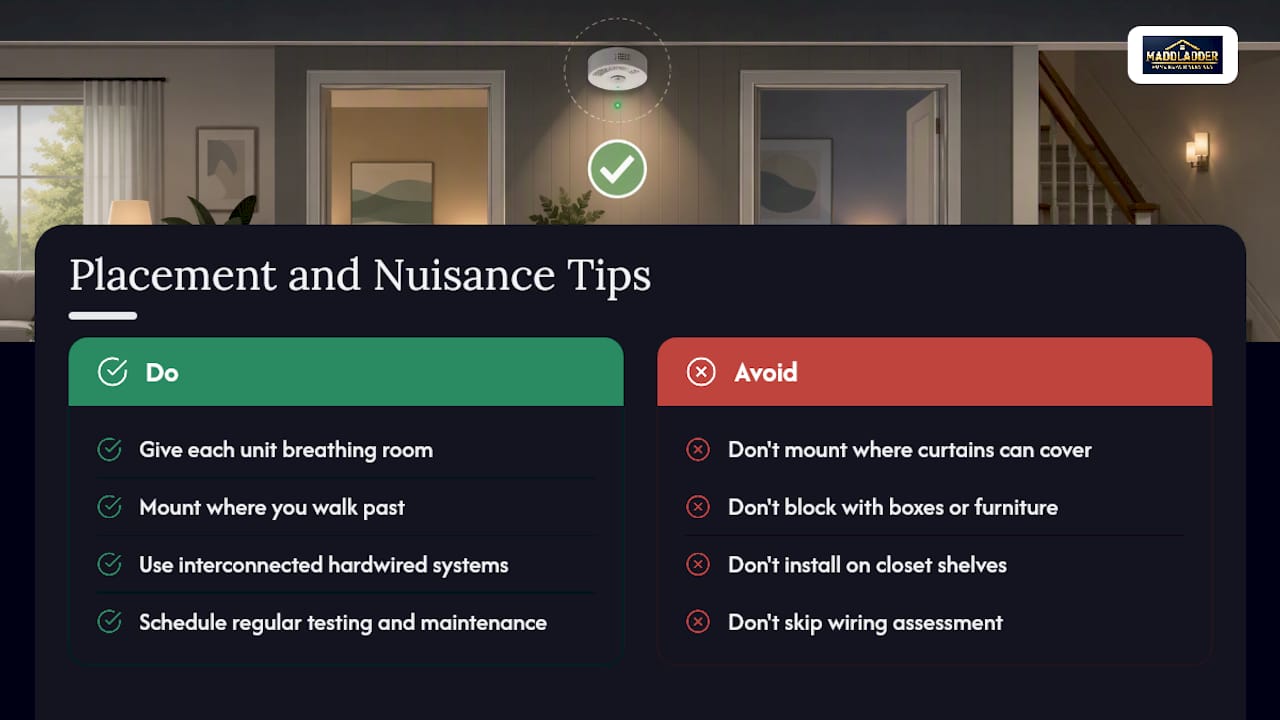
The detectors that fail people aren't usually the cheap ones. They're the ones installed in a spot that seemed fine on day one and became a problem six months later, once someone hung a curtain over it or stacked moving boxes in front of the sensor.
Give every unit breathing room and a clear line to open air, and mount it somewhere you'll actually walk past, not a closet shelf you open twice a year. Interconnected, hardwired systems solve the coverage question for good in multi-story homes, but they need wiring assessed by someone who knows what's behind the drywall. Some professional installers offer hardwired and interconnected CO systems installation and can walk a specific floor plan to find the placement that avoids nuisance triggers while still meeting code. A maintenance plan that includes scheduled testing catches the slow failures, like a sensor nearing end-of-life, before they become the reason an alarm didn't sound.
— Jennifer
Get CO Detectors Installed and Maintained the Right Way
Maddladder is the practical alternative to guessing at placement yourself or leaving a battery unit that never gets tested. If your home needs hardwired interconnection, a multi-unit rental property brought up to code, or detectors mounted somewhere your ladder can't safely reach, that's exactly the kind of job worth handing off.

Professional services handle detector installation, interconnect wiring, and ongoing maintenance plans, so you're not the one remembering battery dates or troubleshooting a chirping unit at midnight. Hardwiring can be advisable when you want every alarm on the same circuit, and it may also be a practical choice for landlords managing multiple units where consistent code compliance matters. Check out Maddladder's repair and installation services or explore smart home upgrade options for interconnected systems, and request a free estimate to get your home's coverage checked properly.
Sources
- Carbon Monoxide safety | NFPA
- Where should I place a carbon monoxide detector? | EPA
- Cpsc
- Where to install CO alarms | First Alert support
- Placement of Carbon Monoxide Alarms | Kidde