

TL;DR:
- Hiring professionals for complex or high-risk home repairs ensures safety, proper permits, and effective documentation. This approach saves money by avoiding costly mistakes, insurance issues, and secondary damages. A hybrid strategy balances DIY efforts on low-risk tasks with professional handling of critical repairs.
Delegating home repairs to experts is the most reliable way to protect your home's value, avoid costly mistakes, and stay on the right side of local building codes. The question of why delegate home repairs to experts comes down to three factors: safety, cost control, and documentation. A botched electrical repair can cost up to $4,000 to correct. Unpermitted work can void your homeowner's insurance. Licensed professionals bring warranties, permit management, and liability coverage that no YouTube tutorial can replicate. For homeowners and property managers in Kansas City and beyond, knowing when to call a pro is one of the most valuable skills you can develop.
Why delegate home repairs to experts instead of doing it yourself?
The core reason is risk. DIY electrical and plumbing mistakes are the top drivers of preventable property damage claims, and the financial fallout can far exceed what you would have paid a professional. Labor costs in professional repairs typically run 50%–70% of the total bill. That sounds like a lot until you factor in the correction costs when something goes wrong.
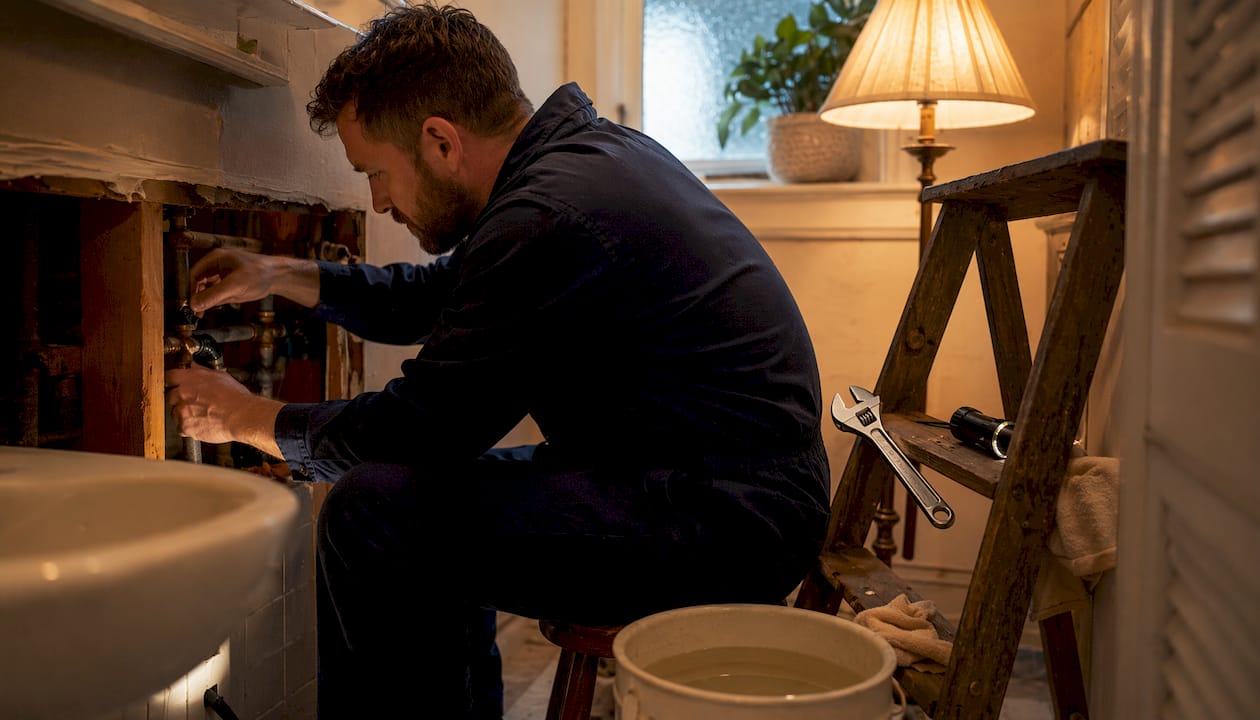
Water leaks behind walls are a perfect example. A homeowner who patches a pipe without understanding the full system can cause hidden water damage that leads to mold and rot over months. Remediation for mold alone can run into thousands of dollars. The original repair might have cost a fraction of that.
Insurance is another layer most homeowners miss. Unpermitted DIY work can lead to claim denials, fines, and serious problems when you try to sell your home. Insurers look at whether work was done to code. If it was not, they have grounds to deny coverage for any damage that results.
The safety hazards are just as serious as the financial ones. Amateur electrical work creates fire risks. Incorrect plumbing connections can cause flooding or sewage backflow. These are not edge cases. They are the predictable outcomes of work done without the right training, tools, or permits.
Pro Tip: Before starting any repair, check whether your municipality requires a permit. If it does, that is a strong signal to hire a licensed professional.
- Electrical correction costs can reach $4,000 after a DIY mistake
- Unpermitted work may void homeowner's insurance coverage
- Hidden water damage from faulty plumbing can cost thousands in mold remediation
- Fire and electrocution risks rise sharply with amateur electrical work
- Resale complications arise from undocumented or non-compliant repairs
How do professional repair services add value through permits and warranties?
Reputable professionals offer a minimum 90-day warranty on both labor and parts. That warranty is not just a nice perk. It means that if something fails after the job is done, you are covered without paying again. No DIY project comes with that guarantee.
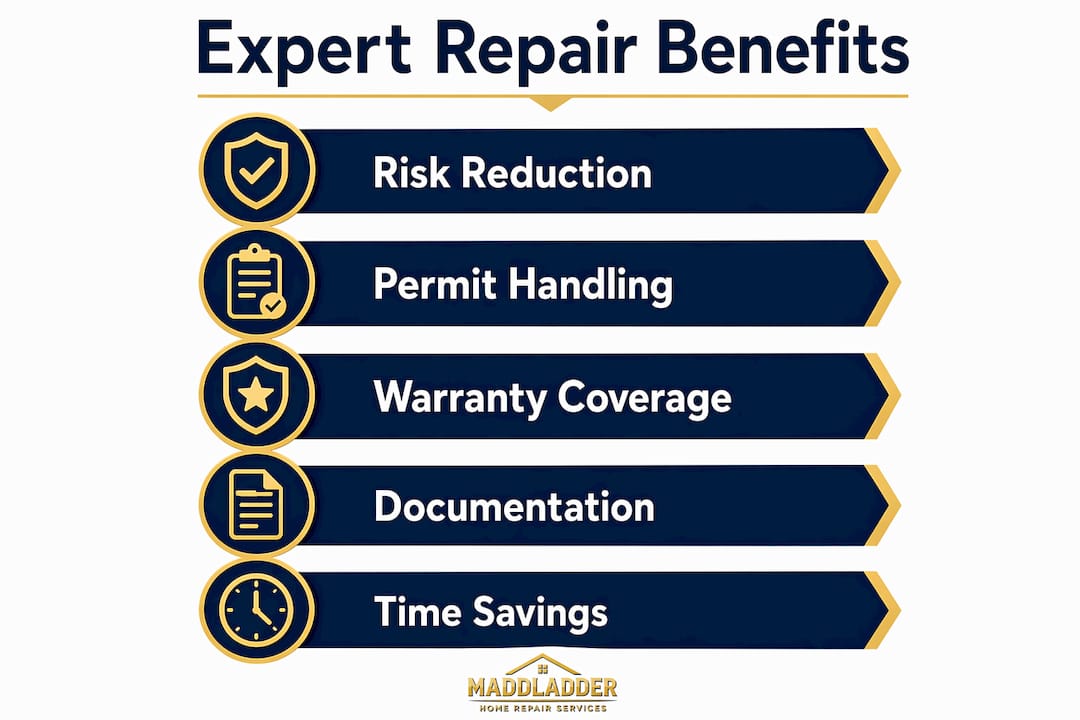
Permit acquisition and inspection coordination are also standard with licensed professionals. Many homeowners do not realize that pulling permits is part of the job, not an optional add-on. Inspections triggered by permits catch unsafe or substandard work before it becomes a bigger problem. That process protects you, your family, and future buyers.
Documentation matters more than most homeowners expect. Licensed work documentation is a direct factor in maintaining property value and making home sales go smoothly. Buyers and their inspectors will ask about past repairs. A paper trail from a licensed contractor answers those questions cleanly.
Pro Tip: Ask your contractor for copies of all permits and inspection reports. File them with your home records. That paperwork can add real value at resale.
The benefits of hiring repair professionals also include liability coverage. If a contractor damages your property or gets injured on the job, their insurance handles it. If you do the work yourself and something goes wrong, you absorb the full cost.
- 90-day minimum warranty on labor and parts from reputable professionals
- Permit and inspection management included as a standard service
- Documented work protects resale value and satisfies buyer inspections
- Liability insurance covers damages or injuries during professional work
- Coordinated scheduling reduces your time managing the project
What framework helps you decide when to DIY versus call a pro?
The most effective decision tool is a three-question test: Does this job carry a safety risk? Does it require a permit? What does it cost if I get it wrong? If any answer points toward serious consequences, hire a professional.
A traffic light framework makes this even clearer in practice:
- Green (safe to DIY): Painting interior walls, replacing cabinet hardware, patching small drywall holes, assembling flat-pack furniture. These tasks carry low risk, require no permits, and are easy to redo if something goes wrong.
- Yellow (mixed risk, assess carefully): Installing ceiling fans, replacing faucets, laying tile. These jobs are manageable for experienced DIYers but carry real risk if you hit wiring or plumbing you did not expect.
- Red (call a professional): Electrical panel work, load-bearing wall changes, gas line repairs, major plumbing, roofing. These tasks require permits, carry serious safety risks, and are expensive to reverse.
Time and tool costs belong in this calculation too. A professional can complete a faucet replacement in 90 minutes. A homeowner tackling the same job for the first time may spend 4–6 hours, including research and cleanup. When you factor in your hourly value and the cost of renting or buying tools, the savings from DIY often shrink or disappear.
The hybrid renovation approach is the strategy most experienced homeowners land on. You handle the low-risk, no-permit tasks yourself. You delegate the high-risk, code-sensitive work to licensed professionals. This method keeps costs down while protecting you where the stakes are highest.
Pro Tip: Build a simple spreadsheet for any repair project. List the task, the safety risk level, the permit requirement, and the cost of getting it wrong. That one exercise will make the right call obvious.
For Kansas City homeowners weighing these decisions, the DIY vs. pro repair guide from Maddladder walks through local code considerations that affect this calculation directly.
How does delegating repairs save time and reduce stress?
Professionals handle scheduling, supply chain management, and problem-solving as part of the job. That means you are not making three trips to the hardware store, watching tutorial videos at midnight, or rescheduling your weekend around a repair that ran long.
Professional efficiency leads to faster project turnaround. For property managers, that speed is critical. A vacant unit sitting idle while a repair drags on costs real money in lost rent. A licensed handyman who completes the job in one visit versus a DIY attempt stretched across two weekends is not just more convenient. It is more profitable.
The learning curve cost is real and often invisible. Every repair you attempt for the first time carries a research phase, a trial-and-error phase, and sometimes a "call a professional to fix what I did" phase. Professionals skip all three. They bring the right tools, the right parts, and the experience to handle surprises without losing time.
Reducing stress with expert repairs also means you are not carrying the mental load of an unfinished project. Homeowners consistently underestimate how much cognitive space an open repair task occupies. Delegating it closes that loop completely.
- Professionals manage scheduling, parts sourcing, and unexpected complications
- Faster turnaround reduces vacancy costs for property managers
- No learning curve means no wasted weekends or repeat trips to the hardware store
- Liability coverage removes the stress of "what if something goes wrong"
- Completed, documented work gives you confidence at inspection or resale
The emotional benefits of a well-maintained home extend beyond aesthetics. A home that works correctly, with repairs done right the first time, reduces daily friction and supports a better quality of life.
Key Takeaways
Delegating home repairs to licensed professionals is the most cost-effective way to protect your property, avoid insurance gaps, and reclaim your time.
| Point | Details |
|---|---|
| DIY error costs are high | Electrical mistakes alone can add up to $4,000 in correction costs. |
| Permits protect your coverage | Unpermitted work can void insurance and create fines or resale problems. |
| Warranties come standard | Licensed professionals provide a minimum 90-day warranty on labor and parts. |
| Time savings are real | A pro completes a faucet replacement in 90 minutes versus 4–6 hours for a first-time DIYer. |
| Hybrid approach works best | Handle low-risk tasks yourself and delegate code-sensitive or high-risk work to professionals. |
What I've learned from watching homeowners get this wrong
I have seen the same pattern repeat itself more times than I can count. A homeowner decides to save money on a repair that looks simple. They watch a few videos, buy the parts, and get started. Three hours in, they hit something unexpected: a wire in the wrong place, a pipe that does not match the diagram, a wall cavity full of insulation blocking the access they need. At that point, they are committed. They push through. And sometimes it works out fine.
But when it does not work out, the cost is always higher than the original repair would have been. Not just in money. In time, in stress, and in the secondary damage that comes from a job done without the right knowledge.
The part that surprises most homeowners is how often the "simple" jobs are the ones that hide complexity. Replacing an outlet looks easy. But if that outlet is on a circuit with a ground fault issue, or if the wiring is older aluminum rather than copper, you are now dealing with a safety situation that requires a licensed electrician. Many homeowners underestimate the risks hiding behind walls until they are already inside them.
My honest recommendation is to treat the three-question test as a non-negotiable habit. Safety risk, permit requirement, cost of reversal. Run every repair through those three filters before you pick up a tool. The hybrid approach is not a compromise. It is the most rational strategy available. Do what you can safely do. Delegate the rest to someone who does it every day.
The professionals who do this work well are not just technicians. They are project managers. They anticipate problems, source the right materials, and coordinate the work so you do not have to. That is worth paying for, especially when the alternative is a weekend lost and a repair that needs to be redone.
— Jennifer
Maddladder handles the repairs you should not tackle alone
When a repair crosses into permit territory, carries electrical or plumbing risk, or simply needs to be done right the first time, Maddladder is built for exactly that situation.

Maddladder serves Kansas City homeowners, landlords, and property managers with licensed, insured professionals who handle everything from drywall and fixture replacement to minor electrical and plumbing repairs. Every job comes with documented work, fast scheduling, and the reliability that comes from a team that does this every day. One-time repair and replacement services start at $75/hour, and subscription maintenance plans are available for property managers who need ongoing coverage. Free estimates make it easy to know what you are committing to before any work begins.
FAQ
What home repairs should always go to a professional?
Electrical panel work, gas line repairs, load-bearing wall changes, and major plumbing always require a licensed professional. These jobs carry serious safety risks and typically require permits that trigger mandatory inspections.
Does DIY work affect my homeowner's insurance?
Yes. Unpermitted or non-compliant DIY work can void your insurance coverage and lead to claim denials if damage results from that work. Always check permit requirements before starting a repair.
How long do professional repair warranties typically last?
Reputable professionals offer a minimum 90-day warranty on both labor and parts as a standard practice. Some contractors extend this further depending on the scope of work.
What is the hybrid renovation approach?
The hybrid approach means handling low-risk, no-permit tasks yourself while delegating high-risk or code-sensitive repairs to licensed professionals. It balances cost savings with safety and compliance.
How much time does hiring a professional actually save?
A professional completes tasks like faucet replacement in roughly 90 minutes. A first-time DIYer typically spends 4–6 hours on the same job, including research, trial and error, and cleanup.