
TL;DR:
- Property maintenance involves routine and corrective activities to keep a building safe, functional, and habitable over time. It includes scheduled tasks like system inspections, landscaping, and emergency repairs, with clear role distinctions between landlords and tenants to prevent disputes. Effective maintenance relies on scheduled checklists, proper documentation, and proactive planning to protect property value and avoid costly repairs.
Property maintenance is the ongoing process of preserving a property's physical condition, safety, and comfort through routine and corrective upkeep tasks. For homeowners, landlords, and property managers in Kansas City and beyond, understanding what property maintenance involves is the difference between a well-functioning property and a costly, reactive scramble. This guide breaks down the core activities, types, and practical strategies that make property upkeep work, including how it differs from property management and what a solid maintenance routine actually looks like.
What is property maintenance and what does it include?
Property maintenance is defined as the set of activities required to keep a building and its surroundings functional, safe, and habitable over time. The scope of property maintenance covers cleaning, pest control, landscaping, mechanical and electrical repairs, and safety inspections. Think of it as everything that keeps a building from slowly falling apart.
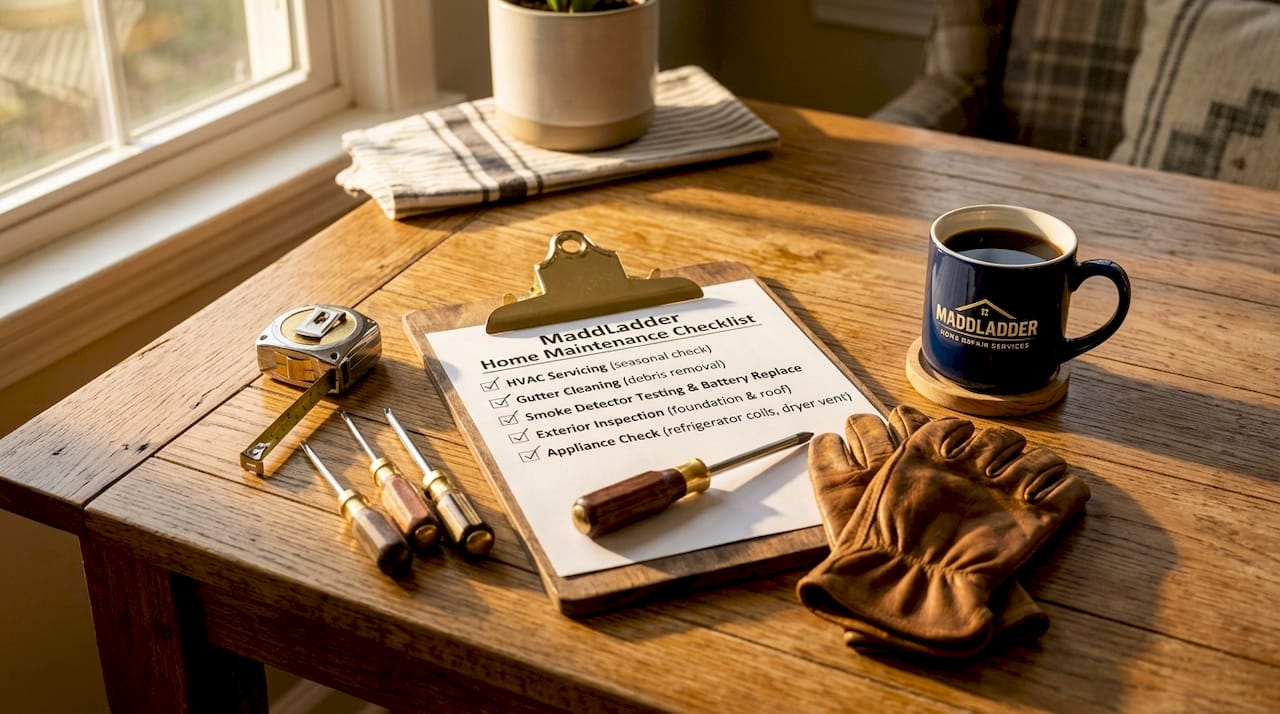
For residential properties, this definition has real teeth. A landlord who skips HVAC servicing for two years does not just face a broken system. They face tenant complaints, potential code violations under the International Property Maintenance Code (IPMC), and a repair bill that dwarfs what routine servicing would have cost. The IPMC sets minimum habitability standards covering structural, plumbing, electrical, mechanical, and fire safety systems, and many jurisdictions adopt it directly into local code.
Property upkeep, as it is sometimes called, is not a single task. It is a system. When that system runs well, occupants rarely notice it. When it breaks down, everyone notices immediately.
What activities make up day-to-day property maintenance?
The practical work of property maintenance divides across several categories, each with its own schedule and skill requirements.
Internal systems and mechanical upkeep:
- Servicing HVAC filters and units on a seasonal schedule
- Inspecting and clearing plumbing drains and water heaters
- Testing and replacing smoke detectors and carbon monoxide alarms
- Checking electrical panels, outlets, and lighting fixtures
Exterior and grounds maintenance:
- Cleaning gutters and downspouts to prevent water damage
- Landscaping, lawn care, and snow or ice removal
- Inspecting roofing, siding, and foundation for visible damage
- Maintaining fencing, walkways, and exterior lighting
Safety and compliance checks:
- Fire extinguisher inspections and sprinkler system tests
- Security system functionality reviews
- Verifying that common areas meet local safety codes
One area that trips up many landlords is the question of who handles what. Tenants are generally responsible for day-to-day cleanliness and minor upkeep like replacing light bulbs. Landlords carry responsibility for structural integrity, major systems, and anything that affects habitability. Defining this clearly in a lease prevents disputes and keeps maintenance requests from piling up.
Pro Tip: Create a simple one-page maintenance responsibility chart for each tenancy. List who handles what, from lawn care to appliance repairs. Attach it to the lease and review it at move-in. This single document eliminates the majority of maintenance-related conflicts.
How does property maintenance differ from property management?
Property management and property maintenance are related but not interchangeable. Property maintenance is a subset of the broader property management function, focused specifically on the physical condition of a building. Property management encompasses leasing, tenant screening, rent collection, financial reporting, and legal compliance in addition to overseeing maintenance work.
Here is how the two functions compare in practice:
| Function | Property management | Property maintenance |
|---|---|---|
| Primary focus | Operations, leasing, finances | Physical upkeep and repairs |
| Key tasks | Tenant screening, rent collection, budgeting | Cleaning, repairs, inspections, landscaping |
| Who performs it | Property manager or management company | In-house staff, contractors, or handyman services |
| Trigger for action | Lease events, financial cycles, legal obligations | Scheduled schedule or reported issues |
| Goal | Maximize asset performance and occupancy | Preserve condition, safety, and habitability |
Property managers coordinate maintenance requests, oversee repairs, and track completion within budget. They do not typically swing a hammer themselves. Instead, they act as the operational layer between ownership and the physical work. For landlords managing their own properties, both roles fall on the same person, which makes having clear processes even more critical.
The financial side matters here too. The IRS draws a firm line between repairs and improvements. Under IRS Publication 527, repairs that restore a property to its prior condition are deductible in the year they occur. Capital improvements that extend useful life or add value must be depreciated over 27.5 years for residential rentals. Misclassifying a roof replacement as a repair is the kind of mistake that creates problems at tax time.
What are the types of property maintenance and why do they matter?
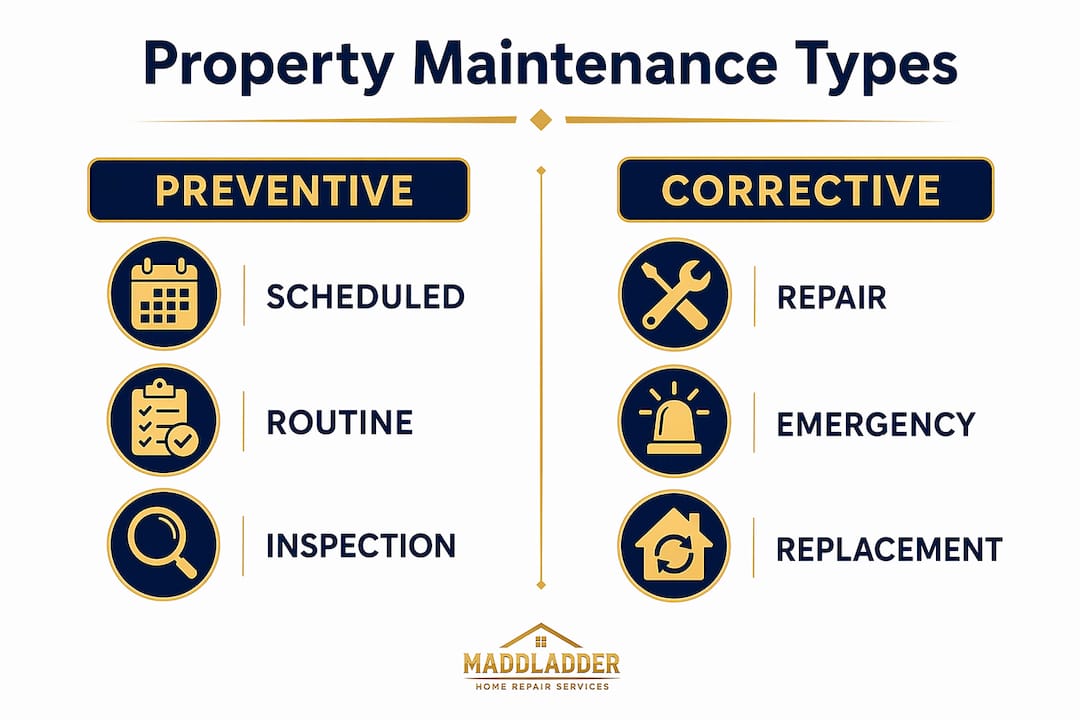
Property maintenance divides into two primary categories, and understanding both is what separates reactive landlords from effective ones.
-
Preventive maintenance covers tasks performed on a set schedule regardless of whether a problem is visible. HVAC filter changes every 90 days, annual gutter cleaning, and biannual roof inspections all fall here. The logic is straightforward: preventive maintenance catches issues early before they escalate into expensive failures.
-
Corrective maintenance covers repairs triggered by an actual problem. A burst pipe, a failed furnace in January, or a roof leak after a storm are all corrective situations. These are reactive by definition, and they almost always cost more than the preventive work that could have avoided them.
-
Routine maintenance sits between the two. It includes recurring tasks like lawn care, common area cleaning, and trash removal that keep a property presentable and functional without necessarily addressing a specific system.
-
Emergency maintenance is corrective work that cannot wait. A gas leak, a sewage backup, or a broken exterior door lock all require same-day response. Landlords who lack a reliable contractor network find out quickly how expensive emergency call rates are.
The distinction between preventive and corrective work is not just operational. Classifying work correctly affects documentation, budgeting, and compliance. A planned HVAC service visit is a preventive maintenance line item. The same technician replacing a failed compressor is corrective maintenance. Both matter, but they belong in different budget categories and maintenance logs.
Pro Tip: Budget 1% to 2% of your property's value annually for maintenance. A $300,000 home should carry a $3,000 to $6,000 maintenance reserve. Properties older than 20 years or with aging mechanical systems should sit at the higher end of that range.
What practical tips and checklists keep properties in top shape?
Consistent property maintenance does not happen through good intentions. It happens through scheduled checklists and documentation. The difference between a landlord who handles 10 units smoothly and one who is constantly firefighting is almost always a matter of systems, not effort.
A practical property maintenance checklist organizes tasks by frequency:
Monthly tasks:
- Test smoke and carbon monoxide detectors
- Check HVAC filters and replace if needed
- Inspect for plumbing leaks under sinks and around toilets
- Clear any debris from exterior drains and gutters
Seasonal tasks:
- Spring: inspect roof and gutters after winter, service air conditioning, check window and door seals
- Summer: inspect irrigation systems, treat for pests, check exterior paint and caulking
- Fall: service heating systems before first use, clean gutters after leaf drop, winterize outdoor faucets
- Winter: check insulation and attic ventilation, monitor for ice dams, inspect weatherstripping
Annual tasks:
- Full HVAC system service by a licensed technician
- Chimney inspection and cleaning if applicable
- Electrical panel inspection
- Water heater flush and inspection
- Full exterior walkthrough documenting condition
For landlords managing multiple units, a layered checklist by area and schedule is the most defensible approach during inspections. Organize tasks by unit, common area, and exterior, then assign them to monthly, seasonal, or annual columns. This structure makes it easy to delegate, track completion, and demonstrate compliance if a dispute arises.
Documentation is not optional. Every completed maintenance task should generate a record: date, work performed, who did it, and any follow-up needed. A simple spreadsheet works. Property management software like Buildium or AppFolio automates this for larger portfolios. The record protects you legally and helps you spot patterns, like a unit that repeatedly reports the same plumbing issue, before they become serious.
Tenant communication is the final piece. Provide a clear process for submitting maintenance requests, set realistic response time expectations, and follow up after work is completed. Tenants who feel heard report fewer issues and stay longer. That retention directly protects your rental income.
Pro Tip: Review your KC home maintenance checklist at the start of each season and schedule the work before it becomes urgent. Booking contractors in advance costs less and avoids the delays that come with peak-season demand.
Key takeaways
Effective property maintenance requires a combination of preventive scheduling, clear role definitions, and consistent documentation to protect both occupant safety and long-term property value.
| Point | Details |
|---|---|
| Preventive beats reactive | Scheduled maintenance costs far less than emergency repairs and reduces tenant complaints. |
| Maintenance vs. management | Maintenance covers physical upkeep; management covers operations, leasing, and finances. |
| Checklists drive consistency | Organizing tasks by monthly, seasonal, and annual frequency prevents missed work and supports compliance. |
| Documentation protects you | Records of completed work defend against disputes and help identify recurring problems early. |
| Tax classification matters | Repairs are deductible; capital improvements must be depreciated over 27.5 years under IRS rules. |
Why good maintenance is invisible until it isn't
I have worked with enough homeowners and landlords to know that property maintenance gets the least attention when it is working best. Nobody calls to say the furnace ran perfectly all winter. They call in February when it fails at 11 p.m. and the repair bill is three times what an annual service would have cost.
The properties I see run well share one trait: the owners treat preventive upkeep as a fixed operating cost, not a discretionary expense. They schedule seasonal work in advance, keep records, and build relationships with reliable contractors before they need them urgently. That preparation is what makes maintenance invisible to tenants.
The most common pitfall I see is the false economy of deferred maintenance. Skipping a $150 gutter cleaning to save money, then spending $4,000 on water damage repairs six months later, is not a savings. It is a penalty for poor planning. The math on preventive maintenance almost always favors action.
My honest advice: start with a single seasonal checklist and work through it completely before adding complexity. One completed checklist beats three elaborate systems that never get used. Build the habit first, then build the system around it.
— Jennifer
How Maddladder makes property maintenance easier in Kansas City

Maddladder serves homeowners, landlords, and property managers across the Kansas City metro with dependable, licensed handyman services built for exactly the kind of work that keeps properties running. From repair and replacement services like drywall, trim, and fixture work to plumbing and electrical repairs that address the systems most critical to habitability, Maddladder handles the tasks that show up on every maintenance checklist. Flexible pricing starts at $75 per hour for one-time work, with subscription-based maintenance plans available for landlords and property managers who need consistent coverage. Free estimates and fast response times mean you are not waiting when something needs attention. Contact Maddladder to schedule your next maintenance visit.
FAQ
What is the definition of property maintenance?
Property maintenance is the set of activities that preserve a building's physical condition, safety, and habitability through routine and corrective upkeep. It includes cleaning, repairs, inspections, landscaping, and mechanical system servicing.
What is the difference between property maintenance and property management?
Property management covers the full operational scope of running a rental property, including leasing, finances, and legal compliance. Property maintenance is a subset focused specifically on the physical upkeep of the building and its systems.
What are the main types of property maintenance?
The primary types are preventive maintenance, which follows a scheduled plan, and corrective maintenance, which responds to failures or damage. Routine and emergency maintenance are additional categories that cover recurring upkeep and urgent repairs respectively.
Why is preventive property maintenance important?
Preventive maintenance catches problems early before they escalate into costly repairs or safety hazards. Consistent scheduled upkeep reduces tenant complaints, protects property value, and supports compliance with local housing codes.
Who is responsible for property maintenance in a rental?
Landlords are responsible for structural integrity, major systems, and anything affecting habitability. Tenants typically handle day-to-day cleanliness and minor tasks. Defining these responsibilities clearly in the lease prevents disputes and keeps maintenance organized.