

TL;DR:
- Neglecting routine repairs can significantly lower property appraisals and impede refinancing opportunities in Kansas City.
- Consistent maintenance and targeted cosmetic fixes help maintain strong condition ratings, protecting property value and market appeal.
- Focusing on high-impact areas like roofs, gutters, HVAC, and exterior surfaces provides the best return and ensures move-in readiness for buyers.
Skipping routine repairs might feel harmless, but deferred maintenance can silently strip tens of thousands of dollars from your property's appraised value and even block your ability to refinance. For Kansas City homeowners and property managers, this isn't a distant risk. Local appraisers follow strict condition rating frameworks that penalize neglected properties, and buyers are paying close attention too. This guide breaks down exactly how maintenance connects to appraisal outcomes, which repairs matter most, and what practical steps you can take right now to protect and grow what your property is worth.
Table of Contents
- How home maintenance influences property value
- Priority areas for maximizing value in Kansas City
- Cosmetic upkeep and signals: Overlooked but essential
- Balancing repairs and upgrades: Getting the best return
- What most Kansas City homeowners overlook about maintenance and value
- Take your next step towards maximizing property value
- Frequently asked questions
Key Takeaways
| Point | Details |
|---|---|
| Condition ratings matter | Maintenance directly influences appraised value and loan eligibility. |
| Prioritize high-impact repairs | Focus on structural, exterior, and visible components for the best return. |
| Cosmetic issues affect perception | Small visible flaws can signal bigger problems and lower buyer confidence. |
| Routine beats reactive work | Consistent upkeep is more cost-effective and valuable than large renovations. |
How home maintenance influences property value
Property value isn't just about square footage or location. Appraisers factor in the physical condition of your home, and that condition is tied directly to how well you've kept up with repairs over time.
Freddie Mac's Uniform Appraisal Dataset (UAD) condition ratings, which most residential appraisers use, rate properties on a scale from C1 (new construction or recently renovated) to C6 (severe deterioration). A home rated C4 or lower because of deferred maintenance can trigger lower appraised values, required repair conditions before loan approval, or outright financing rejection. That's a direct financial consequence from skipping maintenance.
| Condition rating | Description | Financing risk |
|---|---|---|
| C1 | New or recently renovated | Minimal |
| C2 | No deferred maintenance, minor wear | Low |
| C3 | Some deferred maintenance, functional | Moderate |
| C4 | Obvious deferred maintenance | High |
| C5 | Major repairs needed | Very high |
| C6 | Severe deterioration | Financing often blocked |
The jump from C3 to C4 is where most Kansas City homeowners get caught off guard. A leaky roof, failing HVAC, or persistent water staining can push a property into that risk zone quickly.
"Deferred maintenance is not just a cosmetic concern. It is a measurable condition that appraisers assign a rating to, and that rating directly influences your property's value and its financing eligibility."
What makes this especially important is how appraisers interpret visible problems. A cracked window or peeling exterior paint isn't just an eyesore. It signals that the owner may have deferred other, less visible maintenance too. Appraisers are trained to read these signals and adjust their assessments accordingly.
The good news is that targeted, consistent maintenance can keep your home at C2 or C3 ratings, which are the sweet spots for strong appraisal outcomes and smooth financing. You don't need to renovate every room. You need to stay ahead of wear and deterioration. Reviewing home improvement examples from the Kansas City area shows that modest, targeted repairs often deliver outsized value protection compared to expensive renovations. Many homeowners in the metro are also turning to home maintenance subscriptions to keep condition ratings strong year over year without scrambling before a sale.
Priority areas for maximizing value in Kansas City
Not all maintenance tasks are created equal. Some repairs pay back far more than they cost in terms of appraisal outcomes and buyer appeal, while others are lower priority. Knowing the difference is what separates reactive homeowners from strategic ones.
Kansas City's climate creates some very specific vulnerabilities. Freezing winters stress roofs, gutters, and plumbing. Hot, humid summers push HVAC systems hard. Spring storm season brings heavy rain that tests drainage, grading, and foundation integrity. Exterior maintenance, in particular, takes a beating here in ways that homeowners in milder climates don't face.
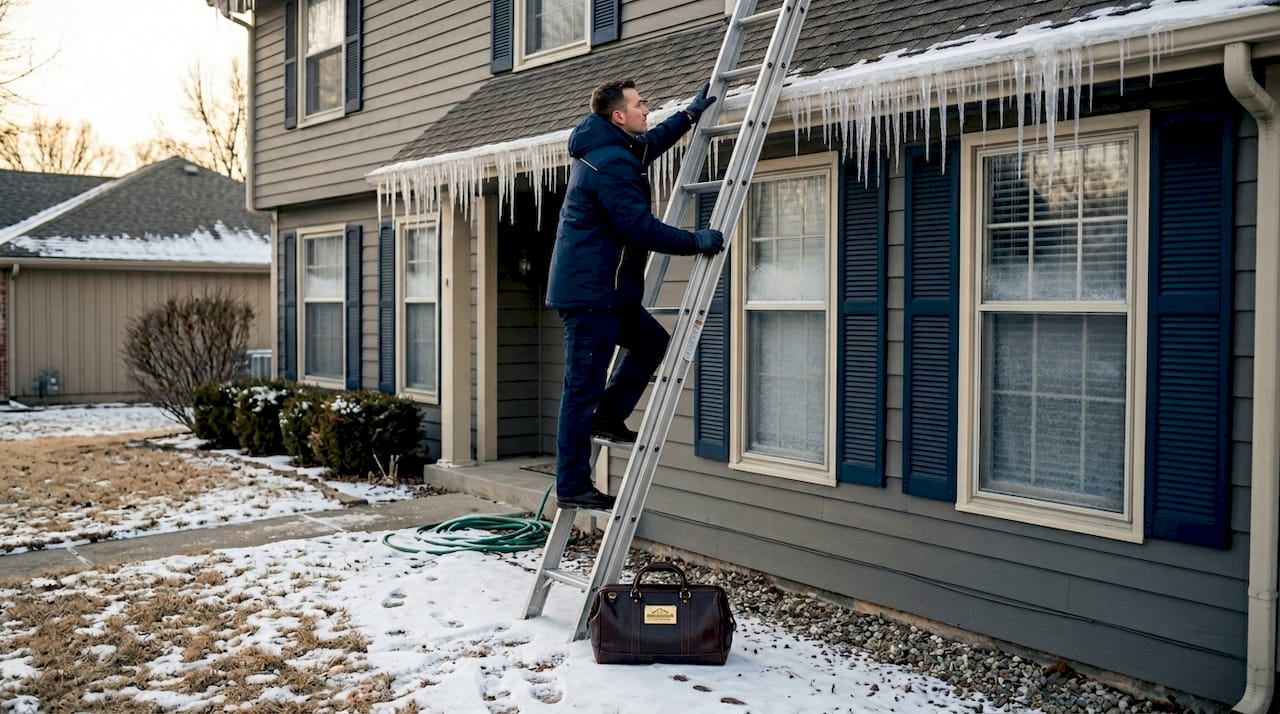
According to exterior maintenance research, treating maintenance as "cost-to-cure" risk management means prioritizing the systems and visible exterior components that appraisers and home inspectors will flag first. That's the most efficient approach to protecting your investment.
Here's a comparison of high-priority versus lower-priority maintenance areas for Kansas City properties:
| Maintenance area | Impact on appraisal | Kansas City risk factor |
|---|---|---|
| Roof and gutters | Very high | High (storm and ice damage) |
| HVAC system | High | High (extreme seasonal demand) |
| Foundation and grading | Very high | High (clay soil shifting) |
| Plumbing and water intrusion | High | Moderate to high |
| Exterior paint and siding | Moderate | Moderate |
| Landscaping and curb appeal | Moderate | Moderate |
| Interior cosmetic updates | Low to moderate | Lower |
Key maintenance priorities for Kansas City homeowners:
- Roof and gutters: Inspect twice yearly. Clogged gutters cause water to pool against the foundation, leading to water intrusion and structural damage.
- HVAC systems: Service annually before summer and winter. A failed HVAC during an appraisal triggers immediate red flags.
- Foundation drainage: Ensure grading slopes away from the home. Kansas City clay soils expand and contract dramatically with moisture changes.
- Window and door seals: Failed seals allow moisture intrusion, which shows up as staining, mold, or warped trim.
- Exterior surfaces: Peeling paint, damaged siding, and crumbling trim are the first things buyers and appraisers see.
Research from Kiplinger on home sales confirms that emphasizing cleanliness, move-in readiness, and outdoor upkeep gives sellers a clear marketing advantage, especially in competitive metro markets. Kansas City buyers shopping in neighborhoods like Overland Park, Lee's Summit, and Lenexa are comparing multiple homes in similar price ranges. The home that looks maintained wins.
Pro Tip: Before listing or refinancing, walk your property as an appraiser would. Stand at the curb and look for peeling paint, damaged gutters, or overgrown landscaping. Then walk inside and look for water stains, failing caulk, and loose fixtures. Fix what you see before anyone else does.
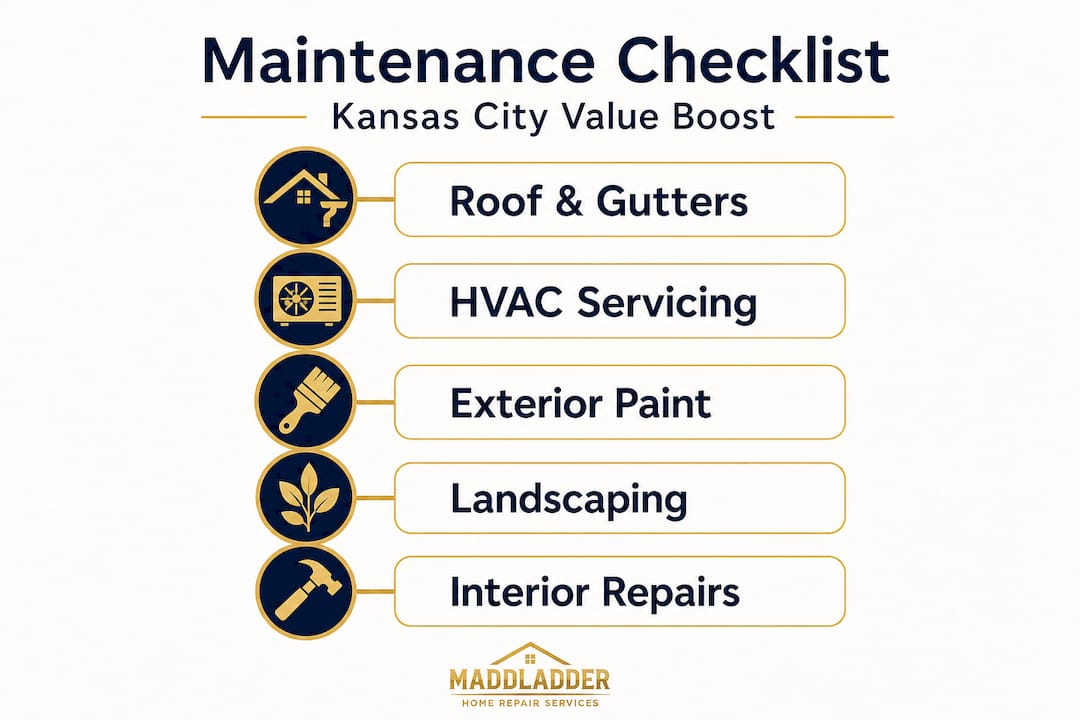
Following a Kansas City maintenance checklist seasonally takes the guesswork out of prioritization and helps you stay in the C2-C3 condition range that keeps your options open. If time is a barrier, look into efficient home repairs strategies that help you tackle the most important items without burning a weekend.
Cosmetic upkeep and signals: Overlooked but essential
It's tempting to dismiss a chipped baseboard or a faded front door as purely cosmetic, something that doesn't affect the real value of the home. That thinking is expensive. Cosmetic neglect communicates something powerful to buyers and appraisers: it suggests that the owner may have skipped maintenance elsewhere too.
Home inspection professionals in Kansas City have documented the pattern clearly. Cosmetic neglect often correlates with hidden issues like water staining, aging mechanical components, and deferred repairs behind walls or under floors. A buyer who sees peeling paint or water rings on the ceiling isn't just noting the cosmetic issue. They're wondering what else has been let go.
Here's a step-by-step framework for addressing cosmetic signals before they become negotiating liabilities:
- Audit visible surfaces first. Walk every room and note peeling paint, damaged trim, stained ceilings, cracked caulk around tubs and sinks, and scuffed or damaged flooring.
- Triage by buyer impact. Focus first on the kitchen, bathrooms, entry areas, and any rooms that show water damage. These are the spaces buyers weigh most heavily.
- Address moisture evidence immediately. Water rings, soft drywall, and moldy caulk aren't just cosmetic. Treat the source, then repair the visible evidence.
- Repaint strategically. Fresh neutral paint in main living areas delivers one of the highest perception returns for the cost. It signals a well-maintained, move-in-ready home.
- Update dated or damaged fixtures. Outdated light fixtures, loose cabinet hardware, and failing door handles are inexpensive to replace and meaningfully improve the overall impression of care.
"Cosmetic neglect does more than look bad. It plants a seed of doubt in buyers' minds that grows into lower offers, longer time on market, and tougher negotiations."
The economic ripple effect of ignoring visible issues is real. A buyer who notices cosmetic problems starts building a mental "repair list" and adjusts their offer accordingly, often subtracting far more than the actual cost to fix the issue. A $200 caulking job that goes undone can become a $2,000 negotiating concession at closing.
For Kansas City property managers overseeing rental units, cosmetic upkeep is equally critical for tenant retention and turnover costs. A well-maintained unit commands higher rent and attracts tenants who treat the property with greater care. Getting ahead of cosmetic issues between tenants is one of the highest-return investments you can make. Learn more about scheduling home repairs efficiently so that cosmetic and functional items don't pile up between occupancies.
Balancing repairs and upgrades: Getting the best return
Once you've addressed condition issues and cosmetic signals, the natural question becomes: where do I invest next? This is where a lot of Kansas City homeowners make costly mistakes, chasing big renovation projects that look impressive but don't recover their cost at resale.
The reality is that payback varies widely by project type. A full kitchen gut renovation might recover 50 to 60 cents on the dollar in most Kansas City neighborhoods, while targeted repairs and market-signaling improvements often recover 80 to 100 cents or more. That's a significant difference when you're deciding where to put your money.
Smart repair and upgrade priorities based on cost-recovery potential:
- Fresh exterior paint or siding repairs: Strong return, high visibility, signals active maintenance
- Updated entry door or garage door: Among the highest cost-recovery projects nationally, strong curb appeal impact
- Bathroom refresh (not full remodel): New fixtures, fresh caulk, updated mirror and lighting deliver strong perceived value for modest cost
- Landscaping and lawn care: Low cost, high visibility, directly affects first impressions and appraisal
- Kitchen updates (targeted): New hardware, fresh paint on cabinets, updated faucet. Much stronger return than a full kitchen remodel
- HVAC or water heater replacement: Necessary repairs that protect condition ratings and financing eligibility
Pro Tip: Before committing to any upgrade project, ask yourself if an appraiser would note it as a positive adjustment. If the answer is no, focus on repairs that protect your condition rating first. A strong C2 rating with no upgrades beats a C4 rating with a renovated master bathroom every time.
The Kansas City market in 2026 continues to reward move-in-ready properties over heavily renovated ones in many price brackets. Buyers want confidence, not chandeliers. Building that confidence through documented maintenance and clean, functional systems is your most reliable path to a strong appraisal outcome. If you're unsure where to start with specific repairs, a DIY repair guide tailored for Kansas City homes can help you identify what you can handle yourself and what needs a professional.
What most Kansas City homeowners overlook about maintenance and value
Here's an uncomfortable truth we've learned from years of working on homes throughout the Kansas City metro: most homeowners dramatically overestimate the value of big renovation projects and dramatically underestimate the value of steady, boring maintenance.
The idea that a renovated kitchen or a finished basement is the key to maximizing property value is a myth that gets reinforced by home improvement television. What actually moves the needle in appraisals and buyer negotiations is much less glamorous: a clean crawlspace, serviceable gutters, an HVAC that runs without complaint, and a roof with documented service history.
Local appraisers in Kansas City are not impressed by granite countertops in a home with a failing foundation or a leaky roof. They're required by their professional standards to note deferred maintenance first, and that notation follows the property through every financing transaction until it's corrected. A $30,000 kitchen remodel in a home rated C4 is money that buyers won't value at anywhere close to what it cost you.
The strongest signal a Kansas City home can send is "move-in ready." That means buyers and appraisers walk through and find nothing to worry about. No lists of repairs forming in their heads. No negotiating leverage handed over because of visible neglect. Just a clean, functional property that asks for nothing immediately.
We've seen this play out repeatedly in neighborhoods across Lee's Summit, Shawnee, Olathe, and Prairie Village. The homes that sell fast and appraise well aren't the ones with the fanciest upgrades. They're the ones where the owner clearly paid attention over time. That's a story told by maintained gutters, fresh caulk, a serviced furnace, and a yard that doesn't look like a project waiting to happen.
Routine maintenance beats reactive big projects every single time. The homeowners who stay ahead of wear with scheduled attention, whether through a saving time on home repairs approach or a professional maintenance plan, consistently come out ahead when it matters most: at the appraisal and at the closing table.
Take your next step towards maximizing property value
You now have a clear picture of what protects and grows property value in Kansas City: strategic maintenance, timely repairs, and smart cosmetic upkeep that signals move-in readiness. The next step is putting that knowledge into action with reliable local support.

MaddLadder serves homeowners and property managers across the Kansas City metro with professional, dependable handyman services designed to keep your property in peak condition. From repair and replace services that tackle the wear and tear appraisers flag, to plumbing and electrical services that address hidden system risks, our team handles what matters most. We also offer smart home upgrades to modernize your property without overcapitalizing. With flexible pricing, free estimates, and fast response times, getting your home to its best condition has never been more straightforward.
Frequently asked questions
What are the most important maintenance tasks for boosting property value in Kansas City?
Roof repairs, gutter cleaning, HVAC servicing, and landscaping rank highest because appraisers flag these as the systems and exterior components most tied to condition ratings and buyer appeal.
Does deferred maintenance affect my ability to get a mortgage or refinance?
Yes. Serious deferred maintenance lowers condition ratings, and those ratings restrict your financing options or require repairs before loan approval can proceed.
Are cosmetic repairs worth the investment?
Cosmetic neglect signals deferred maintenance patterns to buyers and correlates with hidden issues, making targeted cosmetic repairs a smart, low-cost way to protect buyer confidence and negotiating leverage.
Which upgrades deliver the highest return in Kansas City?
Smaller, targeted improvements like fresh paint, updated fixtures, and exterior repairs generally outperform major renovations because payback varies widely by project type and large remodels often recover less than their total cost at resale.