
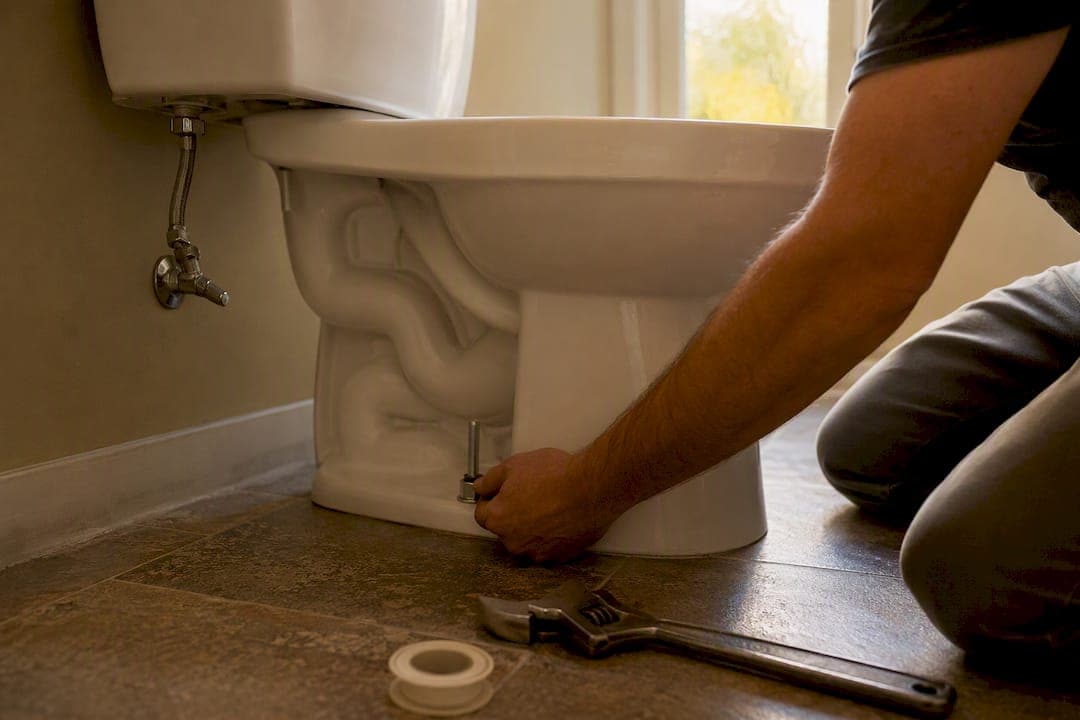
Most homeowners pay within a few hundred dollars for a standard toilet swap, while a full DIY job runs a couple of hundred dollars in parts alone. The single biggest variance driver isn't the toilet itself. It's what a plumber finds underneath it once the old one comes off, since flange damage or rotten subfloor can push a simple job past $2,500. The cost breakdown below shows exactly where that money goes.
TL;DR:
- The most significant cost variation comes from unexpected issues under the toilet, such as flange damage or rot, which can add hundreds to thousands of dollars.
- Typical installation costs range from $350 to $800 for a straight swap, but repairs and additional work like flange repair or subflooring can push the price over $2,500.
- Labor rates vary widely by region, with high-demand metro areas charging significantly more, especially if access is difficult or the drain line is aged or complex.
- Buying your own toilet can save 10 to 20 percent on costs, but only if the rough-in measurement matches and you confirm compatibility beforehand.
- Professional installation includes removal, inspection, sealing, bolting, connection, testing, and disposal, with extra charges for repairs, permits, or unexpected issues.
Table of Contents
- Toilet Installation Cost Breakdown: Fixture, Labor, and Extras
- What Factors Change the Price of a Toilet Installation?
- What's Included in a Professional Toilet Installation?
- Hidden Toilet Repair Costs to Watch For
- DIY vs. Hiring a Professional: What Actually Makes Sense
- How to Get Accurate Toilet Installation Quotes
- A Local Perspective on What Really Drives Toilet Costs
- Get a Toilet Installation Quote in Kansas City
- Sources
Toilet Installation Cost Breakdown: Fixture, Labor, and Extras
A toilet installation quote is really four line items stacked together: the fixture, the labor, the supplies, and disposal of the old unit. Understanding each piece helps you spot a lowball bid or a padded one before you sign anything.
The toilet itself is the most visible cost, and it swings widely by material and features.
- Budget toilets: $100 to $250 (standard two-piece, basic flush)
- Mid-range toilets: $250 to $500 (better flush systems, comfort height, water-efficient models)
- Premium toilets: $500 to $1,200+ (one-piece design, smart features, dual-flush, wall-mounted)
Labor is where most of the real cost to install a toilet lives. HomeAdvisor's national data puts professional toilet installation labor at roughly $224 to $533, averaging around $374 for a standard job. Supplies (wax ring, bolts, and a new supply line) typically add $15 to $40, and haul-away of the old fixture runs another $20 to $75 if the installer doesn't include it in the base fee.
Here's how those pieces combine in real-world quotes, based on patterns WhatItActuallyCosts documents for practitioner-priced jobs in 2026:
| Job type | Typical total cost | What's included |
|---|---|---|
| Straight swap (same rough-in, healthy flange) | $350 to $800 | Removal, new wax ring, set, test, haul-away |
| Swap plus valve/line update | $550 to $1,500 | Above, plus new shutoff valve and supply line |
| Swap plus minor repairs | $900 to $2,500 | Above, plus flange repair or leveling work |
| Full relocation or rough-in change | $1,500 to $3,000 | New drain line positioning, permit, possible floor work |
Homewyse's cost calculator breaks jobs down the same way: fixture, labor, supplies, and disposal as separate inputs, which is worth doing yourself before you call anyone. Consumer guides like NerdWallet generally cite $300 to $800 for a full install, and that range holds up fine for a toilet replacement cost estimate as long as nothing under the floor surprises you.
What Factors Change the Price of a Toilet Installation?
Two identical bathrooms can generate two very different quotes, and the reasons almost always trace back to four variables: the toilet design, the labor market, the drain setup, and who's supplying the fixture.
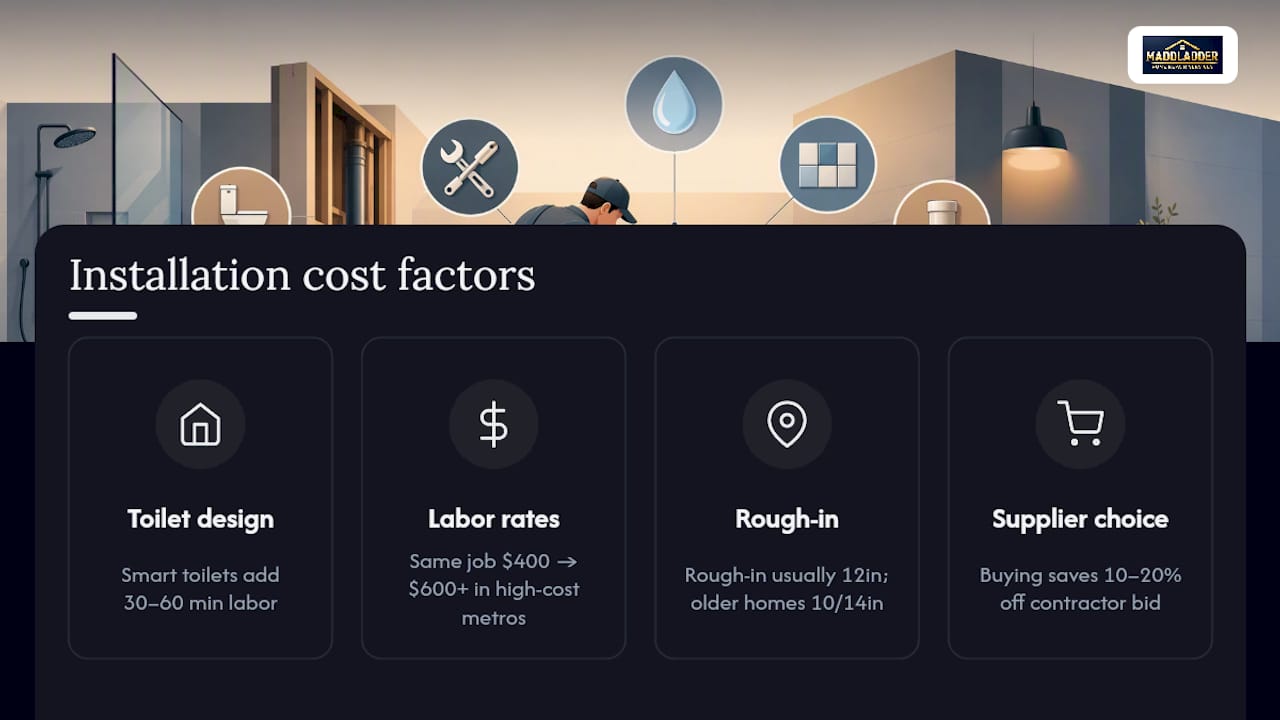
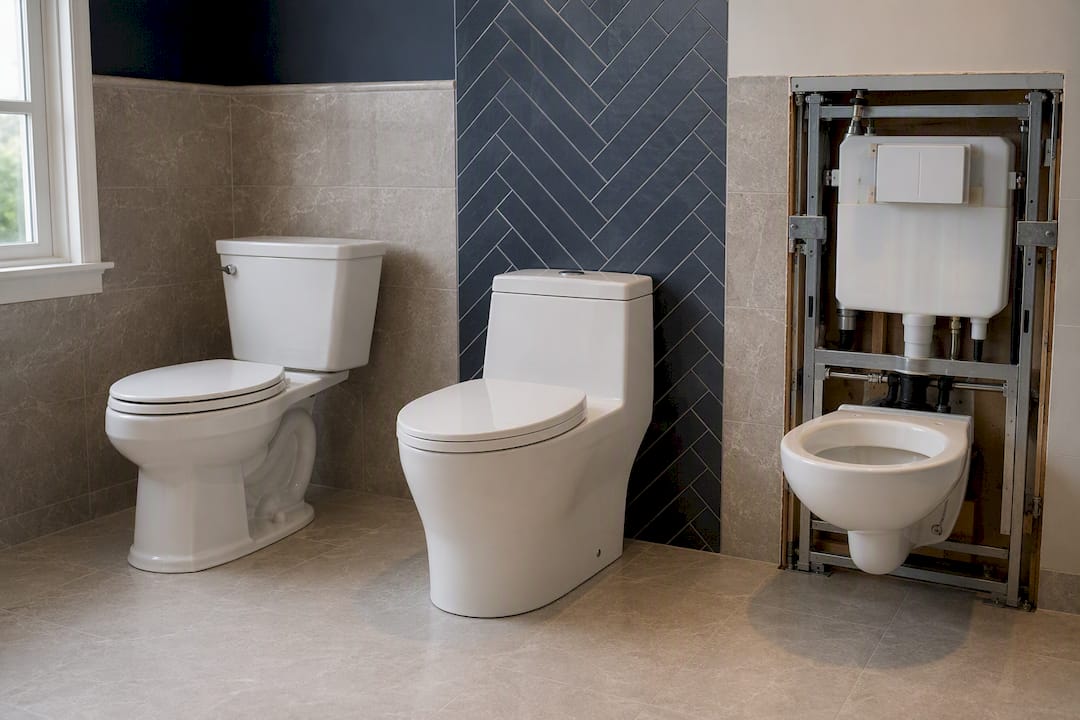
Toilet type matters more than most homeowners expect. A basic two-piece toilet installs faster and cheaper than a one-piece unit, which weighs more and requires more careful handling. Smart toilets with heated seats, bidet functions, or Wi-Fi controls need an electrical outlet nearby and often add 30 to 60 minutes of labor. Wall-mounted toilets are the most expensive to install because the tank sits inside the wall, sometimes requiring carpentry work most plumbers won't touch without a second trade.
Labor rates vary by metro area more than people realize. Bureau of Labor Statistics wage data shows plumber wages differ significantly by region, and that difference shows up directly in your quote. A job that costs $400 in a lower-cost metro can run $600 or more in a high-demand market, independent of the toilet itself.
Access and rough-in size add or subtract labor time. A cramped half-bath under a staircase takes longer to work in than an open master bath. Rough-in distance (the space between the wall and the drain center) is typically 12 inches, but older homes sometimes have 10-inch or 14-inch rough-ins that limit which toilets fit without modification. A plumbing rough-in guide is worth a quick read before you shop for a fixture.
Cast-iron drain lines, common in homes built before the 1970s, raise the stakes further. They're heavier, more prone to corrosion at the flange connection, and less forgiving if a plumber needs to cut into the line.
Pro Tip: If you buy your own toilet to save money, confirm the rough-in measurement and the installer's compatibility policy first. A mismatched rough-in can turn a $75 savings into a $150 return trip.
Buying the fixture yourself instead of letting the installer supply it commonly saves 10% to 20% off the total bid, since contractors mark up materials.
What's Included in a Professional Toilet Installation?
A standard professional install covers a specific set of tasks, and knowing them helps you tell a complete bid from a stripped-down one that will nickel-and-dime you later.
- Removal of the old toilet and disposal of the wax ring
- Inspection of the flange and subfloor for visible damage
- New wax ring or seal installation
- Setting and bolting the new toilet to the flange
- Connecting the water supply and checking for leaks
- Flush testing to confirm proper seal and function
What's often billed separately: a new shutoff valve (if the old one is corroded or seized), a braided supply line, flange repair or extension, subfloor patching, and haul-away of the old unit. Some installers bundle haul-away into the base fee; others charge $20 to $75 extra.
Most professionals price a straight swap as a flat install fee rather than hourly time-and-materials, since the job is predictable when nothing's broken underneath. If a quote comes in suspiciously low, ask directly whether it includes a new wax ring, leak testing, and haul-away. A bid that's silent on those three items is usually missing them.
Pro Tip: Ask for the quote in writing with each task itemized. A one-line "install toilet, $250" bid gives you no way to know what happens if they find a cracked flange once your old toilet is off.
Hidden Toilet Repair Costs to Watch For
The gap between a $350 quote and a $2,000 invoice almost always comes down to four things a plumber can't see until the old toilet is out of the way.
- Flange damage: A cracked or corroded flange typically adds $150 to $350 to repair, or $75 to $200 for a flange extender if it's just sitting too low after a floor buildup.
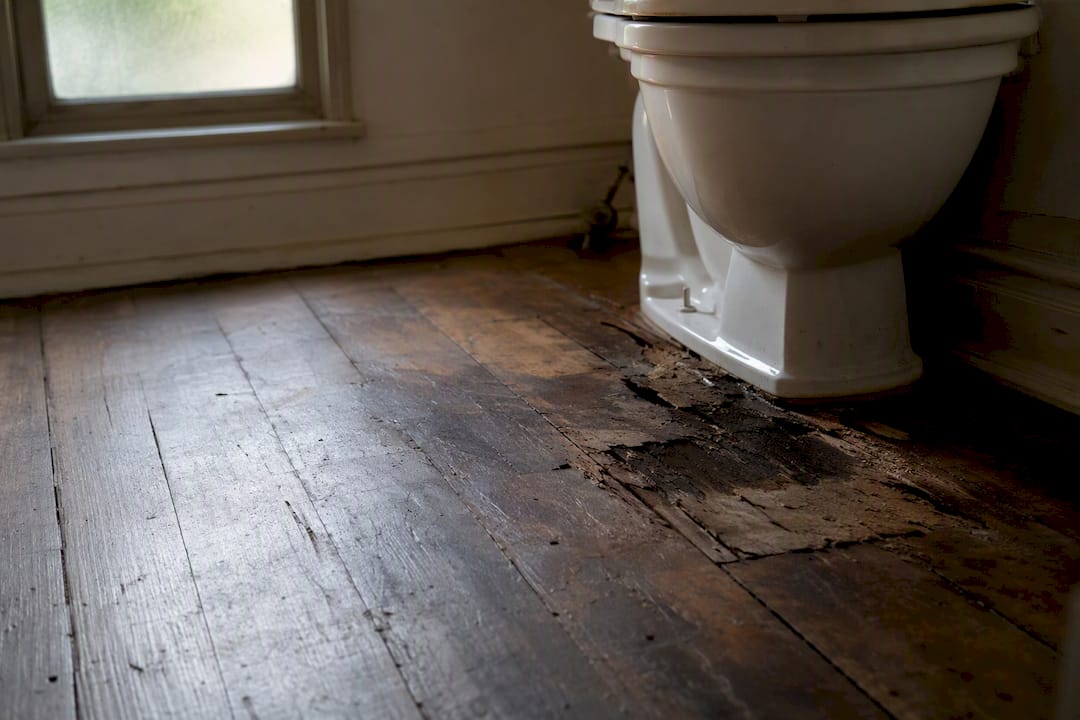
- Subfloor rot: Water damage around the base is common in older bathrooms. A small patch runs $200 to $500; a structural repair involving joists can run $800 to $1,500 or more.
- Seized shutoff valves: Older valves that won't turn need replacement, typically $75 to $200 including the new valve and line.
- Cast-iron drain issues: Corrosion or misalignment in a cast-iron drain can require cutting and re-fitting, often $300 to $800 depending on access.
Industry guidance from retailers like Home Depot's installation service makes a point worth repeating: a "simple swap" is never guaranteed until the old fixture is physically off the floor. That's exactly why a pro who handles both plumbing and basic carpentry avoids the change-order scramble of calling in a second contractor mid-job.
Before you get quotes, check for soft or spongy flooring around the base, discoloration on the floor or ceiling below, and a toilet that rocks even when bolts are tight. Photograph all three and send them with your quote request. Minor plumbing repairs caught early, like a slow leak at the base, often prevent the subfloor damage that turns a $400 job into a $1,500 one.
Relocating a toilet to a new spot in the room, or changing the rough-in size, is the one scenario that reliably pushes costs into four figures. That work usually requires a permit and sometimes a new drain line route entirely.
DIY vs. Hiring a Professional: What Actually Makes Sense
DIY parts alone run $150 to $400: the toilet, wax ring, bolts, and supply line. That number excludes your time, any tools you don't already own, and zero protection if something goes wrong. Professional labor alone typically lands at $224 to $533 per HomeAdvisor, with total pro installs (fixture plus labor) commonly falling in the $300 to $800 range for straightforward jobs.
Here's a workable rule: attempt DIY only if you can physically inspect the flange and confirm the shutoff valve turns freely before you start. If either one looks questionable, or you've never removed a toilet before, hire a pro.
- DIY makes sense when the flange is clearly intact and the valve turns easily
- Hire a pro when you see water staining, a rocking toilet, or a valve that won't budge
- Hire a pro for any rough-in change, relocation, or cast-iron drain work
- Always hire a pro if a permit is required in your jurisdiction
Pro Tip: A botched DIY seal is one of the most common causes of slow leaks that homeowners don't notice for months. If you're not confident in the wax ring seat, that alone is worth paying for.
Warranty coverage is the quiet factor DIY skips entirely. Most licensed installers back their labor for 90 days to a year, which covers you if a seal fails or a connection loosens. A DIY job carries no such protection, and homeowner's insurance rarely covers water damage traced to an installation the homeowner performed.
How to Get Accurate Toilet Installation Quotes
Getting comparable bids starts with giving every contractor the same information. Send photos of the current toilet, the base and floor around it, the shutoff valve, and a rough-in measurement (the distance from the wall to the center of the drain bolts).
Then ask these ten questions of every quote:
- Does this price include removal and haul-away of the old toilet?
- Is a new wax ring and bolt kit included?
- What's your policy if the flange needs repair?
- What's your policy if the subfloor needs patching?
- Is a new shutoff valve or supply line included?
- Do you charge flat-rate or time-and-materials?
- What warranty do you offer on labor?
- Is a permit required, and is that cost included?
- What's your estimated timeline, start to finish?
- Do you charge extra for same-day or emergency scheduling?
A same-day straight swap typically takes one to two hours. Add a flange repair or valve replacement, and expect half a day. Subfloor work or a rough-in change can stretch the timeline to a full day or, if materials need ordering, several days.
Compare bids line by line, not just bottom-line totals. A quote that's $150 cheaper but silent on flange policy isn't actually cheaper if you end up paying for a return trip. Walk away from any contractor unwilling to itemize the bid in writing or who quotes sight-unseen for anything beyond a confirmed straight swap.
A Local Perspective on What Really Drives Toilet Costs
The jobs that go over budget almost never start that way. They start as a "quick toilet swap" and end with a plumber tapping on a soft spot in the subfloor. What separates a fair quote from a frustrating one is whether the contractor prices for that possibility upfront, in writing, instead of springing it on you afterward.
Property managers tend to learn this lesson fastest, which is why so many move to a maintenance plan instead of calling around every time something fails. One emergency toilet repair at a rental property often costs more than a year of preventive coverage would have.
— Jennifer
Get a Toilet Installation Quote in Kansas City
Maddladder handles licensed plumbing installs across the Kansas City metro, and the difference shows up the moment something unexpected turns up under the old toilet.

Instead of calling a second contractor for a flange repair or subfloor patch, one licensed technician handles the plumbing and the carpentry in the same visit, so a hidden issue doesn't turn into a second appointment and a second bill. Every quote is itemized before work starts, so you know exactly what's covered and what isn't. Property managers juggling multiple units often find the Home Care and Property Manager maintenance plans more predictable than paying emergency rates unit by unit, especially for older buildings prone to flange and valve issues.
If you're ready to get a real number instead of a guess, request a free estimate for your toilet installation and get a written, itemized quote before any work begins.
Sources
For rebate programs on high-efficiency toilets, check the EPA WaterSense Rebate Finder. For regional labor-rate context, see BLS occupational wage data. For real local quote ranges, Yelp's cost data aggregates actual bids from plumbers nationwide.
- How Much Does Toilet Replacement Actually Cost in 2026? (A ‘Simple Swap’ With Plot Twists)
- How Much Does It Cost to Install a Toilet? 2025 Data
- Cost to Install Toilet - 2026 Cost Calculator (Customizable)
- What Does Toilet Installation Cost?