
TL;DR:
- Many Kansas City homeowners are confused about what constitutes essential home care, everything from medical support to property maintenance.
- Clear definitions and specific task agreements help prevent costly misunderstandings, ensuring proper support and maintenance.
- Partnering with reliable service providers like MaddLadder can streamline care, repairs, and safety upgrades for families and property managers.
Most Kansas City homeowners assume they know what is included in essential home care until they actually need to arrange it. Then the confusion kicks in fast. Is it about helping an aging parent bathe and eat? Is it a Medicare-covered nurse visiting twice a week? Or is it the long list of maintenance tasks keeping your roof, pipes, and heating system from failing you mid-January? The honest answer is: all of the above, depending on context. This guide separates the categories clearly so you can plan, budget, and act without second-guessing.
Table of Contents
- Understanding what essential home care includes
- Non-medical essential home care: the day-to-day support
- Skilled medical home care: understanding Medicare's role
- Essential home maintenance services for Kansas City properties
- Clarifying misunderstandings and navigating overlaps in essential home care
- Why clear definitions in essential home care can save Kansas City homeowners time and money
- Explore MaddLadder's essential home care and maintenance services in Kansas City
- Frequently asked questions
Key Takeaways
| Point | Details |
|---|---|
| Essential home care categories | Essential home care includes non-medical personal and homemaking support plus skilled nursing and therapy services. |
| Medicare coverage limits | Medicare covers only physician-ordered skilled services, not ongoing personal care or homemaking. |
| Non-medical tasks explained | Personal care involves bathing, dressing, and grooming while homemaking includes meal prep and errands. |
| Winter maintenance importance | Winterizing irrigation and auditing home systems in Kansas City prevent costly freeze damage. |
| Clarify service scope | Clear definitions and documentation of included tasks reduce misunderstandings and gaps in care. |
Understanding what essential home care includes
The phrase "essential home care" gets used in two very different conversations. One happens in a doctor's office or a case manager's notes. The other happens when a landlord realizes the gutters haven't been cleaned in three years. Both are legitimate, and both matter.
At its core, home care services cover non-medical help such as personal care and homemaking, plus skilled medical services like nursing and therapy. That's a wide range. Understanding where your situation falls on that spectrum is the first step to getting the right support without paying for the wrong kind.
The two main categories break down like this:
- Non-medical personal care: Bathing, dressing, grooming, toileting, and mobility assistance
- Non-medical homemaking: Meal preparation, light housekeeping, laundry, grocery runs, and transportation to appointments
- Companionship services: Conversation, social engagement, and emotional support
- Skilled nursing care: Wound care, medication management, injections, and monitoring of chronic conditions
- Therapy services: Physical, occupational, and speech therapy delivered in the home
- Medical social services: Counseling and resource coordination tied to a medical condition
Property managers and homeowners also deal with a parallel set of essential home care components: structural maintenance, safety upgrades, and seasonal winterization tasks. Following a solid home maintenance checklist keeps both categories organized and prevents small issues from becoming expensive repairs.
Non-medical essential home care: the day-to-day support
Non-medical care is what most families encounter first, usually when an elderly parent or a recovering family member needs help getting through the day without leaving home or moving to a facility. These services are not glamorous, but they are profoundly important.
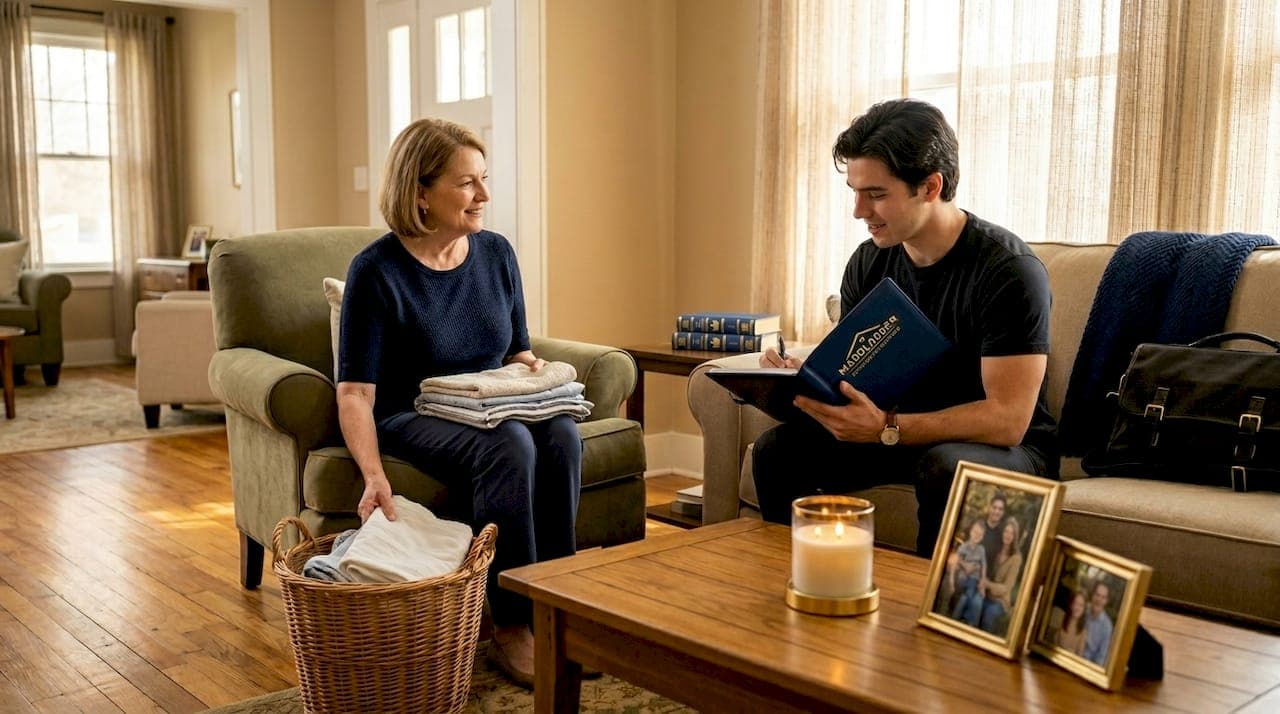
Personal care and homemaking tasks include bathing, grooming, toileting, meal preparation, laundry, and errands. A caregiver handling these tasks allows someone to stay home safely while maintaining their dignity. For a Kansas City homeowner managing an aging parent's care remotely, this type of support is often the difference between independence and a nursing home.
Here is what non-medical home care typically covers:
- Personal hygiene assistance: Help with bathing, hair care, oral hygiene, and dressing
- Meal planning and preparation: Cooking based on dietary restrictions and preferences
- Light housekeeping: Vacuuming, dusting, dishes, and tidying common areas
- Laundry: Washing, drying, and folding clothes and linens
- Errands and transportation: Rides to doctor appointments, pharmacies, and grocery stores
- Companionship: Scheduled visits for conversation, games, reading, or simply being present
The companionship piece often gets underestimated. Social isolation is a real health risk, particularly for seniors living alone in Kansas City neighborhoods where winters limit outdoor activity. A caregiver who shows up three times a week isn't just helping someone eat. They're providing a check-in that the family can't always manage.
Pro Tip: Before signing any care agreement, write out every task you expect the caregiver to handle and every task that falls outside their role. Ambiguity in care contracts leads to gaps in coverage, billing disputes, and frustrated families. The more specific you are upfront, the less you'll troubleshoot later.
One often-missed benefit of non-medical home care is its role in preventive home maintenance of the person's daily routine. Just like catching a leaky pipe early saves you a flooded basement, consistent personal care prevents small health issues from escalating into hospitalizations.
Skilled medical home care: understanding Medicare's role
When a person is recovering from surgery, managing a serious illness, or needs clinical monitoring at home, skilled medical home care steps in. This is a regulated, physician-directed category with rules about who qualifies and what gets paid for.
Here is how Medicare covers skilled home care, step by step:
- A doctor certifies that skilled care is medically necessary and creates a formal plan of care
- The patient must be considered "homebound," meaning leaving home requires significant effort
- Medicare covers intermittent skilled nursing and therapy and medical social services when ordered by a doctor
- Coverage is not unlimited. Once clinical goals are met, Medicare-covered visits stop
- Ongoing personal care (bathing, dressing) is not covered by Medicare unless paired with a skilled need
The key distinction: Medicare pays for skilled medical care delivered in the home, not for custodial or personal care alone. If someone only needs help with daily tasks but has no medical need requiring clinical oversight, Medicare will not foot the bill.
This is where many Kansas City families get blindsided. They assume Medicare will pay for a home health aide to assist Mom with bathing indefinitely. It won't. Medicare is specific about what counts as "skilled," and personal grooming does not meet that bar on its own.
Pro Tip: When talking to a home health agency, ask directly whether a specific service is Medicare-billable or out-of-pocket. Get the answer in writing. An unexpected monthly bill for non-covered services is entirely avoidable with one direct question upfront.
For homeowners making accessibility modifications to support a family member's recovery at home, reviewing a DIY safety upgrades workflow can clarify which changes make the biggest impact on safety and mobility.
Essential home maintenance services for Kansas City properties
Shift the lens from personal care to property care, and the definition of essential home care takes on a completely different meaning. For Kansas City homeowners and property managers, keeping a building safe and functional through the seasons is its own form of essential care.
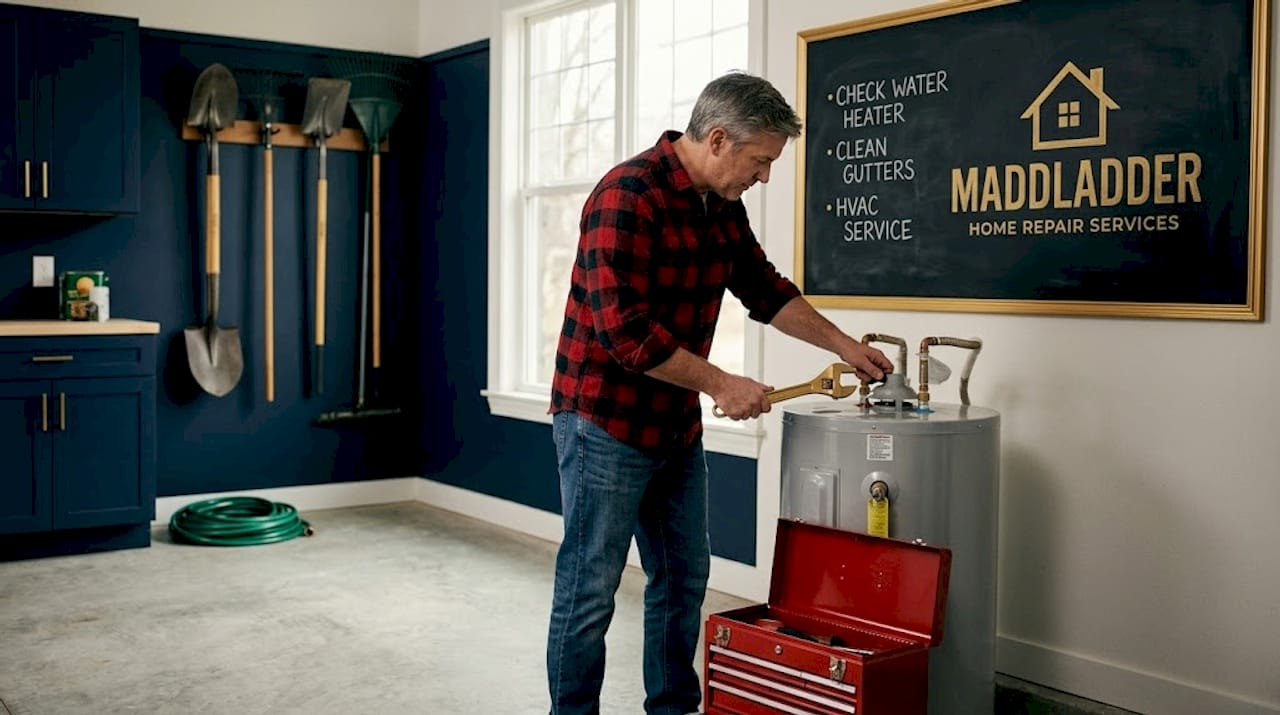
Kansas City winters are unforgiving. Temperatures regularly drop below freezing, and the freeze-thaw cycle is brutal on pipes, irrigation systems, and outdoor fixtures. Winterizing irrigation and outdoor faucets prevents freeze damage and is a top priority for property managers before cold weather sets in.
Here is what property-focused essential home maintenance typically includes:
- Irrigation winterization: Blowing out sprinkler lines to prevent burst pipes
- Outdoor faucet protection: Installing insulated covers and shutting off interior valves
- HVAC inspection and filter replacement: Ensuring heating systems perform when temperatures drop
- Roof and gutter inspection: Clearing debris to prevent ice dams and water infiltration
- Smoke and carbon monoxide detector checks: Testing and replacing batteries before winter
- Weatherstripping and caulking: Sealing gaps around doors and windows to reduce heat loss
| Winterization task | Consequence if skipped |
|---|---|
| Blow out irrigation lines | Cracked PVC pipes and flooded landscaping |
| Cap outdoor faucets | Burst supply lines inside exterior walls |
| Clean gutters | Ice dams causing roof leaks and ceiling damage |
| Inspect HVAC system | Heating failure during a freeze event |
| Check window seals | Drafts, higher utility bills, moisture intrusion |
| Test detectors | Undetected CO leaks during high furnace use |
The difference between a $150 irrigation winterization and a $3,000 burst pipe repair is a single fall service call. That math is not complicated, but plenty of property managers skip it anyway. Following a reliable home maintenance checklist and knowing which essential safety upgrades protect your investment are the two habits that separate proactive owners from reactive ones.
Clarifying misunderstandings and navigating overlaps in essential home care
Here is where things get genuinely complicated. Many homeowners and property managers use the term "home care" to cover everything from helping a parent get dressed to fixing a leaking faucet. These are not the same category, and mixing them up creates real problems.
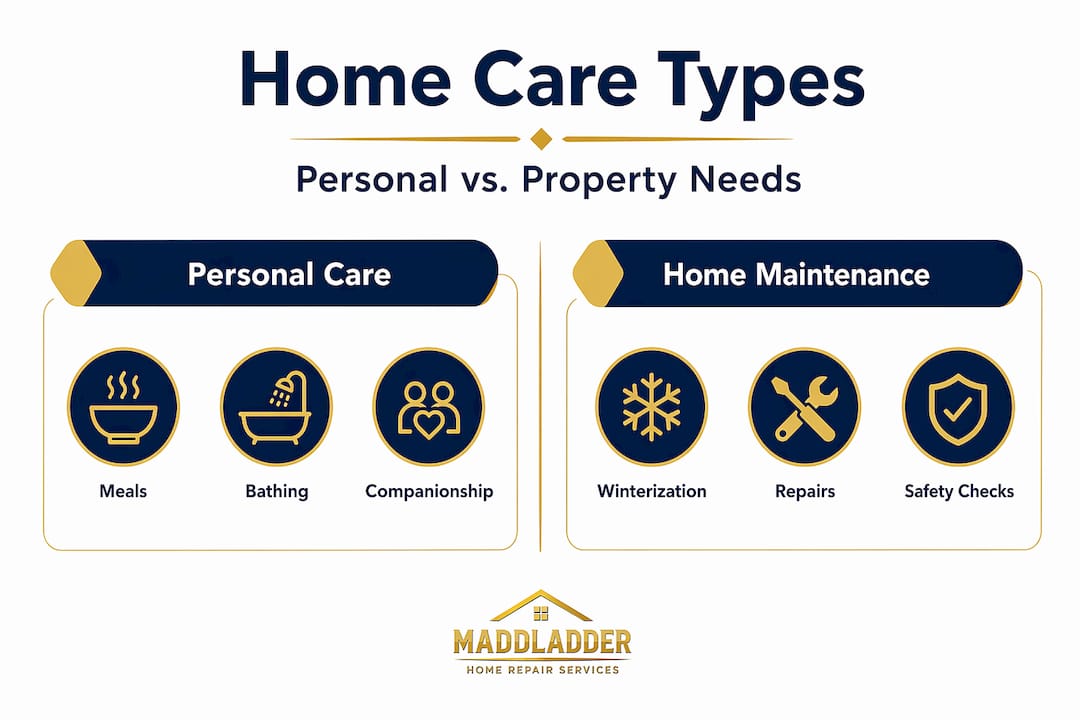
Essential home care (non-medical personal support) and Medicare home health care (skilled, physician-directed services) are funded and regulated differently. Confusing the two leads to uncovered bills, service gaps, and frustrated expectations.
Common points of confusion include:
- Assuming Medicare covers ongoing personal care: It doesn't unless a skilled medical need is also present
- Expecting a home health aide to handle house repairs: That falls completely outside their scope
- Thinking "essential home care" is a single defined service: It isn't. The term means different things depending on whether you're talking to a care agency or a handyman service
- Overlooking what non-medical care excludes: Most personal care aides do not do heavy cleaning, home repairs, or financial management
Pro Tip: Use task-based agreements with any care or maintenance provider. Instead of saying "help around the house," list: "assist with morning shower, prepare lunch, take to Tuesday appointment, do one load of laundry." This level of specificity protects both you and the provider, and it tells you immediately if there are gaps in coverage.
For property managers handling step-by-step home repairs on their own, knowing exactly where DIY ends and professional help begins is the same principle applied to maintenance. Draw the line clearly, and you spend your time and money in the right places.
Why clear definitions in essential home care can save Kansas City homeowners time and money
Here is an opinion most home care guides won't give you: the single most expensive mistake Kansas City homeowners make isn't ignoring maintenance or choosing the wrong care provider. It's operating on vague assumptions about what's covered and who's responsible.
Ambiguous service definitions are the root cause of a pattern I see repeatedly. A family thinks their parent's care plan includes medication reminders. It doesn't. A property manager assumes the cleaning crew handles gutter clearing. They don't. These misunderstandings don't just cause inconvenience. They cause emergency expenses, delayed care, and in winter, real physical danger.
Documenting winterization before freeze periods helps property managers reduce risk and manage liability effectively, but documentation is only half the value. The other half is the discipline it builds. When you document what you've done, you also get clear about what you haven't done, and you catch gaps before they become emergencies.
Treat your essential home care plan the way you'd treat a detailed service contract. Write down what's included. Write down what's excluded. Set a schedule. Assign responsibility. Doing this with preventive home maintenance protects your property. Doing this with personal care services protects your family member. And doing it with both keeps you in control instead of reacting to crises.
The homeowners and property managers who avoid expensive surprises are not luckier than everyone else. They just made better agreements upfront.
Explore MaddLadder's essential home care and maintenance services in Kansas City
Knowing what essential home care includes is only useful if you have a reliable partner to actually do the work.

MaddLadder serves Kansas City homeowners and property managers with professional, dependable handyman services covering everything from general repairs to safety upgrades. Whether you need repair and replace services for worn fixtures and drywall, help with plumbing and electrical repairs, or ADA safety and mobility upgrades like grab bars and ramps for a family member aging in place, MaddLadder brings the skills and speed to get it done right. Flexible pricing starts at $75/hour, with subscription maintenance plans for homeowners and property managers who want to stay ahead of problems instead of behind them. Free estimates available.
Frequently asked questions
What types of tasks are included in essential home care services?
Essential home care includes personal care such as bathing and dressing, homemaking like meal preparation and light housekeeping, companionship, and in some cases skilled nursing and therapy services. Property-focused home care also covers seasonal maintenance, safety inspections, and minor repairs.
Does Medicare cover all essential home care services?
No. Medicare home health requires a physician order and covers only skilled nursing and therapy, not ongoing personal care alone. Homemaking and companionship services are typically paid out-of-pocket or through private insurance.
What winter maintenance tasks are essential for Kansas City homes?
Winterizing irrigation and outdoor faucets prevents freeze damage and is critical for homeowner safety. Regular inspections of the HVAC system, gutters, and window seals round out the most important cold-weather tasks.
How can homeowners avoid confusion about what is included in essential home care?
Homeowners should ask every provider for a written, task-specific list of included and excluded services. Clarifying Medicare coverage versus out-of-pocket responsibilities before care begins prevents unexpected bills and unmet expectations.
Why is documentation important for property maintenance in winter?
Documenting winterization before freeze periods helps Kansas City property managers reduce risk and manage liability effectively. It also creates a maintenance record that protects you if freeze-related damage becomes a legal or insurance dispute.