
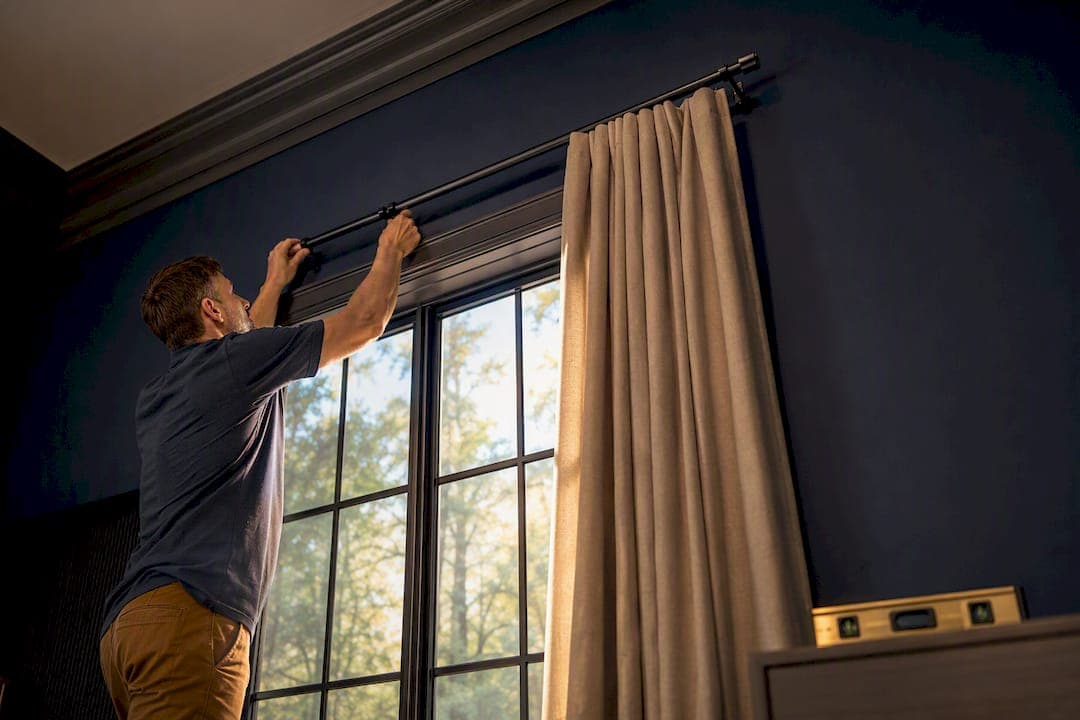
Most homeowners pay between $164 and $420 per rod for professional curtain rod installation, covering the rod, brackets, basic hardware, and roughly an hour of labor. Simple tension rods on drywall land near the bottom; anything mounted into brick, requiring ceiling brackets, or spanning a wide bay window pushes toward the top. If your project involves more than one window, ask for a bundled quote in writing before you commit. It almost always beats paying for separate visits.
TL;DR:
- Most curtain rod installation costs between $164 and $420, with labor accounting for most of the final price, especially for complex wall types.
- Extra charges for masonry anchors, ceiling brackets, or spans over 8 feet can significantly raise the price, especially on brick or plaster walls.
- Bundling multiple windows into one appointment reduces per-window costs, as setup and travel are minimized.
- Written quotes should specify wall type, anchor requirements, hardware, labor structure, and whether patching is included to avoid surprises.
- DIY installation is feasible for light tension rods on drywall, but heavy, ceiling-mounted, or brick wall jobs require professional expertise and warranty protection.
Table of Contents
- What Drives Curtain Rod Installation Price
- What Makes One Quote Higher Than Another
- Real Cost Examples From Typical Jobs
- What a Written Quote Should Actually Include
- Should You Install It Yourself or Call a Pro?
- What MaddLadder Sees In Kansas City Estimates
- The Real Lesson Hiding In These Price Ranges
- Get A Written Estimate Before You Commit
- Where These Numbers Come From
- Sources
What Drives Curtain Rod Installation Price
The rod itself is usually the smallest line item on your bill. Labor, hardware, and job-specific extras do most of the heavy lifting on your final number.
Material costs by rod type vary widely depending on finish and mechanism:
- Basic tension rods: $5 to $40
- Standard metal or wood rods: $30 to $120
- Decorative rods with finials and rings: $75 to $200
- Traverse (pull-cord) systems: $100 to $250
- Motorized track systems: $250 and up, sometimes several hundred more depending on smart-home integration
Labor pricing usually follows one of two structures. Some installers charge a flat fee per window, often $50 to $150, which includes mounting, leveling, and a basic cleanup. Others bill hourly, and handyman labor rates commonly run $75 to $150 an hour depending on the metro area and the complexity of the wall.
Extras add up fast. Masonry or brick anchors typically tack on $20 to $60 per bracket. Center supports for long spans run another $10 to $60. Ceiling-mount brackets, which require different anchoring than a standard wall mount, often add a similar amount.
Here's how that plays out in practice:
- Basic single window, drywall studs, standard rod: $35 rod + $80 labor = roughly $115 total.
- Wide bay window, brick wall, decorative rod, center support: $150 rod + $120 labor + $50 masonry anchors + $40 center bracket = around $360 total.
Fixr's data backs up that spread, showing full curtain installation projects ranging from $50 to $600 depending on whether curtains, hardware, or both are part of the job.
What Makes One Quote Higher Than Another
Two homes with identical windows can get wildly different quotes, and the wall itself is usually why. Drywall over wood studs is the easiest substrate to work with. Plaster, brick, tile backsplash returns near a window, and concrete block all require different anchors, more drilling time, and sometimes specialty bits the installer has to bring along.
Rod weight and span length matter too. A heavy wood rod spanning 10 feet needs more brackets and possibly a center support to keep it from sagging. That's more hardware and more time on the ladder.
Mount height changes things as well. Ceiling-height installs above 9 feet often require a taller ladder or a second technician for safety, and that shows up in the price. Repositioning an existing rod, patching old holes, or discovering wiring and plumbing behind a wall you didn't expect can all add to the final bill.
Where you live plays a role too. Wage data from the Bureau of Labor Statistics shows meaningful regional variation in skilled trade pay, and that variation shows up directly in handyman quotes. Spring and early fall, when homeowners tend to redecorate, can also mean tighter scheduling and slightly higher rates.
- Drywall and wood studs: easiest, fastest, cheapest
- Plaster, brick, tile, or concrete: more time, specialty anchors, higher cost
- Spans over 8 feet: usually need a center support
- Ceiling mounts above 9 feet: may require a second technician
Pro Tip: Take a photo of your wall and window before calling for quotes. Installers who see brick, tile, or plaster ahead of time can give you a far more accurate number than one based on a phone description alone.
Real Cost Examples From Typical Jobs
Numbers help more than ranges when you're trying to nail down a budget, so here are three scenarios built on a $90 hourly labor rate, standard toggle anchors, and a two-bracket setup unless noted.
- Single standard window (6 to 8 feet), basic metal rod: $35 in materials, one hour of labor at $90, comes to about $125 total. This sits near the low end of what Airtasker's installation data shows for straightforward jobs.
- Three-window bundle, mid-range rods, one brick-wall mount: $270 in materials across three rods, 2.5 hours of combined labor at $225, plus a $45 masonry anchor charge, totals around $540, or $180 per window. Bundling cuts the per-window labor cost compared to booking three separate visits.
- Premium ceiling-mounted motorized track for heavy drapes: Track and motor hardware alone can run $300 to $500, with labor climbing to two or three hours because of the wiring and ceiling anchoring involved. Total project costs often land between $500 and $900.
What a Written Quote Should Actually Include
A vague verbal estimate is how homeowners end up with surprise charges. Insist on a written quote that spells out:
- Materials, including rod type, brackets, and any specialty hardware
- Labor structure: flat per-window fee or hourly rate, with a minimum charge disclosed
- Anchor type required for your wall (stud, toggle, or masonry) and who pays for that hardware
- Travel or trip charges, especially for jobs outside a standard service radius
- Cleanup and hole-patching responsibility if a rod is being repositioned
Ask directly whether the installer supplies materials or expects you to buy the rod yourself. HomeGuide's cost breakdown makes clear that "rod installation" and "full curtain installation" are priced very differently, and that mismatch is one of the most common budgeting mistakes homeowners make.
Multiple windows in one visit almost always lowers your per-window rate since the installer isn't paying setup and travel time twice. A quote that skips anchor type, minimum charge, or warranty terms entirely is a red flag worth asking about before you book.
Should You Install It Yourself or Call a Pro?
A basic tension rod over a single window with light curtains is a fair DIY project for most people. Simple wall-mounted rods on drywall studs are usually manageable too, if you own a stud finder and a level.
Hire a pro for heavy drapes, ceiling mounts, brick or plaster walls, anything motorized, or when you want the work backed by a warranty from a local expert. A DIY tension rod install takes maybe 15 minutes; a professional handling a masonry mount or a motorized track system budgets closer to two hours once setup and cleanup are counted.
- DIY-friendly: tension rods, single drywall window, lightweight curtains
- Hire a pro: brick or plaster walls, ceiling mounts, motorized systems, heavy drapery
- Licensed, insured work protects you if a bracket pulls out and damages drywall or a window later
What MaddLadder Sees In Kansas City Estimates
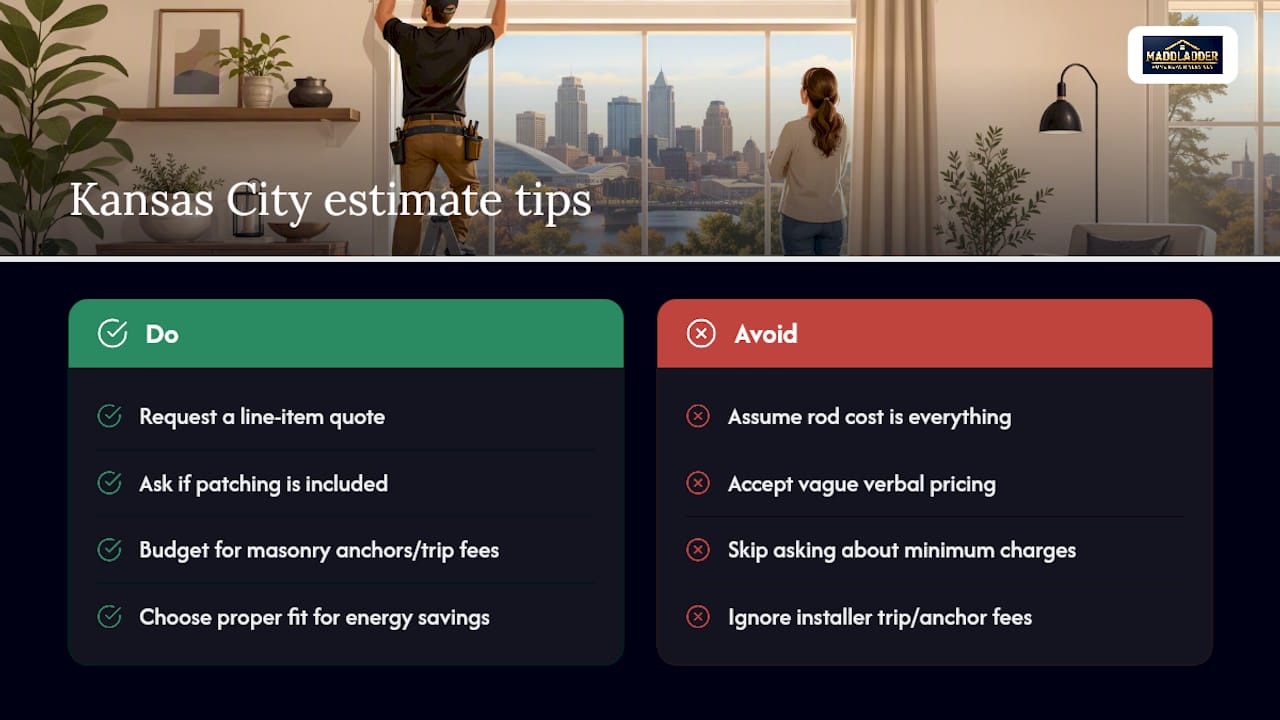
Across the Kansas City metro, we typically see curtain rod labor land between $75 and $150 an hour, with minimum job charges common for single-rod visits under an hour. The most frequent surprise homeowners run into isn't the rod cost. It's the masonry anchor fee or a trip charge that wasn't mentioned upfront.
Jennifer's advice: get a line-item quote before any work starts, and ask specifically whether patching is included if a rod is being repositioned. It's also worth remembering that properly fitted window coverings genuinely help reduce heating and cooling loss, so a solid installation pays you back beyond curb appeal.
The Real Lesson Hiding In These Price Ranges
The spread between a $115 install and a $540 project isn't random. It's almost entirely explained by wall type, span length, and whether the job needs a second trip for patching. Most cost guides bury that detail under a single national average, which is why homeowners get blindsided by a quote that looks nothing like the number they googled.
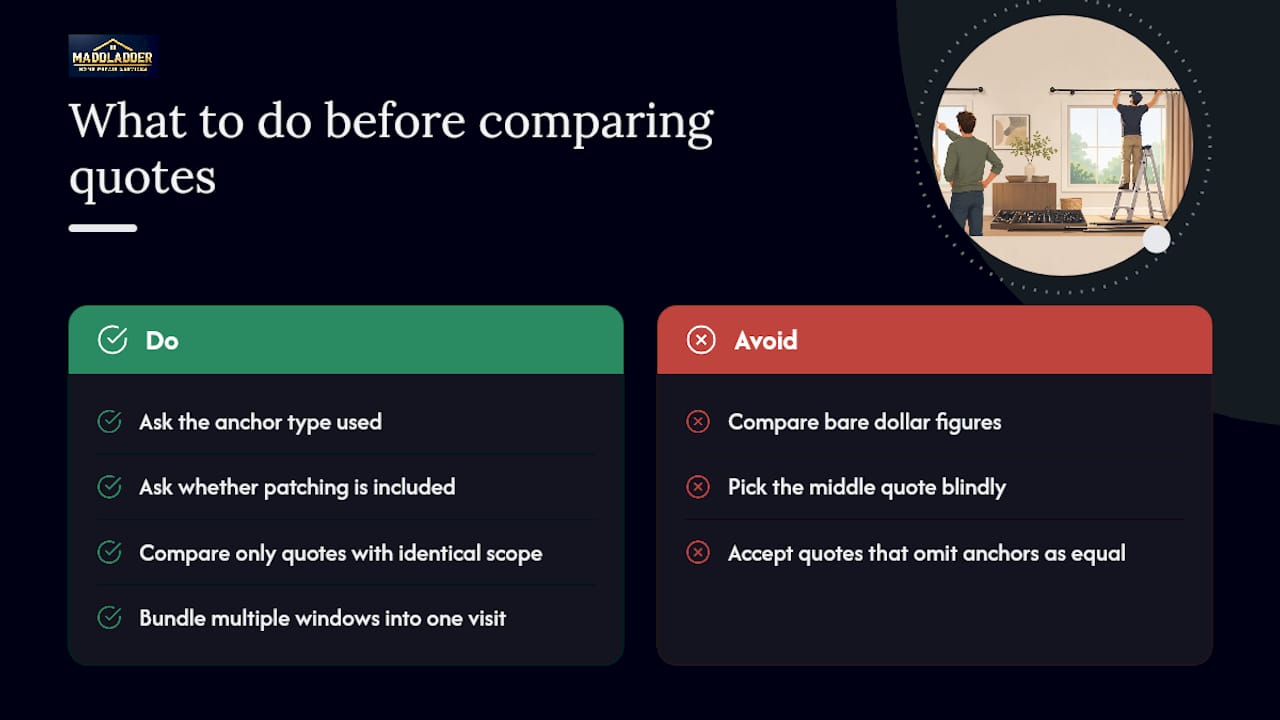
The conventional advice, "get three quotes and pick the middle one," misses the actual leverage point. What matters is comparing quotes that specify the same scope. A $115 quote that excludes anchors and a $200 quote that includes them aren't competing offers, they're different jobs wearing the same label.
If you take one thing from this guide, make it this: ask every installer to state the anchor type and whether patching is included before you compare a single dollar figure. Bundling windows into one visit is the second-easiest way to cut your total, and it costs you nothing but a phone call.
— Jennifer
Get A Written Estimate Before You Commit
MaddLadder prices curtain rod jobs the same way we price every small install: hourly tiers with a small-job minimum, and a real discount when you bundle multiple windows into one visit instead of booking them separately.

A free estimate covers your wall type, rod preference, and window count, so you know your anchor type and labor cost before anyone shows up with a drill. If your project involves patching an old hole or repositioning a rod, our repair and replace service folds that into the same visit. Considering a motorized track for heavy drapes? Our smart home upgrades page covers what that install typically involves. Before you call, measure your window width and note your wall type (drywall, plaster, or brick). Then request a written estimate through our install and assemble service and get a number you can actually plan around.
Where These Numbers Come From
The cost ranges and scope details in this guide are pulled from the leading national cost-data sources homeowners rely on when budgeting for small installs:
- Homewyse's curtain rod cost calculator for national average pricing and itemized labor/material breakdowns
- Fixr's curtain installation cost guide for per-window ranges and rod material pricing
- Airtasker's U.S. installation cost guide for the low-to-high spectrum across simple and complex jobs
- HomeGuide's curtain cost breakdown for the distinction between rod-only and full curtain installation
- BLS wage data for regional labor rate context
Sources
- Cost to Install Curtain Rod - Homewyse
- Curtain installation cost | Fixr
- How Much Does Curtain Rod Installation Cost in the US | Airtasker