
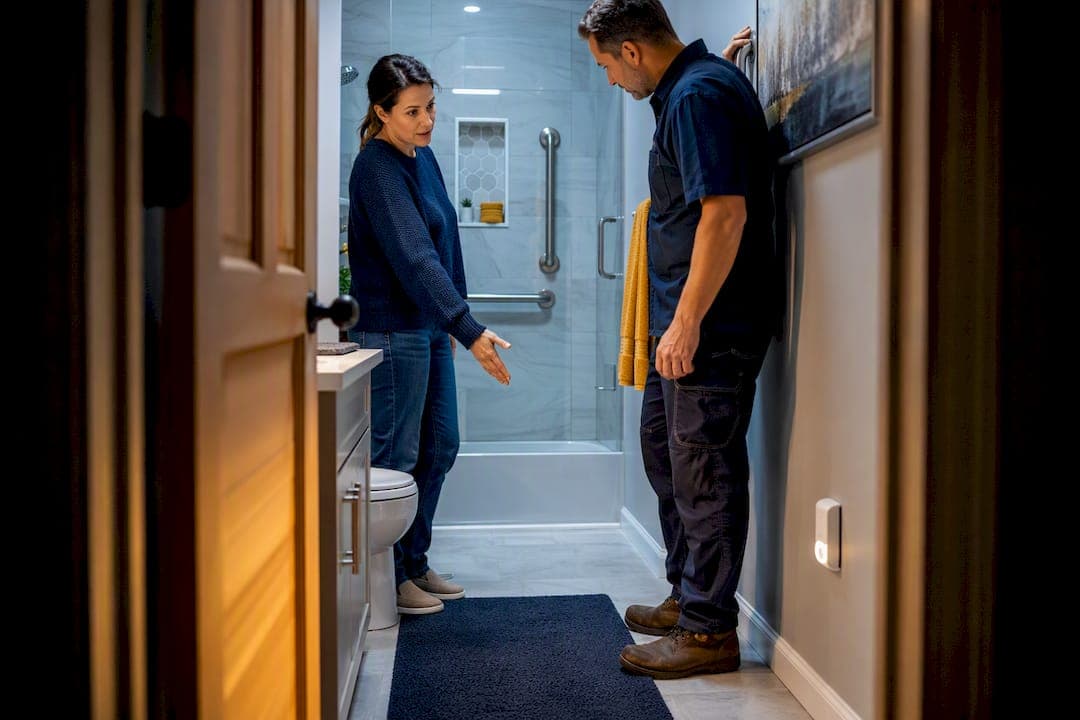
The fastest way to cut bathroom fall risk for seniors is to add secure grab bars, clear away slip hazards, adjust the toilet height, and improve lighting. About 80% of senior falls at home happen in the bathroom, where wet, hard surfaces meet tight turns. If the senior has had a recent fall, surgery, or new dizziness, call a physical or occupational therapist for an assessment before making any other changes.
TL;DR:
- Most grab bars should be anchored into wall studs or blocking to support full body weight, not drywall or suction mounts.
- Exact placement of grab bars around the toilet and shower should align with the user's reach and movement patterns, not fixed measurements.
- Bathroom surfaces, especially glossy tiles and loose mats, significantly increase slip risk, making textured flooring and secure, rated mats essential.
- A licensed installer is recommended for properly mounting fixtures in tiled walls and for structural work like blocking, rather than relying on adhesive or suction solutions.
- Home assessments by occupational or physical therapists can help identify personalized equipment needs, which are then best executed by qualified installers for safety.
Table of Contents
- Shower and Bathtub Safety for Seniors: Chairs, Benches, and Handheld Sprayers
- Making Toilet Transfers Safer: Seats, Frames, and Caregiver Technique
- Reduce Slips and Trips With Flooring and Lighting Fixes
- Grab Bar Placement and Installation That Actually Holds
- Choosing Equipment and Deciding Between DIY and a Licensed Installer
- When to Call an OT/PT vs. When to Call an Installer
- Water Temperature, Footwear, and Emergency Backup
- What We See Walking Into Older Bathrooms
- MaddLadder Can Handle the Install While You Handle the Decisions
- Sources
Shower and Bathtub Safety for Seniors: Chairs, Benches, and Handheld Sprayers
A senior who can step over a tub wall unassisted but tires standing needs a shower chair. Someone who can't safely lift a leg over the tub edge needs a transfer bench, which straddles the tub wall so they can sit down outside the tub and slide across. A full walk-in shower conversion makes sense when falls have already happened or mobility is expected to decline further, since it removes the step entirely.
Whichever seat you choose, the handheld showerhead needs a hose long enough to reach every angle from a seated position, usually 60 to 72 inches, mounted on a slide bar within easy arm's reach rather than fixed high on the wall.
- Weight-rate the seat for the user, not just "senior duty."
- Check rubber tips or suction feet monthly. They lose grip as they age.
- Keep a non-slip mat under and around the bench, not just inside the tub.
- Reapply anti-slip adhesive treads every 6 to 12 months as they wear smooth.
Pro Tip: Test the shower chair dry before the first wet use. If it wobbles on a level floor, it will wobble worse when soapy water hits it.
Making Toilet Transfers Safer: Seats, Frames, and Caregiver Technique
Sitting down should end with knees at roughly a 90 degree angle and feet flat on the floor. If the senior's knees are lower than their hips, the toilet sits too low, and standing back up strains the knees and back. A raised toilet seat adds 2 to 6 inches; a toilet safety frame adds armrests around the existing seat without altering height.
- Use a frame when the senior needs to push up with both arms.
- Use a raised seat alone when height, not arm strength, is the problem.
- Position one grab bar vertically for pulling up and one horizontally for steadying, since a grab bar within reach raises the odds of recovering balance during a slip by over 75%.
- Stand to the senior's weaker side during assisted transfers, and stop the transfer immediately if they report dizziness.
Reduce Slips and Trips With Flooring and Lighting Fixes
Loose bath mats are a hazard disguised as a solution. Choose mats with a rubber, adhesive backing rated for wet floors, and skip anything that can bunch or slide, including thick decorative rugs. Peel-and-stick non-slip treads work well in the tub itself and cost far less than replacing tile.
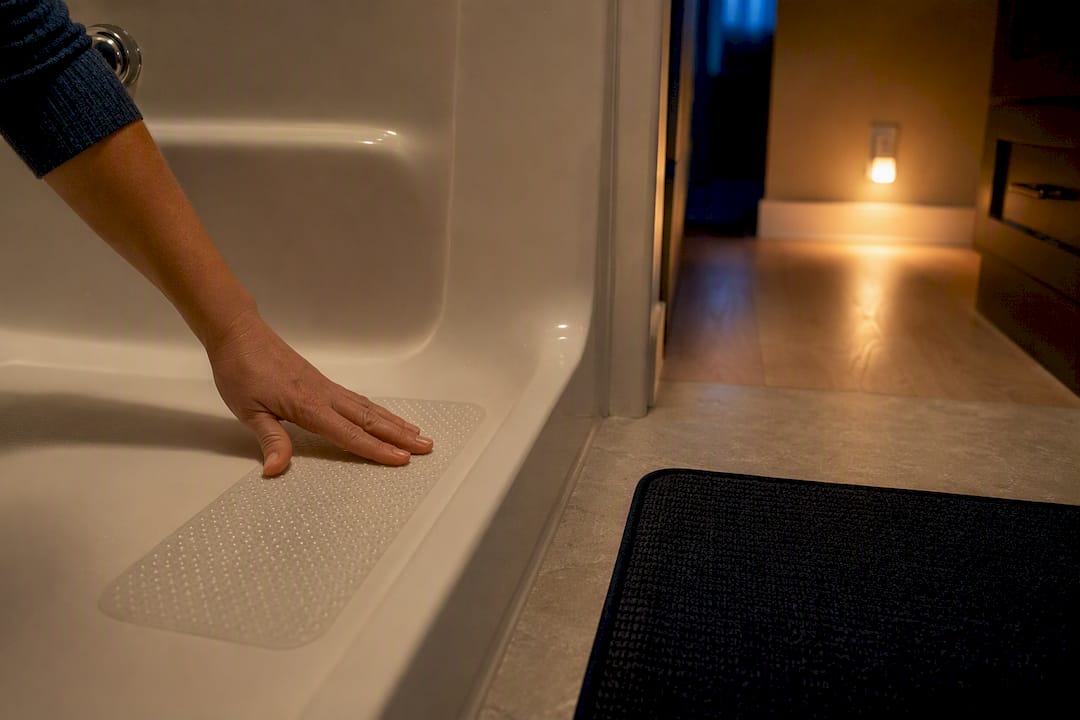
If the existing tile is glossy or already slick when wet, replacing it with a textured, low-sheen tile or vinyl removes the hazard permanently rather than managing it. Add motion-sensor night lights along the path from bedroom to bathroom and inside the room itself. The National Institute on Aging recommends clear, evenly lit pathways as a core fall-prevention step, alongside removing any raised thresholds or clutter that blocks a straight walking line.
Grab Bar Placement and Installation That Actually Holds
Grab bars only work if they're where the body actually reaches during a slip and installed to bear real weight. Guidance modeled on ADA specifications puts horizontal bars around 33 to 36 inches above the floor, though exact placement should match the individual's height and reach, not a fixed measurement.
- Beside the toilet: one vertical bar near the front edge for pull-up leverage, one horizontal bar for steadying.
- Inside the shower: a vertical bar at the entry and a horizontal or angled bar along the seated bathing zone.
- At the tub edge: a bar positioned for the exact motion of stepping over, tested with the actual user before final placement.
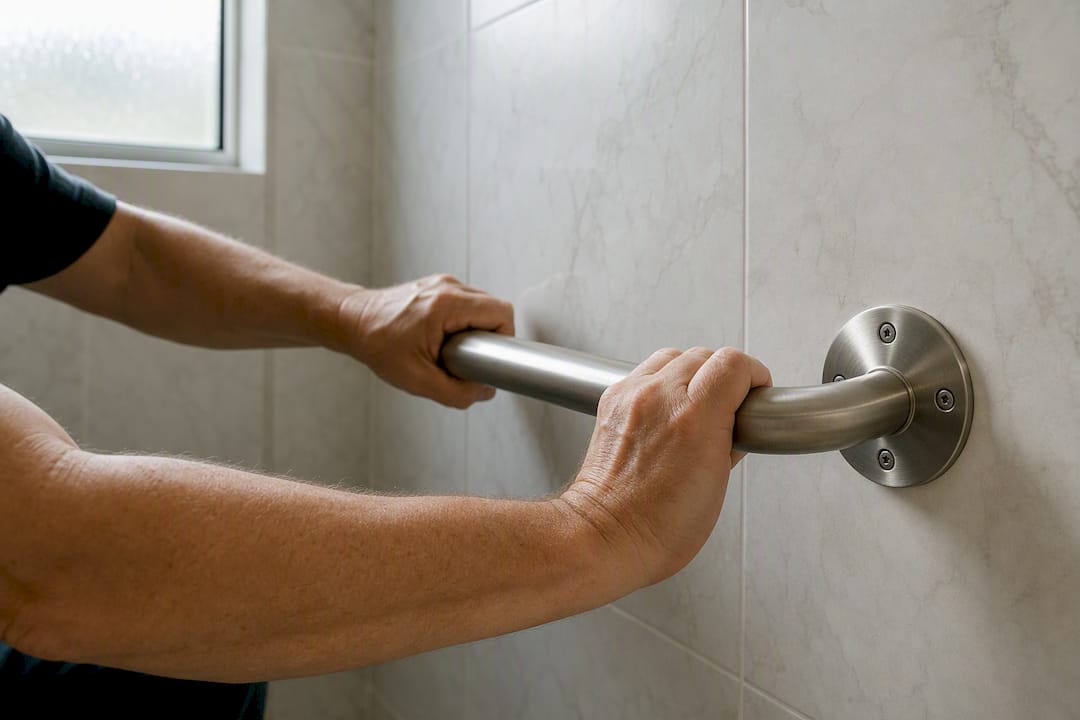
Bars must anchor into wall studs or blocking installed behind the drywall. A bar screwed only into drywall or tile can pull free at the exact moment someone's full body weight lands on it, and suction-mounted bars or towel bars should never substitute for a load-rated grab bar. Pair bars with lever-style faucet handles, which are easier to operate with arthritis, and a thermostatic mixing valve to prevent scald spikes.
Pro Tip: Grab the bar and pull hard, sideways and down, right after installation. If you feel any flex in the wall around the mounting plate, it's not anchored into a stud.
Choosing Equipment and Deciding Between DIY and a Licensed Installer
Before buying anything, check the weight rating (most quality bars support 250 to 500 pounds), the mounting hardware included, and the return policy in case the fit is wrong for the user. A DIY grab bar guide can walk a handy family member through a straightforward stud-mounted install in a drywall bathroom.
Tile walls change the math. Drilling through tile without cracking it, finding studs behind mortar and backer board, and adding blocking where studs don't line up all call for a licensed installer with tile experience. Ask any installer directly whether they anchor into studs or blocking, and whether their estimate covers tile repair if drilling causes a crack.
- Confirm the installer carries liability insurance before work starts.
- Ask for a written estimate that itemizes hardware, labor, and any tile or drywall repair.
- Walk away from any installer who suggests a suction-cup or adhesive bar as the finished solution.
Pro Tip: A vague verbal estimate is a red flag. A detailed one that mentions studs, blocking, or tile repair by name means the installer actually inspected the wall.
When to Call an OT/PT vs. When to Call an Installer
An occupational or physical therapist assesses how the senior actually moves through the transfer, not just where a bar looks convenient on paper. They evaluate balance, reach, grip strength, and gait, and their placement recommendations often differ from generic hardware-store diagrams.
- Request a referral after any fall, hospital stay, surgery, stroke, or sudden change in balance.
- Ask a primary care provider or hospital discharge planner for a home safety evaluation referral.
- Expect the clinician to hand you a written list of recommended equipment and placements.
- Bring that list to a licensed installer who can execute the structural work: blocking, correct anchors, and tile-safe drilling.
The two roles aren't interchangeable. A therapist tells you what the senior needs; an installer makes sure it stays on the wall.
Water Temperature, Footwear, and Emergency Backup
Set the water heater to 120°F to prevent scald injuries, a standard both MedlinePlus and plumbers recommend for households with older adults. A thermostatic anti-scald valve adds backup protection if the heater setting drifts.
- Require non-slip footwear or grip socks in the bathroom. Bare feet and regular socks both slide on wet tile.
- Keep a phone or wearable help button within arm's reach of the toilet and shower, and test it monthly.
- Check grab bars, mats, and shower seat hardware every few months for looseness or worn treads.
- A home safety score checklist can help structure that recurring inspection.
What We See Walking Into Older Bathrooms
Most bars we find failed weren't badly designed. They were screwed into drywall with no blocking behind it, so the first real pull loosened the whole mounting plate. On a walkthrough, we check stud location, tile condition, water heater setting, and whether the toilet height actually suits the person using it, not just code minimums.
If your family is weighing options, a free estimate costs nothing and tells you exactly what the wall behind that bathroom needs.
— Jennifer
MaddLadder Can Handle the Install While You Handle the Decisions
You've read the checklist. Now someone has to drill into the right stud, set the toilet at the right height, and make sure the shower seat doesn't wobble on day one. Licensed technicians can handle this installation work for property owners and managers who don't want to gamble a parent's safety on a suction-cup bar.

MaddLadder's licensed technicians install grab bars anchored into studs or blocking, adjust or replace toilets for proper transfer height, mount shower seats and transfer benches, and handle the plumbing and electrical work behind anti-scald valves and lever faucets. Pricing runs on a straightforward hourly rate, with the exact cost depending on whether the wall needs blocking or tile repair. If night lighting is part of the plan, MaddLadder also installs motion-sensor smart lighting along hallway and bathroom paths.
Request a free estimate for installation and assembly and get a written quote before anyone drills a single hole.
Sources
- Centers for Disease Control and Prevention — Falls
- PubMed article on grab bar effectiveness
- MedlinePlus — Bathroom safety for adults
This article is general information, not a substitute for advice from a qualified doctor. Consult a qualified healthcare professional about your own circumstances before acting on anything here.