
TL;DR:
- Upgrading aging homes focuses on improving safety, updating systems, and enhancing accessibility to support independent living. Core priorities include bathroom safety features, structural repairs, early planning for mobility modifications, and smart technology integration for added security. Proper sequencing of repairs and early assessments significantly reduce costs and safety risks over time.
The top handyman upgrades for aging homes address three core problems at once: safety hazards that accumulate over decades, systems that no longer meet modern standards, and accessibility gaps that limit independent living. Homes built before 1980 often carry outdated electrical panels, galvanized plumbing, and bathroom layouts designed for a younger body. The good news is that most of these problems are solvable with targeted repairs and modifications, many of which cost far less than a full renovation. This guide covers the upgrades that deliver the most value, from grab bars and lighting to structural systems and smart home technology, with real costs and professional guidance throughout.
1. Bathroom safety and accessibility upgrades
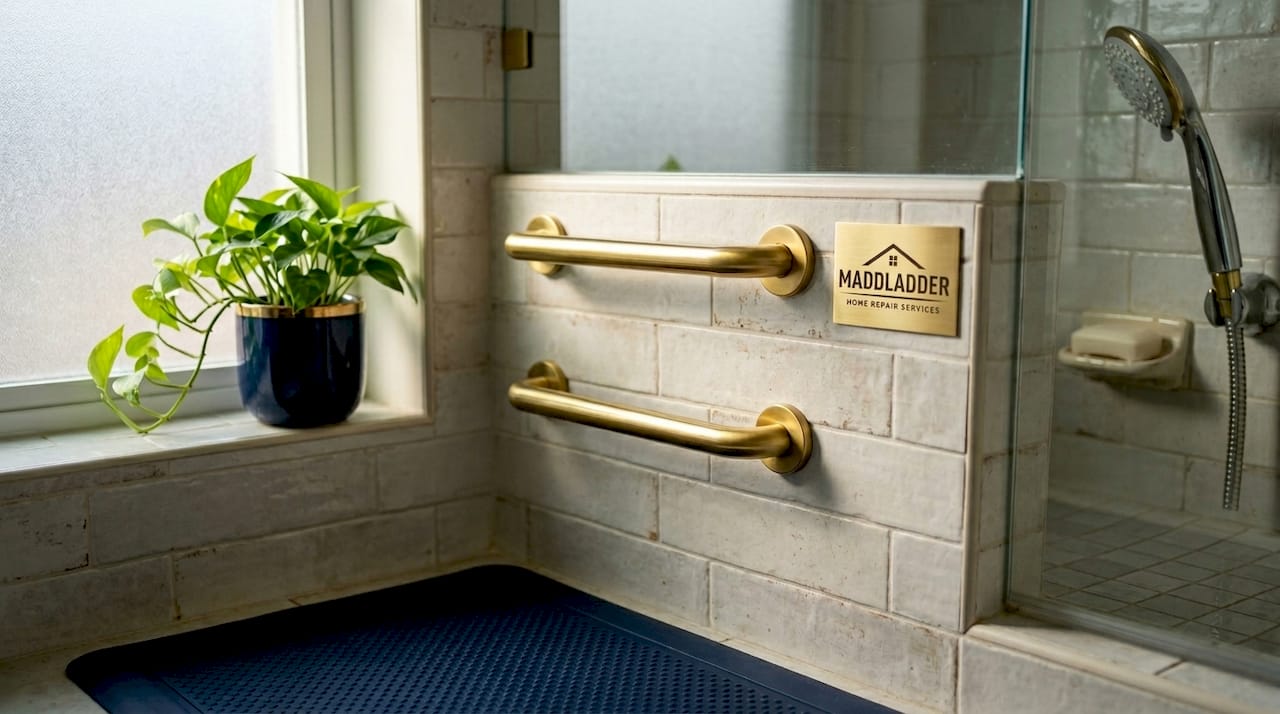
Bathrooms are the highest-risk room in any aging home, and the right handyman upgrades here prevent the most serious injuries. Grab bars, non-slip flooring, and accessible fixtures are the industry term for what's commonly called "bathroom safety modifications," and they belong at the top of every upgrade list.
Grab bars are the single most impactful bathroom upgrade you can make. Professional installation runs between $150 and $400 per bar, with the bars themselves costing $100 to $300 each. That cost is non-negotiable for one reason: grab bars must anchor into wall studs or solid blocking to safely bear a person's weight. Adhesive-only mounts fail under load and create a false sense of security.
Walk-in shower conversions are the next tier of bathroom upgrades. Curbless shower designs range from $3,000 to over $12,000 depending on size and features. If a full conversion isn't in the budget right now, a fold-down teak bench, a handheld showerhead, and a pressure-balanced anti-scald valve deliver most of the safety benefit at a fraction of the cost.
Additional upgrades worth scheduling together include:
- Raised toilet seats or comfort-height toilets (17 to 19 inches) to reduce knee and hip strain
- Non-slip flooring or adhesive treads applied directly to existing tile
- Lever-style faucet handles that operate without a tight grip
- Anti-scald valves set to 120°F to prevent burns for those with reduced sensation
Pro Tip: When installing grab bars, have your handyman add blocking between studs during the same visit. Blocking costs very little to add now and makes future bar placement anywhere on that wall simple and secure.
2. Lighting and flooring improvements for safety
Poor lighting and loose flooring are responsible for a disproportionate share of home falls, and both are among the most budget-friendly remodels for old houses. The fix requires no structural work, just the right products installed correctly.
Motion-activated night lights cost $15 to $60 each and belong in every hallway, staircase, and the path between the bedroom and bathroom. They activate automatically, which means no fumbling for a switch at 2 a.m. Place them at outlet height so the light hits the floor where it matters most.
Upgrading to LED lighting with dimmer switches in kitchens and bathrooms serves two purposes. LEDs produce less heat and use less energy, but more importantly, they render color and contrast more accurately than older incandescent or fluorescent bulbs. That matters because aging eyes need more light to process the same visual information. Under-cabinet kitchen lighting eliminates the shadow cast by overhead fixtures and makes counter work significantly safer.
Flooring upgrades to prioritize:
- Remove or secure all area rugs with non-slip pads and double-sided tape, or eliminate them entirely on hardwood and tile
- Install non-slip vinyl plank flooring in bathrooms and kitchens as a direct replacement for slick tile
- Add rubber stair treads to bare wood stairs, which cost under $100 for a full staircase
- Modify door thresholds that are higher than half an inch, since raised thresholds are a documented trip hazard
Pro Tip: Ask your handyman to install a dedicated circuit for under-cabinet lighting during any kitchen lighting upgrade. Running it off an existing overloaded circuit defeats the energy and safety benefits.
3. Structural and system upgrades for aging properties
The most expensive mistakes homeowners make when modernizing an old home involve doing cosmetic work before fixing the systems underneath. Addressing foundational infrastructure before cosmetic work prevents hazardous conditions and costly rework. A fresh coat of paint over a leaking pipe is money wasted twice.
Plumbing
Homes built before 1970 frequently have galvanized steel pipes that corrode from the inside out, reducing water pressure and contaminating water. Replacing old plumbing with flexible PEX piping is the modern standard because PEX snakes through existing wall cavities like electrical wire, avoiding the need to open every wall. The result is a full replumb with far less demolition than traditional copper replacement.
Electrical
Complete panel upgrades to 200 amps are standard in homes built before 1980, which often have 60 or 100-amp service that cannot support modern appliances, EV chargers, or solar panels. GFCI outlets in all wet areas (bathrooms, kitchens, garages, and outdoors) are a code requirement in new construction and a critical safety upgrade in older homes. Budget for both together since the electrician is already on-site.
Roofing and HVAC
| System | Key upgrade | Why it matters |
|---|---|---|
| Roofing | Replace aging shingles before interior work | Water intrusion destroys insulation, drywall, and framing |
| HVAC | Add programmable or smart thermostat | Reduces energy costs and supports aging-in-place comfort |
| Insulation | Upgrade attic insulation to current R-values | Cuts heating and cooling bills by 15 to 25 percent |
| Foundation | Seal cracks and improve drainage grading | Prevents moisture damage that compromises structural integrity |
One additional consideration for older homes: if your property sits in a historic district, verify approval requirements before replacing any exterior elements like windows or siding. Historic district violations can result in legal action years after the work is completed, even when the homeowner was unaware of the restriction.
4. Accessibility and mobility enhancements
Aging-in-place modifications, the professional term for accessibility upgrades designed to support independent living, work best when planned before a mobility crisis forces rushed decisions. Starting modifications early allows for proper budgeting, better contractor selection, and less emotional stress.
The most impactful mobility upgrades include:
- Widening doorways to 36 inches to accommodate walkers and wheelchairs. Standard doorways are 28 to 30 inches, and widening them requires framing work but is far less expensive than relocating walls.
- Installing a zero-step entry or ramp at the primary entrance. A concrete ramp with handrails typically costs $1,500 to $3,000 and eliminates the most common entry barrier.
- Adding a second handrail on stairs. A second stair handrail costs $200 to $800 and dramatically reduces fall risk, particularly for anyone with one weaker side.
- Replacing round door knobs with lever handles. Lever-style handles cost $15 to $50 each, and a whole-home conversion runs a few hundred dollars total. They operate with a closed fist, which matters for arthritic hands.
- Installing pull-out shelves and lazy Susans in lower kitchen cabinets to eliminate the need to reach deep into dark spaces.
The CAPABLE program now integrates Medicare-supported home safety evaluations that pair nurses, occupational therapists, and handymen to identify and address fall risks proactively. This program can save thousands in future medical costs and is worth requesting through your Medicare plan before scheduling any major accessibility work.
5. Smart home technology upgrades
Smart home upgrades are the fastest-growing category of handyman repairs for seniors because they add a layer of safety and convenience without structural changes. Most installations take a few hours and require only basic wiring or Wi-Fi setup.
The most practical smart home upgrades for aging homeowners:
- Smart locks and video doorbells (Ring, Schlage Encode) let residents see and speak to visitors without walking to the door, and allow family members to grant remote access
- Voice-activated assistants (Amazon Echo, Google Nest) control lighting, thermostats, and timers through voice commands, removing the need to reach switches
- Smart lighting systems that activate on schedules or motion, eliminating dark rooms entirely
- Automated medication dispensers (Hero, MedMinder) that dispense correct doses on schedule and alert caregivers when doses are missed
- Passive activity sensors that monitor movement patterns and alert family members if no activity is detected by a set time
Medical alert systems with automatic fall detection cost $50 to $200 upfront and $25 to $50 per month for monitoring. That monthly fee buys 24-hour emergency response coverage, which is a meaningful safety net for anyone living alone. Smart technology fills critical gaps in home safety, but it works best as a support layer on top of physical modifications, not as a replacement for them.
Key takeaways
The most effective approach to upgrading an aging home is to fix structural systems first, then add accessibility modifications, and layer smart technology on top.
| Point | Details |
|---|---|
| Bathrooms first | Grab bars, non-slip flooring, and anti-scald valves prevent the most common and serious injuries. |
| Fix systems before surfaces | Plumbing, electrical, and roofing upgrades must precede any cosmetic or accessibility work. |
| Plan accessibility early | Starting aging-in-place modifications before a mobility crisis reduces cost and stress significantly. |
| Smart tech supports, not replaces | Medical alert systems and smart locks add safety layers but do not substitute for physical modifications. |
| Lever handles and lighting are high-ROI | Low-cost upgrades like lever handles and motion-activated lights deliver outsized safety returns. |
What I've learned from years of aging home upgrades
After working on dozens of older homes in the Kansas City area, the pattern I see most often is homeowners who spent money in the wrong order. They updated kitchens and bathrooms cosmetically, then discovered the plumbing behind the walls was corroding or the electrical panel couldn't handle the new appliances. That sequence costs twice as much and creates real safety risks in the interim.
The other mistake I see is treating aging-in-place upgrades as something to address "later." The homeowners who plan these modifications at 60 get better results than those who call us at 75 after a fall. Early planning means you can phase the work over two or three years, spread the cost, and make thoughtful choices instead of emergency ones.
Personalized assessments matter more than generic checklists here. A 68-year-old with strong mobility has different priorities than a 74-year-old recovering from hip surgery. The right handyman asks questions before picking up a drill. The upgrades that matter most are the ones matched to your specific home layout, your current mobility, and where you realistically expect to be in five years.
One more thing worth saying: historic homes deserve respect. Replacing original woodwork or windows with modern substitutes often destroys more value than it creates, both financially and aesthetically. Work with a handyman who understands how to upgrade home accessibility without erasing what makes an older home worth keeping.
— Jennifer
Ready to upgrade your aging home? Maddladder can help.
Maddladder serves homeowners across the Kansas City metro area with professional handyman services built specifically for aging and older properties. From grab bar installation and ramp construction to electrical repairs and smart thermostat setup, the team handles the full range of upgrades covered in this article.
Whether you need a single safety fix or a phased accessibility plan, Maddladder offers free estimates and flexible scheduling. Their ADA safety and mobility services cover the modifications that matter most, and their smart home installation team handles technology upgrades from video doorbells to automated lighting. Contact Maddladder today for a free estimate and a clear plan for your home.
FAQ
What are the most important handyman upgrades for an aging home?
Bathroom safety modifications (grab bars, non-slip flooring, anti-scald valves), structural system repairs (plumbing, electrical panel), and motion-activated lighting are the highest-priority upgrades. These address the most common causes of injury and property damage in older homes.
How much do aging-in-place home modifications typically cost?
Costs range widely: grab bar installation runs $250 to $700 per bar installed, lever handle conversions cost a few hundred dollars for a whole home, and walk-in shower conversions range from $3,000 to over $12,000. Structural upgrades like electrical panel replacement typically cost $2,000 to $4,000.
Should I fix plumbing and electrical before doing accessibility upgrades?
Yes. Structural and system repairs should always precede accessibility or cosmetic work. Addressing plumbing and electrical first prevents damage to new installations and avoids paying twice for the same walls and surfaces.
Does Medicare cover any home safety modifications in 2026?
The CAPABLE program now supports Medicare-covered home safety evaluations that include nurse, occupational therapist, and handyman collaboration. These evaluations identify fall risks and recommend modifications that can prevent costly hospitalizations.
Are smart home devices worth installing in an older home?
Smart locks, video doorbells, and medical alert systems with fall detection add meaningful safety coverage for seniors living alone. Medical alert monitoring costs $25 to $50 per month and provides 24-hour emergency response, making it one of the most cost-effective safety investments available.