
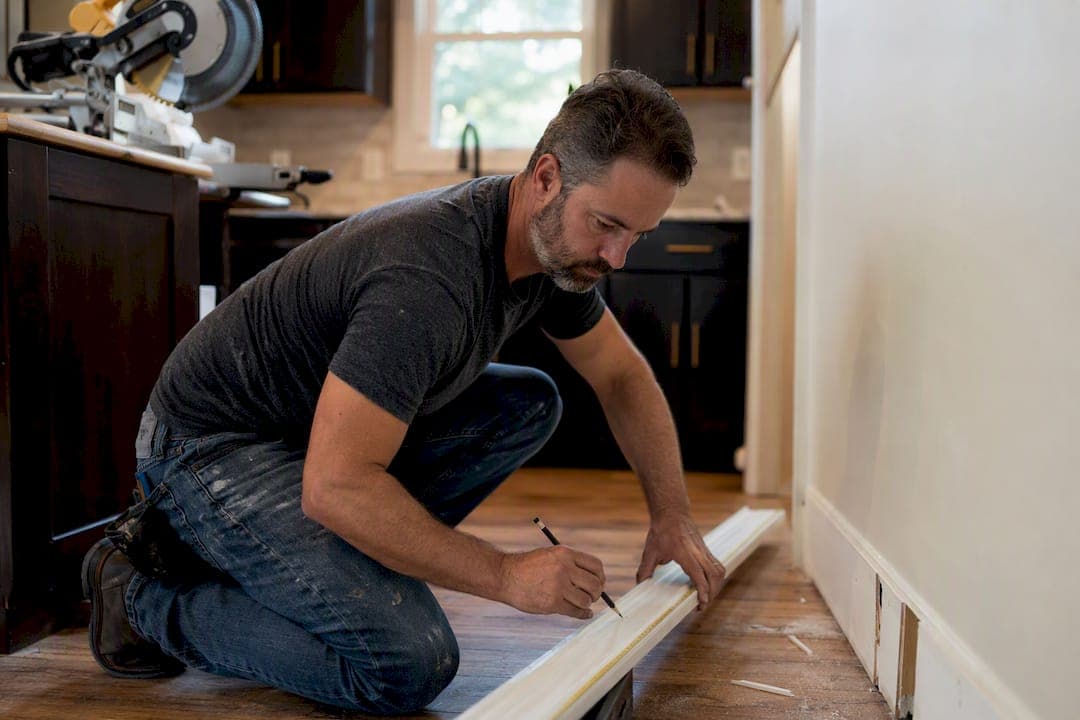
Most homeowners pay between low and high per linear foot installed, which covers material, removal, and basic finish work. A typical 100 linear foot room runs $530 to $835, averaging around $685. The math is simple: measure your continuous linear feet, subtract door openings, then multiply by your chosen rate per foot.
TL;DR:
- Material costs vary significantly, with hardwood being the most expensive at $4 to $12 per linear foot, while MDF and PVC are much cheaper.
- Labor prices generally range from $6 to $9 per linear foot, but regional wage differences can raise the total cost in high-cost cities.
- Removal, drywall patching, and painting can add $0.50 to $5 per linear foot, especially if coping corners or complex profiles are involved.
- Accurate project estimates depend on measuring wall lengths carefully, choosing materials, and including a contingency of 10 to 15 percent for unexpected issues.
- Itemized quotes that specify scope, materials, and labor are more reliable than simply comparing per-foot rates, reducing surprises and rework.
Table of Contents
- How Much Is Baseboard Replacement Cost Per Linear Foot?
- What Do Baseboard Materials Cost?
- What Do Labor and Extra Services Add to the Cost?
- Should You DIY Baseboard Replacement or Hire a Pro?
- How Do You Estimate Your Baseboard Project Before Calling a Contractor?
- What Do Real Baseboard Projects Actually Cost?
- How Does MaddLadder Quote Trim Jobs?
- Why Most Baseboard Cost Guides Miss the Point
- Ready for a Clear Baseboard Quote?
- Where These Cost Estimates Come From
- Sources
How Much Is Baseboard Replacement Cost Per Linear Foot?
The national range for installed baseboard work sits between $4 and $12 per linear foot once you factor in material, tear-out, caulking, paint, and labor, according to HomeCostCalc's project modeling. Most jobs land closer to the middle of that range, around $6 to $9 per foot, which matches what HomeGuide reports for typical 100 to 150 linear foot projects.
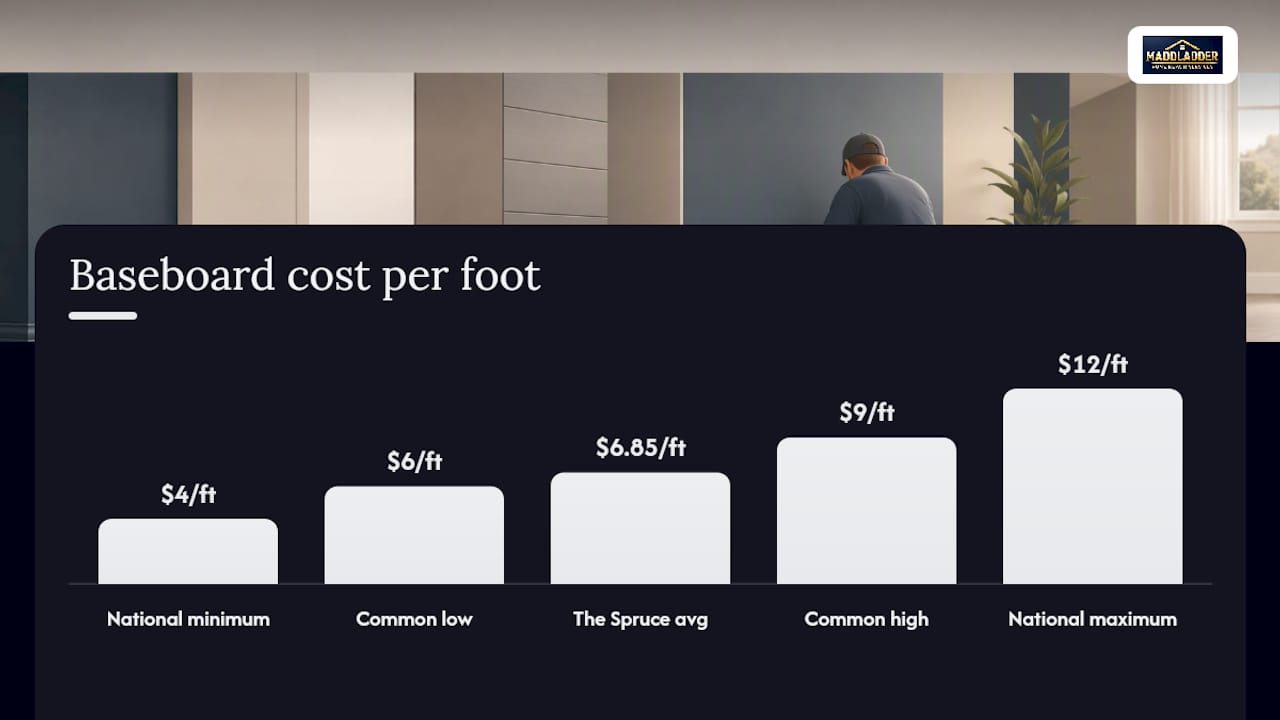
The Spruce puts the average at $6.85 per linear foot, meaning a standard 100 foot room averages $685 total. Thumbtack's data tells a similar story on a broader scale: their national figures show a range of roughly $426 to $1,494 across different project sizes, with a common midpoint near $805.
Here's how those per-foot rates translate into real project totals:
Contractor pricing shifts by region too. A quote in a high cost-of-living metro will typically run higher than one in a smaller market, even for identical scope. That regional gap comes down mostly to labor, not material.
What Do Baseboard Materials Cost?
Material choice moves the needle on price more than almost anything else in a baseboard project. Here's what you're looking at per linear foot for the raw material alone, before labor:
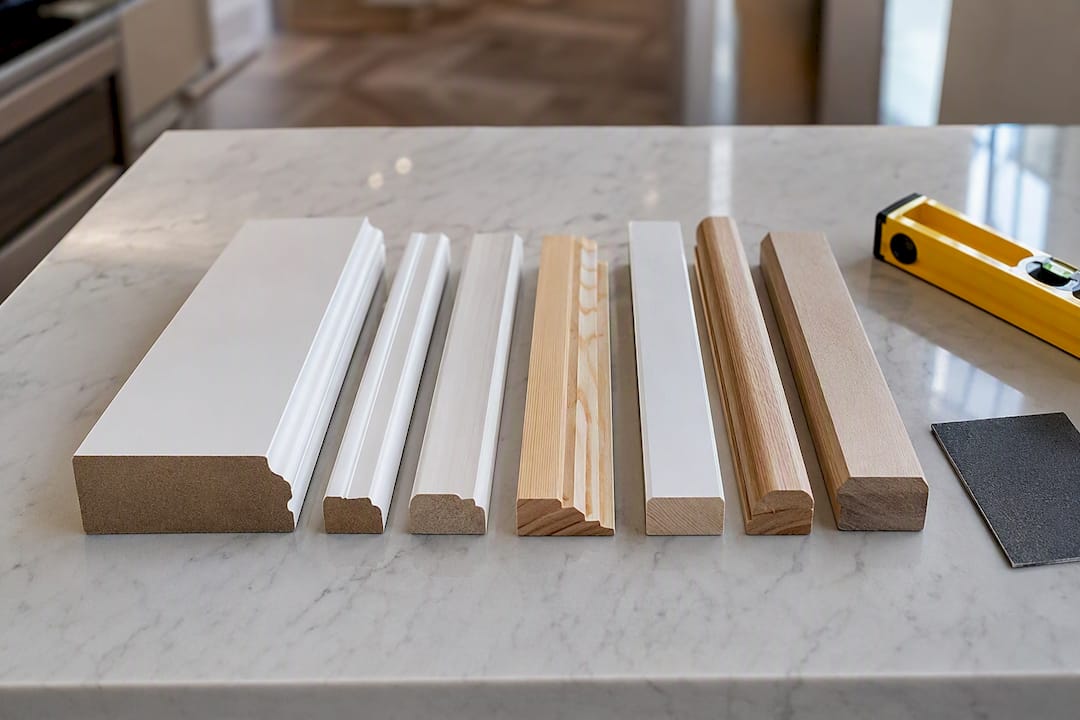
- Primed MDF: about $1 to $1.60 per linear foot
- PVC: about $1.60 to $2.50 per linear foot
- Finger-joint pine (paint-grade softwood): about $1.85 to $3.75 per linear foot
- Solid hardwood (oak, poplar, stain-grade): $4 to $12 per linear foot
Every quarter-inch you go up in profile height adds roughly $0.25 to $0.50 per linear foot to material cost, since taller boards use more raw stock and often cost more per unit to mill. A jump from a standard 3.25 inch base to a 5.5 inch traditional profile can meaningfully change your material line item on a large room.
If you're painting the trim anyway, MDF or PVC makes the most financial sense. PVC also resists moisture, which matters in kitchens, bathrooms, and basements. Finger-joint pine is the middle ground for painted trim with a slightly better feel underfoot when bumped. Solid hardwood only earns its premium when you're staining it to match existing wood floors or cabinetry. Paint over hardwood and you're paying for a grain nobody will ever see.
What Do Labor and Extra Services Add to the Cost?
Labor gets priced two ways: per linear foot or hourly. Per-foot pricing is more common for straightforward runs, while hourly billing shows up more on small jobs, oddly shaped rooms, or repair work mixed into a bigger punch list. Regional wage data from the Bureau of Labor Statistics shows carpenter and installer wages vary widely by metro area, and that variance shows up directly in your quote.
A few line items catch homeowners off guard:
- Removal and disposal of old baseboard typically runs $0.50 to $1.50 per linear foot.
- Painting or staining adds $1 to $5 per linear foot depending on how many coats and how much prep the trim needs.
- Coping corners (versus simple mitered cuts) takes longer and often carries a higher labor rate, since a tight coped joint on painted trim is unforgiving work.
Pro Tip: Ask your installer upfront whether old trim is glued or nailed. Glued trim almost always tears drywall paper on removal, and patching that after the fact costs more than pricing it into the original quote.
Should You DIY Baseboard Replacement or Hire a Pro?
DIY can save real money on straightforward runs, but it comes with hidden costs that don't show up until you're mid-project.
- DIY baseline costs run to material plus tool rental or purchase, usually $50 to $150 for a miter saw rental, nail gun, and caulk if you don't already own them.
- Hidden DIY risks that add cost later include coping corners badly, cutting into uneven walls, tearing drywall paper on removal, and gaps at joints that need extra caulk or filler to hide.
- Hire a pro when you're dealing with water damage behind the trim, complex crown or multi-piece profiles, or any room where finish quality affects resale value, like a kitchen or primary bathroom.
A simple guest bedroom with straight runs and no obstacles is a reasonable DIY candidate for a handy homeowner. Anything involving coping, old plaster walls, or rooms buyers will scrutinize is where professional installation pays for itself.
How Do You Estimate Your Baseboard Project Before Calling a Contractor?
Getting an accurate number before you request quotes keeps every bid comparable.
- Measure continuous linear feet along every wall, then subtract door and opening widths.
- Note your material choice and height preference, since both change the per-foot rate.
- Decide whether you want removal, drywall patching, and paint included or handled separately.
- Add a 10 to 15% contingency for surprises like rotted subfloor trim or unexpected drywall repair.
When you talk to contractors, ask these questions directly: Is the quote itemized by material, labor, and finish? Is pricing per linear foot or hourly? Does it include drywall patching and disposal? What's the warranty on workmanship? A reasonable written quote should answer all four before you sign anything.
What Do Real Baseboard Projects Actually Cost?
Numbers make more sense with real scenarios attached to them.
A small bedroom with painted MDF is the cheapest realistic project you can run. A whole-floor replacement scales fast once you mix in taller profiles or hardwood in main living spaces. The premium example assumes drywall patching from removal plus stain work, which is where the per-foot cost climbs highest.
How Does MaddLadder Quote Trim Jobs?
MaddLadder prices baseboard work as part of its broader trim and fixture replacement services, with flexible pricing starting at $75 an hour and free estimates before any work begins. A proper quote itemizes material, removal, drywall patching where needed, and finish work, so you're not guessing what's included.
If you're weighing repair against full replacement, this guide on protecting trim value and this breakdown of trim and fixture types cover related decisions worth reading before you commit to a project scope.
Why Most Baseboard Cost Guides Miss the Point
The number that matters least in this whole conversation is the headline per-foot rate. What actually determines your final bill is whether your walls are straight, whether the old trim is glued, and how many corners need coping instead of simple miters. Those three variables can swing a quote by hundreds of dollars on an identical room.
Conventional advice tells homeowners to shop by per-foot price alone. That's backwards. A $4 per foot quote that excludes drywall patching will cost more than a $7 per foot quote that includes it, once the surprise invoice arrives. Ask what's excluded before you ask what's included.
If you take one thing from this guide, prioritize getting an itemized quote over chasing the lowest headline number. Homeowners who compare bids apples-to-apples on scope, not just price, consistently end up with fewer change orders and cleaner final walls. That's not a small thing when you're repainting a whole floor.
— Jennifer
Ready for a Clear Baseboard Quote?
Skip the guesswork of matching per-foot rates to your specific walls, corners, and finish goals. MaddLadder handles baseboard removal, installation, caulking, basic paint touch-up, and disposal as one coordinated job across the Kansas City metro area, so you get a single itemized number instead of piecing together separate contractor bids.

A free estimate typically covers your linear footage, material preference, and whether old trim needs removal or drywall repair behind it. Have your room measurements and a rough idea of paint versus stain finish ready when you call. Head to the Services page to request a quote, or check out installation and assembly services if your project includes coordinating other fixtures at the same time.
Where These Cost Estimates Come From
These figures draw on The Spruce's per-foot averages, HomeCostCalc's scenario modeling for low, mid, and high project tiers, Thumbtack's national range data, and HomeGuide's per-project totals. Regional labor context comes from BLS wage data. Run any of these calculators with your local labor rates for a number closer to your actual quote.
Sources
- How Much Does It Actually Cost to Install Baseboards?
- Baseboard Installation Cost Calculator (2026) — Free Online Estimate | HomeCostCalc
- 2026 Baseboard Installation Cost | Cost to Replace Baseboards
- How Much Does Baseboard Installation Cost? (2026)
- Bureau of Labor Statistics - Occupational Employment and Wages