

TL;DR:
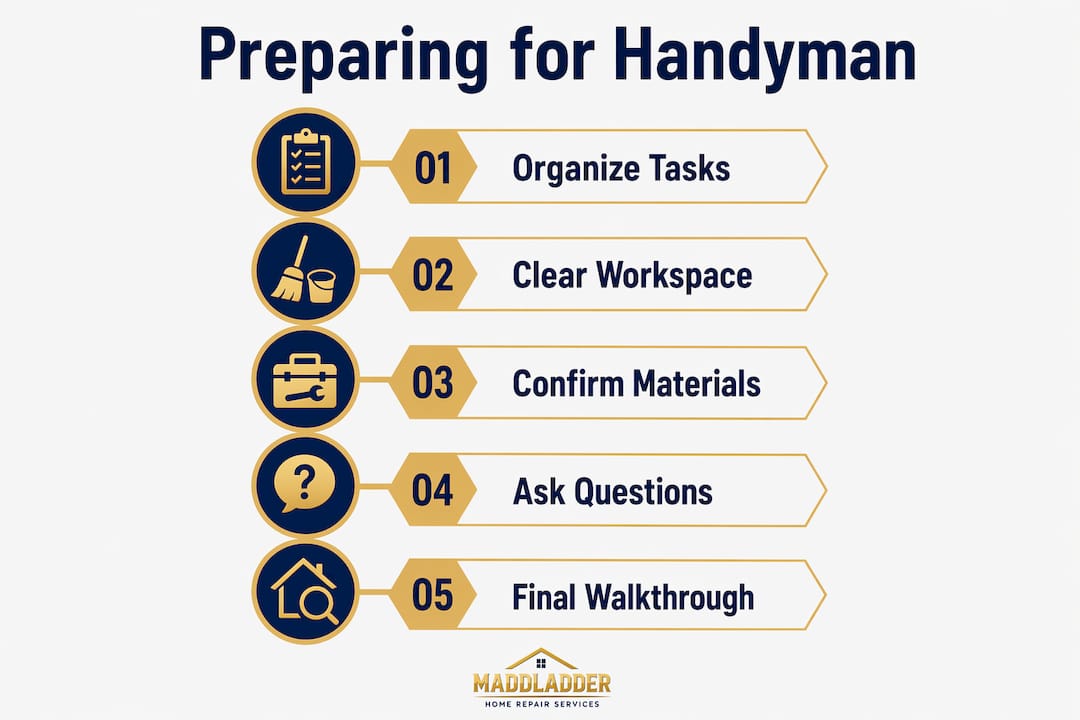
- Proper preparation for a handyman visit includes creating a detailed task list, clearing the work area, and asking relevant questions beforehand to ensure efficiency. Organizing the space and confirming scope reduces service time, protects belongings, and prevents costly callbacks. Final walkthroughs and clear communication with the technician help guarantee satisfaction and a smooth repair process.
Preparing for a handyman visit means organizing your repair tasks, clearing the workspace, and confirming expectations before the technician arrives. Four out of five households require handyman services at least once a year, yet most homeowners skip the prep work that makes those visits faster and cheaper. Done right, preparation reduces service time by up to 25%, protects your belongings, and eliminates the back-and-forth that drives up hourly costs. This guide walks you through every step, from building your task list to conducting the final walkthrough, so your next service call runs exactly as planned.
How to prepare for a handyman visit: organizing your repair tasks first
The single most effective thing you can do before a handyman arrives is write down every repair you need, ranked by urgency. A detailed task list gives the technician a clear picture of the scope before they walk through your door, which means less time spent on-site assessing and more time spent fixing. It also prevents the common scenario where a homeowner remembers a leaky faucet only after the handyman has packed up and left.
Start by walking through your home room by room. Note every issue you want addressed, from a sticking door in the hallway to a loose outlet cover in the bedroom. Once you have the full list, separate urgent repairs (anything affecting safety, water damage, or daily function) from non-urgent cosmetic fixes. Prioritizing this way lets you communicate clearly if the visit runs shorter than expected.
- List every task by room and category (plumbing, electrical, carpentry, general).
- Rank by urgency: safety hazards and functional failures come first.
- Estimate complexity: note whether a task requires special materials or permits.
- Share the list in advance: send it to the handyman before the appointment so they can bring the right tools and materials.
- Cluster similar tasks: group drywall repairs together, or batch all fixture replacements in one session.
Clustering similar tasks is the move most homeowners miss. Grouping drywall patches in the same room, for example, means the handyman sets up once instead of three times. That alone can shave 30 to 45 minutes off a standard visit. For help scheduling home repairs in a logical sequence, Maddladder's planning guide walks through the exact prioritization process used by their Kansas City technicians.
Pro Tip: Call or message your handyman two days before the appointment to confirm the task list. This gives them time to source any specialty materials and arrive fully prepared.
What to do before the handyman arrives: clearing the work area
A cluttered workspace does not just slow a handyman down. It adds directly to your bill. Clearing the workspace can save 30 to 60 minutes in labor time, which at a typical hourly rate translates to real money back in your pocket. Think of the work zone the same way a contractor thinks of a job site: clear, organized, and hazard-free.
Here is what to do before the handyman arrives in each area they will work:
- Remove personal items and decorations from walls, shelves, and surfaces near the work zone. A framed photo knocked off the wall mid-repair is an avoidable loss.
- Move or cover furniture within three feet of the work area. Use drop cloths or old bedsheets if you cannot relocate a heavy piece.
- Clear access routes from the front door to the work zone. Hallways stacked with boxes or bikes force the handyman to navigate around obstacles with heavy tools.
- Create a dedicated tool staging area near the work zone, such as a cleared section of floor or a folding table, so the technician can organize their equipment without hunting for space.
- Secure pets in a separate room and keep children away from the work zone. Pets and children near active repairs create safety risks for everyone involved and slow the work considerably.
- Flag any known hazards: tell the handyman about asbestos concerns, weak floorboards, or shutoff valve locations before work begins.
Pro Tip: Take a quick photo of each work area before the handyman arrives. If anything gets moved or damaged, you have a clear before-and-after record.
Treating your home as a professional work zone is not just about efficiency. It signals to the technician that you respect their time, which tends to produce better results. Professionals who feel organized and respected consistently deliver higher-quality work. The DIY safety upgrades workflow from Maddladder covers additional safety protocols worth reviewing before any repair appointment.

What materials and tools should you have ready?
One of the most common preparation mistakes is buying materials before the handyman has assessed the job. Homeowners who pre-purchase materials without professional guidance frequently end up with the wrong specifications, wrong quantities, or products the technician cannot work with. Waiting for the handyman's recommendation avoids delays and ensures durable, correct installations.
The table below clarifies what you should have ready versus what to leave to the professional.
| Item | Homeowner responsibility | Handyman responsibility |
|---|---|---|
| Appliance manuals and warranties | Have these ready and accessible | Reviews specs before starting work |
| Paint color codes or tile samples | Provide if you have a preference | Sources matching materials if needed |
| Standard hardware (screws, anchors) | Not required to purchase in advance | Brings standard stock on the truck |
| Specialty fixtures (light fixtures, faucets) | Purchase only if handyman confirms spec | Advises on correct model and fit |
| Permits (for larger jobs) | Research local requirements | Can advise but homeowner typically pulls |
The one exception to the "wait for guidance" rule is fixtures you have already chosen for aesthetic reasons, such as a specific faucet finish or light fixture style. In that case, share the product link or model number with the handyman before the visit so they can confirm compatibility. Professionals like Maddladder's technicians also have access to contractor pricing, so letting them source materials often costs less than buying retail.
What questions to ask your handyman before and during the visit
Clear scope and open dialogue prevent most of the stress homeowners experience during service visits. Asking the right questions before work begins is not being difficult. It is being a prepared client. Here are the questions worth asking at every stage.
Before booking:
- Are you licensed and insured? Verifying insurance and licensing before hiring protects you from liability if something goes wrong on your property.
- Can you provide references from similar jobs?
- What is your hourly rate, and do you charge a minimum?
Before work begins:
- Can I get a written, itemized estimate? A written estimate must include scope, costs, timeline, and payment terms. Never pay 100% upfront before work is complete.
- What happens if you find additional problems once work starts?
- Do you warranty your labor, and for how long?
During the visit:
- How is the work progressing relative to the estimate?
- Do you need anything from me to keep moving?
- Are there any issues I should know about before you finish?
Asking about unexpected findings mid-job is particularly important. A handyman replacing a bathroom exhaust fan might discover water damage behind the wall. Knowing in advance how they handle scope changes, and whether they will pause for your approval before adding work, prevents bill shock at the end of the visit. For more on what insured handyman coverage actually means for homeowners, Maddladder's guide breaks it down clearly.
What to expect during and after the handyman visit
A standard handyman visit follows a predictable sequence. Knowing each phase helps you stay out of the way at the right moments and engaged at the right moments.
- Arrival and initial walkthrough: the handyman reviews your task list, inspects each area, and confirms the scope. This is your last chance to add or remove tasks before the clock starts.
- Setup and staging: tools come in, the work zone gets organized, and any protective coverings go down. A prepared space cuts this phase significantly.
- Active repair work: the handyman works through tasks in the order agreed upon. Stay available but not hovering. Check in every hour or so if the visit is long.
- Progress updates: a professional handyman communicates proactively if something unexpected comes up. If they go quiet for hours with no update, it is reasonable to ask for a status check.
- Cleanup: most handymen clean up their immediate work area. Confirm this expectation upfront, especially for dusty jobs like drywall or drilling.
- Final walkthrough: walk through every completed task together before the handyman leaves. Skipping the final walkthrough leads to unnoticed incomplete work and additional fees for a return visit.
Document the completed work with photos immediately after the walkthrough. Note the date, the tasks completed, and any warranties provided. This record protects you if a dispute arises later.
After the visit, keep all receipts, warranties, and the original written estimate in a single folder, either physical or digital. If the handyman provided a labor warranty, note the expiration date in your calendar. Following up within 48 hours if you notice any issue is far easier than waiting weeks when the details have faded. Efficient home repairs require good post-visit habits just as much as good pre-visit preparation.
Key takeaways
Preparing for a handyman visit requires a prioritized task list, a cleared work area, the right questions, and a final walkthrough to protect your investment and avoid costly callbacks.
| Point | Details |
|---|---|
| Build a prioritized task list | Rank repairs by urgency and share the list with your handyman before the appointment. |
| Clear the work area in advance | Removing furniture and clutter saves up to 60 minutes of billable labor time. |
| Wait on materials | Let the handyman confirm specifications before purchasing fixtures or specialty supplies. |
| Ask for a written estimate | Always get itemized scope, costs, and payment terms in writing before work begins. |
| Never skip the final walkthrough | Inspecting completed work on the spot prevents callbacks and additional fees. |
What I've learned from watching homeowners skip the prep work
I have seen the same scenario play out more times than I can count. A homeowner books a two-hour appointment, the handyman arrives, and the first 45 minutes disappear because the work area is full of boxes, the task list is vague, and nobody can find the shutoff valve. By the time actual repairs begin, the visit is already running over budget.
The homeowners who get the most value from a service call are the ones who treat it like a meeting with a contractor, not a casual drop-in. They have a written list, a clear space, and at least one question ready about the warranty on labor. That level of preparation is not obsessive. It takes about 30 minutes the evening before.
The final walkthrough is the step I feel most strongly about. Most people skip it because they feel awkward asking the handyman to go room by room before leaving. Do not skip it. Walking through the completed work together is the only moment where you can flag a concern while the technician is still on-site and equipped to fix it. Once they leave, every correction becomes a scheduling problem and potentially a billing dispute.
Building a good relationship with a reliable handyman is one of the most underrated home maintenance strategies available to homeowners. When you are prepared, communicative, and respectful of their time, you become the client they prioritize. That pays off every time you need a same-week appointment.
— Jennifer
Ready to book a handyman visit in Kansas City?
Maddladder makes the entire process straightforward for homeowners and renters across the Kansas City metro area. Their licensed technicians handle everything from drywall and fixture replacements to minor plumbing, electrical repairs, and smart home upgrades. Free estimates mean you know the scope and cost before any work begins, and flexible scheduling options fit around your availability.

Whether you have a single repair or a full list of deferred maintenance, Maddladder's repair and replacement services are built to handle it efficiently. Subscription-based home maintenance plans starting at the Essential tier give landlords and property managers a reliable, recurring solution. Call for a free estimate or book online today.
FAQ
How early should I prepare before a handyman arrives?
Start your task list and clear the work area at least the evening before the appointment. Sharing your task list two days in advance gives the handyman time to source any specialty materials.
Should I buy materials before the handyman visit?
In most cases, wait for the handyman's guidance before purchasing materials. Professionals have access to correct specifications and contractor pricing, and pre-purchased items frequently cause delays when they do not match the job requirements.
What questions should I ask a handyman before hiring?
Ask whether they are licensed and insured, request a written itemized estimate, and confirm their warranty on labor. Never pay the full amount upfront before work is completed.
How long does a typical handyman visit last?
Most handyman visits run between two and six hours depending on the number and complexity of tasks. Proper preparation, including a cleared workspace and a detailed task list, can reduce that time by up to 25%.
What happens during the final walkthrough?
The final walkthrough is a room-by-room review of all completed work conducted with the handyman before they leave. It allows you to flag any concerns on the spot and confirm that every task on your list was finished to your satisfaction.