
TL;DR:
- Fixture upgrades enhance home appearance, function, and energy efficiency through lighting, plumbing, and smart technologies. LED retrofits, smart bulbs, and stylish fixtures provide high visual impact and energy savings with minimal effort. Proper planning and finishing consistency significantly boost home value and curb appeal.
Fixture upgrades are defined as the replacement or improvement of permanent home installations, including lighting, plumbing hardware, and electrical fittings, to improve appearance, function, or energy performance. The best examples of fixture upgrades deliver measurable results: LED technology uses up to 90% less energy than incandescent bulbs, and a well-planned lighting overhaul on a mid-size home can sell 19 days faster while yielding a 122% gross ROI. These upgrades apply equally to homeowners building equity and renters refreshing a space without major construction. The industry term for this category is "fixture replacement," though "fixture upgrade" captures the broader goal of improving what is already installed.
1. What are the best lighting fixture upgrade examples?
Lighting upgrades deliver the highest visual impact per dollar of any home fixture improvement. A single afternoon of work can shift a room from dated to polished, and the energy savings compound over years.
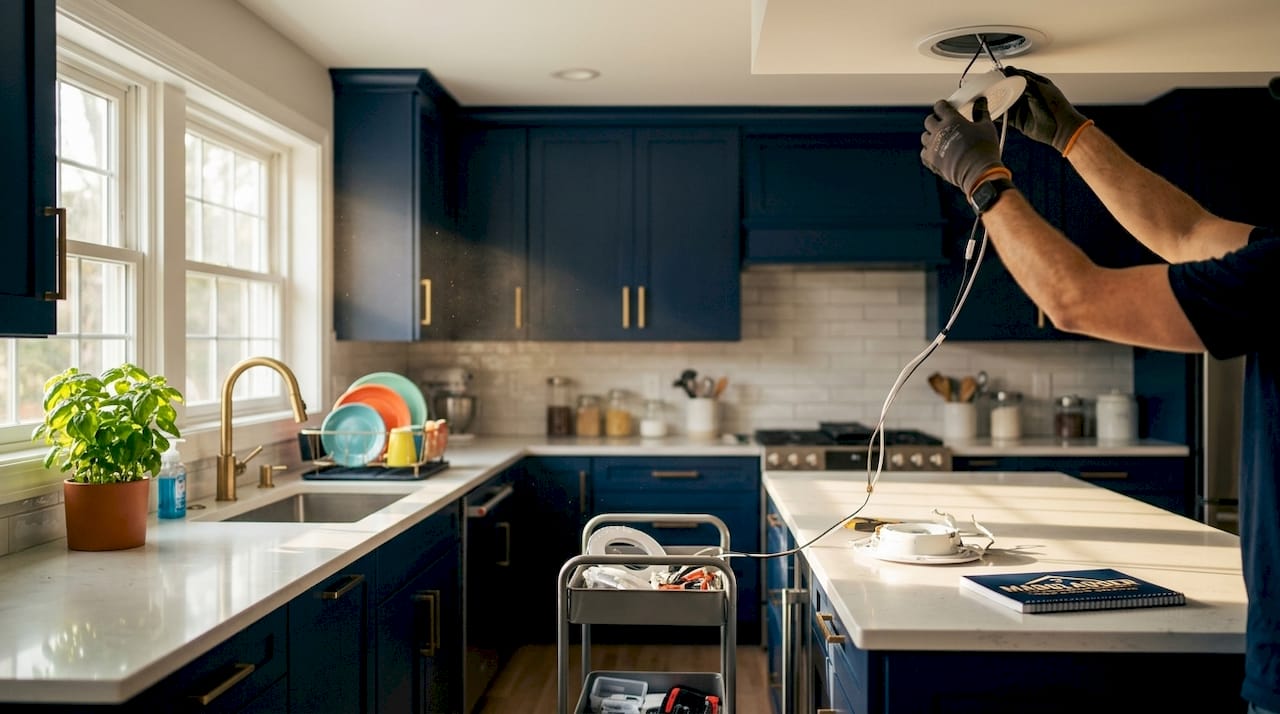
LED retrofit kits for recessed lighting are the single most practical upgrade in this category. Retrofit kits replace old bulbs and trims in under one hour, require no drywall work, and cut energy use by up to 80%. They also seal the ceiling opening, eliminating the "chimney effect" air leak common with older recessed trims. That thermal benefit lowers heating and cooling costs year-round.
Smart LED bulbs replace standard incandescent bulbs in any existing socket. They offer dimming, color temperature control, and app or voice activation. This upgrade requires no wiring changes, making it accessible for renters.
Vanity bars, flush mounts, and wall sconces in modern finishes like matte black, brushed nickel, or aged brass replace builder-basic fixtures quickly. Standard fixture swaps are safe for homeowners who turn off power at the circuit breaker and confirm matching wiring and mounting.
Under-cabinet LED strips and plug-in pendants add layered lighting without any electrical work. These are especially effective in kitchens and reading nooks where overhead lighting alone feels flat.
Pro Tip: Older dimmer switches often fail with LEDs, causing buzzing or flickering. Always check LED bulb and dimmer packaging for compatibility before installing.
| Lighting Upgrade | Avg. Difficulty | Energy Impact | Wiring Required |
|---|---|---|---|
| LED retrofit kit | Low | High (up to 80% savings) | No |
| Smart LED bulbs | Very low | Moderate | No |
| Vanity bar or flush mount | Low to moderate | Low | Yes (existing wiring) |
| Under-cabinet LED strips | Very low | Low | No |
| Chandelier or pendant | Moderate | Low | Yes |
2. Which bathroom fixture upgrades boost appearance and function?
Bathroom fixture examples cover a wide range, from a $30 faucet swap to a full vanity replacement. The upgrades that deliver the most impact combine visual improvement with water efficiency.
Toilets are the most overlooked upgrade in this category. Modern low-flow models use significantly less water per flush than toilets manufactured before 1994. Replacing an old toilet also updates the visual baseline of the entire room.
Sinks define the style of a bathroom more than almost any other element. Vessel sinks create a contemporary, hotel-style look and work well in powder rooms. Pedestal sinks suit classic or transitional spaces and free up floor area in tight bathrooms.
Faucets combine design and function in one fixture. Single-handle faucets with a waterfall spout or geometric form update a vanity instantly. Water-saving aerators built into modern faucets reduce flow without reducing perceived pressure.
Showerheads with adjustable spray patterns, including rainfall, massage, and mist settings, replace standard heads in minutes using only a wrench and plumber's tape. A handheld showerhead on a slide bar adds accessibility for all ages.
Pro Tip: Choose fixtures with a consistent metal finish throughout the bathroom. Mixing chrome, brushed gold, and oil-rubbed bronze in the same room creates visual noise that undermines even expensive upgrades.
3. How can kitchen fixture upgrades improve usability and style?
Kitchen fixture enhancements focus on the intersection of daily function and visual appeal. The kitchen is the room buyers and renters evaluate most critically, so upgrades here carry outsized weight.
Faucets with pull-down sprayers replace standard two-handle models and immediately improve usability. Touchless activation, available on mid-range models, reduces cross-contamination during cooking. Finishes like matte black or brushed gold coordinate with modern appliances and cabinetry hardware.
Sinks offer more variety than most homeowners realize. Single-bowl undermount sinks maximize workspace. Farmhouse sinks with an apron front create a focal point and work well in both traditional and modern kitchens. Some models include an integrated cutting board or colander that drops into the basin.
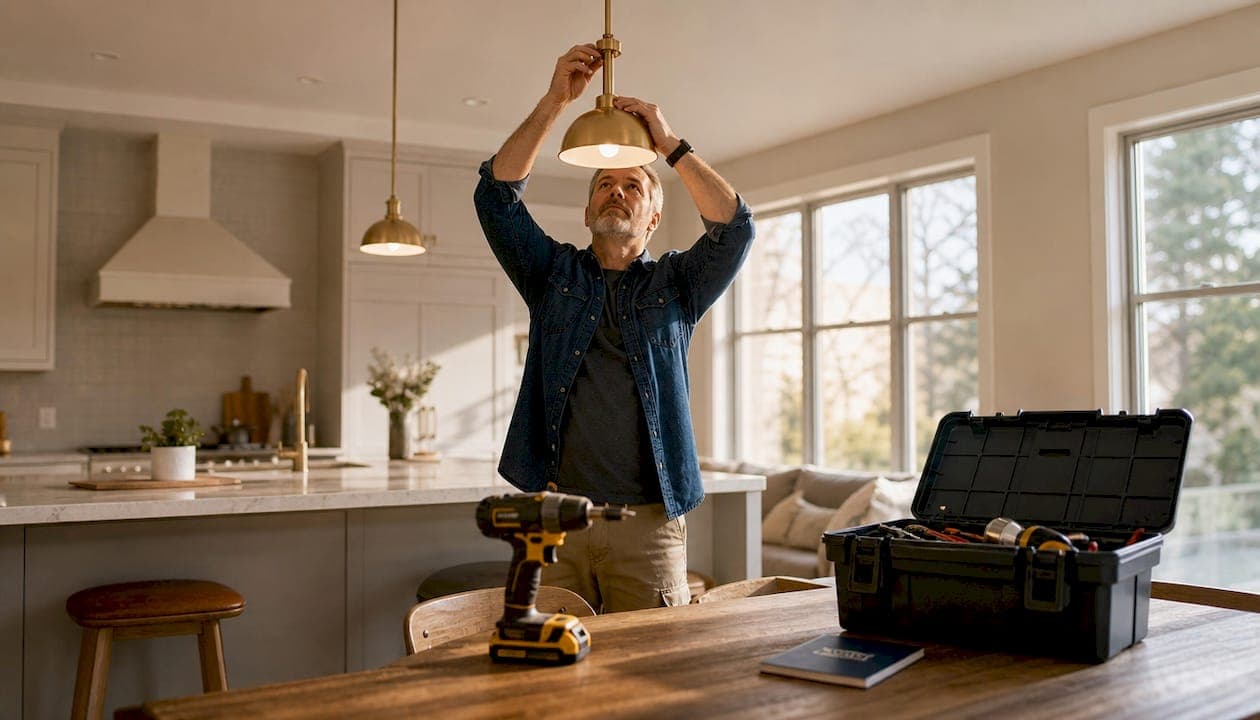
Lighting over the island is one of the most transformative kitchen fixture upgrades available. Statement pendants in clusters of two or three define the island as a design anchor. Under-cabinet LED strips eliminate shadows on countertops and make food prep safer and easier.
Cabinet hardware is technically a fixture upgrade and one of the fastest ways to refresh a kitchen. Replacing builder-standard knobs with bar pulls or cup pulls in a coordinated finish takes an afternoon and costs far less than new cabinets.
Pro Tip: Coordinate fixture finishes with your appliance hardware. If your refrigerator and oven have stainless handles, brushed nickel or chrome faucets and pulls create a cohesive look without matching exactly.
For rental kitchen inspiration, this high-impact kitchen renovation example shows how targeted fixture swaps transform a space without major construction.
4. What smart home fixture upgrades add convenience and value?
Smart home upgrades represent a growing category that blends technology with traditional fixture improvements. Many of these require no wiring changes, making them practical for renters and homeowners alike.
Smart lighting switches replace standard toggle switches and give you app or voice control over existing fixtures. They work with most LED bulbs and integrate with Amazon Alexa, Google Home, and Apple HomeKit. One switch can control an entire room's lighting scene.
Wi-Fi enabled thermostats like the Google Nest or Amazon Smart Thermostat replace standard HVAC controls and learn your schedule over time. They reduce energy use by adjusting temperature when the home is empty. Installation takes under an hour for most homeowners comfortable with basic wiring.
Smart outlets replace standard receptacles and add scheduling, energy monitoring, and remote control to any plug-in fixture. Plug-in smart pendants and lamps become fully controllable without any hardwiring.
Video doorbells and smart locks fall under the fixture upgrade category and add security alongside convenience. Both install in the footprint of existing doorbells and deadbolts, requiring minimal modification.
The practical benefit of smart fixture upgrades extends beyond convenience. Energy management features reduce monthly utility costs, and security integrations lower home insurance premiums with some carriers.
5. How to choose fixture upgrades that maximize home value and aesthetics
Selecting the right upgrades requires matching style, budget, and expected return. Not every upgrade delivers equal impact, and sequencing matters.
Coordinate finish and style throughout the home. Mismatched fixtures and inconsistent bulb color temperatures signal neglect to buyers, even when individual fixtures are new. Pick one or two metal finishes and one color temperature (2700K for warm, 3000K for neutral white) and apply them consistently across key sightlines.
Prioritize lighting upgrades for ROI. Upgraded lighting throughout key sightlines creates a strong positive perception among buyers and often delivers the highest return relative to cost. Lighting is the "missing layer" in home design that makes a home feel dated when ignored, even with fresh paint and new flooring.
Check installation requirements before buying. Ceiling junction boxes must support the weight of new fixtures. Heavier chandeliers require a ceiling fan-rated box, which may involve cutting drywall. Knowing this before purchase prevents costly surprises.
Balance cost against impact. Hardware swaps and LED retrofits cost little and deliver immediate visual results. Full vanity or sink replacements cost more but add lasting value. Use the table below to prioritize.
| Fixture Upgrade Type | Typical Cost | DIY Difficulty | Visual Impact | ROI Potential |
|---|---|---|---|---|
| LED retrofit kit | Low | Easy | High | High |
| Cabinet hardware swap | Low | Easy | Moderate | Moderate |
| Faucet replacement | Low to moderate | Easy to moderate | High | High |
| Vanity or sink replacement | Moderate | Moderate | High | High |
| Chandelier or statement pendant | Moderate | Moderate | Very high | High |
| Smart thermostat | Low to moderate | Easy | Low | Moderate |
| Toilet replacement | Moderate | Moderate | Moderate | Moderate |
For a deeper look at interior upgrades that boost value, the sequencing and ROI data for 2026 are worth reviewing before you commit to a project.
Key Takeaways
The most effective fixture upgrades combine coordinated finishes, LED lighting, and targeted plumbing hardware to deliver measurable gains in aesthetics, energy efficiency, and home value.
| Point | Details |
|---|---|
| LED lighting leads on ROI | LED retrofits cut energy use by up to 80% and can accelerate home sales significantly. |
| Finish coordination matters | Consistent metal finishes and bulb color temperatures across key sightlines prevent a dated look. |
| Many upgrades are DIY-friendly | Faucets, hardware, smart switches, and LED retrofits require no electrician for most homeowners. |
| Smart fixtures add layered value | App-controlled lighting and thermostats reduce energy costs and can lower insurance premiums. |
| Check structural support first | Heavy fixtures like chandeliers require a fan-rated junction box before installation. |
What I've learned after years of watching fixture upgrades go right and wrong
The most common mistake I see is buying a beautiful fixture without checking what is behind the wall or ceiling. A homeowner installs a stunning chandelier, then discovers the existing junction box cannot support the weight. Now there is a drywall repair on top of the fixture cost. Measure twice, buy once applies here as much as anywhere in home improvement.
The second pattern I notice is treating fixture upgrades as isolated decisions. Someone replaces the kitchen faucet in brushed gold, then buys a bathroom vanity light in chrome, then adds a pendant in oil-rubbed bronze. Each piece looks fine alone. Together, they create a home that feels unfinished. Picking one or two finishes and committing to them across the whole house is the single decision that separates a polished result from a patchwork one.
Lighting uniformity surprises people the most. I have walked into homes where one room has warm 2700K bulbs and the adjacent dining room has cool 4000K bulbs. The contrast is jarring and immediately reads as amateur. Matching color temperature costs nothing extra and makes every room feel intentional.
My honest opinion on smart fixtures: start with a smart thermostat and one smart lighting switch. Those two upgrades cover the most daily touchpoints and give you a feel for the ecosystem before you commit to a full smart home setup. Most people who go all-in on day one end up with devices they never use.
Small hardware details carry more weight than most people expect. Swapping builder-grade knobs for solid bar pulls on kitchen cabinets takes two hours and under $150 in materials. The result looks like a kitchen renovation. That ratio of effort to impact is hard to beat anywhere else in home improvement.
— Jennifer
Maddladder makes fixture upgrades straightforward in Kansas City
Fixture upgrades are rewarding projects, but installation errors cost more to fix than hiring a professional from the start. Maddladder serves homeowners and landlords across the Kansas City metro with licensed, dependable fixture repair and replacement services covering lighting, plumbing hardware, and smart home installations.

Whether you need a chandelier hung safely, a bathroom vanity swapped out, or a smart home upgrade installed correctly, Maddladder handles the work so you get the result without the risk. Free estimates are available, and one-time services start at $75/hour. Contact Maddladder to schedule your fixture upgrade today.
FAQ
What counts as a fixture upgrade?
A fixture upgrade is the replacement or improvement of a permanent home installation, including lighting, faucets, showerheads, toilets, cabinet hardware, and smart controls, to improve appearance, function, or efficiency.
Can renters do fixture upgrades?
Renters can safely swap LED bulbs, add plug-in pendants, install smart outlets, and replace showerheads in most cases. Always restore original fixtures before moving out and confirm changes with your landlord.
Do lighting fixture upgrades really increase home value?
A $2,250 lighting upgrade on a mid-size home yielded a 122% gross ROI and cut days on market from 31 to 12. Lighting upgrades consistently rank among the highest-return home improvements available.
Do I need an electrician for fixture upgrades?
Most standard swaps, including flush mounts, sconces, and pendants, are safe for homeowners who turn off power at the breaker and confirm matching wiring. Heavier fixtures or new circuit work require a licensed electrician.
What fixture finish is most popular in 2026?
Matte black and brushed gold lead current design trends, while brushed nickel remains the most versatile choice for coordinating across multiple rooms and appliance finishes.