
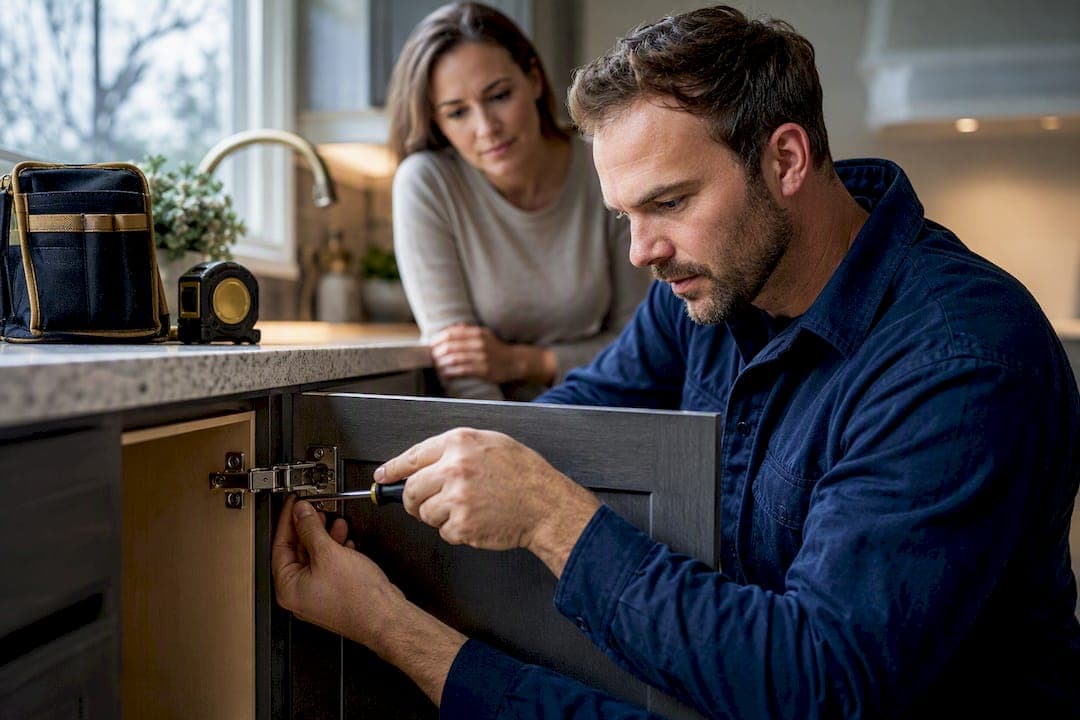
Start by asking a trusted neighbor, realtor, or contractor for referrals, then require proof of general liability insurance and a written, itemized estimate before you agree to anything. If the job involves electrical, plumbing, or structural work, confirm whether your state or city requires a license for it. These two checks alone stop most of the horror stories homeowners tell about hiring a handyman.
TL;DR:
- Most trustworthy referrals come from neighbors, realtors, or contractors, and online platforms should include detailed photos and scope for accurate quotes.
- Verify insurance coverage by requesting a certificate of insurance and confirm its validity directly with the insurer before hiring.
- Check licensing requirements in your area and read multiple recent reviews to identify consistent workmanship patterns and avoid red flags like upfront payments or vague estimates.
- Test a new handyman with a small job first and ensure all costs, scope, and timelines are clearly in writing before committing to larger projects.
- Budget for hourly rates or flat fees based on region, and beware of extra charges such as trip fees, minimums, or undisclosed material markups.
Table of Contents
- Where to Find a Handyman You Can Actually Trust
- What Should You Verify Before Hiring a Handyman?
- What Questions Should You Ask a Handyman?
- How Much Does a Handyman Cost in the U.S.?
- Handyman Hiring Red Flags to Watch For
- Test a New Handyman With a Small Job First
- MaddLadder's Approach to Vetting, Pricing, and Protection
- Ready to Book? Here's How MaddLadder Fits In
- Where to Verify Licenses, Reviews, and File Complaints
- Sources
- FAQ
Where to Find a Handyman You Can Actually Trust
Referrals beat every other channel because someone you know has already absorbed the risk of a bad hire for you. Ask neighbors, your realtor, or a contractor you've used before. That kind of word-of-mouth vetting catches things a five-star rating never will, like whether someone shows up on time or leaves a mess.
Apps and marketplaces such as Yelp, Thumbtack, and TaskRabbit are the right move once referrals run dry. The best results come from posting a job with photos, measurements, and a clear description of the constraints, since vague requests get vague, inflated quotes back. Yelp's own guidance recommends leaning on referrals first, then using photos and detailed scope on review platforms to get responses you can actually compare.
Don't overlook offline sources either. Hardware store bulletin boards, a building superintendent's contact list, and local community groups on Facebook or Nextdoor often surface reliable independents who don't bother marketing online.
- Neighbors, realtors, and past contractors (best first stop)
- Yelp, Thumbtack, or TaskRabbit for a wider net
- Hardware store boards and property management contacts
- Neighborhood Facebook groups and Nextdoor
Larger franchise services tend to charge more but back the work with brand guarantees, while independents are usually cheaper and require more legwork to vet. Weigh that tradeoff against how comfortable you are doing the checking yourself.
What Should You Verify Before Hiring a Handyman?
Treat this as a short checklist you complete before you book, not after.
- Request a certificate of insurance (COI) and call the insurer listed on it to confirm the policy is active. A handyman who hesitates here is telling you something.
- Check your state or municipal licensing rules. Requirements vary widely, and Consumer Reports notes that where a license is required, it gives you a government body to file a complaint with if something goes wrong.
- Read recent reviews for patterns, not just star ratings. Look at before-and-after photos for consistent workmanship, and treat one bad review as noise but three similar complaints as a pattern.
- Ask about warranties or satisfaction guarantees, and note how long the business has operated. Longevity and professional memberships both suggest staying power.
- Collect at least two written, itemized quotes. AllBetter's vetting guide points out that comparing line items, labor, materials, minimums, matters more than comparing hourly rates alone.
A license matters less for something like hanging a shelf, but it matters a great deal for work that carries fire, flood, or structural risk. That distinction should drive how hard you push on step two.
Pro Tip: If a handyman says they're insured but can't produce a COI, ask for the insurer's name and policy number directly. Most legitimate providers hand this over without a second thought.
What Questions Should You Ask a Handyman?
A short phone call before booking saves you from a longer, more expensive conversation later. Ask directly: How long have you been doing this type of work? What's your typical turnaround for a job this size? Can you send a COI? Do you carry your own tools, or will I need to supply anything? Is there a warranty on the labor?
Once you've settled on someone, get the answers in writing and review the maintenance checklist for landlords to ensure thorough vetting and follow-up. A real estimate or contract should spell out:
- The full scope of labor and materials, itemized rather than lumped together
- Start date and expected completion date
- Payment schedule, including how deposits are handled
- Who handles cleanup and debris removal
- A process for approving change orders if the scope shifts mid-job
On payment, keep deposits tied to material costs only, commonly a deposit below one-third on larger jobs, and use a traceable method like a card or check rather than cash. Withhold final payment until you've inspected the finished work. If something unexpected turns up mid-job, like rotted subfloor behind a wall, get the revised scope and price in writing before work continues.
How Much Does a Handyman Cost in the U.S.?
Handyman pricing generally falls into common models such as hourly rates with a minimum time requirement, flat per-job pricing, or bundled punch-list pricing for a list of smaller tasks in one visit. Rates shift based on your region, the complexity of the work, and whether specialty materials are involved.
Watch for trip fees layered on top of an hourly rate, minimums that make a five-minute fix cost as much as an hour of labor, and material markups that aren't disclosed until the invoice arrives. Bundling several small jobs into a single visit, say, a leaky faucet, a loose cabinet hinge, and a picture hung crooked, usually costs less overall than booking three separate visits, since each visit would otherwise trigger its own minimum.
Say one quote comes in at $85/hour with a two-hour minimum and no mention of materials, while another quotes a flat $220 for the same punch list including parts. The flat quote isn't automatically better, ask what happens if the job runs long or a part needs replacing, since that's where hidden costs tend to surface.

Handyman Hiring Red Flags to Watch For
Most bad handyman experiences trace back to one of a handful of warning signs, and they're easy to spot if you know what you're looking for:
- No certificate of insurance, or reluctance to provide one
- Pressure to pay cash only, with no invoice or paper trail
- A demand for full payment before any work starts
- Refusal to put the estimate in writing
- A quote that's dramatically lower than every other bid you collected
- Suggestions to skip permits on work that likely needs one
- Sparse, vague, or entirely missing references
Consumer Reports and AllBetter both flag full upfront payment as one of the clearest signs something's off; a standard deposit tops out around 30% for materials, and jobs under $500 often need no deposit at all. If you spot one of these red flags, the safest move is simple: pause the booking, ask the direct question that clears it up, and walk away if the answer doesn't satisfy you. Document every text and email along the way.
If a job has already gone wrong, first ask the handyman to return and fix it. If that fails, escalate through the platform's dispute process if you booked through an app, file a complaint with the Better Business Bureau or your state's consumer protection office, and dispute the charge with your credit card issuer if you paid that way and the work was never completed as promised.
Test a New Handyman With a Small Job First
Before handing over a full remodel or a multi-day project, run a smaller job first to see how someone actually works. A door that sticks, a small drywall patch, or mounting a TV are all low-stakes tasks that reveal a lot about skill and punctuality without much financial risk.
- Pick a task with a clear, visible outcome, something you can inspect in five minutes.
- Set your acceptance criteria before they arrive: what does "done right" look like?
- Inspect the work in person before releasing final payment, not after they've already left.
- If the small job goes well, book them again for bigger work. If communication was poor or the work was sloppy, look elsewhere. One rough job isn't always disqualifying, but a pattern is.
Pro Tip: A small drywall patch is one of the best tests around: it shows whether someone sands, feathers, and matches texture, or just slaps on mud and hopes paint hides it.
MaddLadder's Approach to Vetting, Pricing, and Protection
Professional handyman services confirm insurance is active, hand over written scopes before work begins, and stand behind the job with a satisfaction policy, the same standards this guide walks through. Maddladder offers handyman services with free estimates and aims to respond promptly once you reach out. Choosing a licensed local provider over an unvetted individual gives you clearer recourse if something goes sideways, along with the convenience of one call covering everything from drywall repair to smart-home installs.
— Jennifer
Ready to Book? Here's How MaddLadder Fits In
If the checklist above sounds like a lot of legwork, that's because vetting an unknown handyman properly always is. Maddladder was built to provide pre-vetted handyman services for homeowners, landlords, and property managers in the Kansas City area, handling insurance and credential checks before contact.

The lineup covers the jobs homeowners ask about most, one-time repairs and replacements, minor plumbing and electrical fixes, smart home installs like thermostats and cameras, plus tiered home maintenance subscriptions for anyone who'd rather not repeat this whole vetting process every time something breaks. Every job starts with an estimate and a written scope, without cash-only requirements or vague verbal promises. If you've got a repair on your list right now, check current pricing and service options and request a free estimate to see how quickly it moves from first contact to a completed job.
Where to Verify Licenses, Reviews, and File Complaints
A few outside resources are worth bookmarking before you need them:
- Your state's contractor licensing board, searchable through your state government's website, confirms whether a license is required and active for a given trade.
- Consumer Reports' handyman guide and Yelp reviews help you spot reputation patterns before you book, and most apps include a built-in dispute process if a job goes sideways.
- The Better Business Bureau and your state attorney general's consumer protection office both accept complaints if a dispute can't be resolved directly.
Sources
- How to Find a Great Handyman - Consumer Reports
- No more DIY disasters: Tips for finding a reliable handyman | Yelp - Official Blog
- How to Choose the Right Handyman (Vetting Guide) - AllBetter
FAQ
What do you pay a handyman per hour?
Rates vary by region and complexity, but most handymen bill hourly with a one to two hour minimum, or quote a flat per-job price for defined work. Bundling several small tasks into one visit typically costs less than booking separate trips for each.
What are some red flags when hiring a handyman?
The clearest warning signs are no certificate of insurance, pressure to pay cash only or in full upfront, refusal to provide a written estimate, and a quote that's far below every other bid you've collected. Suggestions to skip permits and thin or missing references round out the list.
What is the best way to hire a handyman?
Start with referrals from people you trust, confirm active general liability insurance, check local licensing requirements for the specific job, and collect at least two written, itemized quotes before booking. Testing a new hire with a small job first lowers your risk before committing to anything larger.
What is the most popular handyman app in the US?
Yelp, Thumbtack, and TaskRabbit are among the most widely used platforms for finding handymen, each offering reviews and messaging tools to compare candidates. For homeowners in the Kansas City metro, a licensed local service like Maddladder offers the same vetted approach without needing to sort through unverified individual listings.